Do All Electric Cars Use the Same Charger? A Guide
Do all electric cars use the same charger? No. In North America, the physical connector and the kind of charging both matter. Home and many destination chargers deliver AC power; highway fast chargers deliver DC power. A matching-looking connector or an adapter does not guarantee that the vehicle, station and network will complete a charging session.
The short answer for home and public charging
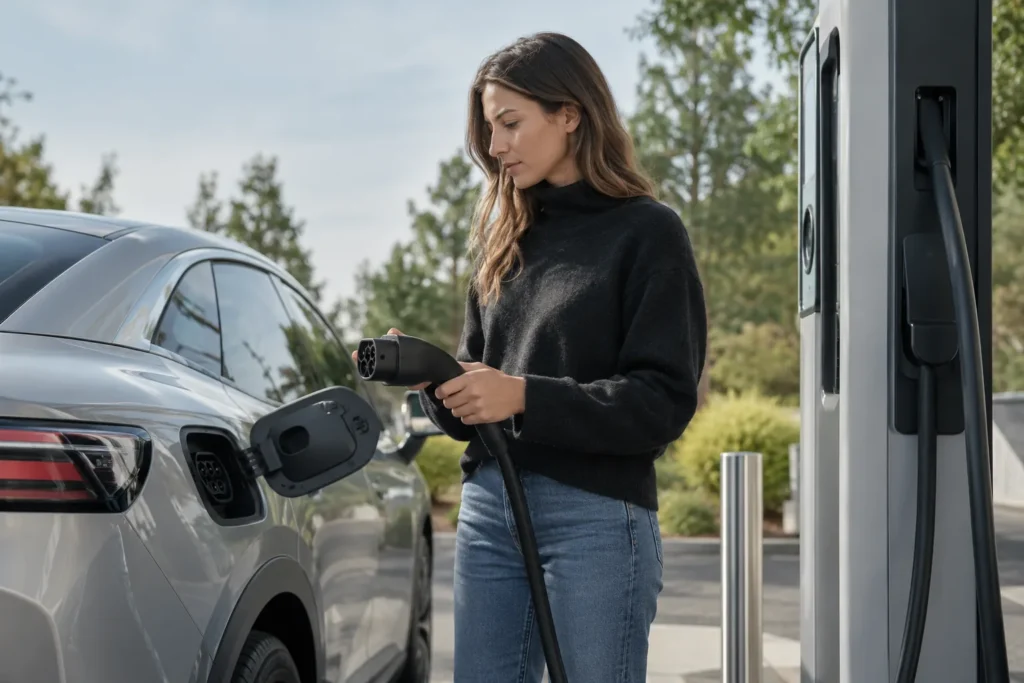
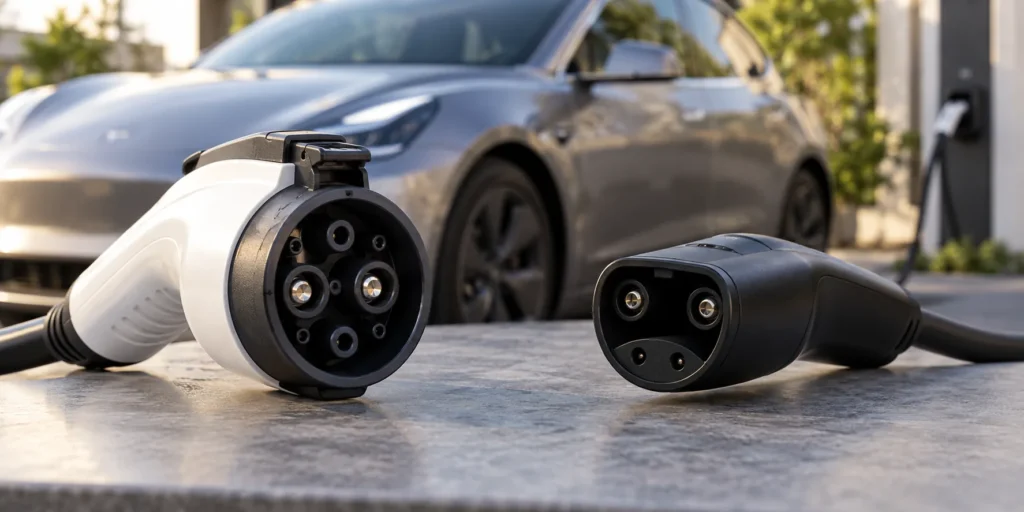
For Level 1 and Level 2 AC charging, many North American vehicles use the J1772 connector, while vehicles with the SAE J3400 connector, often called NACS, use its compact plug. Compatible, manufacturer-approved adapters can bridge some AC charging combinations. For DC fast charging, the main connector families include CCS, J3400 and CHAdeMO; access and adapter support vary by car and network. A plug that fits the inlet is only the first compatibility check.
This guide discusses North American passenger vehicles. Connector standards and charging arrangements differ elsewhere, and even vehicles within one brand can differ by model year or market. Confirm your exact vehicle’s inlet and charging capability in its manual or manufacturer’s app.
AC charging: J1772 and J3400
J1772 for Level 1 and Level 2
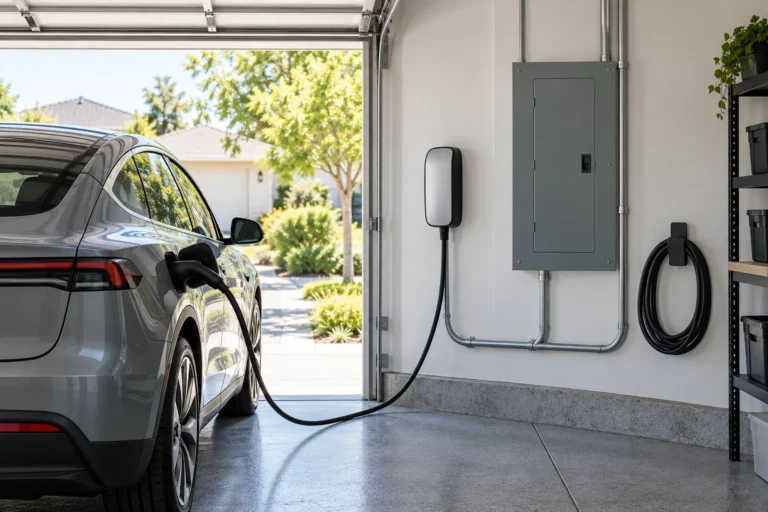
J1772 is a common North American AC connector. At home, the EV charging equipment supplies AC power, and the car’s onboard charger converts it to DC for the battery. The car’s onboard limit and the installation determine how much AC power it can take. A J1772 inlet by itself does not provide a DC fast charging path.
J3400, also called NACS
The J3400 connector uses the same compact vehicle inlet for AC and, where the vehicle supports it, DC charging. It is associated with Tesla vehicles and is being adopted more broadly, but the particular vehicle’s hardware and network access still govern which stations it can use. The connector’s shape alone does not say how fast the car can charge.
If you are shopping for a home unit, establish your car’s inlet and any approved AC adapter before choosing a connector. A household with two different inlet types may prefer a compatible unit or a manufacturer-supported adapter arrangement. Our two-EV home charging guide covers the shared-parking decision.
DC fast charging: CCS, J3400 and CHAdeMO
CCS in North America combines a J1772-style upper portion with two larger DC contacts below it. A vehicle’s CCS inlet can accept the appropriate AC J1772 connector and a CCS DC fast charger. J3400-capable vehicles may use the compact inlet for both, subject to the vehicle’s DC capability. CHAdeMO is another DC fast charging connector used by some vehicles and stations. These are not interchangeable by force or appearance.
The U.S. Department of Energy’s Alternative Fuels Data Center describes these connector families and notes that charging times depend on vehicle, battery, station and other conditions. Check station listings for connector type as well as power, and check the car manufacturer’s guidance for approved DC adapters. Our DC fast charging guide explains station power and the charging curve in more detail.
What an adapter can and cannot do
An adapter can change the physical interface for an approved use case. It cannot add DC fast charging to an AC-only vehicle, exceed the car’s onboard AC or DC limits, or grant access to a network that does not support that vehicle. AC and DC adapters serve different purposes. Do not treat a third-party claim of ‘universal’ as proof of safety or compatibility.
Read the vehicle maker’s approved adapter list and instructions for your model and year. Check the charger’s connector, supported vehicle list, network access rules and the adapter’s rated use. Some public networks require an app, payment method, vehicle enrollment or specific site equipment. If any of those checks fail, pick another station rather than forcing a connection.
A five-step compatibility check before a trip
- Identify the exact inlet on the vehicle and whether it supports DC fast charging. The owner’s manual or manufacturer’s charging page is the best starting point.
- Filter the charging map by the station’s connector and power. Do not assume every site has every connector at every stall.
- Confirm that any adapter is approved for the specific vehicle, connector direction and AC or DC use. Bring it if the session requires one.
- Check live station availability, network access and payment details. A supported connector on a broken or restricted charger does not help.
- Review the vehicle’s route planner and charging settings, then leave another suitable charging stop as a backup.
The simplest way to avoid a failed session is to check vehicle, connector, charging level, approved adapter and network access together. That takes a few minutes at home and matters more than the word ‘universal’ in an accessory listing.
A compatible connector and a suitable charging level are separate checks. Review charging levels. Use using public charging stations and home charging planning to check the related decisions before choosing equipment or a charging routine.
Sources
- U.S. DOE AFDC: Electric vehicle charging stations and connectors
- U.S. DOE AFDC: Electric vehicles for consumers
- U.S. DOE AFDC: How all-electric cars work
Frequently asked questions
Does a J1772 adapter work at every fast charger?
No. J1772 is an AC connector. A J1772 AC adapter does not convert a DC fast charging cable into a compatible connection. Different approved hardware may be needed for a specific DC combination.
Does every J3400 vehicle have Supercharger access?
No universal rule covers every vehicle and station. Eligibility can depend on the car, manufacturer agreement, adapter, site hardware and network. Check the vehicle maker and station operator’s current guidance before relying on a stop.
Can the same home charger serve different EV brands?
Often, if the cars share an AC connector or each has a manufacturer-approved adapter for the charger’s connector. The electrical installation and charging power are separate considerations.