Best Time to Charge EV at Home: Off-Peak Rate Guide
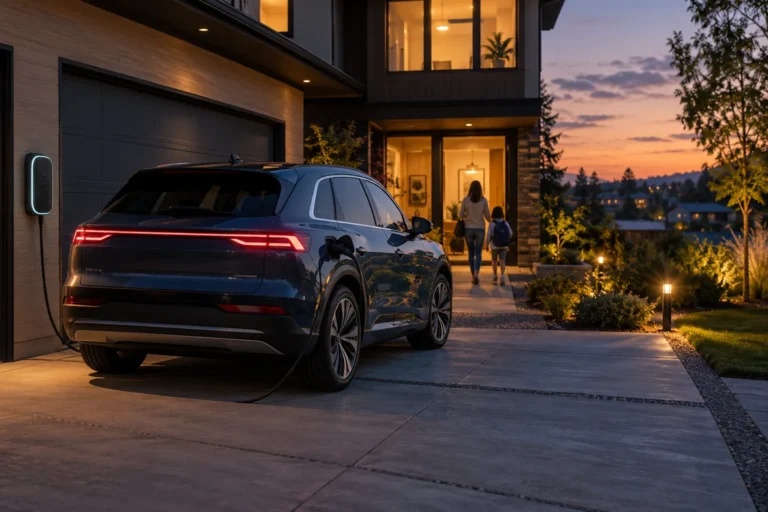
The best time to charge an EV at home is the lowest-priced period on your own utility plan that still leaves enough time to replenish the car before departure. Overnight is often convenient and may be off-peak, but there is no nationwide cheapest hour. A flat-rate plan may have no time-based savings at all. Check your tariff, estimate the kWh you need and set a schedule that fits both.

Find the rate you actually pay
Start with the name of your current utility plan and its published tariff or bill. A time-of-use (TOU) plan changes the energy price by period, and those periods may vary by weekday, weekend, season or holiday. A flat-rate plan may charge the same energy rate whenever you plug in, although tiered usage or other charges can still affect the bill. Some utilities have EV-specific rates or managed-charging credits with enrollment rules.
The U.S. EPA recommends scheduling home charging for lower off-peak rates where available. DOE’s Alternative Fuels Data Center lists utility incentives and EV time-of-use programs, but availability and terms are local. Do not copy another driver’s 9 p.m. or midnight setting without checking your own plan.
Calculate how many charging hours you need
Estimate energy to replace from recent driving, then divide by the approximate power your car can actually accept from the installed charger. If you need 24 kWh into the battery and the wall system effectively adds about 6 kW to it on average, allow roughly four hours plus a margin. Actual speed and losses vary, so use the car’s estimated completion time or measured charging history to refine the window.
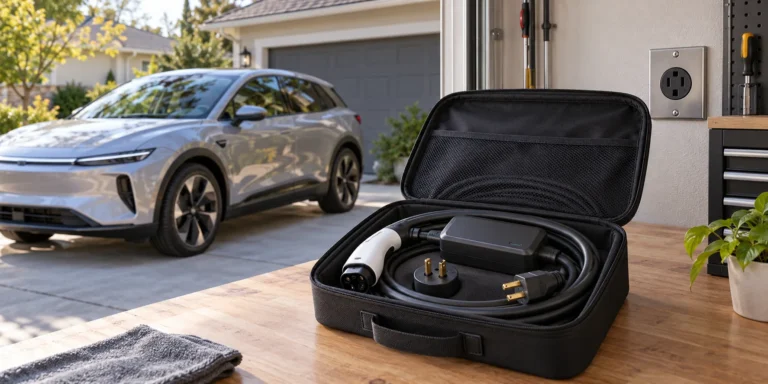
A charger advertised at 11.5 kW does not guarantee that rate. The vehicle’s onboard AC limit and the installed output setting can reduce it. Our charger amperage guide explains the circuit and output relationship. If the off-peak period is shorter than the time needed, start earlier or select a different approved setup rather than leaving tomorrow’s car short.
Compare the real savings
Suppose the car draws 30 kWh from the wall. On an illustrative plan that charges $0.14/kWh during the chosen off-peak hours versus $0.28/kWh in the peak period, shifting all 30 kWh saves 30 × $0.14 = $4.20 for that session’s energy charge. That is an arithmetic example, not a live utility tariff. Compare all applicable delivery charges, fixed fees, minimums and the effect on other household usage before switching plans.
An EV-specific TOU plan can lower the EV’s charging cost while raising the price of cooking, air-conditioning or laundry during peak periods. If enrolling changes your whole-house rate, estimate both the EV and household load. Our electric car charging cost guide shows the kWh-to-dollar calculation in detail.
Set a dependable charging schedule
Use the car or charger timer
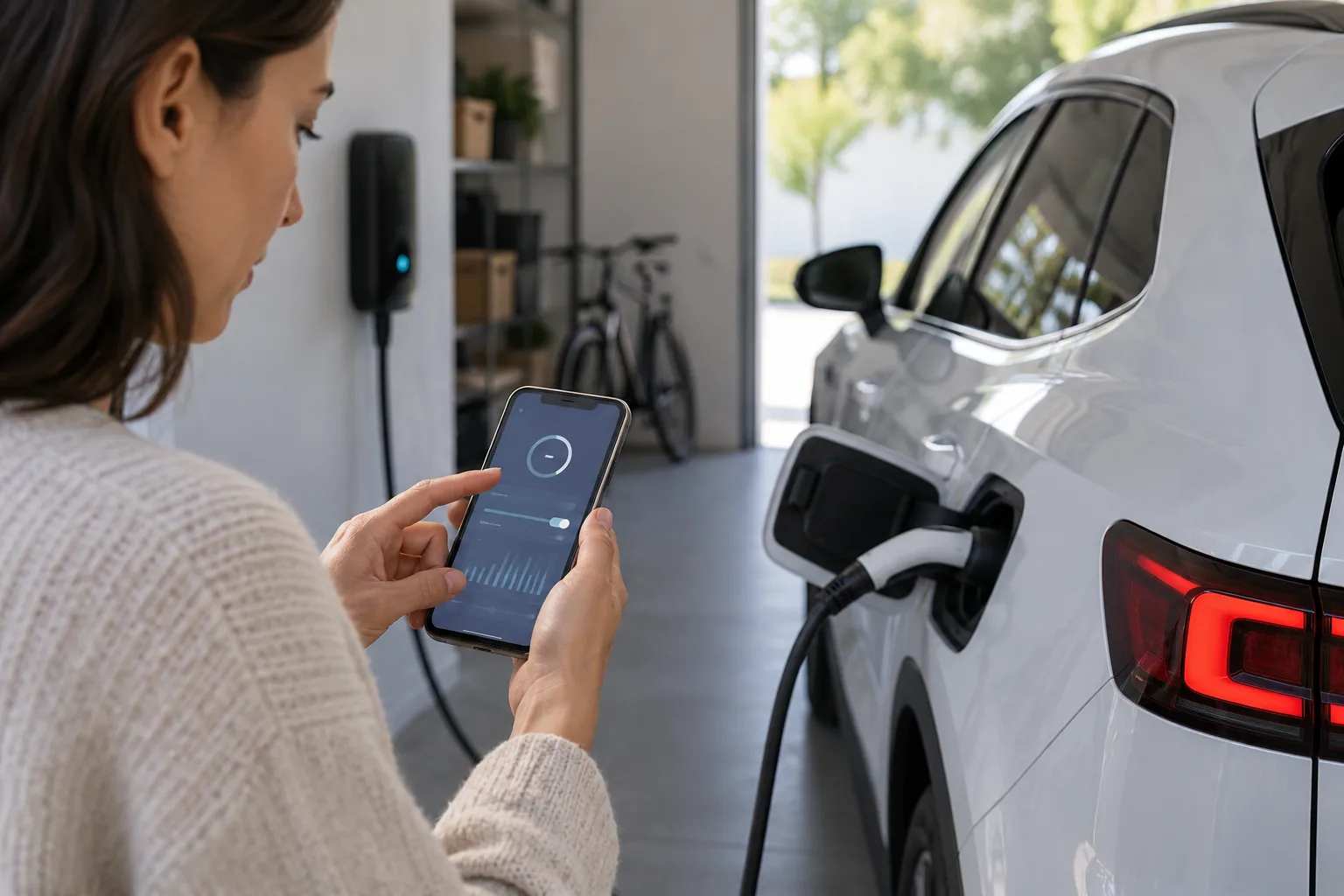
Many vehicles and some home EVSEs allow scheduled start or departure-time charging. Set the clock, time zone and days correctly; confirm daylight-saving changes if the software does not handle them as expected. Prefer one active scheduling system so the car and wall unit do not wait for each other. The manufacturer’s instructions control how the setting works.
Test it before relying on it
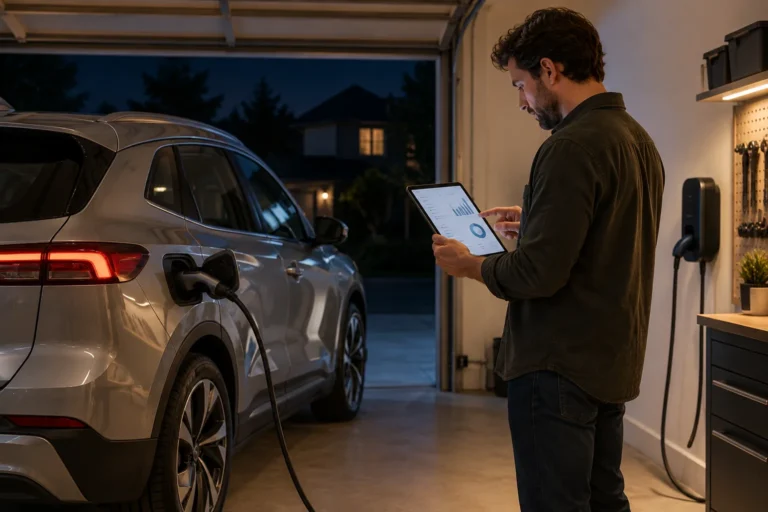
After plugging in, confirm that the vehicle recognizes the connector, shows the scheduled start and reaches the desired limit by a typical departure. Review one or two actual sessions in the car or charger app. An app setting can be overwritten by a temporary departure time, a manual ‘charge now’ command or a changed location profile.
Plan for exceptions
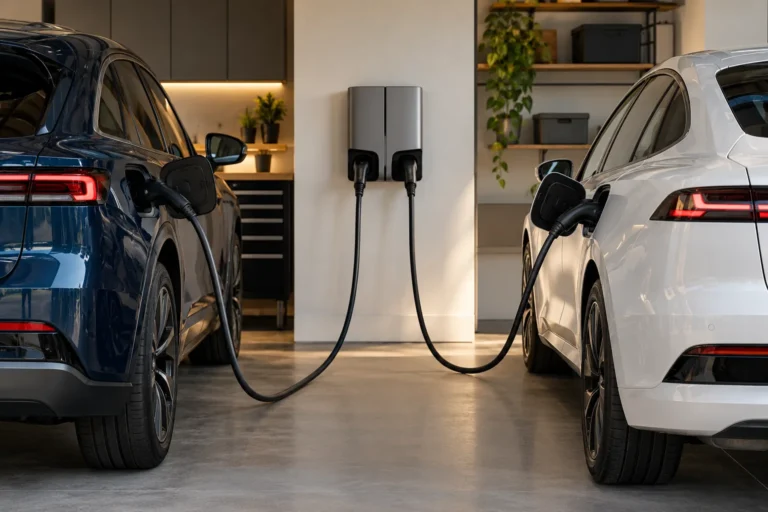
If you arrive with a low battery and need to leave early, override the schedule as the vehicle maker permits. The priority is adequate energy for the trip, not maximizing a small rate difference. Households with two EVs should check whether the system shares power; two timers that start together do not necessarily limit combined load. See our two-EV charging guide.
What if there is no time-of-use plan?
A flat rate removes the time-price reason to delay, but it can still be convenient to charge while parked and to set a sensible battery limit per the vehicle manual. A utility may offer a different eligible plan, rebate or managed-charging program. Evaluate the enrollment terms, metering and equipment requirements before buying a new charger solely for an advertised discount.
Solar households should compare the value of on-site solar use with export credits and the price of grid electricity at each hour. The best window may be daytime if the car is home, or overnight if the household’s rate structure favors it. There is no one answer without your tariff and usage data.
A quick decision checklist
- Read the utility’s current rate periods and confirm the plan is active on your account.
- Estimate wall kWh needed on an ordinary and a busy day.
- Check your car’s AC charging limit and the installed charger setting.
- Choose a start and end window that finishes before departure with a reasonable margin.
- Set one timer, test it and review a bill or charging record after the first month.
- Revisit the setting when the utility changes its tariff or your driving routine changes.
The best time to charge is a calculation, not a universal clock time. Your tariff sets the price window, while your car and the next trip set the minimum energy requirement.
Your charging window must be long enough to replace the energy used while driving. Review home charging routines. Use electricity use and home charger scheduling features to check the related decisions before choosing equipment or a charging routine.
Sources
- U.S. EPA: Home EV charging and off-peak scheduling
- U.S. DOE AFDC: Utility incentives and time-of-use programs
- U.S. DOE: Time-variable electricity pricing
Frequently asked questions
Is it always cheaper to charge an EV at night?
No. It may be cheaper on a TOU plan with lower overnight rates. A flat rate has no time-based energy price difference, and some plans have different seasonal or weekend periods.
Should I schedule the car and charger at the same time?
Usually use one scheduling control and test the result. Two independent timers can conflict depending on the equipment. Follow the vehicle and EVSE instructions.
Does charging more slowly save money?
The main savings on a TOU plan come from moving kWh into lower-priced hours. Slower charging can have different efficiency and timing effects, so measure the actual result rather than assume a fixed saving.