Best Used EV: How to Compare Value Before Buying
The best used EV is the one whose actual battery condition, charging access, remaining warranty and total purchase cost fit your driving. Start with a shortlist by use case: Chevrolet Bolt EV/EUV for a compact value candidate, Tesla Model 3 for travel and charging access, Hyundai IONIQ 5 or Kia EV6 for a roomier fast-charging candidate, and Nissan LEAF for a local-driving case where its connector and battery condition work for you. These are research starting points, not a claim that every model year, trim or listing is equally good.
Used electric cars can differ more than their listing photos suggest. A model’s battery size, EPA rating, DC fast-charge equipment, connector and warranty can change by year and trim. This U.S. guide shows how to compare the actual VIN and vehicle rather than ranking cars by an unstable nationwide asking price. Research checked October 2026; we did not road-test the individual vehicles below.
Best used EV candidates by driving need
Use the table to narrow the search. Then verify the exact listing’s specifications, recalls, battery report and local service access.
| Candidate | Why shortlist it | Check before buying |
|---|---|---|
| Chevrolet Bolt EV / EUV | Compact daily driver to compare for value | VIN-specific battery recall remedy, DC charging equipment and warranty status |
| Tesla Model 3 | Sedan for buyers who value route charging access | Trim and model-year range, vehicle condition, battery warranty and account/charging access |
| Hyundai IONIQ 5 / Kia EV6 | Roomier hatch/crossover candidates for mixed driving | Exact year and trim, charging hardware, service campaigns and battery coverage |
| Nissan LEAF | Local commuting if the actual car’s range is adequate | Battery-health evidence and CHAdeMO fast-charging availability on your routes |
This is a use-case shortlist, not a current-price leaderboard. Listings, equipment and service histories vary. For the Bolt, Chevrolet directs owners to VIN-based recall and warranty checks. The 2019 LEAF manual describes the CHAdeMO quick-charge port on equipped cars; verify the individual year and nearby network before committing.
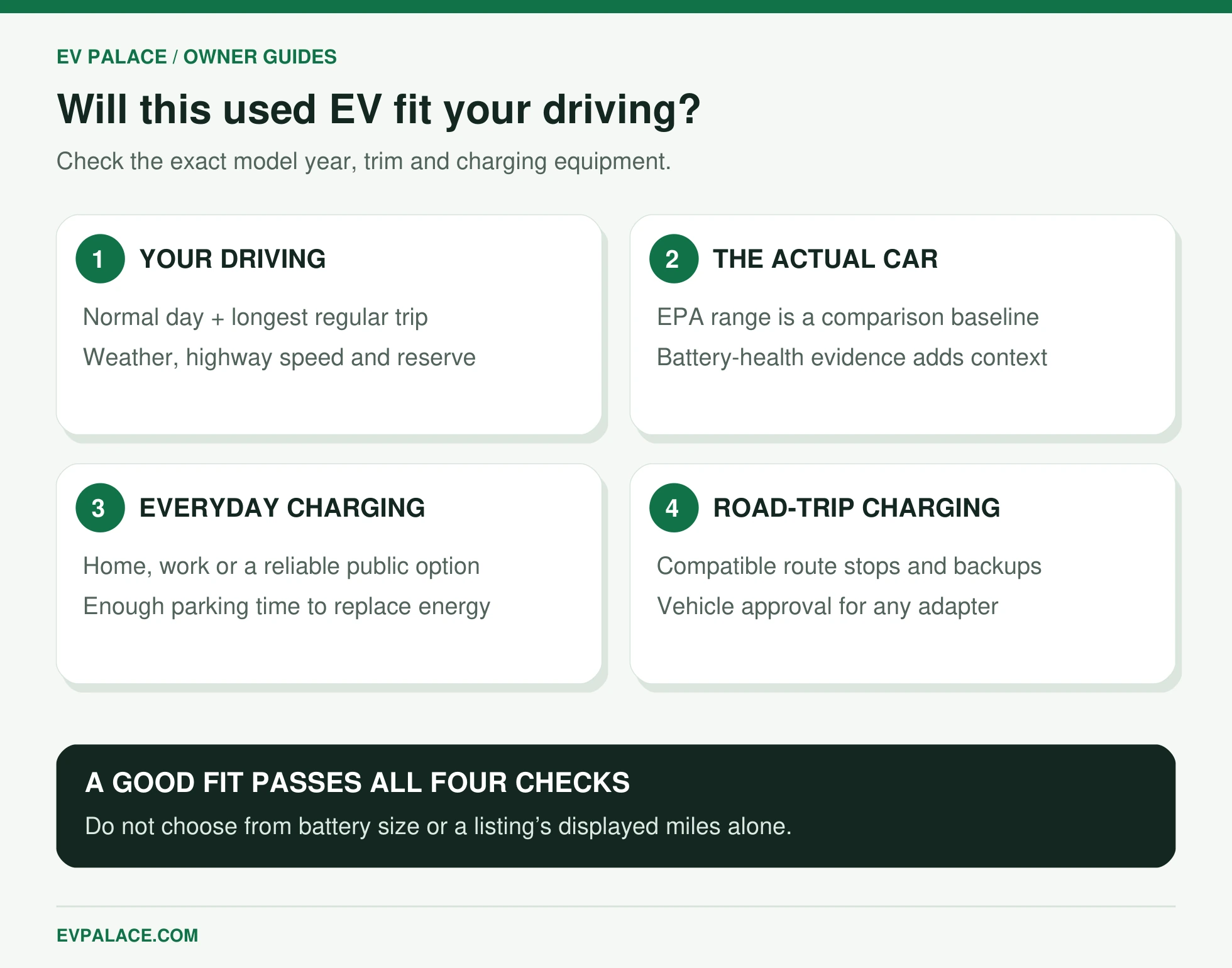
Set your daily range and charging plan first
Write down a normal day’s mileage, your longest recurring round trip and where the car can sit parked. Compare the exact trim’s EPA range using fueleconomy.gov; treat that as a standardized comparison, not the range the used car must achieve in winter or at highway speed. Our range factors guide explains weather, speed, terrain and tires.
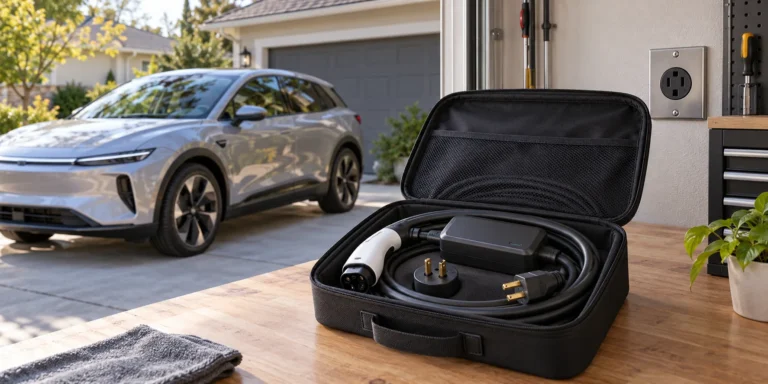
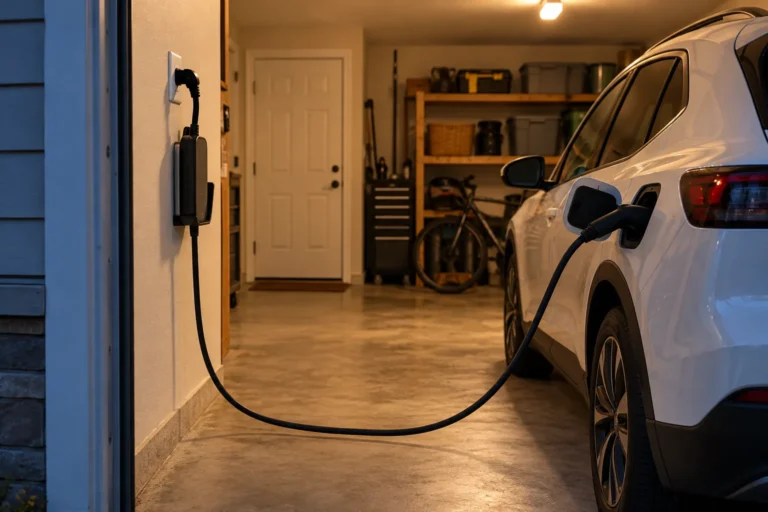
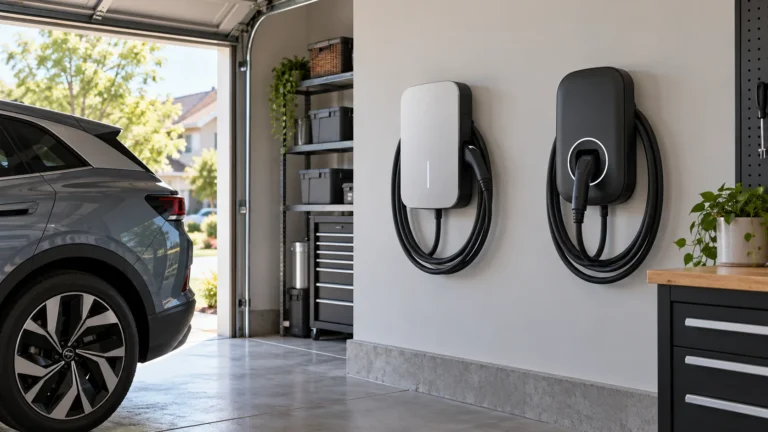
Determine whether you can charge at home, at work or only in public. A low purchase price can be a poor fit if the car cannot cover your route with the charging you actually have. Read how to charge at home before paying for a Level 2 installation. If road trips matter, map compatible DC stops along routes you take, check the exact car’s connector and adapter policy, and leave time for charging and backup stations.
Ask for evidence of battery condition
A dashboard guess of remaining miles is influenced by recent use. Ask for a battery-health report from the manufacturer or a qualified EV technician where available. Find out what the measure means, when it was captured and whether it is comparable between cars. Also request service records, charging-system repairs and battery replacement history.
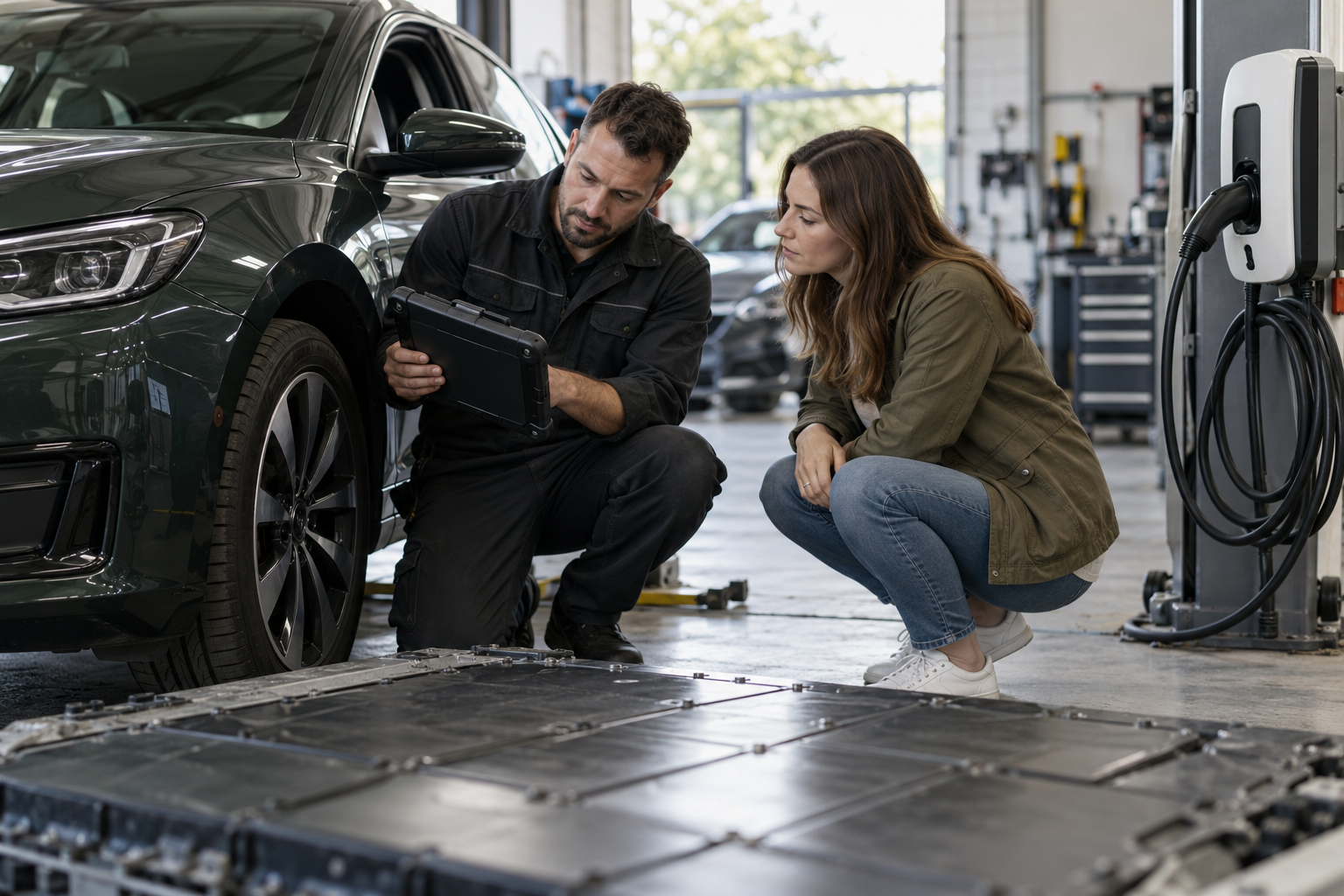
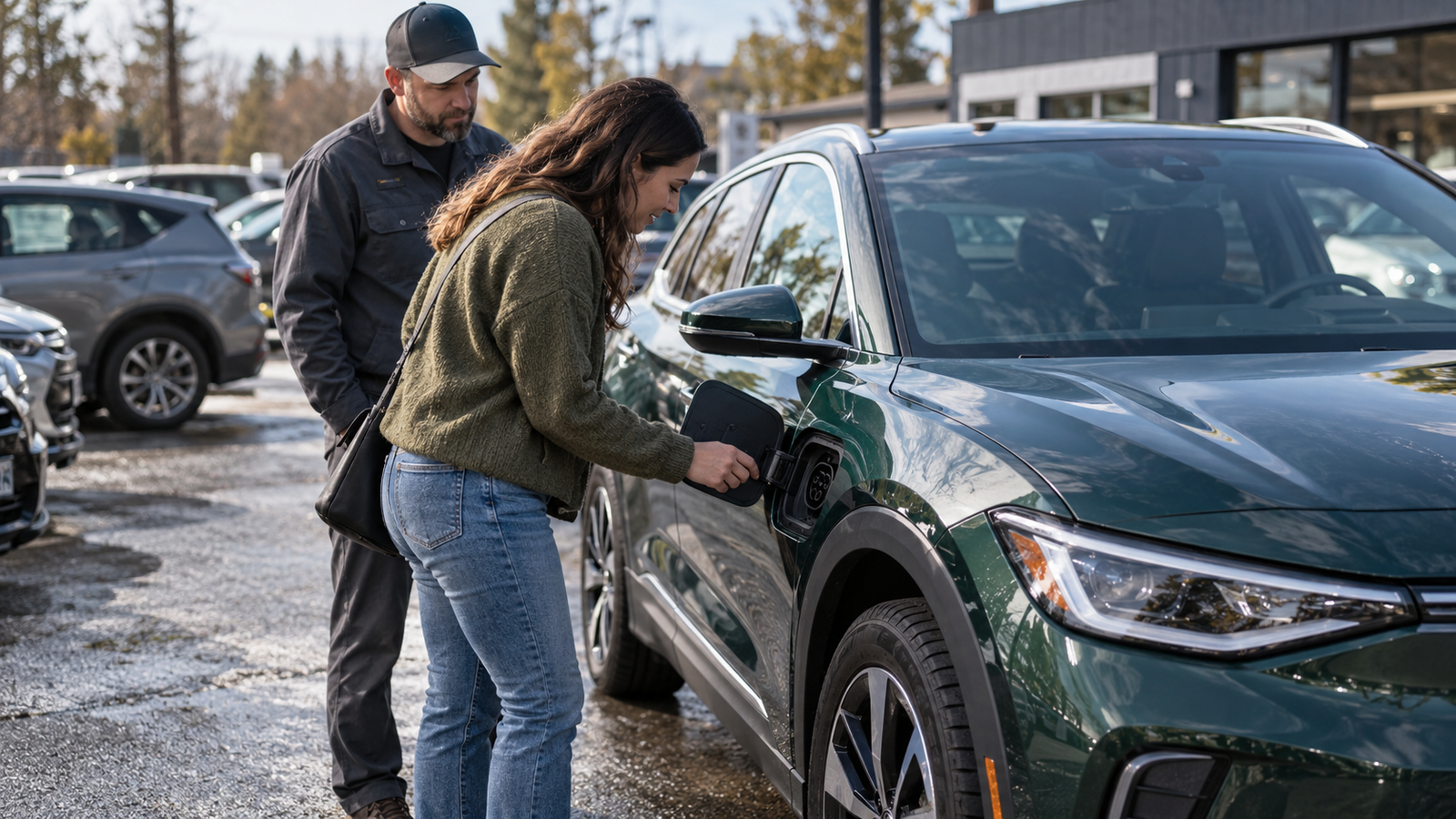
Ask the seller to show a normal charge session if practical. Test the charge-port door, cable latch and AC charging function; check DC fast charging if the seller and nearby compatible station make it feasible. Verify any adapters are approved for that vehicle and not merely included loose in the trunk. A certified mechanic should perform any high-voltage evaluation.
Check recalls, warranty and seller paperwork
Run the VIN through the NHTSA recall lookup and the manufacturer’s service system. Verify completed work with records rather than assuming a generic recall announcement means this specific vehicle received a new battery. Ask the manufacturer when the original battery warranty began, how many miles remain, what capacity threshold applies and whether coverage transfers. Battery and general vehicle warranties are separate.
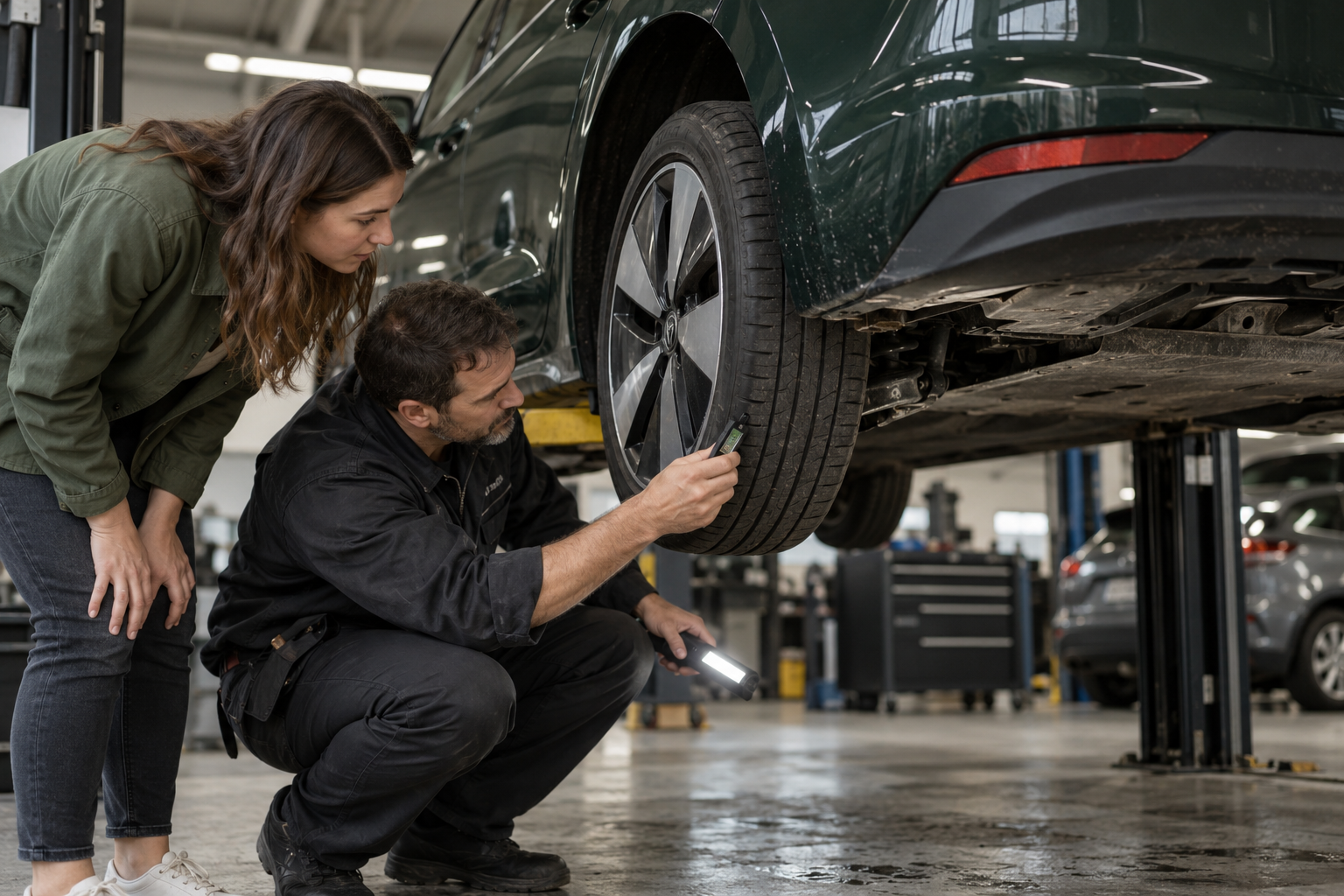
The FTC advises buyers to get a vehicle history report, arrange an independent inspection and read the dealer’s Buyers Guide for “as is” and warranty terms. History reports may miss unreported damage, so inspect the body, underbody, tires, brakes, suspension and charging hardware. Compare the written out-the-door price, not just the monthly payment.
Compare the total cost, not the lowest listing price
For each candidate, add the purchase price, taxes and dealer fees, insurance quote, likely tire or repair costs, and any home-charging work. Estimate energy cost using your own electric rate and the exact vehicle’s efficiency; our electricity-use guide walks through the math. A cheaper older car with poor battery evidence or costly near-term work can cost more to own than a better documented example.
Do not subtract an assumed federal used-EV tax credit from a 2026 purchase. The IRS says the previously owned clean vehicle credit is unavailable for vehicles acquired after September 30, 2025. State, local or utility programs may differ and can change; verify any specific current offer with its administrator before signing.
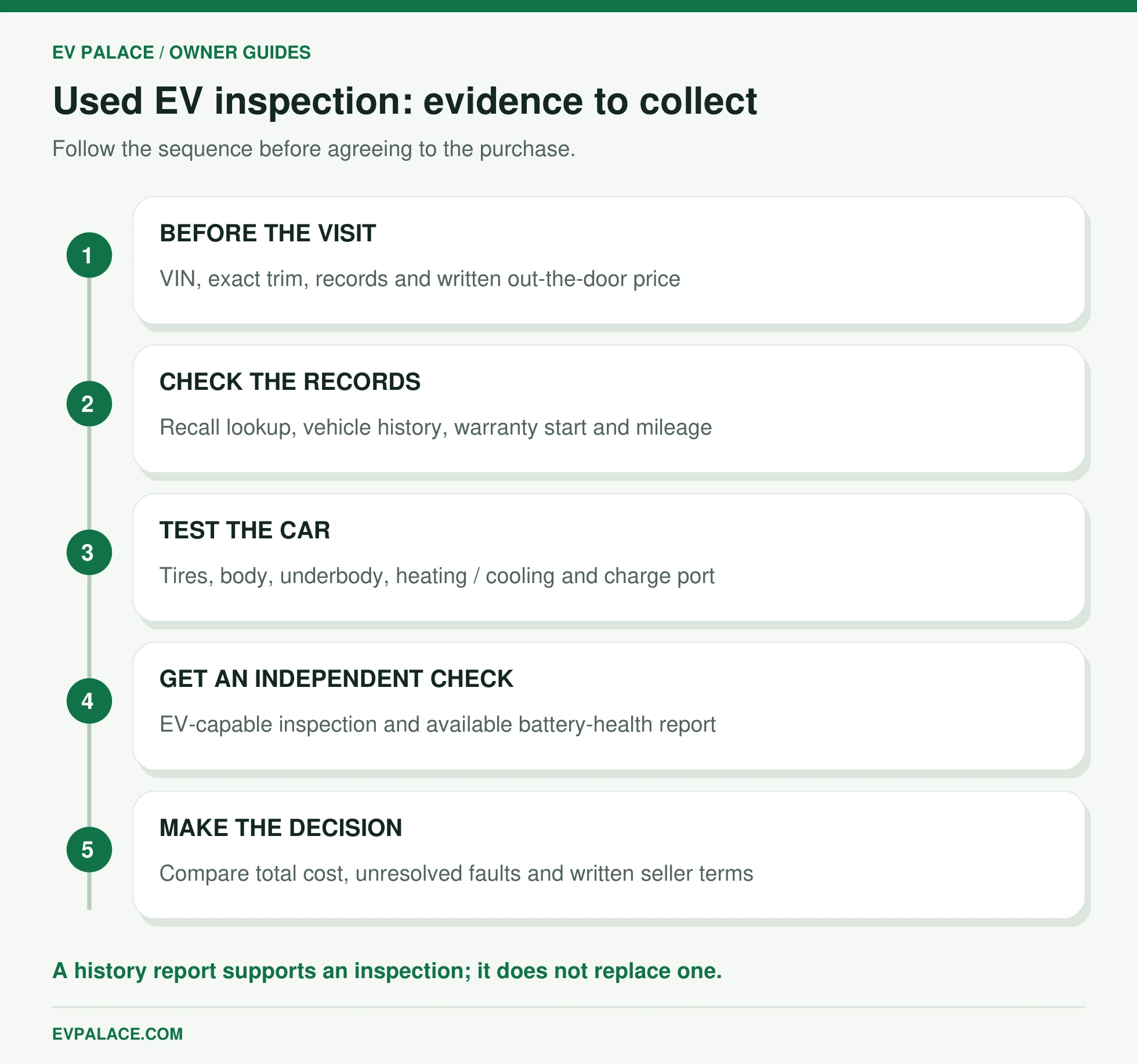
A practical used EV inspection sequence
- Before visiting: Ask for VIN, trim, model year, mileage, battery warranty details, charging equipment, service records and an out-the-door written price.
- Desk check: Compare EPA range and connector against your routes; run VIN recall and title/history checks; get an insurance quote.
- At the car: Inspect tires, body, underbody and charge port; test accessories, heating/cooling and a normal charge session if feasible.
- Independent check: Arrange a qualified pre-purchase inspection including an available battery-health assessment and review of alerts and service campaigns.
- Decision: Compare total cost and written seller terms. Walk away if material issues cannot be explained or verified.
A confident choice is specific to your driving and the individual car’s evidence. Start with the shortlist, then let condition and records decide. See EV batteries explained for capacity basics and our electric vs hybrid guide if your charging options are uncertain.
Sources and review method
- FTC: Buying a Used Car From a Dealer.
- IRS: Used Clean Vehicle Credit status.
- NHTSA: Recall lookup.
- EPA/DOE: FuelEconomy.gov model comparisons.
- Chevrolet: EV ownership, battery warranty and Bolt recalls.
- Tesla: Vehicle warranty terms.
- Nissan: LEAF manual connector details.
This is a researched buyer framework, not a claim of hands-on testing, current nationwide prices or universal model-year specifications. Check the individual VIN and local inventory.
Frequently asked questions
What is the best used EV for most buyers?
There is no one model for everyone. Compare a car’s real battery condition, range for your routes, charging access, service history, remaining warranty and complete price.
How do I check a used EV battery?
Ask for a manufacturer or qualified diagnostic battery-health report, review service history and warranty, and arrange an EV-capable pre-purchase inspection. A displayed miles estimate alone is not a health test.
Is a used Nissan LEAF good for road trips?
It depends on the year, available range and route. Older LEAFs with CHAdeMO quick charging require compatible stations, so check your actual route and the specific car before buying.
Is the federal used EV tax credit available in 2026?
The IRS says the previously owned clean vehicle credit is not available for vehicles acquired after September 30, 2025. Verify current state and local programs separately.