EV Range Factors: What Affects How Far You Can Drive?
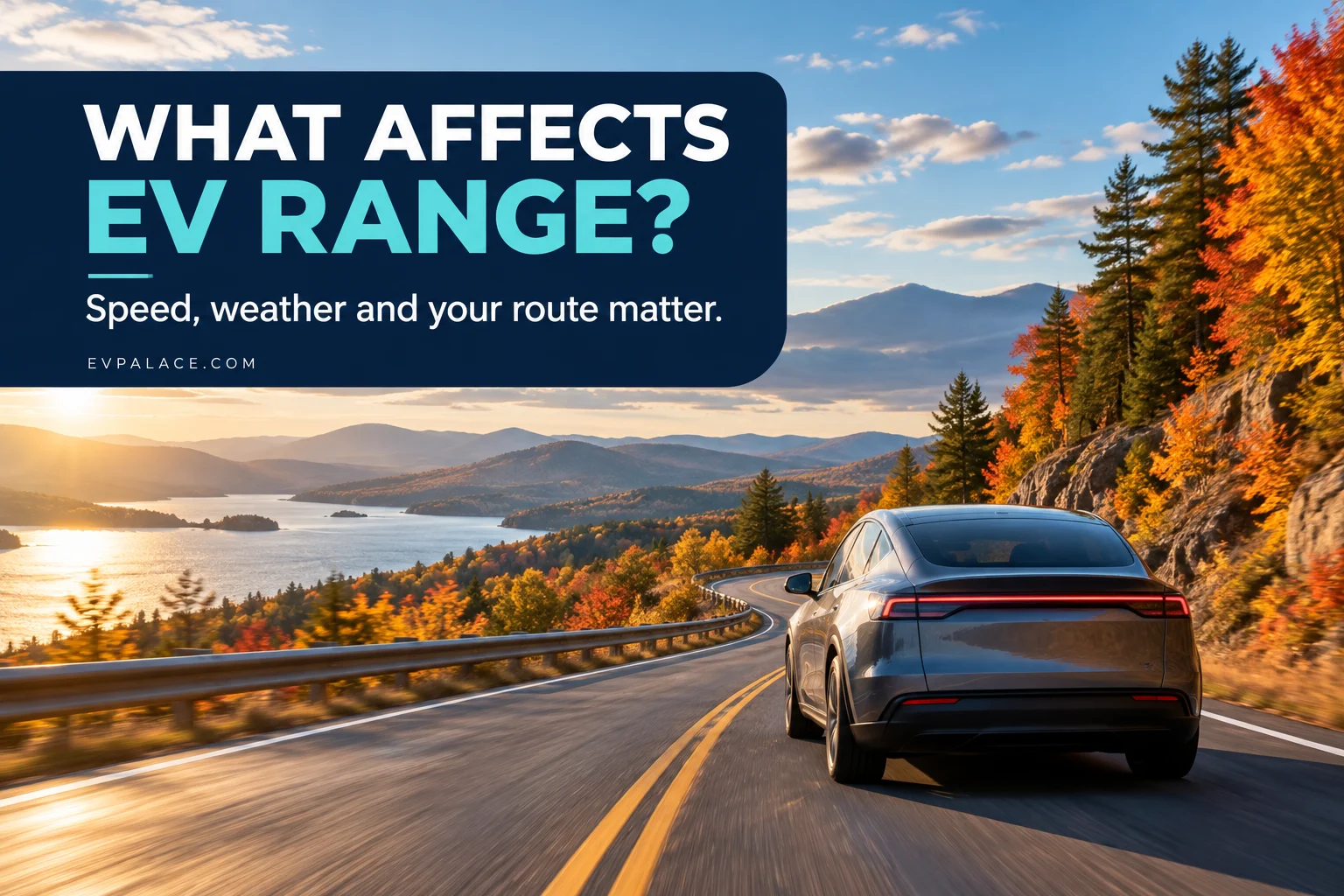
EV range depends on usable battery energy and how quickly the car consumes it. Important factors include speed, weather, terrain, heating or cooling, tires, load and battery condition. Rated range helps compare vehicles, while a real trip estimate should account for your route, starting charge and a sensible arrival reserve.
A car advertised with 300 miles of range does not promise 300 miles on every journey. The rating, the dashboard estimate and the distance to your next charger answer different questions. Understanding those differences makes electric car mileage easier to judge without chasing a perfect number.
What does range mean in a car?
Range is the estimated distance a vehicle can travel before it needs more energy. For a battery electric car, the remaining usable battery energy supplies that journey. Published range ratings come from a defined testing process; dashboard estimates depend on the vehicle’s prediction method and may change as conditions change.
A navigation-based arrival prediction can be more useful for a particular trip than a single remaining-range number. It may consider the planned route and expected energy use. It still needs monitoring because weather, traffic and driving can differ from the assumptions.
The basic range calculation
A simple estimate is usable energy divided by driving consumption. If you have an assumed 60 kWh available and use 0.30 kWh per mile, the arithmetic gives 200 miles. At 0.40 kWh per mile, the same energy gives 150 miles. These examples illustrate the relationship; they are not ratings or guarantees for a specific car.
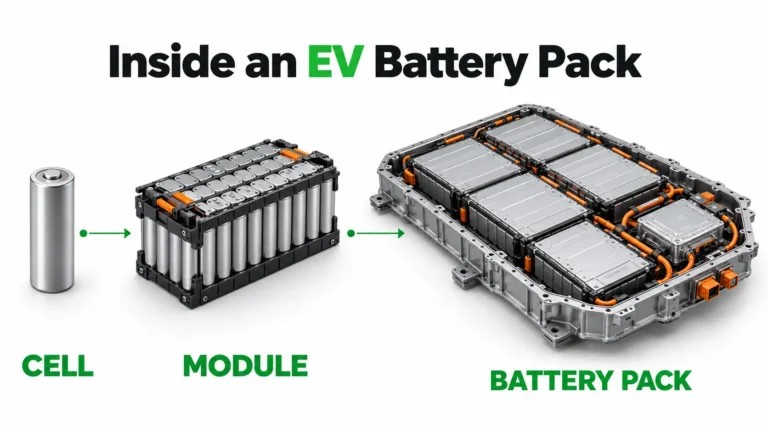
Use energy available for the segment, not the battery’s total advertised size. A trip starting below a full charge and ending with reserve cannot use the entire pack. Nominal capacity and usable capacity can also differ. Our battery guide explains those terms.
| Factor | Planning implication |
|---|---|
| Higher sustained speed | Expect consumption to rise |
| Cold or extreme heat | Allow for temperature management and cabin comfort |
| Uphill route or headwind | Watch the route prediction and arrival charge |
| Tires, racks and load | Use appropriate equipment and remove unnecessary drag |
| Available battery energy | Account for start charge, reserve and condition |
Speed and driving style
Air resistance becomes a major consideration at highway speeds. Driving faster can reduce the distance available from the same charge. A quiet, effortless EV ride can hide that energy cost, so watch actual consumption rather than judging efficiency by how relaxed the cabin feels.
Accelerate progressively and anticipate stops when road conditions permit. Regenerative braking can recover some energy that would otherwise be lost during deceleration, but it does not recover everything. A steady, safe drive avoids repeatedly spending energy and trying to regain it.
Weather and cabin energy use
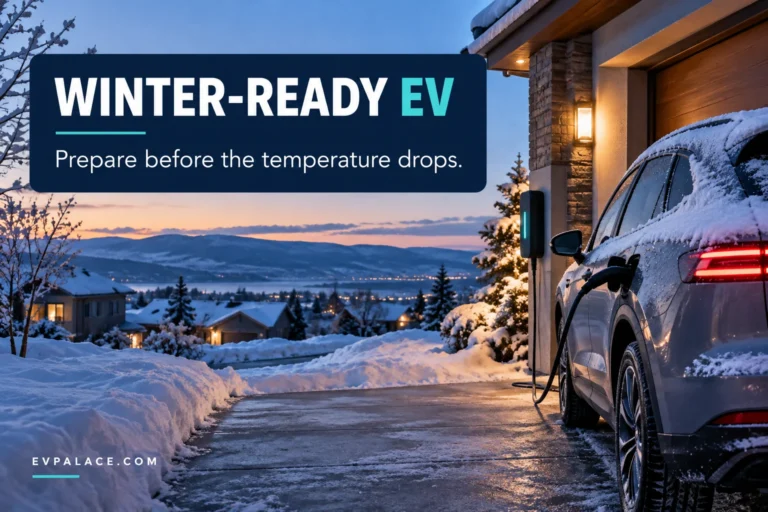
Heating and cooling draw energy as well as keeping passengers comfortable. Cold can also affect battery behavior and charging. DOE/EPA guidance recommends preparing the cabin while plugged in when supported, and using model-specific advice because energy management differs between vehicles.
Do not turn off necessary defrost or compromise visibility for range. Use comfort features sensibly, keep the windshield clear and plan enough energy for the conditions. A heat pump or other efficiency feature may help in some situations, but it does not make weather irrelevant.
Wind matters too. A long highway segment into a strong headwind can be less efficient than the same road in calm conditions. Seasonal comparisons are most useful when you also know whether speed, route and cabin settings changed. For preparation rather than range theory, see our winter EV checklist.
Hills, tires, load and accessories
Climbing uses energy, and a descent may return some through regeneration. Do not expect the return journey to cancel every uphill cost. The route profile and the car’s regeneration limits influence the result. Plan the difficult outbound segment independently if charging options are sparse.
Keep cold tire pressures at the vehicle’s recommended setting. Tire type, wheel choice and replacement specification can change efficiency, so compare range figures for the actual trim and wheel package. Do not overinflate beyond the recommendation to pursue a longer range estimate.
A roof box, roof rack or trailer can change the planning calculation substantially. Payload and aerodynamics both matter. For a towing journey, use the car’s supported trailer settings and real observed consumption rather than a range rating for an unladen vehicle.
State of charge and battery condition
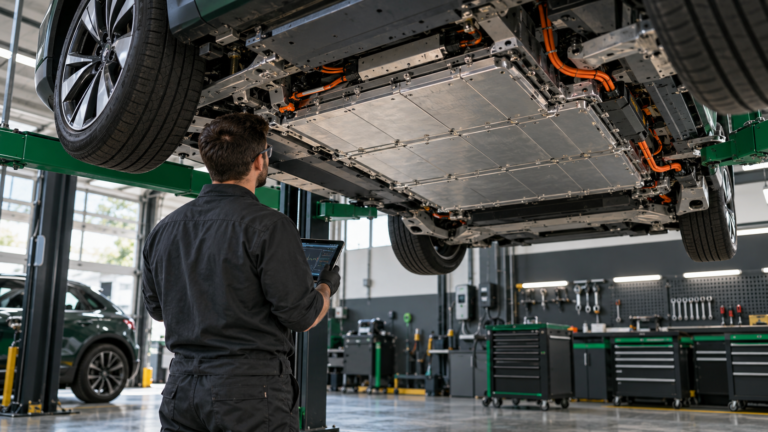
A partial start means less energy available for the next segment. Normal aging can also affect usable capacity, but a lower dashboard estimate alone is not a reliable battery-health diagnosis. Weather and recent driving may change the estimate without an equivalent change in battery health.
If you notice a persistent unexplained reduction, compare trips under similar conditions and record energy use, charge levels and warnings. Ask qualified service personnel about the manufacturer’s diagnostic process. Do not infer an expensive battery replacement from one disappointing winter journey.
A practical trip-planning example
Suppose a hypothetical car has 70 kWh usable capacity, leaves at 80% and targets 15% at arrival. The segment budget is approximately 45.5 kWh: 70 multiplied by the 65-percentage-point difference. At an assumed 0.35 kWh per mile, that is about 130 miles before further adjustment. The calculation shows why full-pack range is not the same as a comfortable charging segment.
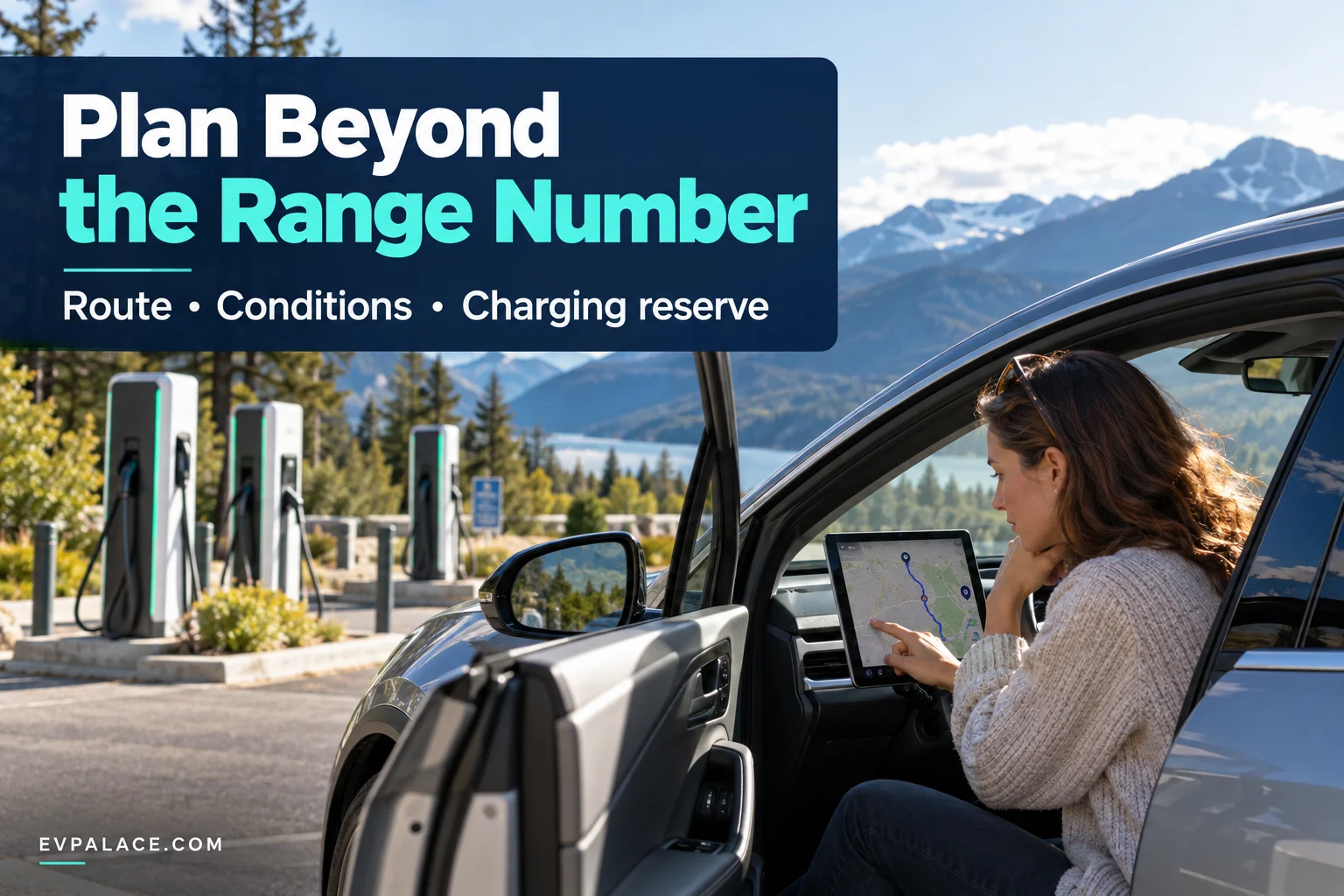
Keep an additional margin if conditions are uncertain, and prefer a route with alternatives. Check the predicted arrival charge at departure and again during the journey. If the prediction falls, reduce speed safely, adjust stops or choose a nearer compatible charger before the reserve becomes tight.
How to learn your own car’s range
- Record consumption on a normal commute and a representative highway trip.
- Note temperature, speed, cabin settings and any roof equipment.
- Use several comparable trips rather than one unusually good or bad result.
- Separate driving energy from electricity purchased at the charger.
- Use the car’s route planner and verify a backup charging location.
Energy billed at a charger can include losses and other needs, so it is not always identical to the driving figure on the dashboard. See our EV electricity-use guide to compare units correctly.
The useful question is whether the car can cover your normal journeys with comfortable charging options. A realistic segment plan is more valuable than squeezing the maximum possible distance from a single charge.
Range depends on both the energy available and the energy consumed per mile. Review battery capacity and health. Use electricity use and public charging to check the related decisions before choosing equipment or a charging routine.
Sources
- U.S. EPA: electric-vehicle range and operating factors
- DOE/EPA EV driving tips
- DOE AFDC: all-electric vehicles
Frequently asked questions
How far do electric cars go?
It depends on the model, battery, charge level and conditions. Compare the exact vehicle rating and plan the actual route.
Why does my EV’s range change overnight?
Temperature, parked energy use and the car’s estimation method can change the display. One change does not diagnose battery damage.
Does highway driving reduce EV range?
Higher sustained speed often increases consumption. Use highway-specific experience when planning a highway trip.
Does regenerative braking recharge the whole battery?
No. It recovers some deceleration energy and cannot replace external charging for a battery electric car.