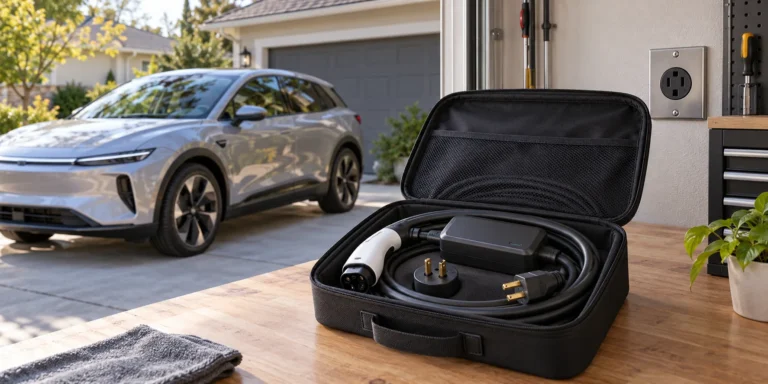
EV Charger Outlet: Planning a Suitable Home Connection
An EV charger outlet is the wall receptacle supplying a plug-in charging unit; it is different from the connector that plugs into the car. In the U.S., Level 1 commonly uses a suitable 120 V outlet, while plug-in Level 2 equipment needs a compatible 240 V receptacle and circuit. A qualified electrician should assess capacity, location, equipment instructions and local code before you use or install one.
Searching for a “car charger outlet” can lead to three different products: a household wall receptacle, a portable EV charging unit (EVSE), and the vehicle-side connector. Getting the terms straight prevents buying a plug that fits the wall but not a safe charging setup. This guide explains the planning choices, without turning into instructions for wiring a circuit.
Wall outlet, EVSE and vehicle connector: which is which?
| Part | Where it is | What it does |
|---|---|---|
| Wall receptacle | House or garage wall | Supplies electricity to compatible plug-in EVSE |
| EVSE or charging unit | Between the wall supply and the car | Controls and protects the charging session |
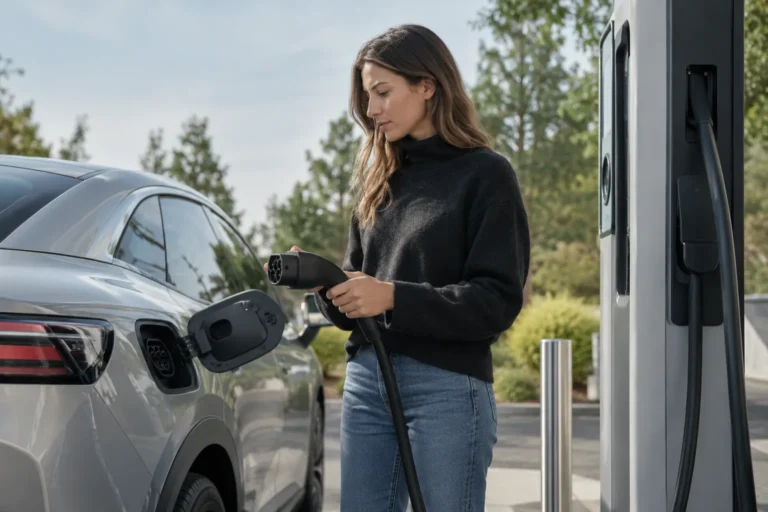
| Vehicle connector | End of EVSE cable at car | Fits the vehicle’s charge port |
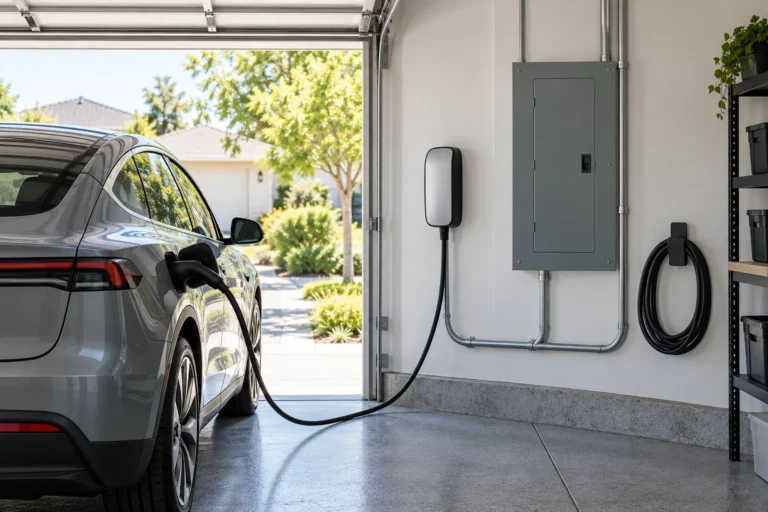
A hardwired wall charger has no wall plug or receptacle at its supply connection. The electrician connects it as specified by the equipment and applicable code. A plug-in EVSE uses a matching wall receptacle. The vehicle-side connector remains a separate compatibility question. Our charging levels guide explains speed; a forthcoming connector guide will cover J1772, J3400/NACS and adapters in detail.
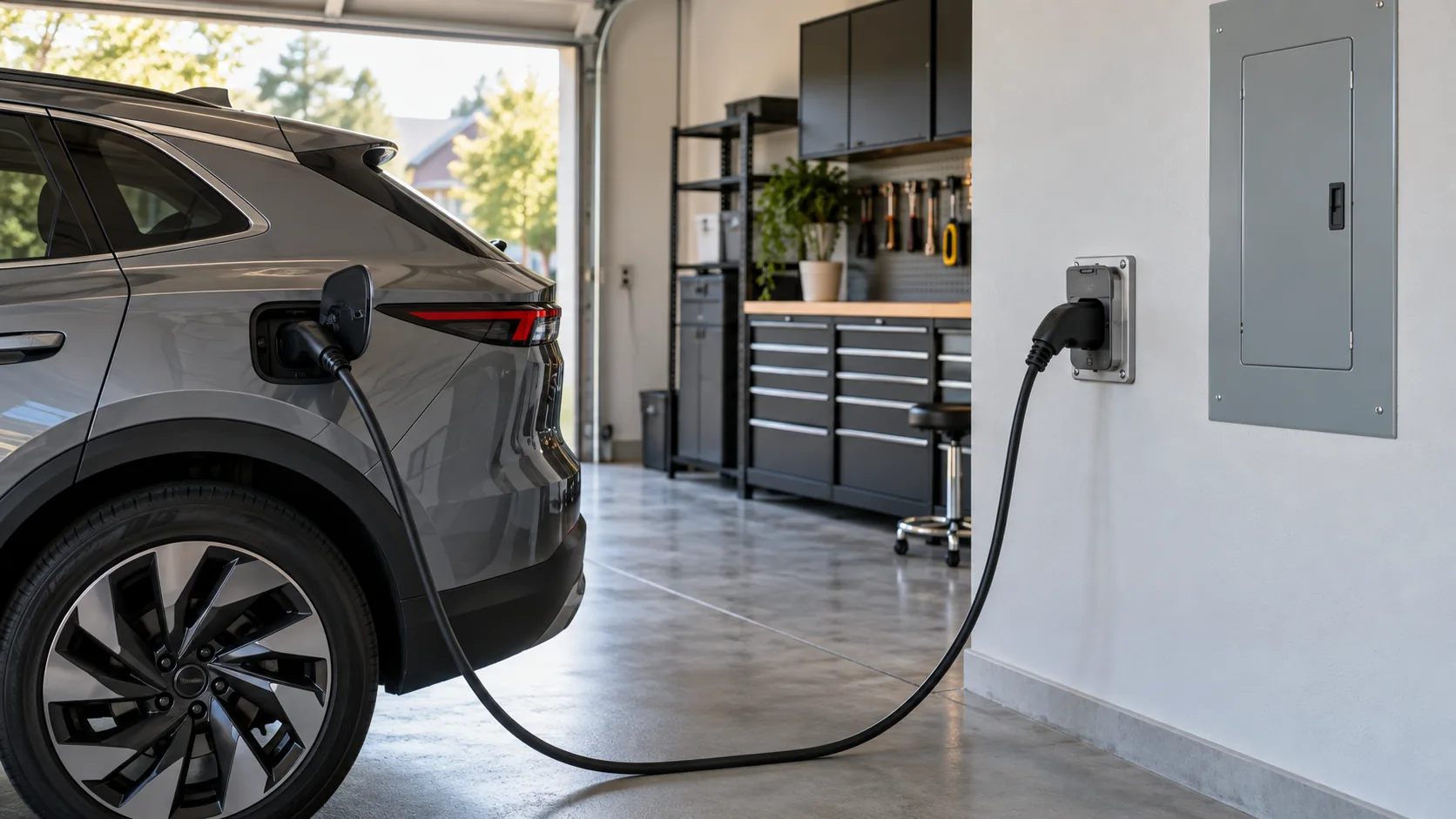
Level 1: when a 120-volt outlet may be enough
In the United States, Level 1 charging uses compatible EVSE on a suitable 120 V supply. The U.S. Department of Energy’s AFDC says many drivers can meet daily needs overnight if an appropriate outlet on a dedicated branch circuit is near the parking space. That is a useful low-cost starting point for modest mileage or some plug-in hybrids.
Do not treat every convenient garage receptacle as ready for hours of repeated charging. Its condition, circuit sharing, protection and equipment instructions matter. If there is uncertainty, ask a qualified electrician to inspect it. Avoid extension cords, damaged or loose receptacles, and improvised adapters. Match the EVSE’s plug and settings to the approved supply, not merely to the wall opening.
Level 1 may not replenish a longer commute overnight. Estimate your actual driving and parking time before deciding to add a 240 V connection. Our home charging guide helps with that calculation.
Level 2: planning a 240-volt connection
Residential Level 2 equipment generally uses a 240 V supply. For a plug-in unit, the receptacle must match its manufacturer-approved plug and a properly designed circuit. Some EVSE models are hardwired instead. The EPA’s charging basics recommends a qualified electrician when a suitable 240 V connection is not already in place and to determine whether the home has enough capacity.
You may see NEMA 14-50 in product listings. It names a particular wall receptacle and matching plug pattern, not the connector at the vehicle and not a promise of charging speed. The AFDC glossary describes NEMA 14-50 as a 240 V, 50 A-rated outlet. Other receptacle types or hardwired installations exist; the correct choice depends on the EVSE’s instructions, site assessment and local code. The receptacle’s rating must not be confused with the vehicle’s charging current.
If you already have a 240 V outlet intended for another appliance, its appearance alone does not establish compatibility. Check the exact receptacle type, its condition, how the circuit is used and whether the EVSE manufacturer allows that arrangement. A shared appliance circuit or adapter is not a shortcut to a dedicated, professionally assessed charging plan.
Plug-in or hardwired: what changes?
| Choice | Planning advantage | What to ask |
|---|---|---|
| Plug-in EVSE | Equipment can potentially be moved or replaced more easily | Is the specific receptacle and circuit approved for this EVSE and local requirements? |
| Hardwired EVSE | Permanent installation without a supply-side plug/receptacle | Does this suit the location, output, equipment and future replacement plans? |
The EPA notes that an outlet offers flexibility to swap equipment, while hardwiring can offer a safety advantage. Neither choice eliminates the need for a load assessment, code-compliant installation and a suitable location. Ask the electrician to explain the choice for your home rather than selecting it from a product photo.
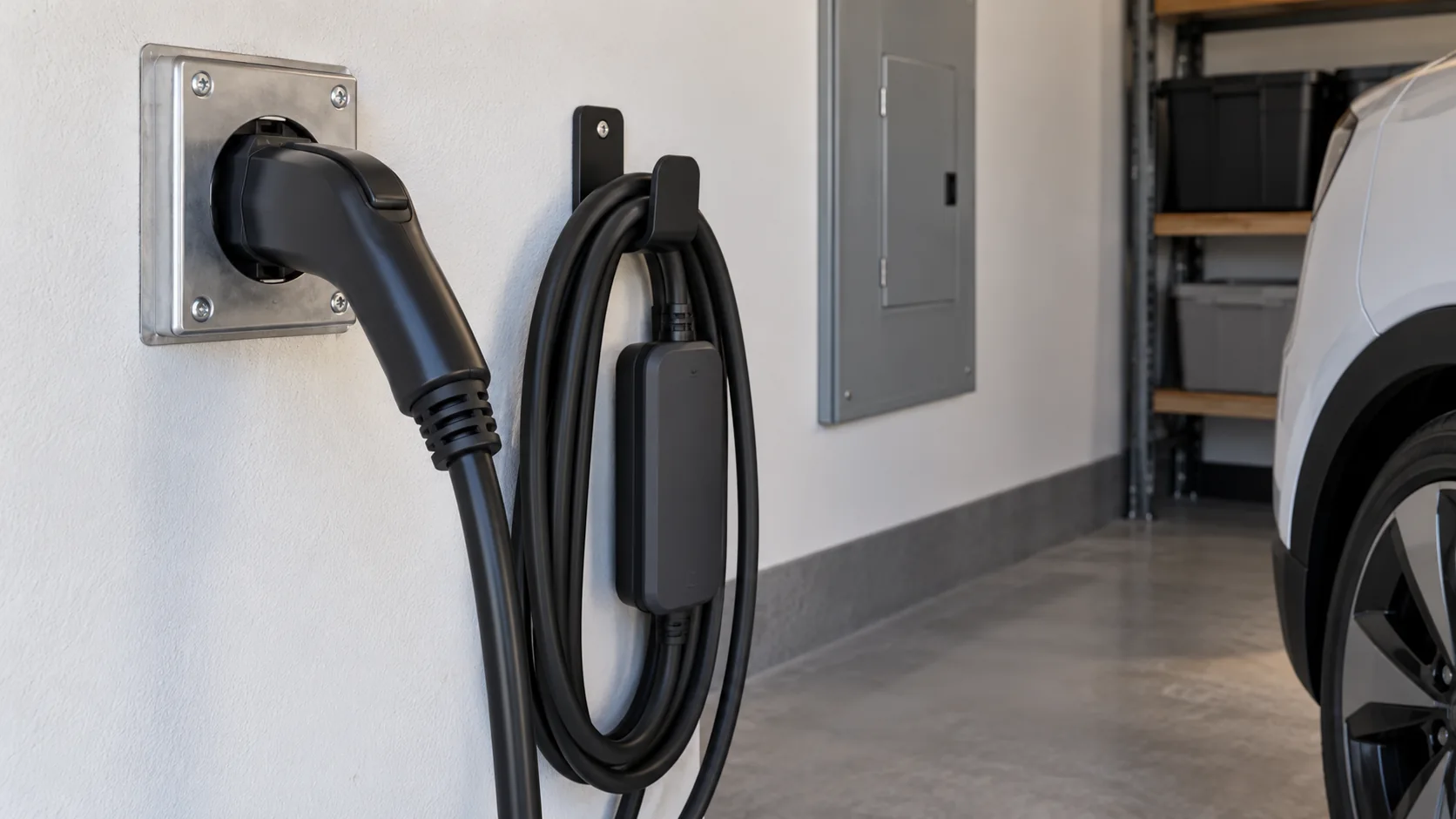
Location, cable reach and outdoor use
The receptacle or charging unit should serve the car’s normal parking position. Check the car’s charge-port side, cable length, garage door movement and where people walk. Plan storage so the cable is not left across a passage or drive path. A detached garage, finished wall or long route from the electrical panel may alter the work and quote.
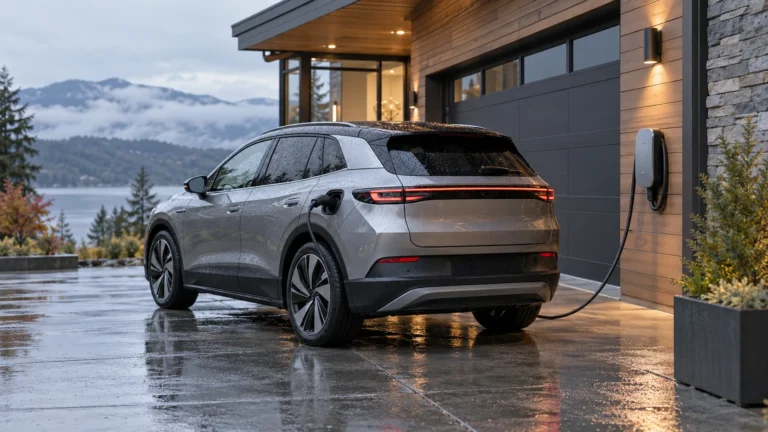
Outdoor charging is possible with equipment rated for it. The DOE says outdoor installations require outdoor-rated equipment. The electrician should select a location and enclosure suitable for exposure and comply with local rules and the EVSE manual. A regular indoor outlet is not made suitable by adding an arbitrary cover or cord.
Electrical capacity and permits come before the purchase
A panel can have an empty breaker position and still lack capacity for the desired charging load. A qualified electrician assesses the home’s existing loads and proposed charger output; the EPA also points to approved load management as an option in some homes. The contractor then specifies the connection, protection and any changes needed. Our installation readiness checklist covers the broader assessment.
Local codes and permits may apply. Ask who obtains the permit and inspection, and whether the selected EVSE, supply plug and location comply with the rules at your address. If you rent or share parking, obtain property permission first. The installation cost guide shows why panel-to-parking distance, permits and panel work affect the quote.
Questions to ask your electrician
- Is my existing 120 V outlet suitable for the equipment and expected charging routine?
- What does the home load assessment allow for the proposed Level 2 unit?
- Is hardwiring or a plug-in receptacle the better approved option here?
- What exact receptacle and plug does this EVSE require, if it is plug-in?
- Where should the connection sit so the cable reaches without crossing a walkway?
- Which permits, inspections and utility or property approvals apply?
- Does the quote include the equipment, receptacle or hardwire connection, circuit route and restoration?
Bring the vehicle model, EVSE manual and photos of the parking spot to the discussion. Let the contractor verify the electrical details on site; do not rely on a generic chart to size a home circuit.
An outlet choice follows from the charging approach and equipment you plan to use. Review home charging planning. Use Level 1 and Level 2 compared and portable charger kits to check the related decisions before choosing equipment or a charging routine.
Sources
- U.S. DOE AFDC: Charging Electric Vehicles at Home
- U.S. DOE AFDC: Glossary (NEMA 14-50)
- U.S. EPA: Plug-In Electric Vehicle Charging Basics
- U.S. EPA: Getting Started with Home EV Charging
Frequently asked questions
What outlet does an EV charger need?
It depends on the EVSE. Level 1 commonly uses a suitable 120 V supply; plug-in Level 2 models require the specific compatible 240 V receptacle identified by the manufacturer and an appropriate circuit. Hardwired units do not use a supply-side wall outlet.
Is a NEMA 14-50 outlet the same as a J1772 or NACS connector?
No. NEMA 14-50 refers to a wall receptacle and EVSE supply plug. J1772 and J3400/NACS describe vehicle-side charging connections.
Can I use a dryer outlet for my electric car?
Do not assume so from its shape or voltage. The outlet, circuit use, condition and EVSE instructions need professional assessment; a shared appliance circuit or adapter can be unsuitable.
Does a 240-volt outlet make any EV charge at maximum speed?
No. Charging power is limited by the vehicle’s onboard AC charger, EVSE setting and the professionally assessed supply. An outlet’s rating is not a guaranteed charging speed.
Do I need an outlet for a wall-mounted home charger?
Not necessarily. Many wall-mounted EVSE products can be hardwired; some are plug-in. Confirm the exact model and approved installation method with the manufacturer and electrician.