Electric Car Charger Outside: Weather and Setup Guide
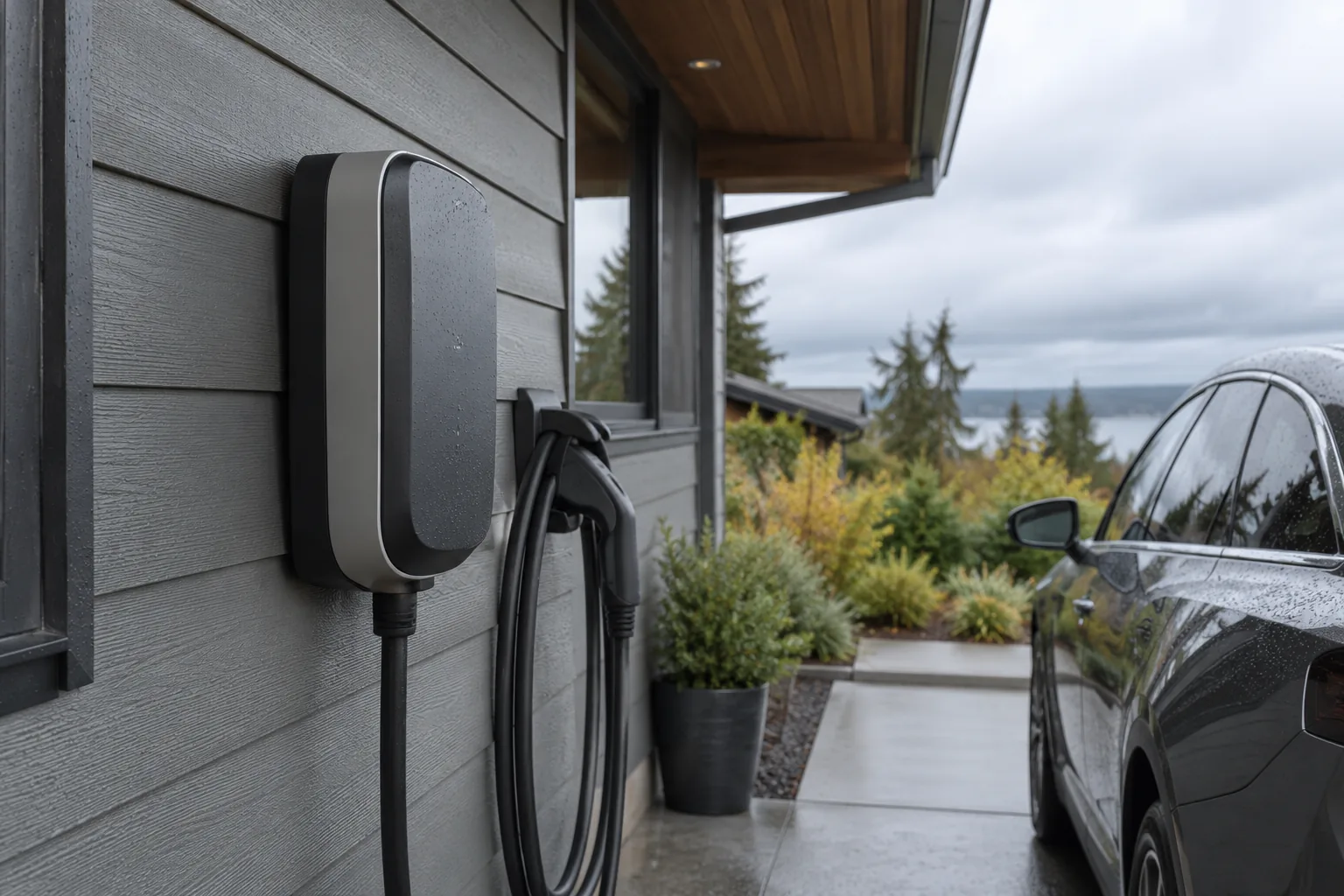
Can you put an electric car charger outside? Yes, provided the equipment is expressly rated for the location and installed according to its manufacturer instructions and local electrical requirements. The important question is not whether a box looks sealed. It is whether the complete installation, including its supply connection, mounting, cable route and connector storage, suits the exposure at your parking spot.
Start with the exact product’s outdoor rating
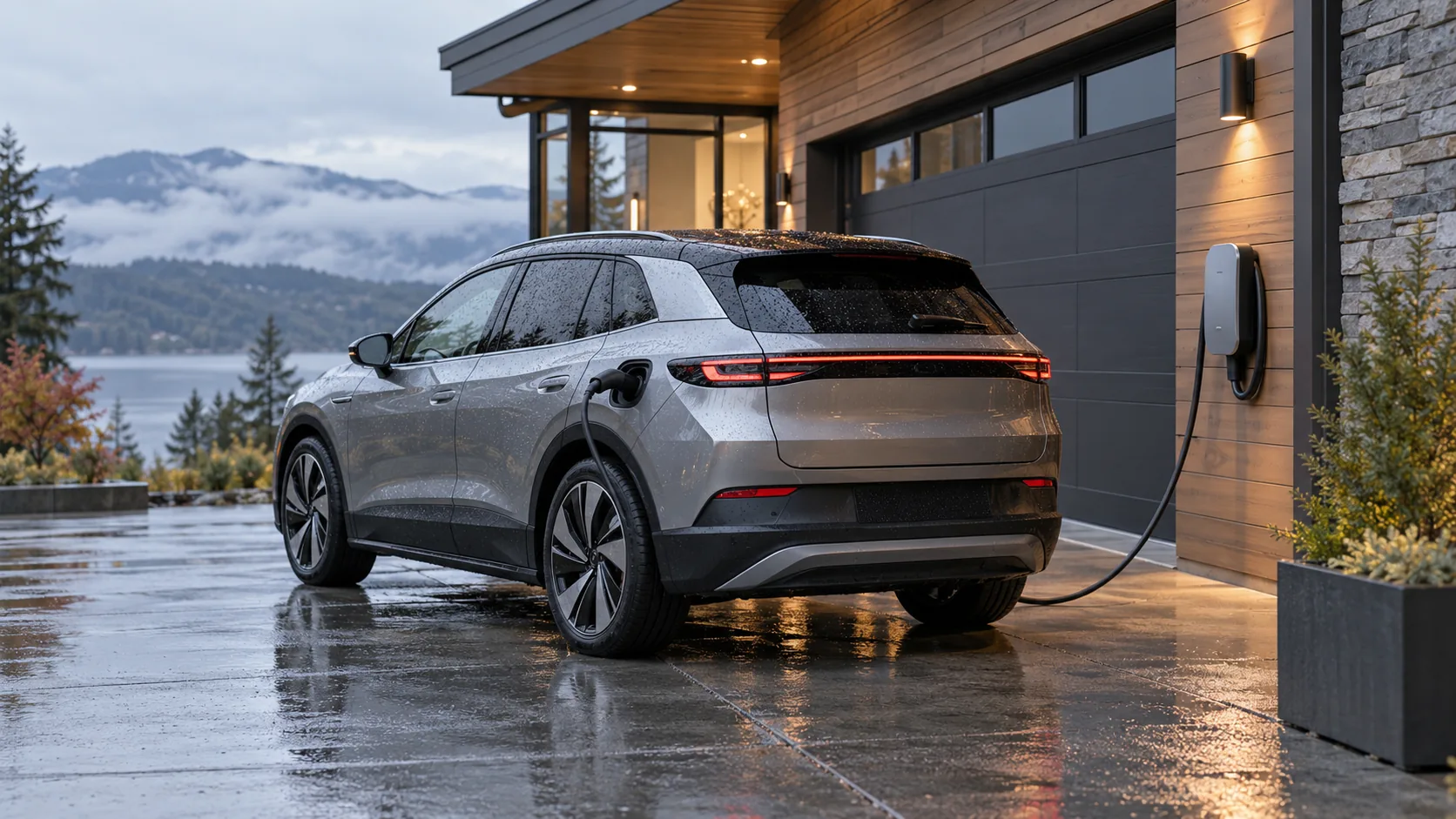
Look for an explicit outdoor-use statement in the installation manual and the enclosure’s environmental rating, often expressed as a NEMA or IP designation. These ratings describe specified conditions and test methods; they are not a promise that a charger can survive every flood, pressure wash, salt-air environment or incorrect installation. Check the manufacturer’s stated operating temperature, mounting orientation, cable handling and any restrictions for direct sun or coastal exposure.
A listing for electrical safety from a nationally recognized testing laboratory is a useful purchase filter. It does not replace reading the installation manual or matching the unit to the location. The U.S. Department of Energy’s Alternative Fuels Data Center notes that outdoor charging is feasible with equipment rated for outdoors and recommends a qualified electrician for installation.
Choose the location around the car, the cable and the weather
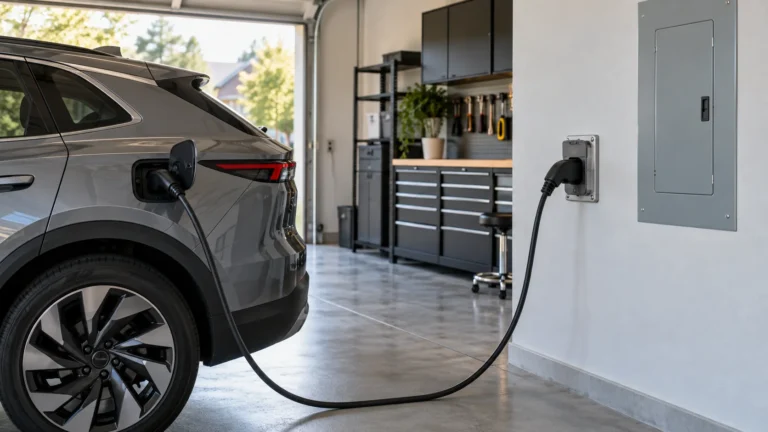
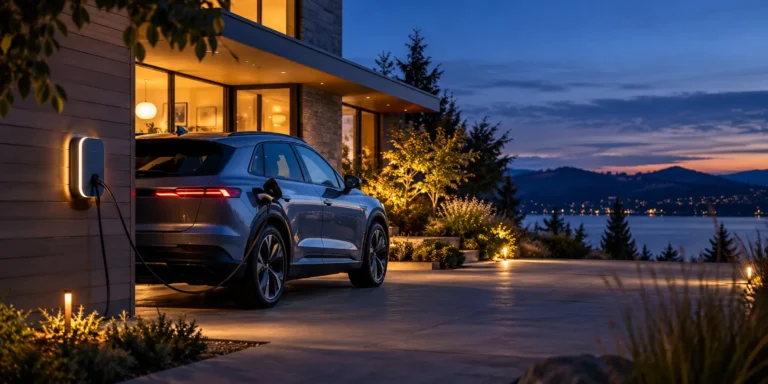
Sketch where each vehicle normally parks and where its charge port sits. Make sure the specified cable reaches without stretching, passing through a driveway or becoming a trip hazard. A wall just inside a garage can sometimes reach an outdoor parking space, but the cable must not be pinched under a garage door unless the manufacturer specifically provides a compliant route. An exterior wall or properly designed pedestal may work better for a detached parking bay.
- Keep the charging unit clear of locations where water collects, snow piles against it or sprinklers repeatedly spray its connections.
- Allow the clearances and mounting height specified by the charger maker and local code; avoid an improvised mount on weak cladding.
- Plan a convenient holster so the connector and cable stay off the ground and away from moving vehicles.
- Consider lighting, accessibility, security, winter snow removal and the path from the electrical panel.
- If Wi-Fi features matter, check signal at the actual exterior location before finalizing placement.
Hardwired or plug-in outdoors?
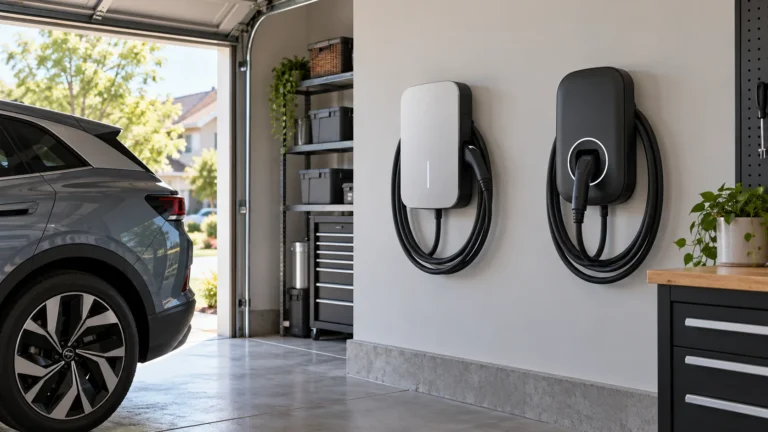
Both configurations exist, but the allowed outdoor arrangement is product-specific. A hardwired unit removes an exposed plug-and-receptacle connection at the charger location and may be recommended by the maker. A plug-in unit requires a correctly specified outdoor receptacle, enclosure and any required protection, all installed for the charging load and local rules. Never assume an indoor receptacle becomes suitable just because the charging box itself is outdoor-rated.
Have a qualified electrician evaluate service capacity, dedicated circuit, wiring route, weatherproof connection, protection and permitting. Keep the manufacturer’s current-setting and enclosure instructions available to the installer. Our home EV charger installation checklist covers the broader planning process, and the amperage guide explains how charger output relates to circuit ratings.
What to look for when buying an outdoor EV charger
A documented rating, not a ‘waterproof’ slogan
Compare the exact model number and its latest manual. Marketing terms can be vague, while the enclosure rating and installation conditions give the electrician a real specification to work with. Outdoor suitability can differ among variants from the same brand. Verify the connector standard for your vehicle and whether a manufacturer-approved adapter is necessary.
Cable length and storage that fit the space
Measure the route with the car parked as it normally sits. Leave practical slack so the cable does not pull at either end. A tidy holster prevents the handle from lying in puddles or dirt. If two people park in different orientations, check both before buying. A longer cable is useful only if it can be stored safely.
Power settings and support
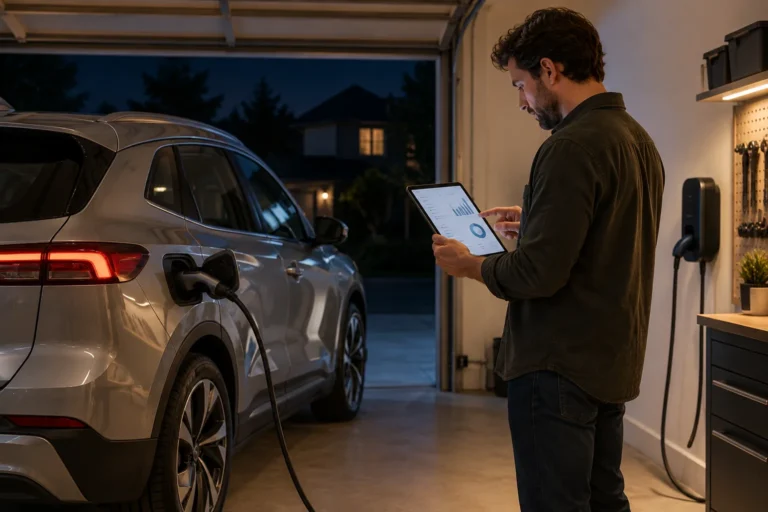
An adjustable Level 2 unit may fit a range of approved circuit configurations, but the output must be commissioned for the actual installation. Decide whether scheduling, usage history or load management adds value for your household. App-only controls may be frustrating where the signal is weak; check whether essential charging functions remain usable as the maker describes.
Rain, snow and heat in everyday use
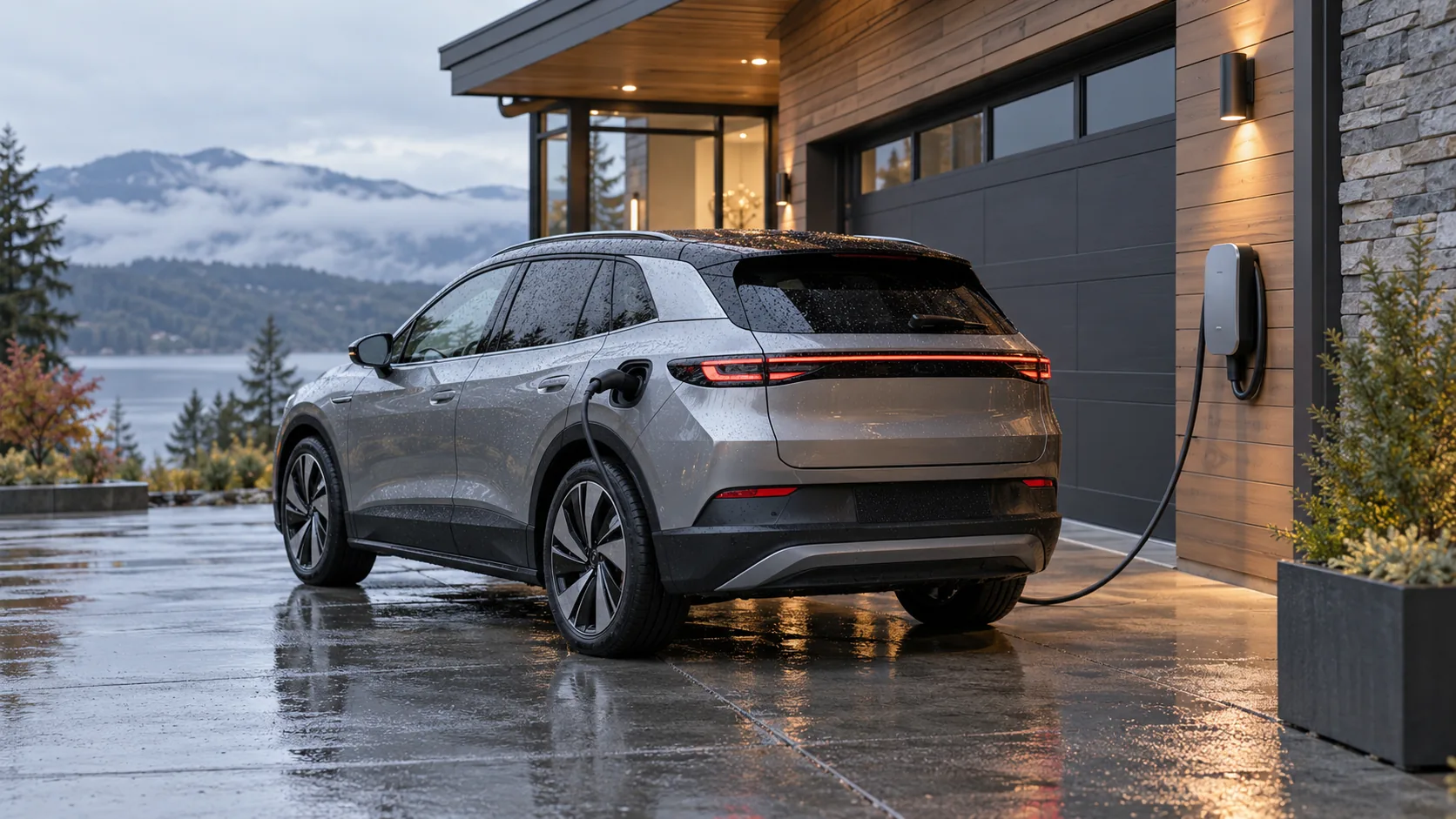
Charging in rain is normal with equipment and a vehicle designed for it, when both are used as directed. Do not touch damaged equipment, immerse a connector, attempt to dry an energized component internally or charge through a visibly compromised cable. Stop use and contact the manufacturer or a qualified professional if there is damage, repeated faults or water intrusion.
In winter, clear snow so the unit and connector remain accessible, but avoid striking the cable or enclosure with tools. Extreme cold or heat can alter the vehicle’s charging behavior, separate from the weather rating of the wall unit. Check both the car and charger manuals for operating limits. A modest overhang can improve everyday usability, yet it does not turn indoor-only hardware into outdoor equipment.
A practical installation plan
- Confirm your vehicle connector and AC charging limit.
- Shortlist only models with explicit outdoor installation approval for the proposed location.
- Measure parking positions, cable route, panel-to-unit route and Wi-Fi signal if needed.
- Ask a qualified electrician for a site assessment, permitted circuit design and mounting plan.
- Keep the product manual and installation records, then test the holster, cable reach and charging schedule after commissioning.
The best outdoor EV charger is one whose documented rating and installation match your actual exposure. Spend the decision time on siting and the electrician’s design before choosing by headline charging speed alone.
Check the exact equipment’s outdoor rating after choosing a practical parking location. Review home charging planning. Use home charger features and portable charging equipment to check the related decisions before choosing equipment or a charging routine.
Sources
- U.S. DOE Alternative Fuels Data Center: Charging at home
- U.S. DOE Alternative Fuels Data Center: Electric vehicles for consumers
- ChargePoint: Home charging guidance
Frequently asked questions
Are all EV chargers waterproof?
No. Outdoor suitability and environmental ratings vary by model and installation. Check the exact unit’s manual and approved mounting conditions; no rating covers every form of water exposure.
Can an EV charger be installed on a driveway post?
Some models allow pedestal mounting, but the pedestal, wiring method, physical protection and placement need a design that meets the manufacturer’s instructions and local requirements. Ask an electrician to assess the site.
Is a cover required for outdoor charging?
That depends on the product’s rating and its installation instructions. A cover may improve convenience, but it does not make an indoor-only unit suitable for outdoors.