How Much Does It Cost to Charge an Electric Car?
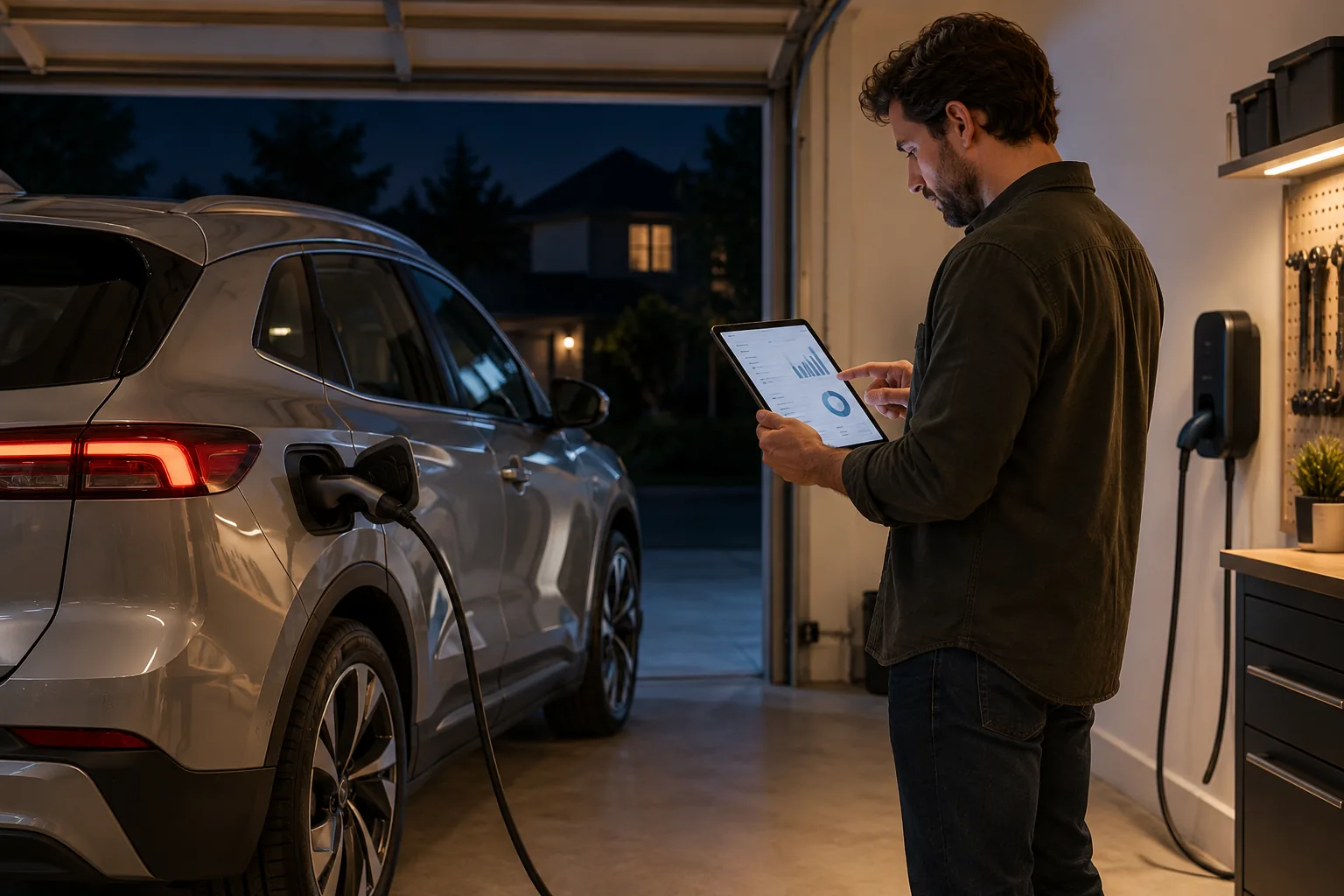
The cost to charge an electric car depends on the electricity used and the price you pay for it. At home, a simple estimate is grid kWh multiplied by your effective electricity rate. For example, adding 30 kWh to the battery at 90% charging efficiency uses about 33.3 kWh from the wall. At an illustrative $0.18 per kWh, that is about $6.00. Your utility plan, car and charging conditions will change the result.
The basic formula
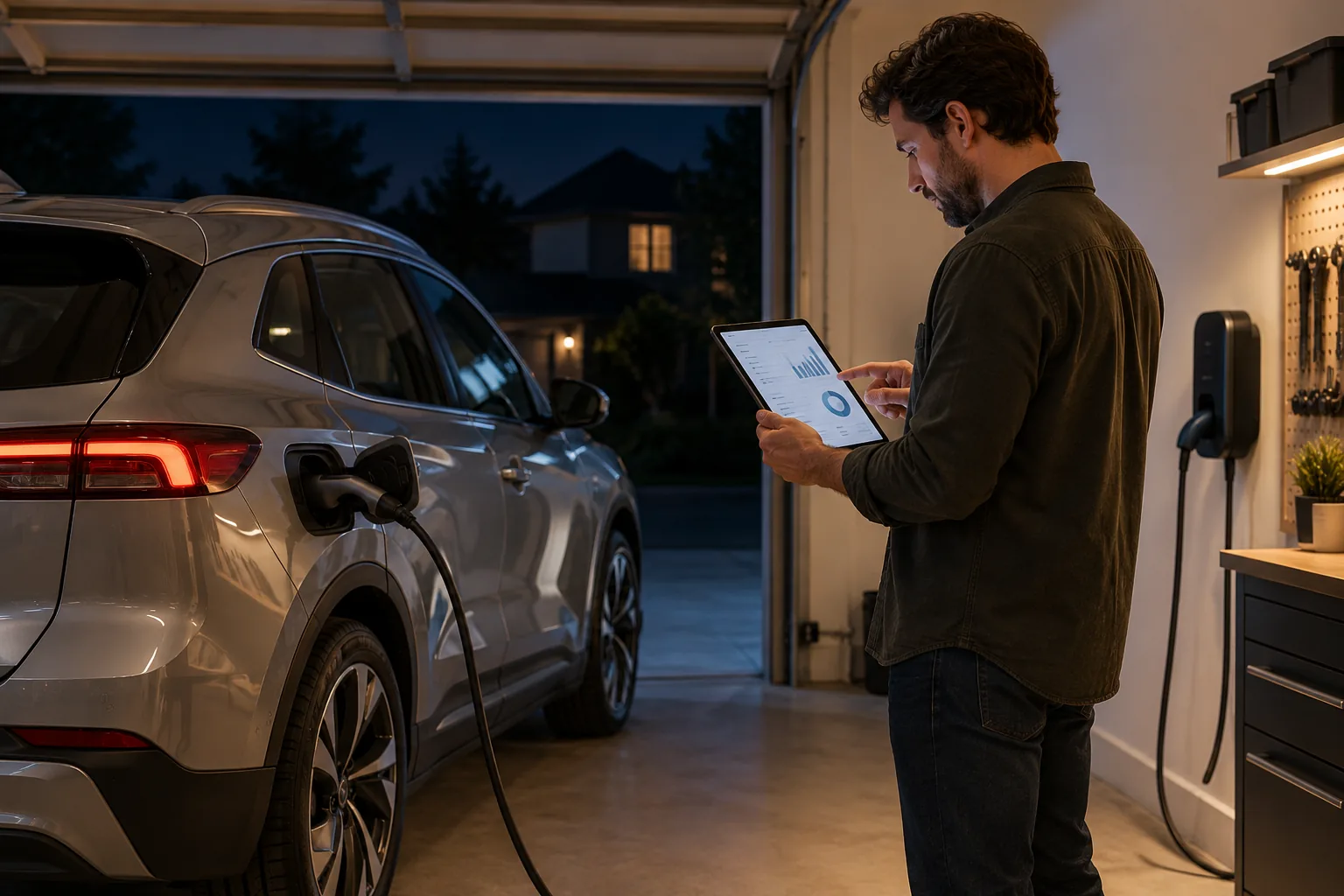
Home session cost = energy drawn from the wall (kWh) × effective electricity price ($/kWh). If you only know the energy added to the battery, estimate wall energy as battery kWh divided by charging efficiency. This keeps charging losses visible. Do not divide a battery percentage by a dollar rate, and do not assume that a 60 kWh battery always needs 60 kWh at every stop.
For a partial charge, multiply usable battery capacity by the percentage points added to estimate energy into the battery. If a 60 kWh usable pack rises from 30% to 80%, the estimated battery energy is 60 × 0.50 = 30 kWh. Then apply a measured or clearly stated loss assumption. Usable capacity, displayed percentages, battery conditioning and wall-meter readings vary, so a charger or utility meter is the best record after the fact.
Worked home-charging examples
One partial session
Suppose the vehicle adds 30 kWh to the battery and the wall-to-battery efficiency for this example is 90%. Wall energy is 30 ÷ 0.90 = 33.3 kWh. At $0.18/kWh, the energy portion costs 33.3 × $0.18 = $6.00. At $0.30/kWh with the same energy and losses, it costs about $10.00. These are scenarios, not a quoted national rate or a promise about any model.
A month of driving
Suppose you drive 1,000 miles in a month and your vehicle uses 0.30 kWh per mile at the battery. That is 300 kWh used for driving. At the same illustrative 90% charging efficiency, wall energy would be about 333 kWh. At $0.18/kWh, the energy portion is roughly $60 for the month. If some miles are charged at public stations, split those kWh out and price them at their actual session rates. Our electricity-use guide explains kWh per mile and how to estimate monthly demand.
The U.S. Energy Information Administration publishes residential average revenue per kWh by state and month, but that average is not your household’s marginal charging price. Find your utility tariff and bill instead. Include relevant delivery, taxes or time-of-use charges as applicable, and separate fixed monthly fees that you would pay even without the EV if the question is the added cost of charging.
Home versus public charging
At home, the car’s energy usually appears on the household electric bill. Public operators set their own prices and may bill per kWh, per minute or through another location-specific arrangement where permitted. A session can also involve parking, idle, congestion or taxes, and promotional credits can change what you pay. Review the station app or screen before connecting. DOE’s Alternative Fuels Data Center notes that public charging, especially DC fast charging, normally costs more than home charging, although actual prices vary.
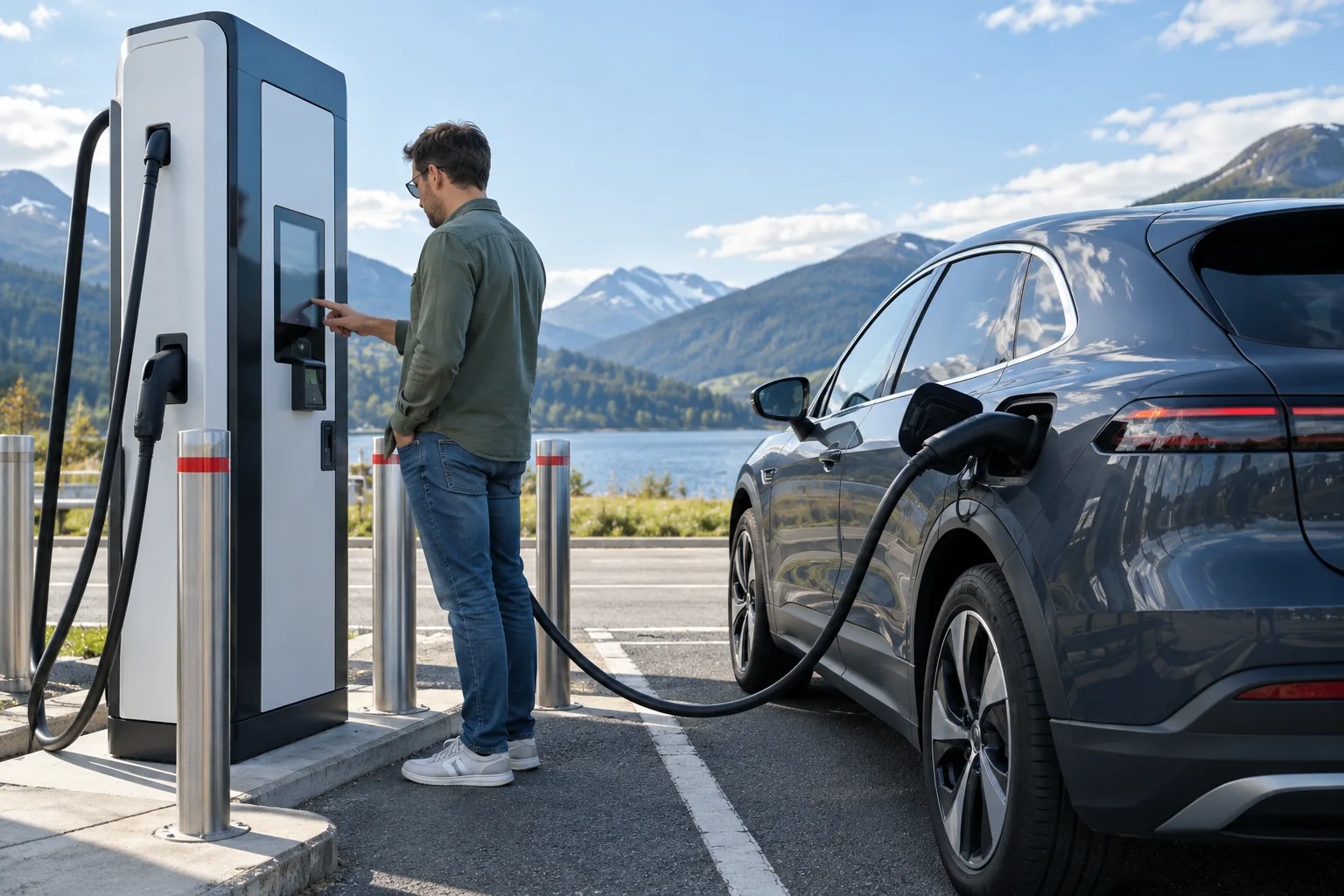
For a purely illustrative per-kWh station charging $0.45/kWh, 30 billed kWh would be $13.50 before other charges. The station may measure delivered energy at a different point from a home wall meter, so do not apply the same 90% home-loss adjustment twice. A per-minute price depends on how quickly your vehicle actually receives energy. The post’s examples do not establish what any specific network currently charges.
Why cost per mile is a better comparison
A full charge is not a standard-sized purchase: EV batteries and the starting state of charge differ. To compare operating costs, use cost per mile = effective $/kWh × wall kWh per mile. With the example above, 0.30 battery kWh per mile ÷ 0.90 efficiency is 0.333 wall kWh per mile. At $0.18/kWh, that is $0.06 per mile for home electricity. Your actual driving, climate and charging mix change the figure.
For public charging, use the energy shown on your receipt divided by miles that energy supports under realistic driving. Do not compare a favorable home estimate with the most expensive public stop as though either represents all EV ownership. Charging hardware installation is a separate upfront cost, covered in our home charger installation cost guide.
What changes your electric bill
- Vehicle efficiency: speed, weather, tires, terrain and cabin heating or cooling affect kWh per mile.
- Charging losses: conversion, cable, battery temperature control and standby power mean wall energy can exceed battery energy.
- Your tariff: flat, tiered and time-of-use plans price incremental consumption differently; check the exact hours and any EV rider.
- Where you charge: a household relying on public DC fast charging has a different mix from one that charges mostly at home.
- Session extras: parking, idle fees and promotional credits may matter at public stations.
How to calculate your own number
- Record monthly miles and your vehicle’s observed energy use, ideally across a representative period.
- Find your actual incremental utility rate for the hours you will charge. Note rate changes by season and time.
- Use charger or vehicle energy records to estimate grid kWh; if unavailable, state a charging-loss assumption rather than hiding it.
- Multiply the home kWh by the appropriate tariff, then add public receipt totals and any relevant extra fees.
- Recheck after a few billing cycles. Compare with pre-EV bills cautiously because weather and household use also change.
If you can shift charging to lower-priced hours under your actual plan, the savings may be meaningful. The best time to charge at home guide explains how to compare utility windows. No one hour is cheapest nationwide.
The energy in your calculation should reflect the charging arrangement you will actually use. Review electric-car electricity use. Use home charging and public charging payments to check the related decisions before choosing equipment or a charging routine.
Sources and rate context
- U.S. DOE AFDC: Charging electric vehicles at home and cost-per-mile method
- U.S. DOE AFDC: Charging electric vehicles in public
- U.S. EIA: State residential electricity price table
Frequently asked questions
Does it cost money to charge an electric car at home?
Yes. The electricity is billed through your utility, unless an offset or credit covers some of it. Multiply measured wall kWh by your applicable tariff to estimate the added cost.
Is public EV charging always more expensive?
No single rule fits every station, discount and home tariff. Public DC fast charging often costs more, but check the current rate and any parking or idle fees at the location.
How much does a full EV charge cost?
It depends on how many kWh the battery needs from its starting level, wall losses and the price paid. A battery’s advertised capacity alone is insufficient for an exact session cost.