Electric Vehicle Minivan: U.S. Options and What to Verify
The only electric vehicle minivan on sale in the U.S. is the Volkswagen ID. Buzz. Most other minivans you can buy today are gasoline-only, hybrid, or plug-in hybrid models. The Honda Odyssey, for example, is gasoline-only. None of them is a battery-electric vehicle. That makes the choice simple in one way and harder in another: one BEV minivan to judge, and a short list of honest alternatives if it does not fit your budget, trips, or charging.
Checked November 11, 2026. Prices are MSRP, excluding destination unless stated, and every range figure is the EPA rating for the exact trim named. A listing price is not an out-the-door price, and a future model is not a car you can buy today.
Words to know before you shop
These words come up all through this guide. Here is what they mean in plain language.
- BEV: a car that runs on its battery alone. No gasoline engine.
- PHEV: a plug-in hybrid. It has a battery and a gasoline engine, and drives a short distance on electricity before the engine takes over.
- Hybrid: a car with a gasoline engine and electric help. It does not plug in.
- kWh and kW: kWh is the size of the battery. kW is how fast it charges. Two different numbers.
- EPA range: the official U.S. test figure for a new car. WLTP is the European test figure, not the same as EPA.
- MSRP: the maker’s list price, before destination, taxes, and dealer fees.
- CCS, NACS, J1772: three charging plug types. CCS is the 2025 ID. Buzz fast-charging plug, NACS is the Tesla-style plug, and J1772 is the standard home-charging plug.
- VIN: the car’s 17-character ID number. Use it to check the model year, recalls, and history.
- Out-the-door price: the full price you pay, including destination, taxes, and fees. Not the listing price or the MSRP.
At a glance: your electric minivan options in the U.S.
If you want a minivan that plugs in and runs on electricity alone, there is one answer in the U.S. today. Everything else is a gasoline-only, hybrid, or plug-in hybrid minivan, or a future model.
On a narrow screen, swipe the table sideways to see all five columns.
| Vehicle | Powertrain | What it is | Key figure | Status |
|---|---|---|---|---|
| VW ID. Buzz 2025 | Battery-electric (BEV) | The only electric minivan | 234 mi EPA (RWD) | On sale as leftover 2025 stock; 2026 model year skipped |
| Chrysler Pacifica Hybrid | Plug-in hybrid (PHEV) | Plug-in hybrid minivan | 32 mi EPA electric range | Being phased out from the 2026 model year |
| Toyota Sienna 2026 | Hybrid | Hybrid minivan, no plug | 36 mpg combined (FWD) | On sale |
| Kia Carnival Hybrid 2026 | Hybrid | Hybrid minivan, no plug | 32 mpg combined | On sale |
| Mercedes-Benz VLE | Battery-electric (BEV) | Luxury electric minivan | Over 434 mi WLTP (not EPA) | Announced for the U.S., not on sale |
| Kia EV9 / Volvo EX90 | Battery-electric (BEV) | Three-row electric SUVs | 230–305 mi / 305 mi EPA | On sale. SUVs, not minivans |
Note: “electric minivan” is used loosely in advertising. A plug-in hybrid minivan is often described as electric, but it still has a gasoline engine.
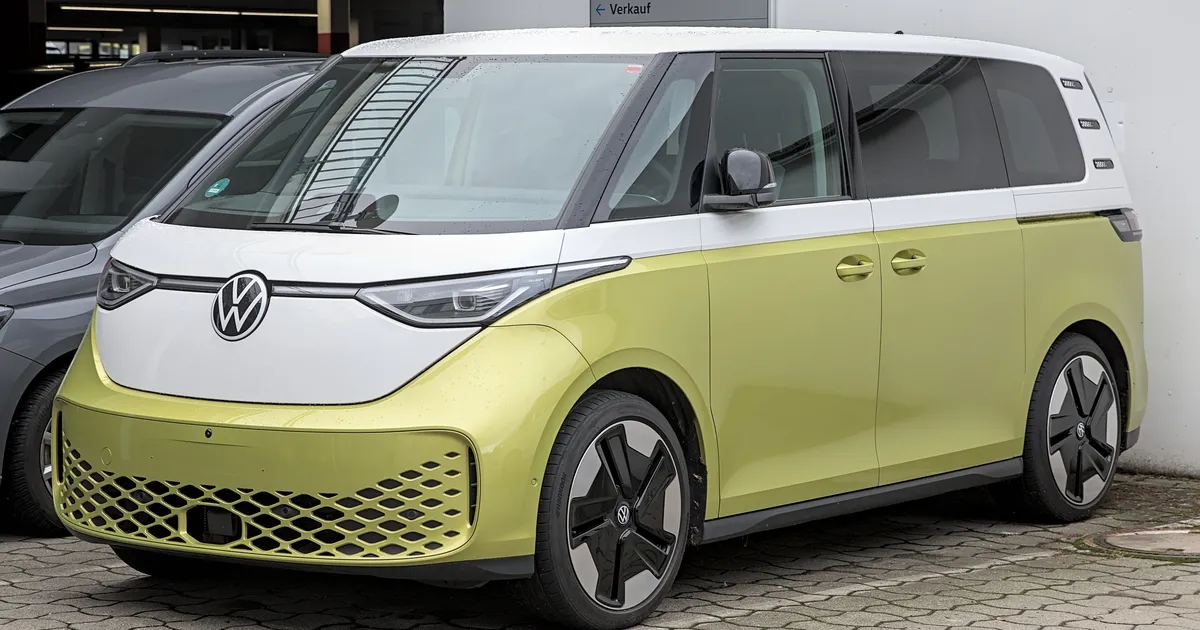
The only electric vehicle minivan you can buy today: the VW ID. Buzz
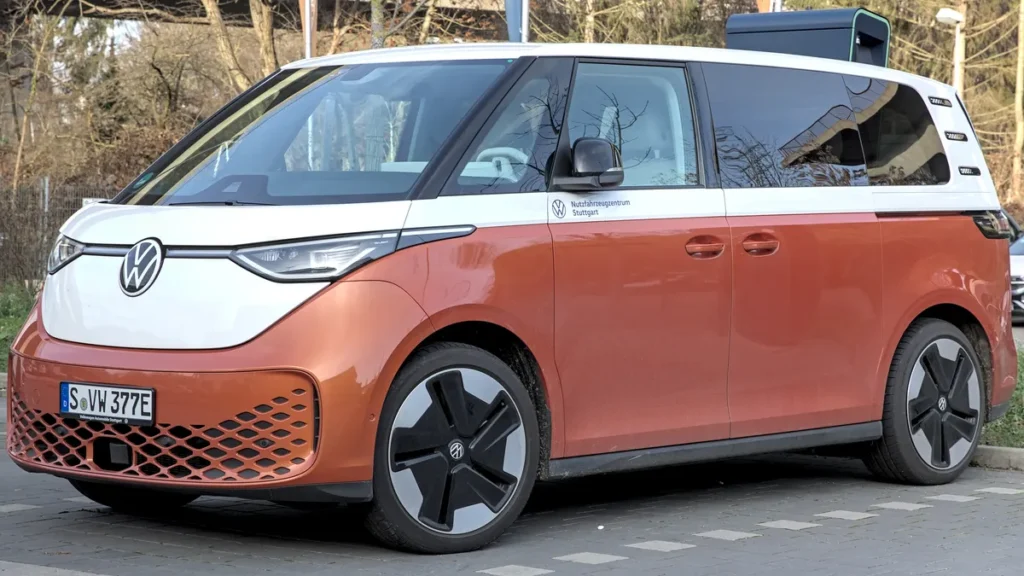
The ID. Buzz is Volkswagen’s battery-electric minivan, sold in the U.S. as a 2025 model, with three rows and sliding rear doors. Judge it on its numbers, not its retro looks.
Its battery is 91 kWh gross, 86 kWh net (Volkswagen spec sheets). EPA range is 234 miles rear-wheel drive and 231 miles with 4MOTION (83 and 80 MPGe combined). DC fast charging peaks at up to 200 kW, 10–80% in about 26 minutes under ideal conditions; the onboard AC charger accepts up to 11 kW; the port is on the right rear.
| Trim | Drive | MSRP from | Seats | Power | EPA range |
|---|---|---|---|---|---|
| Pro S | RWD | $59,995 | 7 | 282 hp | 234 mi |
| Pro S Plus | RWD | $63,495 | 7 | 282 hp | 234 mi |
| Pro S Plus | 4MOTION | $67,995 | 6 | 335 hp | 231 mi |
| 1st Edition | RWD | $65,495 | 7 | 282 hp | 234 mi |
| 1st Edition | 4MOTION | $69,995 | 6 | 335 hp | 231 mi |
All prices are MSRP excluding destination. The Pro S seats seven with a second-row bench. The Pro S Plus RWD and 1st Edition RWD also seat seven with a bench; optional captain’s chairs on the Pro S Plus RWD cut that to six. The 4MOTION versions seat six, with captain’s chairs standard. EPA range is by drivetrain, 234 miles rear-wheel drive and 231 miles 4MOTION, not by trim.
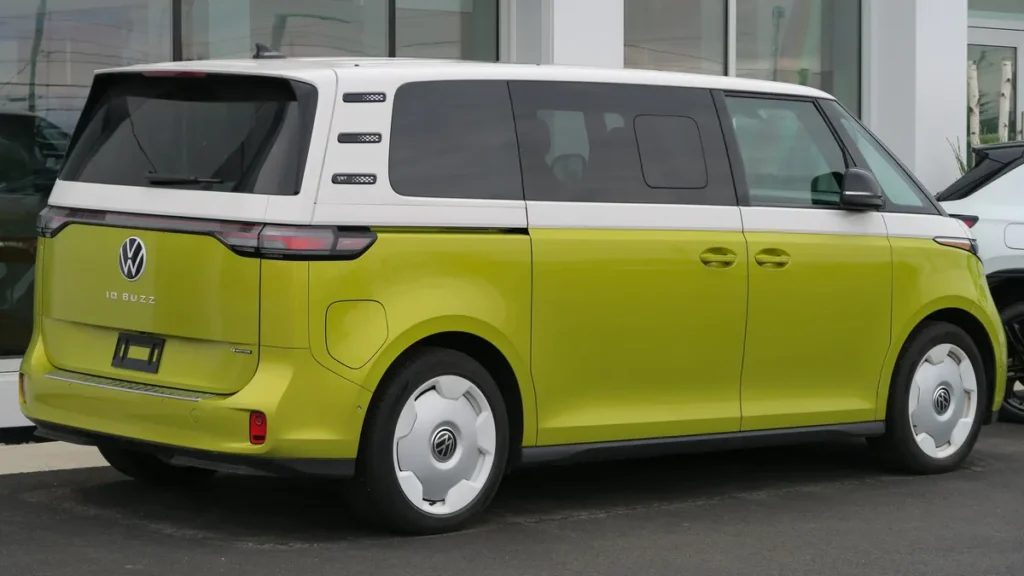
Cargo is 18.6 cubic feet behind the third row, 75.5 behind the second row, and 145.5 maximum, with the third row removable. Compare the 18.6 figure against your stroller or luggage, not the maximum, which assumes the third row is out.
The 2026 model year was skipped, and the 2028 model is a wait, not a buy
Volkswagen skipped the 2026 model year in the U.S. On September 24, 2026, it told U.S. dealers the ID. Buzz will return as a 2028 model, with sales planned for the first half of 2027. Pricing, range, and trims for the 2028 model have not been announced, so no 2028 figure appears in this guide.
The 2028 model is reported, not confirmed by Volkswagen, to add a built-in NACS charging port, vehicle-to-load, and a digital key. Treat those as reports until Volkswagen confirms them. The 2025 car uses CCS for DC fast charging, but it can already charge at compatible Tesla Superchargers with Volkswagen’s NACS DC adapter. See the charging section below.
Remaining 2025 stock vs waiting
U.S. sales were 6,140 in 2025 and 2,481 in the first half of 2026. By late September 2026, only about 38 new 2025 ID. Buzz vehicles were listed nationally on Cars.com (Automotive News). That is a dated snapshot, not a live count, but it shows remaining 2025 stock is thin. If you want one now, you are shopping for a leftover 2025 car: verify its model year, trim, and availability first. If you can wait until the first half of 2027, the 2028 model is the alternative, but its price, range, and trims are unannounced.
BEV, PHEV and hybrid: what the labels actually mean for a minivan
A battery-electric vehicle (BEV) runs on its battery alone and has no gasoline engine. A plug-in hybrid (PHEV) has a battery and a gasoline engine, plugs in, and drives a limited distance on electricity before the engine takes over. A hybrid has a gasoline engine with electric assistance and does not plug in.
A BEV’s battery size is measured in kilowatt-hours (kWh) and its charging speed in kilowatts (kW). Two different numbers. Our EV batteries explained guide explains kWh, kW, and what a battery warranty covers.
The Chrysler Pacifica Hybrid is a plug-in hybrid, not an electric minivan
The Pacifica Hybrid is the only plug-in hybrid minivan in the U.S., and it is not a battery-electric minivan. Its 16 kWh battery gives 32 miles of EPA all-electric range, with 520 miles of total range, 82 MPGe, and 260 horsepower combined. It can run a short commute on electricity; on a road trip it is a gasoline vehicle with electric help.
It is also going away. Stellantis confirmed on January 9, 2026 that it will phase out plug-in hybrid programs in North America beginning with the 2026 model year, including the Pacifica Hybrid. A small number of 2026 model-year units were produced, and some leftover dealer stock may remain. Verify the individual car. Discounts on remaining cars have been reported; no discount amount is quoted here as a price.
The hybrid minivans: Toyota Sienna and Kia Carnival Hybrid
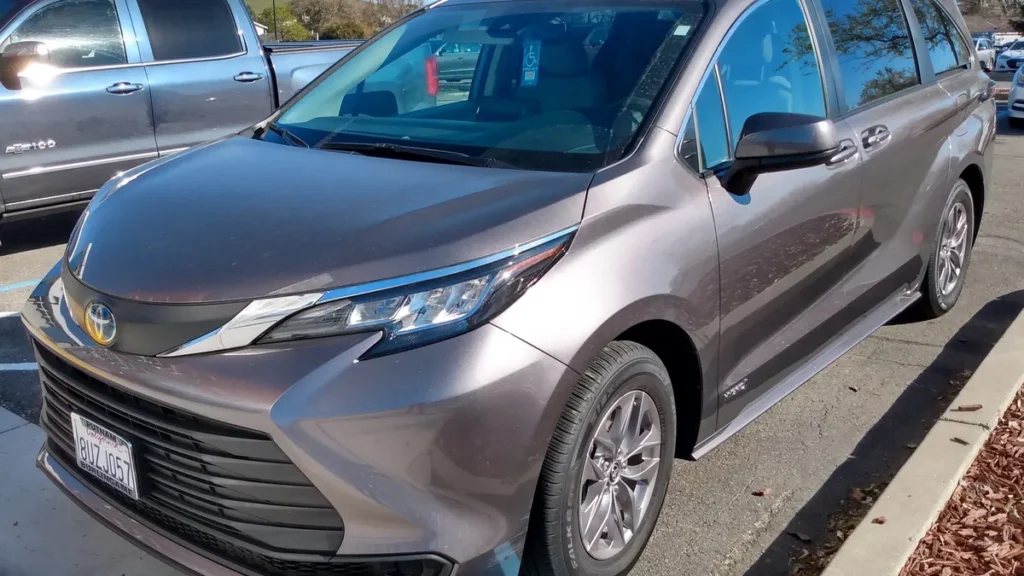
The Toyota Sienna for 2026 is a hybrid only. No plug, no battery-electric version. It returns 36 mpg combined with front-wheel drive and 35 mpg with all-wheel drive, with 245 horsepower. It is a minivan in every way that matters for a family, but it burns gasoline on every mile.
The Kia Carnival Hybrid for 2026 pairs a 1.6-liter turbo engine with a hybrid system for 242 horsepower and 32 mpg combined. It seats up to eight, with no all-wheel-drive option. No battery-electric Carnival is sold in the U.S. A “Carnival EV” listing is either a different market’s car or a mistake, so check the VIN.
Electric vans sold only overseas, such as the Zeekr 009, are not covered here. No U.S. dealer can sell you one.
The alternatives if the ID. Buzz does not fit
If the ID. Buzz is too expensive, too short on range, or simply not available near you, the honest alternatives are three-row electric SUVs, not minivans, and this guide does not pretend otherwise. An SUV has hinged rear doors instead of sliding doors, and a higher floor, which matters when you are loading children and cargo every day.
The Kia EV9 is the closest electric alternative on price. The 2026 Light Long Range rear-wheel-drive version starts at $57,900 MSRP excluding destination, against $59,995 for the ID. Buzz Pro S, also before destination. EPA range is 230 miles for the Light rear-wheel drive, 305 miles for the Light Long Range rear-wheel drive, 283 miles for the Wind and Land all-wheel-drive trims, and 280 miles for the GT-Line all-wheel drive. It is a three-row SUV, not a minivan.
The Volvo EX90 is the larger, more expensive alternative: the 2026 model seats six or seven, is rated at 305 miles EPA with all-wheel drive on 21-inch wheels, and starts at $78,090 MSRP including destination. Our Volvo guide covers the EX90 in more detail.
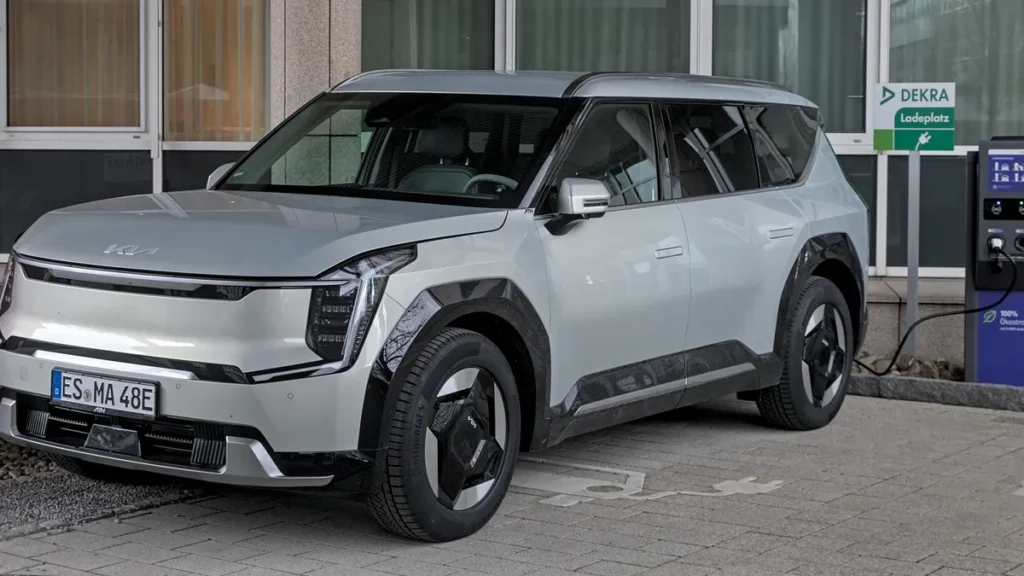
The hybrid minivans are the other alternative, and for many families the right one. A Sienna or Carnival Hybrid gives you the sliding doors, flat floor, and cargo space of a minivan, with no
charging to plan, at the cost of burning gasoline on every trip. If your driving is mostly long highway miles with no home charging, a hybrid minivan may serve you better than the only BEV minivan on sale.
Two future options are worth naming and then setting aside. The Mercedes-Benz VLE, revealed on March 10, 2026 and confirmed for the U.S., is a luxury electric minivan with a 115 kWh usable NMC battery, an 800-volt architecture, and a WLTP range of over 434 miles (700 km). That is a European test figure, not an EPA rating, so do not compare it directly with the ID. Buzz’s 234 EPA miles. It seats up to eight, with the VLE 300 at 272 horsepower and the VLE 400 at 409 horsepower. U.S. pricing and EPA range have not been announced, so it is a future car, not a purchase decision. Toyota has also announced a three-row electric Highlander for 2028, according to the EVPalace Toyota guide, again with no U.S. pricing or EPA range announced, so it is a wait, not a buy today.
Charging the ID. Buzz
The 2025 ID. Buzz uses CCS for DC fast charging. At a compatible fast charger it peaks at up to 200 kW and charges from 10% to 80% in about 26 minutes under ideal conditions. That is fast enough for a road-trip stop; the real-world time depends on the charger, the battery temperature, and the state of charge when you arrive.
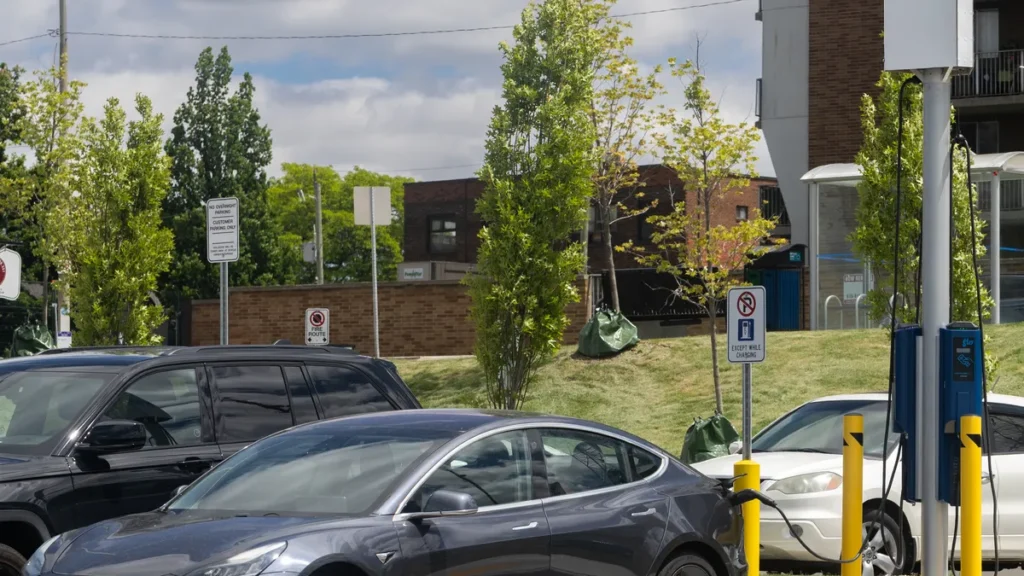
At home, the onboard AC charger accepts up to 11 kW, enough to refill the battery overnight on a Level 2 setup. Our home charging guide helps you work out whether Level 1 (120-volt) charging covers your daily miles or whether Level 2 (240-volt) equipment is worth paying for. Have a qualified electrician assess any new circuit first.
Before you buy, check the connector on the exact car and the chargers on your actual routes. Our connector guide explains CCS, J1772, and J3400 (NACS), and why a plug that fits does not prove you can use a station. The 2025 ID. Buzz can also charge at compatible Tesla Superchargers with Volkswagen’s approved NACS DC adapter. The adapter is for DC fast charging only, so it does not work with Level 1 or Level 2 AC chargers or Tesla Destination Chargers, and Volkswagen recommends completing any open software campaigns before using it. The 2028 ID. Buzz is reported to add a built-in NACS port, but that is not confirmed by Volkswagen, so do not buy a 2025 car expecting it to charge like a 2028 car.
Five questions that decide it
Work through these in order. Each one can end the search before the next costs anything.
1. Do you need sliding doors and a flat floor? If you load children in tight parking spaces or need a low, flat load floor, only a minivan gives you both. The ID. Buzz, Sienna, Carnival, and Pacifica Hybrid all have sliding doors. The EV9 and EX90 do not. They are SUVs.
The ID. Buzz carries 18.6 cubic feet behind its third row, enough for a weekly shop or a folded stroller, but not for seven people’s luggage.
3. Do your regular trips go past about 160 miles? That is roughly the ID. Buzz’s planning range with a reserve at both ends (see the trip test below). If your trips stay under that distance and you can charge at home, the ID. Buzz covers them. If you regularly drive further, you will be planning charging stops.
4. Can you charge at home? A battery-electric minivan without home charging is a harder life than the same car with a driveway charger. If you cannot charge at home, a hybrid minivan may fit your week better than a BEV you must charge in public.
5. Can you wait until the first half of 2027? That is when Volkswagen plans to start selling the 2028 ID. Buzz, but its price, range, and trims are unannounced, so you are waiting for an unknown. If you need a car now, the choice is a leftover 2025 ID. Buzz, a hybrid minivan, or a three-row electric SUV.
The 180-mile trip test
Illustrative example: One family drives a 180-mile highway trip to visit family every month, charges at home overnight, and wants to arrive with at least 20% charge left.
Assumptions, in plain sight: They leave at 90% and arrive at 20%, so they budget 70% of the battery. EPA figures are new-car ratings for the exact trim named; cold, speed, and load reduce the result further. These are planning numbers, not predictions. The Sienna line is a gasoline calculation, not a battery range.
| Vehicle | EPA range / economy | 70% planning window | What the 180-mile trip looks like |
|---|---|---|---|
| VW ID. Buzz RWD (2025) | 234 mi EPA | About 164 mi | Needs one planned charging stop. The trip is longer than the planning window |
| Kia EV9 Light Long Range RWD (2026) | 305 mi EPA | About 214 mi | Covers the trip on paper. Still plan a backup stop, because winter or speed can erase the margin |
| Toyota Sienna Hybrid FWD (2026) | 36 mpg combined | About 5 gallons for 180 mi | No charging stop; 180 miles uses about 5 gallons of gasoline from a full tank |
The chart above shows the two bars to scale, with the 180-mile trip marked: the ID. Buzz bar falls short, the EV9 bar passes it. The EPA figures are 234 and 305 miles, but the usable trip figures are about 164 and about 214 miles once you keep a reserve at both ends.
On a 40-mile weekday the difference disappears: 17% of the ID. Buzz’s EPA range and 13% of the EV9’s, both covered easily with overnight home charging.
So ask the question in the right order. First, does the ID. Buzz cover your weekday with a comfortable margin? If it does, a 40-mile day is not the decision. If the monthly highway trip matters, compare the two on that trip, stop planned, backup named, before you pay for range you will only use twelve times a year.
What to verify before you buy
Run these before you pay.
1. Model year: only 2025 ID. Buzz cars exist in the U.S. Confirm the model year on the VIN plate, not the listing headline. There is no 2026 ID. Buzz in the U.S., and the 2028 model is not on sale yet.
2. VIN: run it through the NHTSA recall lookup. Check for open safety recalls and ask for the repair records. Confirm the warranty start date, coverage, and transferability. Our best used EV guide covers the battery, warranty, and inspection checks for any used ID. Buzz or leftover Pacifica Hybrid.
3. Out-the-door price: get it in writing. The MSRP figures in this guide exclude destination. Compare the written out-the-door price, destination, taxes, and dealer fees included, not the listing price or the monthly payment. A $59,995 starting MSRP is not a $59,995 car.
4. No federal credit subtraction. The federal clean vehicle credit is not available for vehicles acquired after September 30, 2025, according to the IRS. The ID. Buzz also did not qualify while the credit existed because it is built in Germany, according to secondary reporting. Do not let a listing subtract a federal credit from the price. State, local, or utility programs may differ; verify any specific offer with its administrator before you sign.
5. Charging fit: confirm the car’s connector and your routes. The 2025 ID. Buzz uses CCS for DC fast charging, and it can also use compatible Tesla Superchargers with Volkswagen’s NACS DC adapter. Check that the fast chargers on your regular routes have CCS or work with the adapter, and that the car can use them. A plug that fits does not prove access.
6. Dealer stock: verify the individual car. Stock was not audited for this guide. A listing is not a car on the lot; confirm the exact car is available, at the written out-the-door price, before you travel to see it.
Where to start with an electric vehicle minivan
Start with the ID. Buzz if you want a battery-electric minivan now, you can find a 2025 car, and your regular trips fit inside its planning range with home charging. Step to the Kia EV9 if you can live with an SUV body and want more range. Step to a Sienna or Carnival Hybrid if you need a minivan without planning charging stops. Wait for the 2028 ID. Buzz or the Mercedes-Benz VLE only if you can genuinely wait, knowing that neither car’s price nor EPA range has been announced. Whichever you choose, the right electric vehicle minivan is the one whose model year, VIN history, warranty, connector, and out-the-door price all check out on the same car, not the one with the lowest listing price or the longest headline range.
How we checked this guide
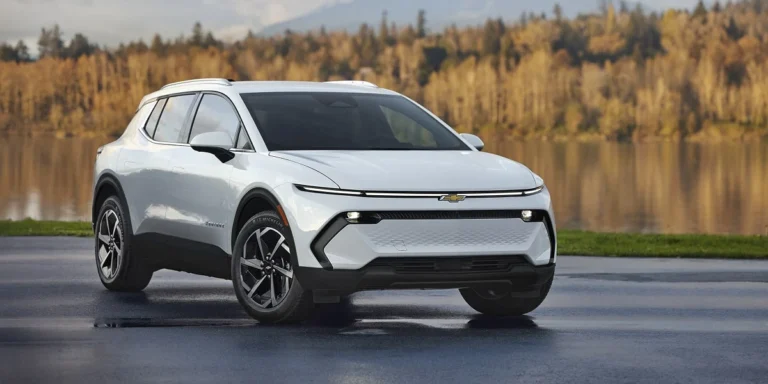
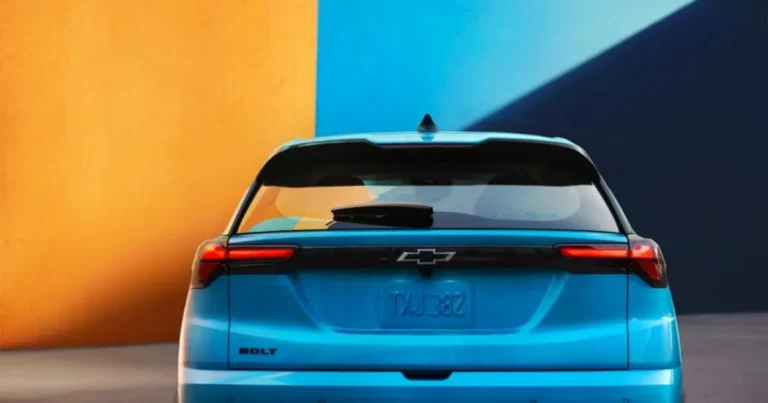
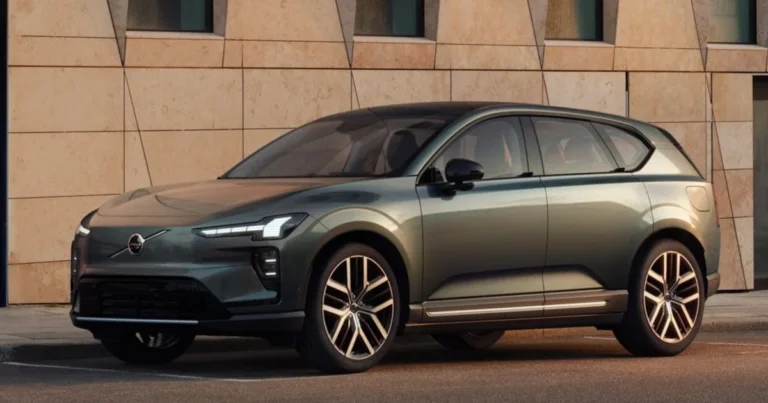
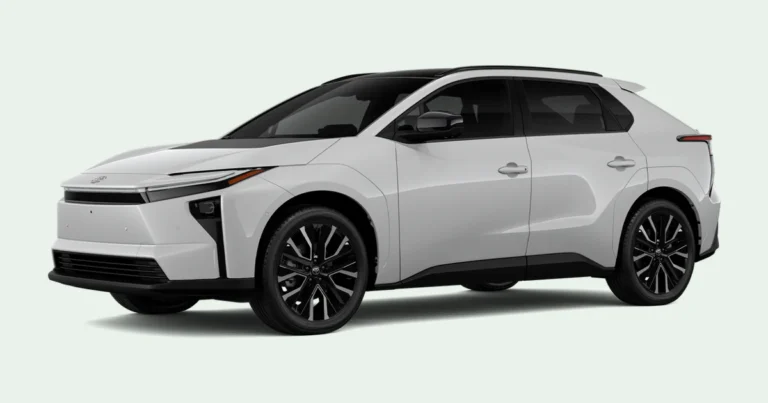
By Sam Wilson, EV Palace’s editorial pen name. Prepared with AI assistance from Volkswagen technical data, the Kia and Volvo spec sheets, and the sources below. We verified every price, range, and date against the cited manufacturer or retailer page; desktop research only, no test drives. The featured image is illustrative: a generic modern electric family van, not a photograph of a specific car. The diagrams are original EVPalace graphics from the verified figures in the research log.
Sources
- Edmunds. Electric minivans: “only one is a full EV: the Volkswagen ID. Buzz” (guide updated 2026-02-10). https://www.edmunds.com/electric-car/articles/electric-minivans.html
- Volkswagen. 2025 ID. Buzz Pro S technical data: 91 kWh gross / 86 kWh net, EPA 234 miles RWD, 83 MPGe combined, DC fast charging up to 200 kW, 10–80% in about 26 minutes, AC onboard charger up to 11 kW. https://www.vw.com/idhub/content/dam/onehub_pkw/importers/us/en/showrooms/id-buzz/2025/tech-specs/ID_Buzz_Pro_S_Technical_Data.pdf
- Volkswagen. 2025 ID. Buzz 1st Edition with 4MOTION technical data: EPA 231 miles, 80 MPGe combined. https://www.vw.com/idhub/content/dam/onehub_pkw/importers/us/en/showrooms/id-buzz/2025/tech-specs/ID_Buzz_1st_Edition_with_4MOTION_Technical_Data.pdf
- Volkswagen announcement (reported with trim detail). 2025 ID. Buzz pricing: Pro S from $59,995; Pro S Plus from $63,495 RWD / $67,995 4MOTION; 1st Edition from $65,495 RWD / $69,995 4MOTION, MSRP excluding destination. https://www.autospies.com/news/With-A-60-000-Starting-Price-Is-The-VW-ID-Buzz-PROOF-The-BIGGEST-Lie-We-ve-Ever-Been-Fed-In-The-Car-Business-Is-That-The-Germans-Are-The-BEST-Engineers-122495/
- Volkswagen. NACS DC adapter: the Volkswagen-approved NACS-to-CCS DC adapter lets the 2025 ID. Buzz charge at compatible Tesla Superchargers; DC fast charging only, not Level 1/2 AC or Destination Chargers; software update recommended for certain vehicles. https://vwaccessoriesshop.com/shop-by-model/volkswagen-nacs-adapter/ ; Supercharger access from November 18, 2025, adapter $200 MSRP with a $100 rebate for original 2025 owners: https://www.destinationcharged.com/news/volkswagen-evs-gain-access-to-tesla-supercharger-network-starting-november-18/
- Bud Brown Volkswagen. 2025 ID. Buzz: bench seating standard on the Pro S Plus, captain’s chairs available as an option, changing capacity to six. https://www.budbrownvw.com/2025-vw-id-buzz-faq/ ; Team Volkswagen trim page: second-row captain’s chairs standard on Pro S Plus and 1st Edition with 4MOTION. https://www.teamvw.com/research-aa-id-buzz-trims/
- CarWhere. 2025 ID. Buzz pricing corroboration (VW builder checked Nov. 5, 2026, still listing 2025 models). https://www.carwhere.com/volkswagen/id-buzz
- Elk Grove VW. 2025 ID. Buzz dimensions: 18.6 cu ft behind the third row, 75.5 cu ft behind the second row, 145.5 cu ft maximum. https://www.elkgrovevw.com/2025-volkswagen-id-buzz-dimensions/
- Electrive. VW postpones the U.S. return of the ID. Buzz to 2028 (Sept. 25, 2026): dealer communication Sept. 24, 2026, sales planned for the first half of 2027, U.S. sales 6,140 in 2025 and 2,481 in H1 2026, about 38 new 2025 cars listed nationally on Cars.com in late September 2026. https://www.electrive.com/2026/09/25/vw-postpones-us-return-of-the-id-buzz-to-2028/
- Electrek. Volkswagen delays the electric minibus in the U.S. again (Sept. 24, 2026). https://electrek.co/2026/09/24/volkswagen-delays-electric-minibus-us-again/
- Carscoops. Volkswagen’s ID. Buzz comeback slips to 2028 (Sept. 2026). https://www.carscoops.com/2026/09/volkswagens-id-buzz-comeback-slips-to-2028/
- Detroit Free Press. Stellantis discontinues PHEVs, including the Pacifica Hybrid (Jan. 9, 2026). https://www.freep.com/story/money/cars/chrysler/2026/01/09/stellantis-discontinues-phevs-electric/88103543007/
- EVShift. America’s only plug-in hybrid minivan is dying on dealer lots (reported discounts; no discount amount used as a price). https://www.evshift.com/491912/americas-only-plug-in-hybrid-minivan-is-dying-on-dealer-lots-at-3160-below-msrp/
- AutoEdgeView. Kia electric minivan: no battery-electric Carnival is sold in the U.S. https://autoedgeview.com/ev-compare/kia-electric-minivan-carnival-ev-hybrid
- Kia. 2026 EV9: Light Long Range RWD from $57,900 MSRP excluding destination, 305 miles EPA; Wind AWD 283 miles, Land AWD 283 miles, GT-Line AWD 280 miles. https://www.kia.com/us/en/ev9
- Emich Kia. 2026 EV9 price and range by trim: Light RWD $54,900 / 230 mi, Light Long Range RWD $57,900 / 305 mi, Wind AWD $63,900 / 283 mi, Land AWD $68,900 / 283 mi, GT-Line AWD $71,900 / 280 mi, MSRP excluding $1,645 destination. https://www.emichkia.com/kia-ev9-denver
- The Autopian. Mercedes-Benz VLE revealed March 10, 2026, confirmed for the U.S. https://www.theautopian.com/holy-crap-mercedes-benz-is-actually-bringing-this-new-luxury-minivan-to-america/
- Automotive Addicts. Mercedes-Benz VLE: 115 kWh usable NMC battery, 800-volt architecture, WLTP range over 434 miles (700 km). https://www.automotiveaddicts.com/113110/mercedes-benz-vle-electric-minivan-finally-coming-to-america
- IRS. Used Clean Vehicle Credit: the previously owned clean vehicle credit is not available for vehicles acquired after Sept. 30, 2025. https://www.irs.gov/credits-deductions/used-clean-vehicle-credit
- EngineerFix. Are there electric minivans? Current and future options (overseas-only BEV vans, e.g. Zeekr 009). https://engineerfix.com/are-there-electric-minivans-current-and-future-options/
- EVPalace. Best Used EV pillar (L30): battery, warranty, and inspection checks. https://evpalace.com/best-used-ev/
- EVPalace. Connector guide: CCS, J1772, J3400 (NACS). https://evpalace.com/do-all-electric-cars-use-the-same-charger/
- EVPalace. Home charging guide. https://evpalace.com/charge-electric-car-home/
- EVPalace. EV batteries explained. https://evpalace.com/ev-batteries-explained/
- EVPalace. Volvo electric cars (EX90: 305 miles EPA, $78,090 MSRP including destination). https://evpalace.com/volvo-electric-cars/
Is there a fully electric minivan for sale in the U.S.?
Yes, exactly one. The Volkswagen ID. Buzz is the only fully electric minivan on sale in the U.S., as a 2025 model. Every other minivan you can buy today is gasoline-only, a hybrid, or a plug-in hybrid. The Honda Odyssey, for example, is gasoline-only. The Mercedes-Benz VLE is a future battery-electric minivan confirmed for the U.S., but it is not on sale yet, and its U.S. pricing and EPA range have not been announced.
Is the VW ID. Buzz still available, or do I have to wait for the 2028 model?
It depends on whether you can find a leftover 2025 car. Volkswagen skipped the 2026 model year in the U.S., and the ID. Buzz is planned to return as a 2028 model with sales in the first half of 2027. Remaining 2025 stock is thin. About 38 new 2025 cars were listed nationally on Cars.com in late September 2026, so verify the exact car before you plan around it. If you can wait, the 2028 model is the alternative, but its price, range, and trims have not been announced.
Is the Chrysler Pacifica Hybrid an electric minivan?
No. It is a plug-in hybrid minivan: a 16 kWh battery gives 32 miles of EPA all-electric range, and a gasoline engine covers the rest, for 520 miles of total range. It can run short trips on electricity, but it is not a battery-electric vehicle. Stellantis also confirmed in January 2026 that it will phase out plug-in hybrid programs in North America beginning with the 2026 model year, including the Pacifica Hybrid, so check the individual car and do not assume new stock is coming.
Can the ID. Buzz charge at Tesla Superchargers?
Yes, with Volkswagen’s approved NACS DC adapter. The 2025 ID. Buzz has a CCS port, but the adapter lets it charge at compatible Tesla Superchargers. The adapter is for DC fast charging only. It does not work with Level 1 or Level 2 AC chargers or Tesla Destination Chargers, and Volkswagen recommends completing any open software campaigns before using it. A built-in NACS port is only reported for the 2028 model, not confirmed by Volkswagen. Check Volkswagen’s guidance for the exact car before you plan a route around Tesla Superchargers.
Should I wait for the Mercedes VLE or buy the ID. Buzz?
Wait only if you can genuinely wait and you want a luxury minivan. The VLE was revealed in March 2026 and confirmed for the U.S., with a 115 kWh usable battery and a WLTP range of over 434 miles. That is a European test figure, not an EPA rating. Its U.S. pricing and EPA range have not been announced, and it is not on sale. If you need a battery-electric minivan now, the ID. Buzz is the only one you can buy; if you need a minivan now and the ID. Buzz does not fit, a hybrid Sienna or Carnival, or a three-row electric SUV such as the Kia EV9, is the car to compare instead.