Best Luxury Electric Cars: 9 U.S. Picks Compared for Comfort, Range and Charging
The best luxury electric car for most U.S. buyers is the 2026 Lucid Air Pure: $70,900 before destination, 420 miles of EPA range, and a cabin that feels like a car costing far more. If rear-seat comfort matters most, the Mercedes-Benz EQS 450+ is the pick at $99,900 with 390 miles of EPA range. If you want a luxury SUV, the Cadillac Escalade IQ leads at $127,405 with a Cadillac-estimated 465 miles. This guide compares nine of the best luxury electric cars on sale now in the U.S., checked November 20, 2026, on comfort, range, charging and price, so you can pick the right one before you shop.
Luxury means more than a high price. It means a quiet cabin, real materials, a ride that smooths a bad road, and technology that works without a learning curve. Every car below delivers that in some form, but they do it in very different ways, and the price spread is wide: $59,200 to $249,000 before destination.
The cheapest pick here is also one of the best values, and the most expensive pick is not the best car. What matters is which trade-off fits you, so this guide keeps every figure on the same basis: MSRP before destination, EPA range for the exact trim and wheels, and charging checked as three separate things, the port on the car, the adapter it needs, and the network it can actually use.
If your budget stretches further by buying used, our guide to the best used electric cars covers the luxury models that hold up best second-hand. This guide is about new cars only.
At a glance: the nine best luxury electric cars
| Pick | Best for | Starting MSRP | Best EPA range | DC fast charging |
|---|---|---|---|---|
| Lucid Air | Longest range | $70,900 | 420 mi (Pure); 512 mi (Grand Touring) | Up to 250 kW |
| Mercedes-Benz EQS Sedan | Rear-seat comfort | $99,900 | 390 mi (450+) | Up to 200 kW |
| BMW i7 | Chauffeur comfort | $105,700 | 314 mi (eDrive50) | Up to 195 kW |
| Porsche Taycan | Driving enjoyment | $105,800 | 274 mi (base); 318 mi (Perf Battery Plus) | Up to 320 kW |
| Audi A6 Sportback e-tron | Balanced executive sedan | $66,700 | 348 mi; 395 mi (Ultra package) | Up to 270 kW |
| BMW i5 | Midsize executive sedan | $67,100 | 310 mi (eDrive40) | Up to 205 kW |
| Cadillac Lyriq | Luxury SUV value | $59,200 | 326 mi | Up to 190 kW |
| Cadillac Escalade IQ | Flagship luxury SUV | $127,405 | 465 mi (Cadillac estimate) | Up to 350 kW |
| Tesla Model S | Supercharger network (remaining inventory only) | $109,990 | 410 mi (AWD) | Up to 250 kW |
All prices are MSRP before destination. Destination fees run $1,175 to $2,895, and the delivered price is shown for each pick. Range is EPA unless the table says otherwise. Checked November 20, 2026.
How we compared them
We scoped every pick to its current U.S. model year. Eight of the nine are 2026 models. The Audi A6 Sportback e-tron is a 2027 model year car, because that is the model year on sale in the U.S. right now, on sale since the second quarter of 2026. Do not use 2025 or 2026 A6 e-tron figures for it: the older car started at $67,195 with 324 to 392 miles of range, and the 2027 car is different.
Every price in this guide is the manufacturer’s suggested retail price before destination, with the destination fee stated next to it, so you can compare picks on the same basis. A delivered price is the MSRP plus the destination fee only; taxes, registration and dealer charges are extra. No price here subtracts any tax credit, because the federal new and used EV tax credits ended for vehicles acquired after September 30, 2025. Every pick in this guide also costs more than the credit’s price caps anyway ($55,000 for a sedan, $80,000 for an SUV).
Every range figure is an EPA rating for the exact trim and wheels shown, except the Escalade IQ, whose 465 miles is a Cadillac estimate. We never use WLTP figures, because WLTP ratings run about 20 to 25 percent higher than EPA ratings for the same car and would make the comparison dishonest.
Charging gets three separate checks for every pick: the port built into the car, the adapter it needs, and the network it can actually use. A car can have Supercharger access and still charge slowly there, or need an adapter you must buy, or need a software update before the adapter works. All three matter, and all three are listed.
1. Lucid Air: the range king
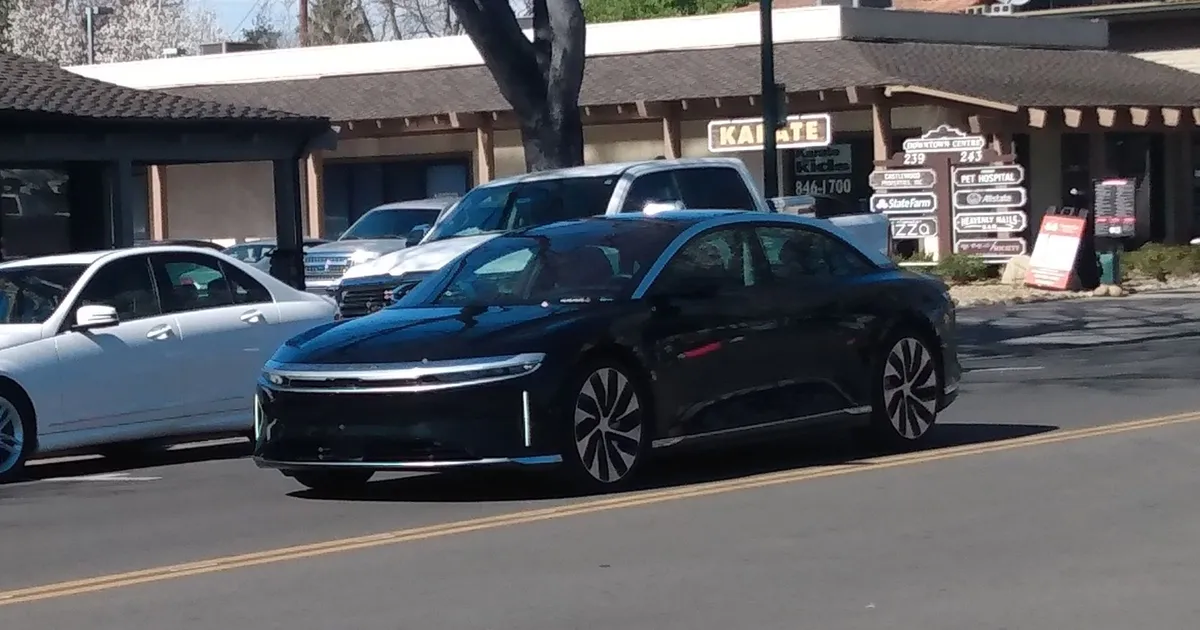
The Lucid Air is the car that makes every other luxury EV look ordinary on range. The base Pure costs $70,900 before destination and goes 420 miles on the EPA cycle, which is further than any other pick here at any price below $114,900. The Grand Touring costs $114,900 and goes 512 miles on 19-inch wheels, the longest EPA range of any electric car on sale in the U.S. today. No other luxury EV in this guide comes within 100 miles of it.
The Pure is the smart buy. It has 430 horsepower, rear-wheel drive, and an 84 kWh usable battery, and its 420 miles of range means most owners will charge at home and rarely think about public charging at all. Destination is $1,500, so the delivered Pure is $72,400. The Touring costs $79,900, adds all-wheel drive with 620 horsepower, and goes 431 miles. The Grand Touring adds 819 horsepower and the 512-mile range, but the $44,000 jump from the Pure buys only 92 extra miles of EPA range, about $478 per extra mile. Buy the Grand Touring for the power and the equipment, not for the range alone.
The cabin is the Air’s other strength. It is quiet, spacious in the rear, and finished in real materials, with a glass canopy roof on higher trims. The Air won the World Luxury Car award in 2023. The 2026 winner of that award is the Lucid Gravity SUV, not the Air, so do not let a listing confuse the two.
Charging needs care. The Air still uses a CCS1 port, not the NACS port that Tesla uses, and Lucid’s own $220 NACS-to-CCS1 adapter is the way into the Supercharger network, which opened to all Airs on July 31, 2025. The catch is speed: the adapter is capped at up to 50 kW, because the Air’s 900-volt system meets Tesla’s 400-volt Supercharger hardware, so Lucid says you get up to 200 miles of range per charging hour on a Supercharger. On a 350 kW CCS fast charger the Touring can charge at up to 250 kW, so for road trips you will want CCS chargers, not Superchargers. Battery warranty is 8 years or 100,000 miles.
Buy the Air if you want the longest range and the lowest cost per mile in this group. Skip it if you charge mostly at Superchargers and want full-speed charging there, because the 50 kW cap is a real limit.
2. Mercedes-Benz EQS Sedan: the comfort flagship
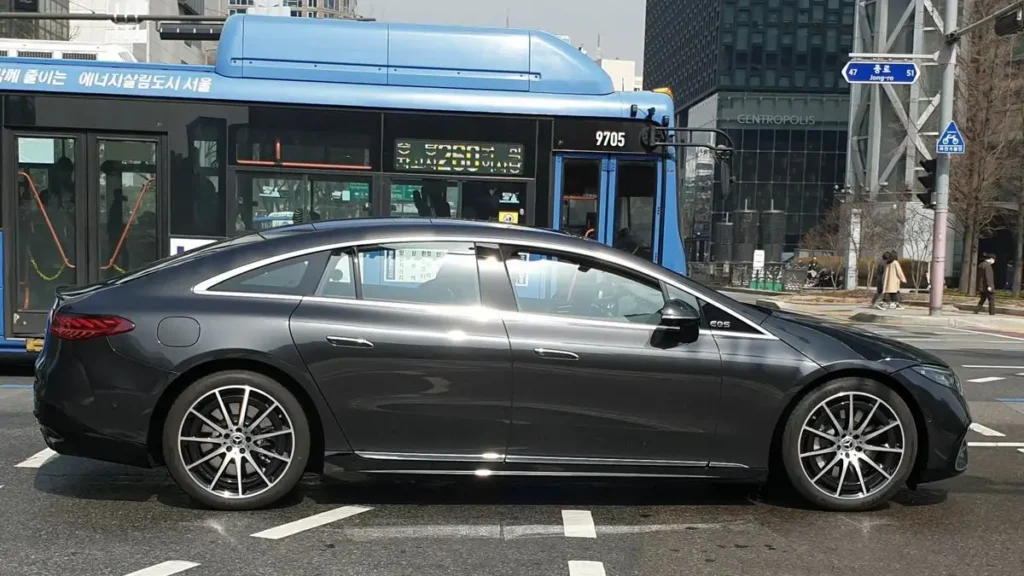
The EQS Sedan is the quietest, softest-riding car in this guide, and the one that feels most like a traditional luxury flagship. The 450+ costs $99,900 before destination ($101,250 with the $1,350 destination fee) and goes 390 miles on the EPA cycle from a 118 kWh battery. The 450 4MATIC costs $102,900 and goes 367 miles. The 580 4MATIC costs $123,900, goes 371 miles, and makes 536 horsepower. All three seat five.
Comfort is where the EQS earns its price. The rear seat has more legroom than any other sedan here, the standard Hyperscreen stretches across the cabin, and the ride is tuned for silence rather than sport. The 450+ makes 355 horsepower and reaches 60 mph in 5.9 seconds, which is quick enough for a car of this size. If you spend most of your time in the back seat, or you drive long distances and want the trip to feel effortless, this is the pick.
Charging is straightforward for a 2026 car. The EQS still uses a CCS1 port, but a NACS adapter is standard on 2026 models, and Supercharger access has been open since February 2025. It charges at up to 200 kW, taking about 31 minutes from 10 to 80 percent. Native NACS comes with the 2027 models, so if you buy a 2026 car, keep the adapter in the car.
The EQS also has the longest battery warranty in this group: 10 years or 155,000 miles. The basic warranty is 4 years or 50,000 miles. For the full Mercedes electric lineup, including the smaller EQE, see our Mercedes electric car guide.
Buy the EQS if comfort and rear-seat space matter more than range per dollar. Skip it if you want the most range for the money, because the Lucid Air Pure costs $29,000 less and goes 30 miles further.
3. BMW i7: the chauffeur’s choice
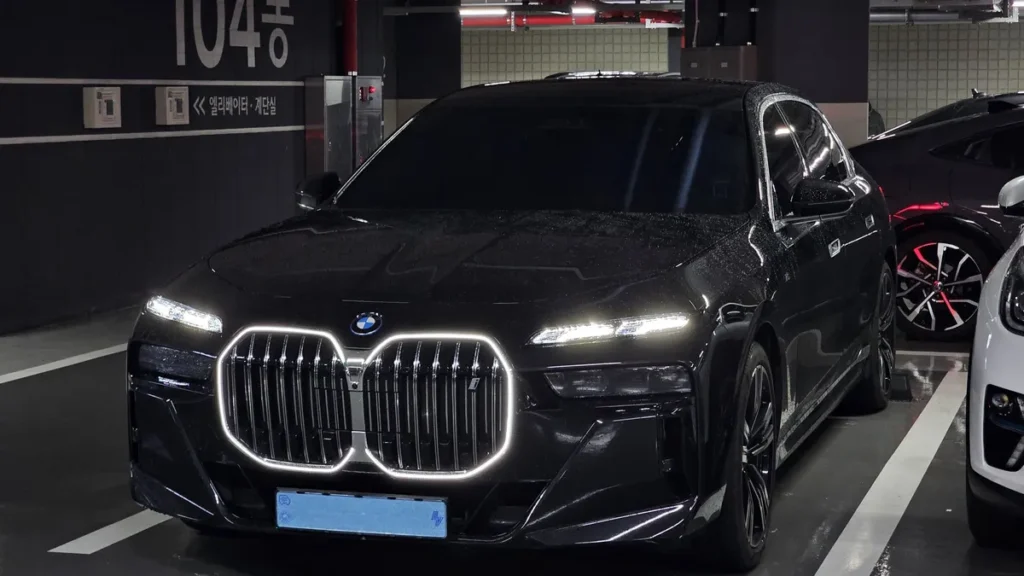
The i7 is the car to buy if someone else drives you, or if you want the most luxurious rear seat in any electric car. The eDrive50 costs $105,700 before destination ($106,875 with the $1,175 destination fee) and goes 314 miles on the EPA cycle on 19-inch wheels, with 449 horsepower and rear-wheel drive. The xDrive60 costs $124,200 and goes 311 miles on 19-inch wheels, 296 miles on 20-inch wheels, and 308 miles on 21-inch wheels, so check the wheels before you quote a range. The M70 costs $168,500, goes 285 miles, and makes 650 horsepower.
The rear seat is the point of this car. An available 31-inch Theater Screen folds down from the roof, the doors close themselves, and the ride is softer and quieter than the 7 Series gasoline car it replaces. The i7 is a big car, and it drives like one: calm, heavy, and unhurried. It is not the car to buy for a tight parking garage or a twisty road.
Charging has a trap. The i7 uses a CCS1 port, and Supercharger access opened on December 10, 2025, but you need the BMW-approved Lectron Vortex Plus adapter, about $180, and a Remote Software Upgrade before it works. Cars built before spring 2026 needed that update, so if you buy a 2026 i7, ask the dealer whether the update is installed. Native NACS comes with the 2027 i7. DC charging peaks at 195 kW from the 101.7 kWh usable battery, and the battery warranty is 8 years or 100,000 miles.
Buy the i7 if the rear seat is where you will spend your time. Skip it if you want the most range per dollar, because the eDrive50 costs $38,600 more than the BMW i5 and goes about the same distance.
4. Porsche Taycan: the driver’s luxury EV
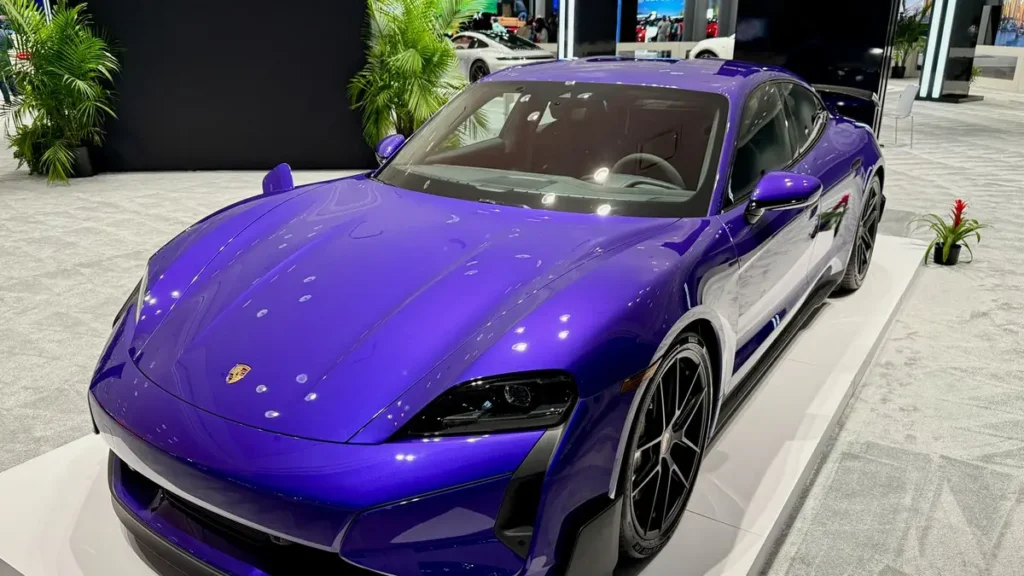
The Taycan is the only car in this guide that feels like a sports car first and a luxury car second, and it is the best-driving electric car you can buy at this price. The base rear-wheel-drive Taycan costs $105,800 before destination ($107,795 with the $1,995 destination fee) and goes 274 miles on the EPA cycle with the standard 82.3 kWh battery.
The Performance Battery Plus option costs $5,780, raises the battery to 97 kWh, and raises the range to 318 miles, which is the option to buy. The Taycan 4 costs $109,900 and goes 251 miles, or 294 miles with the larger battery. The 4S costs $125,900 and goes 295 miles on Porsche’s own figures, though the EPA dataset shows 315 miles for a 4S with the larger battery on 19-inch all-season tires, so the 4S range depends on the wheels and tires you choose.
The Taycan charges faster than anything else here: up to 320 kW on a compatible DC fast charger, which is the highest peak in this group. It also uses a CCS1 port, and Supercharger access opened on September 9, 2025. A NACS DC adapter is included free with new model-year 2026 Taycans, so you do not need to buy one. Battery warranty is 8 years or 100,000 miles, with an 80 percent capacity floor for the first 3 years or 37,000 miles, then 70 percent.
The trade-off is space. The Taycan is a low, four-door coupe with a small rear seat and a small trunk, and it is the least practical car in this guide. The Cross Turismo wagon version adds space and is covered in our EV wagon guide. Buy the Taycan if you love driving and want the fastest charging. Skip it if you need rear-seat room, because the EQS and the i7 are both far roomier for similar money.
5. Audi A6 Sportback e-tron: the balanced executive sedan
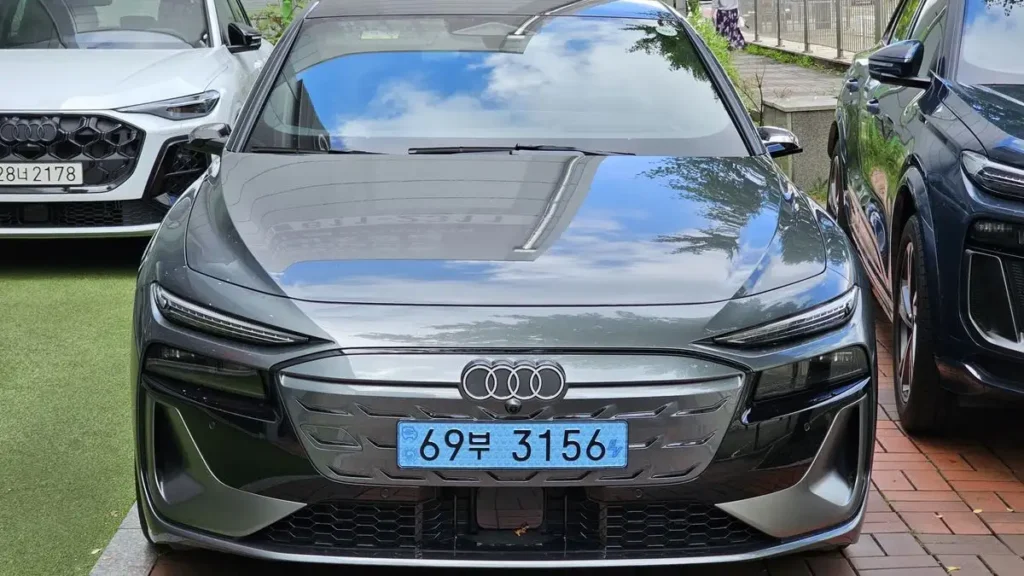
The A6 Sportback e-tron is the most balanced car in this guide, and the one that asks for the fewest compromises. It is a 2027 model year car, on sale in the U.S. since the second quarter of 2026, and it costs $66,700 before destination ($68,095 with the $1,395 destination fee). The rear-wheel-drive version goes 348 miles on the EPA cycle, and the $800 Ultra package raises that to 395 miles, which is the best range per dollar in this group after the Lucid Air. The quattro all-wheel-drive version costs $68,700 and goes 327 miles, or 360 miles with the Ultra package. The S6 costs $79,600, goes 326 miles, and makes 543 horsepower.
The A6 e-tron is an 800-volt car with a 100 kWh battery (94.4 kWh usable), and it charges at up to 270 kW, going from 10 to 80 percent in about 21 minutes. That makes it the fastest-charging car here after the Taycan, and far faster than the EQS or the i7. The liftback body gives it a large cargo opening, which the sedan-shaped rivals do not have, though rear headroom is tight at 35.4 inches.
Charging needs an adapter. The A6 e-tron uses a CCS1 port, and Supercharger access opened on September 9, 2025, but you need Audi’s NACS DC adapter, $200 MSRP. New cars arriving from the port include the adapter as a port-installed accessory, so check the window sticker before you buy one separately. Battery warranty is 8 years or 100,000 miles.
Buy the A6 e-tron if you want a luxury sedan that does everything well for the least money. The $800 Ultra package is the best value in this whole guide: $800 for 47 extra miles, about $17 per extra mile. Skip it only if you need the rear headroom of a taller car, because the Lyriq gives you that for less money.
6. BMW i5: the midsize executive sedan
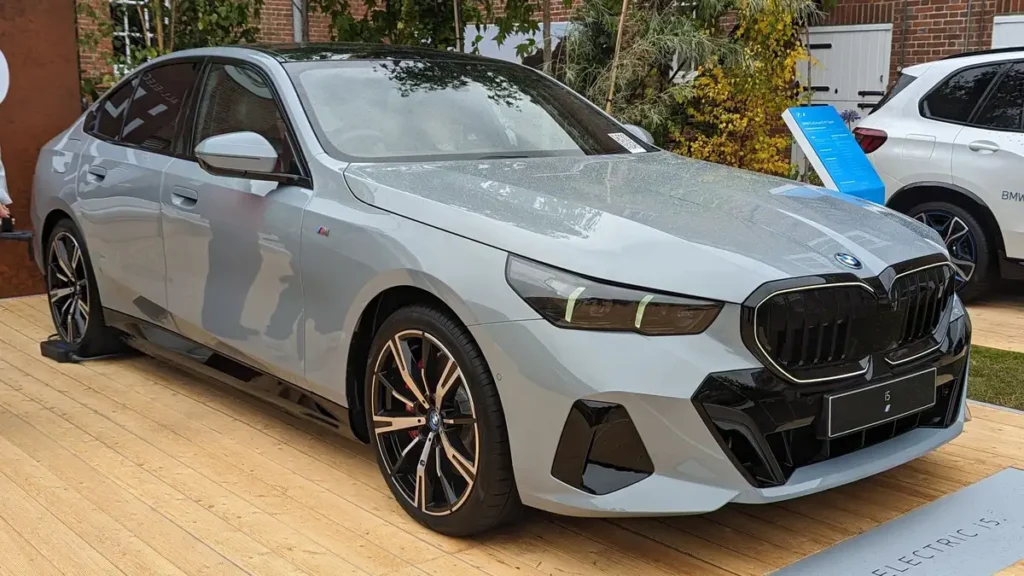
The i5 is the i7’s smaller, cheaper, more practical sibling, and for most buyers it is the better BMW. The eDrive40 costs $67,100 before destination ($68,275 with the $1,175 destination fee) and goes 310 miles on the EPA cycle on 19-inch wheels, with 335 horsepower and rear-wheel drive. On 21-inch wheels it goes 278 miles. The xDrive40 costs $70,100 and goes 259 to 278 miles. The M60 costs $84,100 and goes 253 miles.
The 2026 i5 is better than the 2025 car because of a hardware update: a new inverter and lower-friction bearings raised the eDrive40’s range from 295 miles to 310 miles. The i5 is a normal-sized executive sedan with a usable rear seat and trunk, and it drives like a BMW should: precise, quiet, and comfortable. It does not have the i7’s Theater Screen or its rear-seat theater, but it also does not have the i7’s size or price.
Charging is the same story as the i7. The eDrive40 and xDrive40 use a CCS1 port and need the BMW-approved Lectron Vortex Plus adapter, about $180, plus a software update, for Supercharger access. The 2026 i5 M60 is the first BMW sold in the U.S. with a native NACS port, and i5 models built from March 2026 get one, so the build date matters. DC charging peaks at 205 kW from the 84.3 kWh usable battery, and the battery warranty is 8 years or 100,000 miles.
Buy the i5 if you want a BMW luxury sedan at a sensible price. Skip it if you need the longest range, because the A6 e-tron costs about the same and goes 38 miles further, or 85 miles further with the Ultra package.
7. Cadillac Lyriq: the luxury SUV value pick
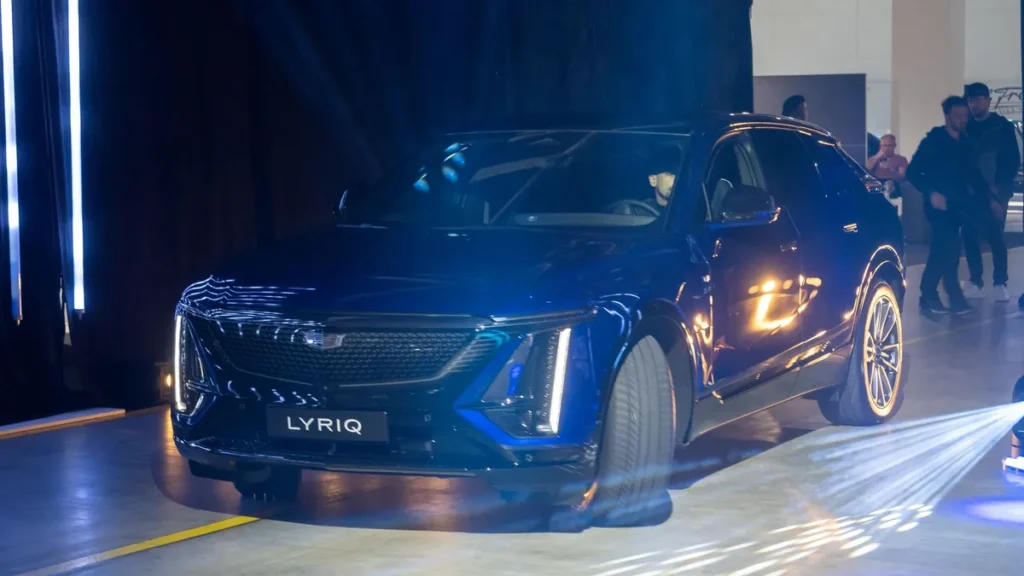
The Lyriq is the cheapest pick in this guide and one of the best values. The Luxury rear-wheel-drive version costs $59,200 before destination ($61,195 with the $1,995 destination fee, which is GM’s own figure) and goes 326 miles on the EPA cycle. All-wheel drive costs more and goes 319 miles, or 303 miles with the 19.2 kW onboard charger. The LYRIQ-V costs $78,595, goes 285 miles, makes 615 horsepower, and reaches 60 mph in 3.3 seconds.
The Lyriq is a midsize SUV with five seats, a quiet cabin, and Super Cruise as standard equipment. It is the only pick here under $60,000 before destination, and it undercuts the German sedans by $8,000 to $46,000 while going further than most of them. The 102 kWh battery charges at up to 190 kW, taking about 33 minutes from 10 to 80 percent, and Cadillac says it can add up to 86 miles of range in about 10 minutes.
Charging is the Lyriq’s weak point only in one way: it uses a CCS1 port, not a native NACS port, despite a claim on one website that the 2025 Lyriq went NACS, which is wrong. Supercharger access has been open since September 2024 with GM’s NACS DC adapter, which costs $299 on the GM Energy store. Battery warranty is 8 years or 100,000 miles with a 75 percent capacity floor.
For the full Cadillac and GM electric lineup, including the Optiq and the Escalade IQ, see our GM electric cars guide.
Buy the Lyriq if you want a luxury SUV for the least money. Skip it if you need seven seats, because the Lyriq seats five, and the Escalade IQ is the seven-seat pick.
8. Cadillac Escalade IQ: the flagship luxury SUV
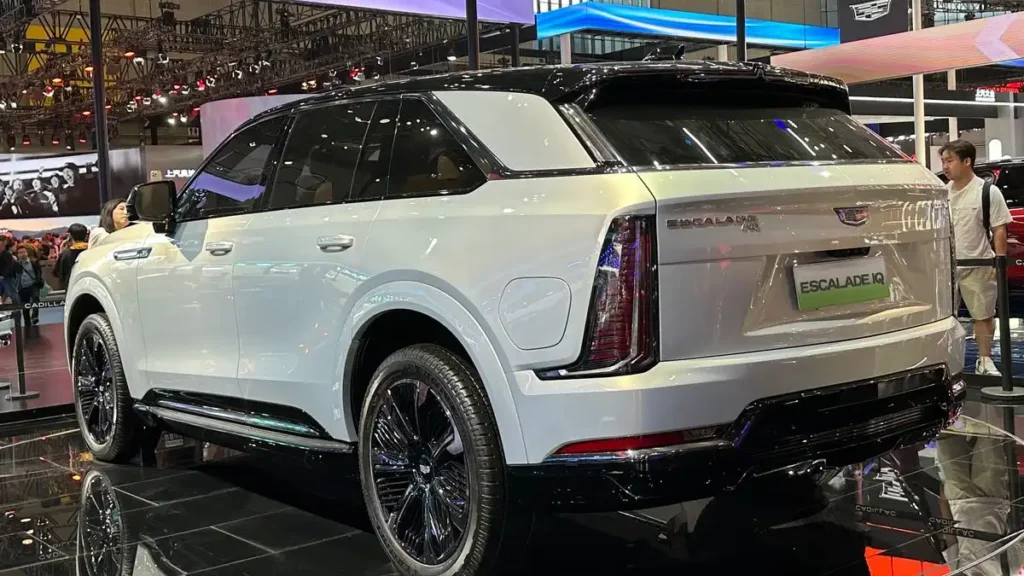
The Escalade IQ is the biggest, most expensive SUV in this guide, and the one with the second-longest range. The Luxury version costs $127,405 before destination ($130,300 with the $2,895 destination fee, which is GM’s own figure) and goes a Cadillac-estimated 465 miles. That range figure is a Cadillac estimate, not an EPA label figure, because the IQ is above the EPA’s label weight limit, so GM’s summary box calling it EPA-estimated is misleading and this guide uses the Cadillac estimate. The Premium Luxury version goes 460 miles, and the long-wheelbase IQL also goes 460 miles.
The IQ has a 205 kWh battery, the largest in this group, and it charges at up to 350 kW, adding about 116 miles of range in 10 minutes. It makes 750 horsepower and 785 lb-ft of torque, reaches 60 mph in 4.7 seconds, seats seven, and tows up to 8,000 pounds. It is the only pick here that can do all of those things at once: carry seven people, tow a trailer, and go further than any luxury SUV.
Charging is the same as the Lyriq: CCS1 port, Supercharger access since September 2024, GM’s $299 NACS DC adapter. Battery warranty is 8 years or 100,000 miles. For family buyers, the seven seats and the cargo space matter more than the badge, and our guide to the best electric cars for families covers the other family picks.
Buy the Escalade IQ if you want the biggest luxury electric SUV with the longest range. Skip it if you do not need seven seats or towing, because the Lyriq gives you the same Cadillac cabin and Super Cruise for $68,205 less.
9. Tesla Model S: the final-inventory pick
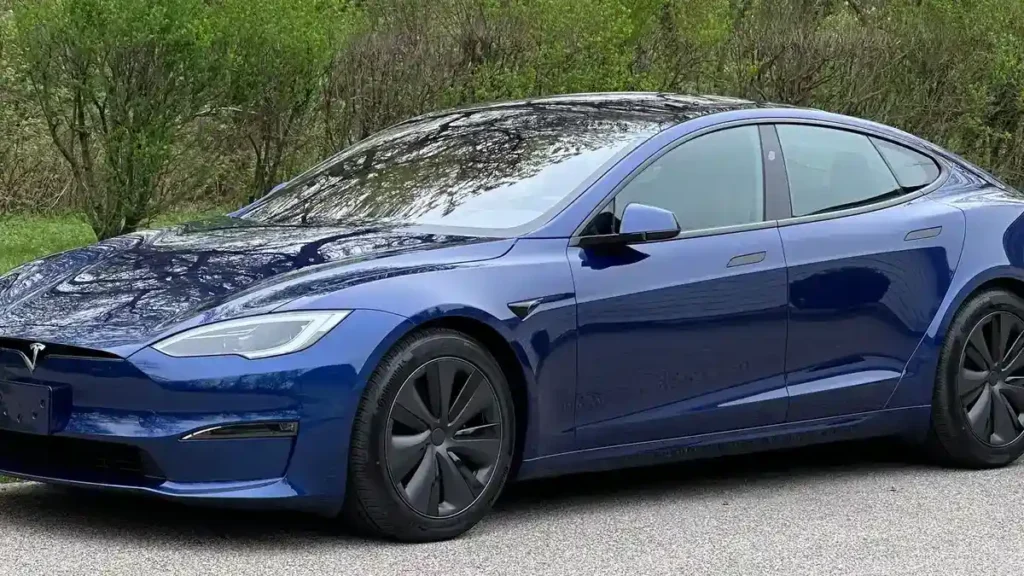
The Model S is the only pick in this guide you cannot order new, and that changes everything about it. Tesla ended Model S production in May 2026. The last car was built around May 10, 2026, custom orders closed on April 1, 2026, and the end was announced on Tesla’s fourth-quarter 2025 earnings call in January 2026. What remains is 2026 inventory, priced at $109,990 for the all-wheel-drive version and $124,990 for the Plaid, both before destination, from the April 2026 reprice that included the Luxe Package. Do not use the $94,990 figure that fueleconomy.gov still lists: that is the pre-reprice price.
The car itself is still excellent. The all-wheel-drive version goes 410 miles on the EPA cycle on 19-inch wheels, or 380 miles on 21-inch wheels, and makes 670 horsepower. The Plaid goes 368 miles on 19-inch wheels and makes 1,020 horsepower. The Model S is the only pick here with a native NACS port, so it charges at Superchargers at up to 250 kW with no adapter and no software update. Battery warranty is 8 years or 150,000 miles, the longest mileage warranty in this group.
Buy the Model S only if you specifically want a Tesla, you want the native Supercharger experience, and you can find the exact car you want in remaining inventory. Do not buy it as a normal new car, because there is no factory order, no custom build, and no guarantee your preferred color and wheels are still available. If you want a non-Tesla luxury EV, see our guide to the best non-Tesla electric cars.
Charging: port, adapter and network are three separate checks
The biggest trap in luxury EV shopping in 2026 is assuming that Supercharger access means fast Supercharger charging. It does not. Three things matter, and they are different for every car.
First, the port on the car. Only the Model S in this group has a native NACS port. Every other pick has a CCS1 port. That will change with the 2027 model year, when the EQS, the i7 and others switch to native NACS, but for 2026 cars it is CCS1.
Second, the adapter. Five of the nine picks need an adapter you must buy or check for: Lucid $220, Audi $200, BMW about $180, GM $299. Mercedes includes one with 2026 EQS models, Porsche includes one free with new 2026 Taycans, and Tesla needs none. Check the window sticker before you buy an adapter separately, because some cars now include one.
Third, the network access and the speed. Every pick here can use Tesla Superchargers, but the speed varies a lot. The Model S charges at up to 250 kW with no adapter. The Lucid Air is capped at up to 50 kW on a Supercharger, which is slow enough that you should use CCS fast chargers for road trips instead. The BMW i7 and i5 need a software update before the adapter works. The Taycan and the A6 e-tron opened Supercharger access on September 9, 2025, and the Lyriq and Escalade IQ have had it since September 2024.
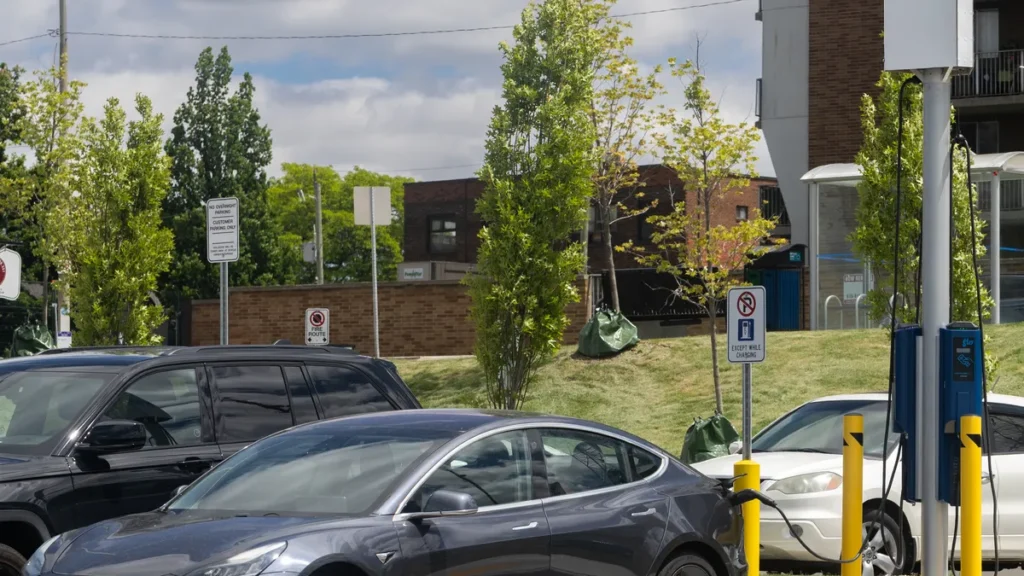
| Pick | Port | Adapter | Supercharger access |
|---|---|---|---|
| Lucid Air | CCS1 | Lucid $220, capped at 50 kW | Yes, since Jul 31, 2025 |
| EQS Sedan | CCS1 | Standard on 2026 models | Yes, since Feb 2025 |
| BMW i7 | CCS1 | Lectron Vortex Plus, about $180, plus software update | Yes, since Dec 10, 2025 |
| Porsche Taycan | CCS1 | Free with new MY2026 cars | Yes, since Sep 9, 2025 |
| Audi A6 e-tron | CCS1 | Audi $200 | Yes, since Sep 9, 2025 |
| BMW i5 | CCS1 (eDrive40/xDrive40) | Lectron Vortex Plus, about $180, plus software update | Yes, since Dec 10, 2025 |
| Cadillac Lyriq | CCS1 | GM $299 | Yes, since Sep 2024 |
| Cadillac Escalade IQ | CCS1 | GM $299 | Yes, since Sep 2024 |
| Tesla Model S | NACS (native) | None | Yes, native |
Can you charge a luxury EV at a Tesla Supercharger?
Yes. Every car in this guide can charge at Tesla Superchargers in the U.S., but eight of the nine need a NACS-to-CCS1 adapter, and the Lucid Air is capped at 50 kW there, so check the adapter and the speed before you plan a trip around Superchargers. For the full connector guide, see our article on whether all electric cars use the same charger.
Which luxury electric car has the longest range?
The 2026 Lucid Air Grand Touring has the longest range of any of the best luxury electric cars on sale in the U.S., with 512 miles of EPA range on 19-inch wheels. The next longest are the Cadillac Escalade IQ at a Cadillac-estimated 465 miles, the Lucid Air Pure at 420 miles, and the Tesla Model S at 410 miles.
Range is not only about the biggest number. The Air Pure costs $44,000 less than the Grand Touring and gives up only 92 miles of range, which is why it is the best buy for most people. The Escalade IQ’s 465 miles is a Cadillac estimate, not an EPA label figure, so it is not directly comparable to the EPA figures of the other picks. And range depends on wheels: the Grand Touring drops to 480 miles on 20-inch wheels and 446 miles on 21-inch wheels, so check the wheels on the exact car you buy.
The cost-per-mile view
Price divided by EPA range shows how much you pay for each mile of range, and it separates the value picks from the prestige picks. The Lucid Air Pure is the cheapest per mile in this group at $168.81, followed closely by the Audi A6 e-tron with the Ultra package at $170.89 and the Cadillac Lyriq at $181.60. The Porsche Taycan is the most expensive per mile at $386.13 with the standard battery, because you pay for the driving experience, not the range.
| Pick | MSRP before destination | Best EPA range | Cost per EPA mile |
|---|---|---|---|
| Lucid Air Pure | $70,900 | 420 mi | $168.81 |
| Audi A6 e-tron (Ultra) | $67,500 | 395 mi | $170.89 |
| Cadillac Lyriq | $59,200 | 326 mi | $181.60 |
| Audi A6 e-tron | $66,700 | 348 mi | $191.67 |
| BMW i5 eDrive40 | $67,100 | 310 mi | $216.45 |
| Lucid Air Grand Touring | $114,900 | 512 mi | $224.41 |
| Mercedes-Benz EQS 450+ | $99,900 | 390 mi | $256.15 |
| Tesla Model S AWD | $109,990 | 410 mi | $268.27 |
| Cadillac Escalade IQ | $127,405 | 465 mi | $273.99 |
| BMW i7 eDrive50 | $105,700 | 314 mi | $336.62 |
| Porsche Taycan (Perf Battery Plus) | $111,580 | 318 mi | $350.88 |
| Porsche Taycan (base) | $105,800 | 274 mi | $386.13 |
The Ultra package on the A6 e-tron is the bargain of the group: $800 buys 47 extra miles, about $17 per extra mile. The Taycan’s Performance Battery Plus costs $5,780 for 44 extra miles, about $131 per extra mile. And the jump from the Air Pure to the Air Grand Touring costs $44,000 for 92 extra miles, about $478 per extra mile, which is the most expensive range in this guide. Pay for range only when you actually need it.
Worked example: a 280-mile weekend trip
Most owners charge at home to 90 percent and plan to arrive with about 20 percent left, which leaves a 70 percent planning window, not the full EPA range. Multiply any EPA range by 0.7 to get the distance you can drive between charges without worrying.
On a 280-mile weekend trip, four of the nine best luxury electric cars make it without stopping on that window. The Lucid Air Grand Touring arrives with 78.4 miles to spare, the Escalade IQ with 45.5 miles, the Air Pure with 14.0 miles, and the Model S with 7.0 miles. The Audi A6 e-tron with the Ultra package misses by 3.5 miles, and the EQS 450+ misses by 7.0 miles, so both need one short stop. The Taycan with the standard battery needs a longer stop, because its 70 percent window is only 191.8 miles.
| Pick | EPA range | 70% planning window | Miles left after 280 miles |
|---|---|---|---|
| Lucid Air Grand Touring | 512 mi | 358.4 mi | 78.4 |
| Cadillac Escalade IQ | 465 mi | 325.5 mi | 45.5 |
| Lucid Air Pure | 420 mi | 294.0 mi | 14.0 |
| Tesla Model S AWD | 410 mi | 287.0 mi | 7.0 |
| Audi A6 e-tron (Ultra) | 395 mi | 276.5 mi | -3.5 |
| Mercedes-Benz EQS 450+ | 390 mi | 273.0 mi | -7.0 |
| Audi A6 e-tron | 348 mi | 243.6 mi | -36.4 |
| Cadillac Lyriq | 326 mi | 228.2 mi | -51.8 |
| Porsche Taycan (Perf Battery Plus) | 318 mi | 222.6 mi | -57.4 |
| BMW i7 eDrive50 | 314 mi | 219.8 mi | -60.2 |
| BMW i5 eDrive40 | 310 mi | 217.0 mi | -63.0 |
| Porsche Taycan (base) | 274 mi | 191.8 mi | -88.2 |
The lesson is that a 30-mile difference in EPA range can decide whether you stop. If your regular trip is 280 miles, the Air Pure, the Model S and the Escalade IQ make it, and the EQS does not, even though the EQS has 390 miles of EPA range. Check your own regular trip against the 70 percent window, not against the EPA number.
Is a luxury EV worth it?
Yes, if you value a quiet cabin, real materials, a smooth ride and strong driver assistance, and you keep the car long enough to enjoy them. No, if you only want range and charging, because a mainstream EV gives you both for less money.
The premium buys things that are hard to measure: the EQS’s silence, the i7’s rear-seat theater, the Taycan’s handling, the Escalade IQ’s space. It also buys longer battery warranties, up to 10 years or 155,000 miles on the EQS, and standard equipment like Super Cruise on the Lyriq that costs extra elsewhere.
What it does not buy anymore is a tax credit: the federal credit ended for vehicles acquired after September 30, 2025, so do not subtract $7,500 from any price in this guide. The best value picks here, the Lyriq at $59,200, the A6 e-tron at $66,700, and the Air Pure at $70,900, are worth it on range and comfort alone. The most expensive picks are worth it only if you want exactly what they do best.
Which of the best luxury electric cars should you buy?
- Longest range: Lucid Air Grand Touring, 512 miles EPA, $114,900.
- Best value: Lucid Air Pure, 420 miles EPA, $70,900, and the cheapest cost per mile in the group.
- Most comfortable: Mercedes-Benz EQS 450+, 390 miles EPA, $99,900, with the longest battery warranty.
- Best rear seat: BMW i7 eDrive50, 314 miles EPA, $105,700.
- Best to drive: Porsche Taycan with the Performance Battery Plus, 318 miles EPA, $111,580.
- Best all-rounder: Audi A6 Sportback e-tron with the Ultra package, 395 miles EPA, $67,500.
- Best midsize sedan value: BMW i5 eDrive40, 310 miles EPA, $67,100.
- Best luxury SUV value: Cadillac Lyriq, 326 miles EPA, $59,200.
- Best flagship SUV: Cadillac Escalade IQ, a Cadillac-estimated 465 miles, $127,405.
- Best for the Supercharger network: Tesla Model S, 410 miles EPA, $109,990, remaining inventory only.
If you can only pick one, pick the Lucid Air Pure. It has the longest range under $71,000, the lowest cost per mile, and a cabin that belongs in a car costing far more.
Also worth knowing
Two cars sit above this guide’s price range and are worth a mention, not a pick. The Rolls-Royce Spectre costs $397,750 and goes 277 miles on the EPA cycle, and the Series II, a 2027 model year car, gets a NACS port and a 308-mile EPA estimate. The Cadillac Celestiq is hand-built in Detroit, costs in the low $400,000s, and goes a Cadillac-estimated 303 miles. Both are bespoke cars, not normal buys.
Three cheaper luxury entries are worth knowing about if your budget is lower. The Mercedes-Benz EQE 320+ sedan costs $64,950 and goes 308 miles on the EPA cycle. The Genesis Electrified G80 costs $76,000 for the 2026 model and goes 300 miles on the EPA cycle, which is 18 miles more than the 2023 to 2025 car. And the Cadillac Optiq costs $50,900 before destination, goes 317 miles on the EPA cycle, and is the cheapest way into a new luxury EV, as well as the native-NACS Cadillac.
How we checked
Every price, range, charging figure and warranty term in this guide was checked against a current primary source on November 20, 2026: the manufacturer’s own pages and news releases, the EPA and fueleconomy.gov dataset, and the IRS for the tax credit cutoff. MSRP is always before destination, with the destination fee stated next to it, and range is always EPA for the exact trim and wheels, except the Escalade IQ, whose range is a Cadillac estimate. Where sources disagreed, the guide uses the manufacturer’s figure and says so, as with the Taycan 4S range and the Escalade IQ estimate.
This article was written by Sam Wilson with AI assistance for research and drafting. No vehicle in this guide was test-driven by the author, and no dealer stock was audited. Prices are manufacturer list prices, not quotes for a specific car, so confirm the price, the wheels, the adapter and the delivery date with the dealer before you buy. The Model S figures apply only to remaining 2026 inventory, because production has ended.
Which luxury electric car has the longest range?
The 2026 Lucid Air Grand Touring, with 512 miles of EPA range on 19-inch wheels. The next longest are the Cadillac Escalade IQ at a Cadillac-estimated 465 miles, the Lucid Air Pure at 420 miles, and the Tesla Model S at 410 miles. Range drops with larger wheels, so check the wheels on the exact car you buy.
Can you charge a luxury EV at a Tesla Supercharger?
Yes, every car in this guide can charge at Tesla Superchargers in the U.S. The Model S does it natively with no adapter. The other eight need a NACS-to-CCS1 adapter, which costs $180 to $299 depending on the brand, and the Lucid Air is capped at 50 kW on Superchargers, so use CCS fast chargers for road trips in an Air.
Do luxury EVs qualify for the federal tax credit?
No. The federal new and used EV tax credits ended for vehicles acquired after September 30, 2025, under Public Law 119-21. No pick in this guide qualifies, and every pick also costs more than the credit’s price caps of $55,000 for a sedan and $80,000 for an SUV. Do not subtract any credit from the prices here.
Is a luxury EV worth it?
Yes, if you value a quiet cabin, real materials, a smooth ride and strong driver assistance, and you keep the car long enough to enjoy them. The best value picks are the Cadillac Lyriq at $59,200, the Audi A6 e-tron at $66,700, and the Lucid Air Pure at $70,900. The most expensive picks are worth it only if you want exactly what they do best.
Is the Tesla Model S still available to buy?
Only from remaining 2026 inventory. Tesla ended Model S production in May 2026 and closed custom orders on April 1, 2026. The all-wheel-drive version costs $109,990 before destination and goes 410 miles on the EPA cycle, but you cannot order a new one, so check what inventory is actually left before you decide.