Best Used EV SUV: 10 Picks Compared for U.S. Buyers
The best used EV SUV for most buyers is a 2022-2024 Hyundai Ioniq 5. A 2022 model typically asks about $21,915, the Long Range rear-wheel-drive version is rated at 303 miles by the EPA, and it charges faster than any other mainstream pick here. If you want the most space and the easiest charging, buy a Tesla Model Y Long Range instead. If you need three rows, the Kia EV9 and the Rivian R1S are the only real choices. Every price in this guide is a typical U.S. asking price from CarGurus, checked in November 2026, and every range figure is tied to the exact trim and model year it belongs to.
Best used EV SUVs at a glance
| Pick | Model years | Best EPA range | Typical asking price (Nov 2026) | Seats | Charging port |
|---|---|---|---|---|---|
| Hyundai Ioniq 5 | 2022-2024 | 303 mi (Long Range RWD) | $21,915-$27,534 | 5 | CCS1 |
| Tesla Model Y Long Range AWD | 2020-2024 | 330 mi (2022-2023); 310 mi (2024) | $27,102-$37,744 | 5 (7 optional) | NACS |
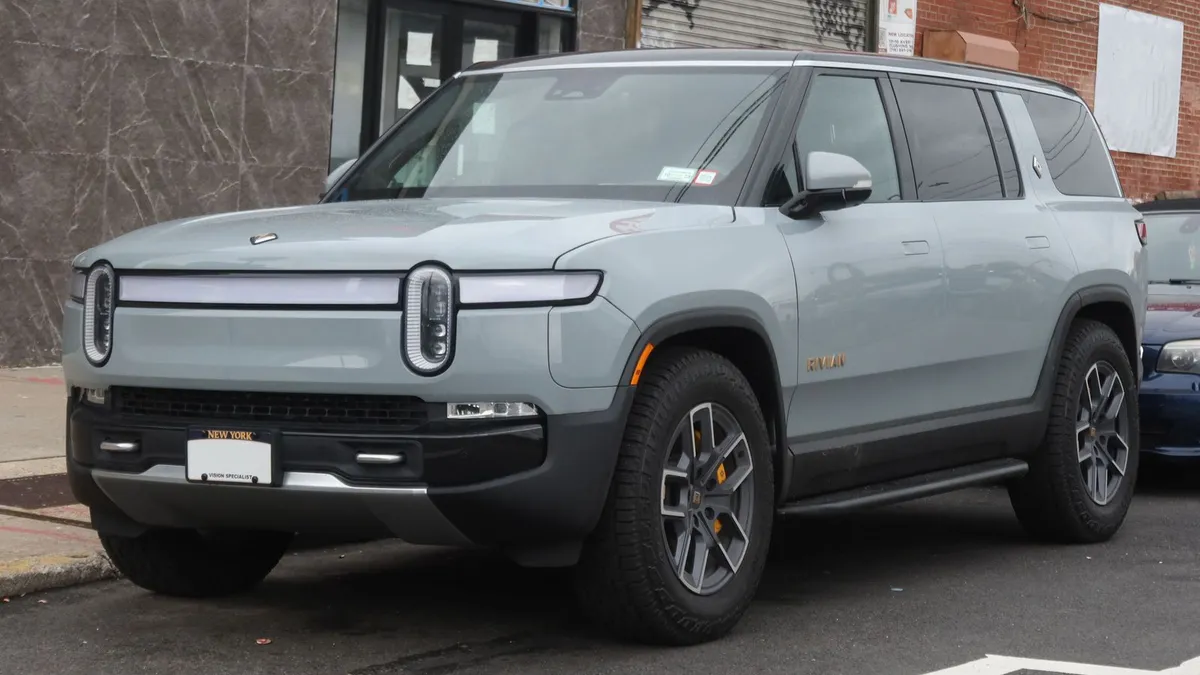
| Kia EV6 | 2022-2024 | 310 mi (Long Range RWD) | $21,915-$27,205 | 5 | CCS1 |
| Ford Mustang Mach-E | 2021-2024 | 320 mi (2024 Premium ER RWD) | $22,659-$32,644 | 5 | CCS1 |
| Volkswagen ID.4 | 2021-2024 | 291 mi (2024 Pro/Pro S RWD) | $18,371-$22,650 | 5 | CCS1 |
| Kia EV9 | 2024-2025 | 304 mi (Light Long Range RWD) | $41,398 (2024 avg) | 6-7 | CCS1 |
| BMW iX xDrive50 | 2022-2025 | 324 mi (2022-2024, 20-inch wheels) | $40,809-$45,700 | 5 | CCS1 |
| Rivian R1S | 2022-2024 | 352 mi (2023 Dual Large, 21-inch wheels) | $57,845-$60,480 | 7 | CCS1 |
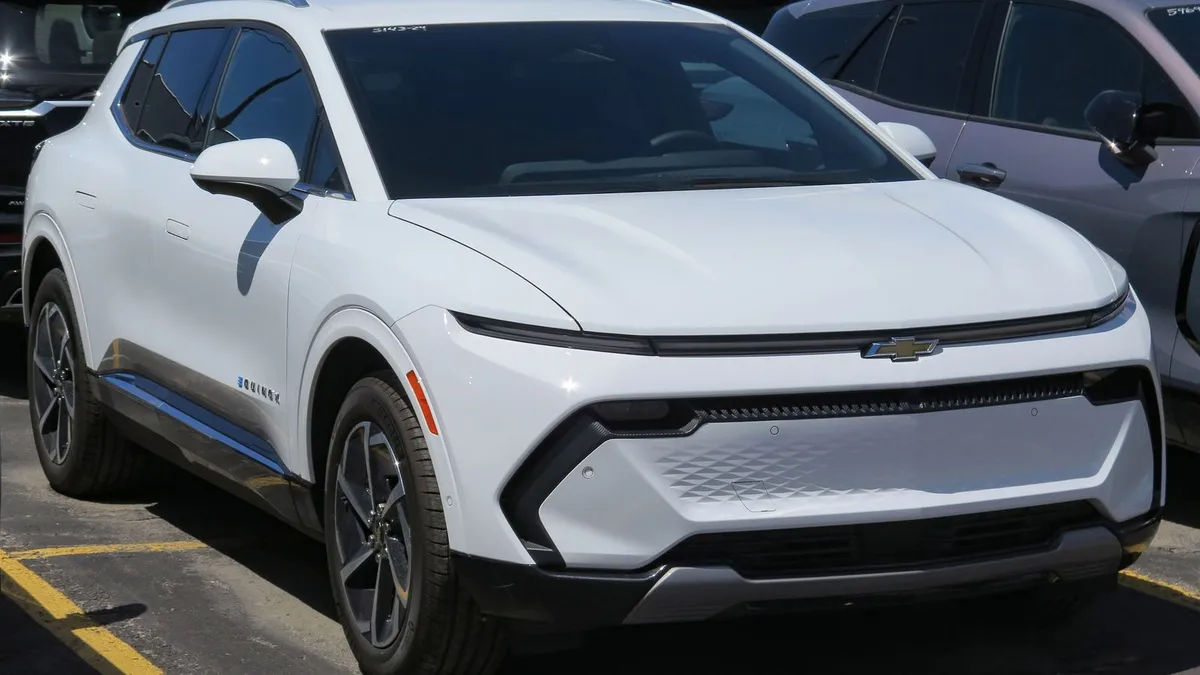
| Chevrolet Equinox EV | 2024-2025 | 319 mi (FWD) | $24,648-$26,530 | 5 | CCS1 |
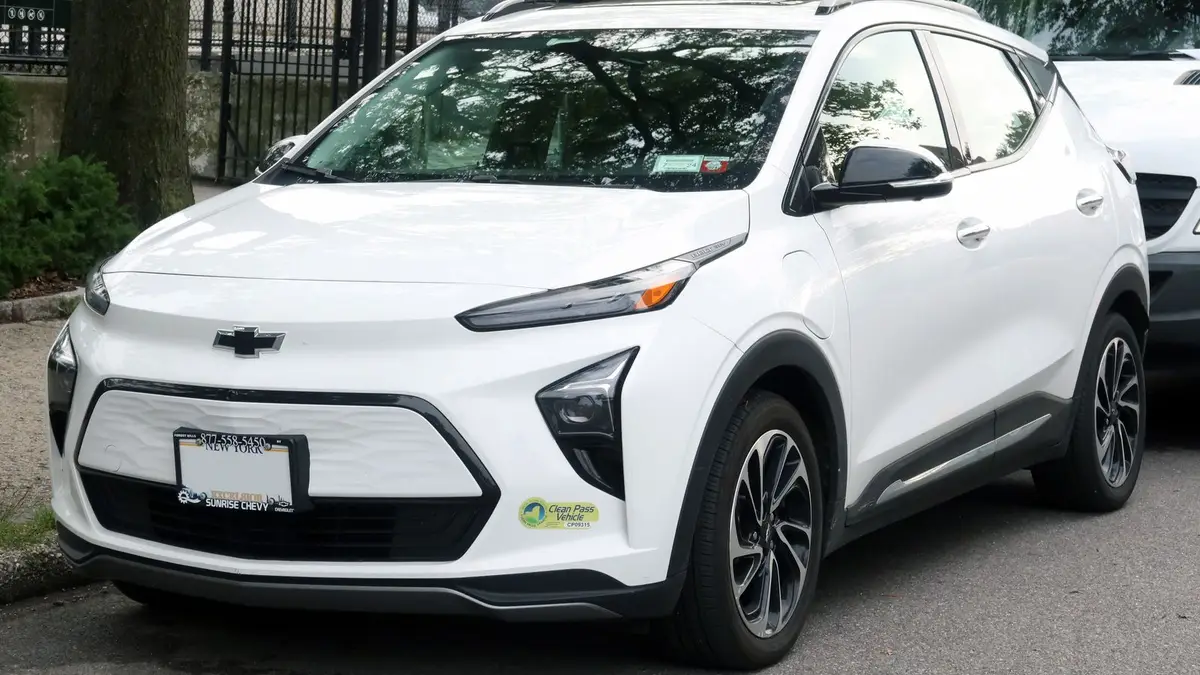
| Chevrolet Bolt EUV | 2022-2023 | 247 mi (all trims) | $19,495-$20,707 | 5 | CCS1 |
Prices are CarGurus asking-price averages by model year, checked November 9-17, 2026, before dealer fees. They are not verified inventory for any specific car. Two gaps to know: no 2022 ID.4 average and no 2024 R1S average were pulled, and the 2022 BMW iX page data was about 108 days old when checked. The EV9 2025 figure is different: CarGurus had no average block for it, so the $40,600-$50,900 range in its section comes from observed November 2026 listings, not an average.
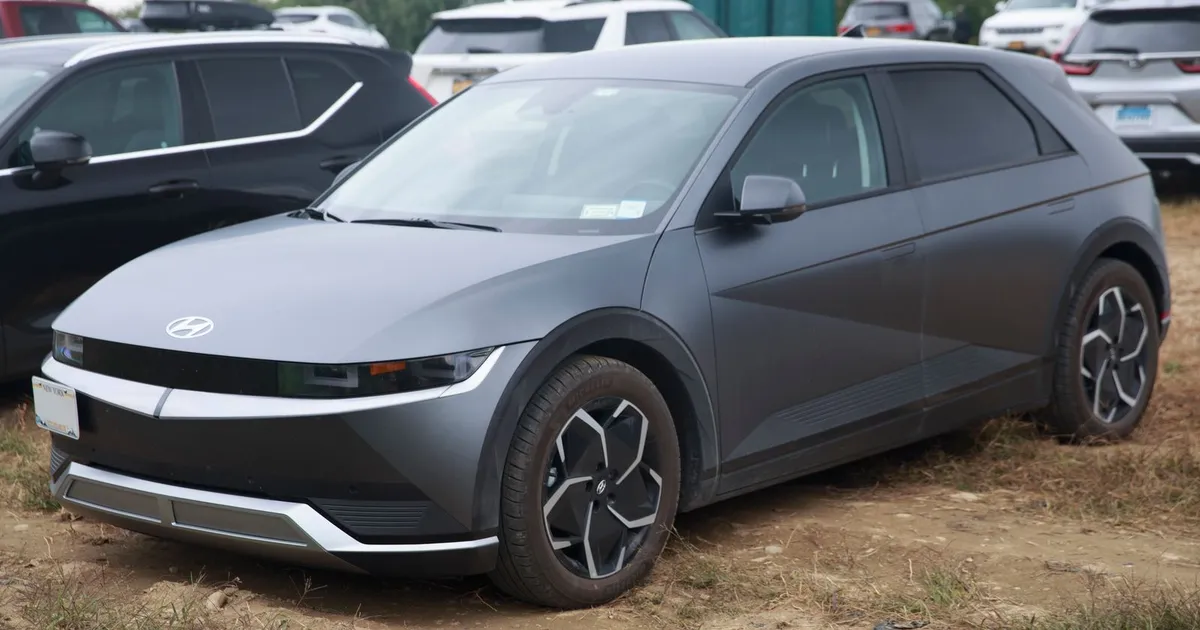
Hyundai Ioniq 5 (2022-2024): the best used EV SUV for most buyers
The Ioniq 5 is the pick because it does the three things that matter most in a used electric SUV at the same time: long range, fast charging and a low price. The Long Range rear-wheel-drive version is rated at 303 miles by the EPA, and the Standard Range version is rated at 220 miles. All-wheel-drive Long Range cars are rated at 256 miles, so check the window sticker before you assume the big number. EPA range figures
A 2022 Ioniq 5 typically asks $21,915, a 2023 asks $27,325 and a 2024 asks $27,534, so a 2022 car is the value buy if the battery checks out. When new, a 2022 SE started at $39,700 before destination. That is about $72.33 per EPA mile on the 2022 average price and the 303-mile rating, the lowest cost per mile of any pick in this guide.
Charging is the Ioniq 5’s real edge. It uses the 800-volt system that lets it take very high DC charging speeds, and it has a CCS1 port on 2022-2024 cars. The 2025 model switched to a native NACS port, so do not expect a 2022-2024 car to plug straight into a Tesla Supercharger. Hyundai gave a free NACS adapter only to owners who bought or leased on or before January 31, 2025, and that program closed on September 30, 2025. A buyer today pays about $250 for the adapter at a dealer. With the adapter, Supercharger access opened in March 2025.
Two checks matter more than anything else on this car. First, the battery warranty is 10 years or 100,000 miles and it transfers to later owners, so a 2022 car still has about six years of battery cover left.
Second, check the ICCU recall. The charging control unit can fail and stop charging the 12-volt battery, which can cause a loss of drive power. NHTSA campaign 24V-204 from March 2024 was superseded by 24V-868 in November 2024 and covers about 101,000 cars from 2022-2024. A small number of 2023-2024 cars also fall under campaign 26V-432 from July 2026 for misaligned battery-cell electrodes, a fire risk where the car should be parked outside. Run the VIN at nhtsa.gov/recalls and confirm both are closed before you pay.
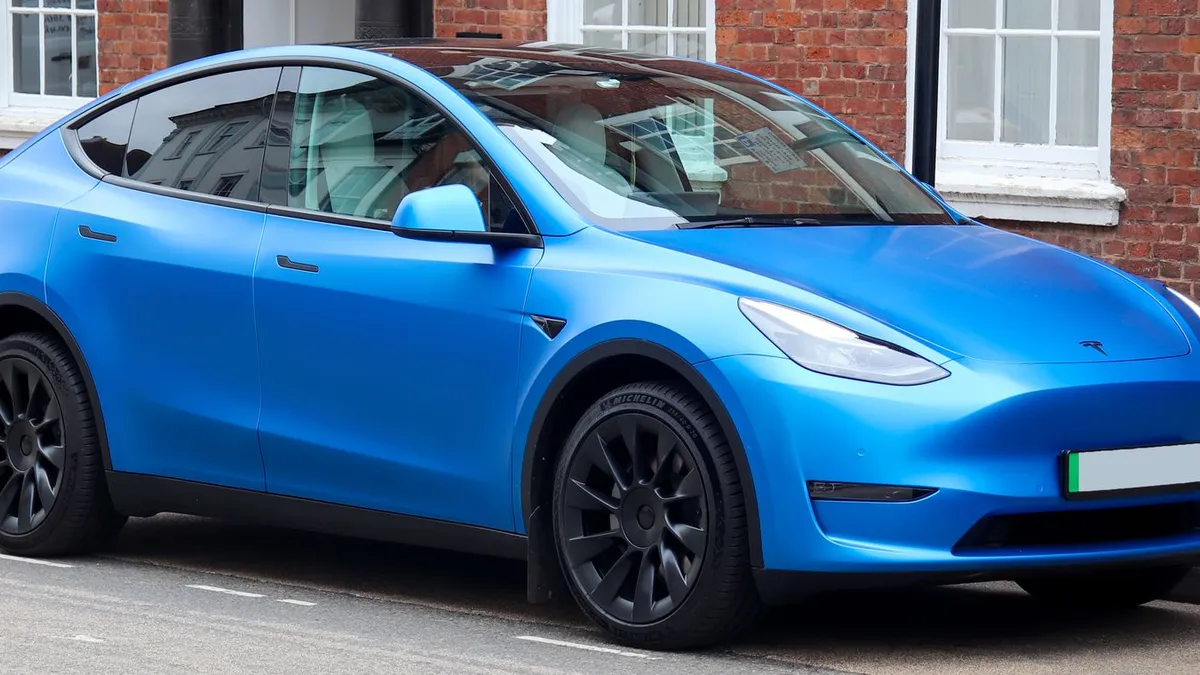
Tesla Model Y Long Range AWD (2020-2024): the most space and the easiest charging
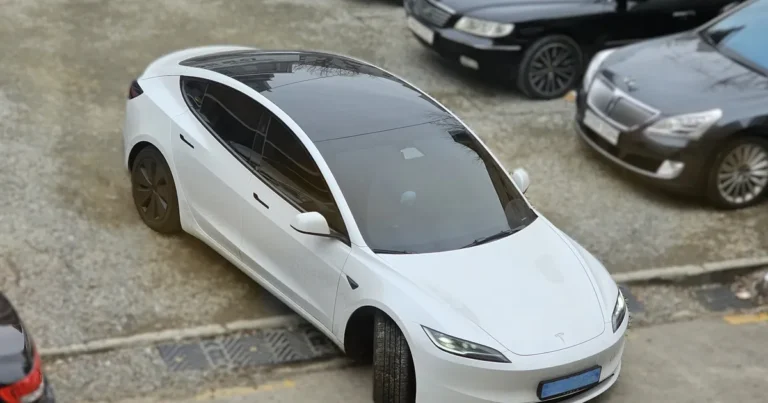
The Model Y is the pick if you want the biggest cargo area and charging with no adapter, no app juggling and no guesswork. It has a NACS port on every model year, so it plugs straight into the Supercharger network. The EPA range for the Long Range all-wheel-drive version is 316 miles for 2020, 326 for 2021, 330 for 2022 and 2023, and 310 for 2024. The 2024 drop is a re-rating under the EPA’s 2024 drive-mode averaging rule, not a smaller battery, so a 2023 car genuinely goes farther on paper than a 2024 car. EPA range figures
Typical asking prices run $27,102 for a 2021, $30,439 for a 2022, $34,261 for a 2023 and $37,744 for a 2024. That is about $103.82 per EPA mile on the 2023 average and the 330-mile rating, roughly $6,936 more than a 2023 Ioniq 5 for the same model year. You pay that premium for the cargo space, the charging network and the over-the-air updates, not for range. New prices were volatile: a 2021 Long Range cost $49,990, a 2022 peaked at $65,990, and a 2024 cost $47,990 after the April 2024 price cut.
The battery warranty is 8 years or 120,000 miles with a 70% capacity floor, so a 2020 car’s battery cover runs to 2028 from its in-service date and a 2024 car’s runs to 2032. The basic 4-year or 50,000-mile warranty is already expired on 2020-2021 cars. The optional third row is available only on the Long Range all-wheel-drive version. It cost $3,000 when it launched in 2021, rose to $4,000, returned to $3,000 in April 2023, and costs $2,500 on new orders since January 2026. Treat it as an occasional-use bench for small children, not a real seven-seat layout.
One warning from our own earlier work: do not trust old Tesla pages that say Basic Autopilot is standard on every new Tesla. New Model 3 and Model Y cars ordered in the U.S. since late January 2026 include Traffic-Aware Cruise Control and active safety features only. Autosteer is not included, and Full Self-Driving (Supervised) is a $99-per-month subscription. Check what driver-assistance features the specific used car actually has before you pay for it as a feature.
Kia EV6 (2022-2024): the driver’s pick, same bones as the Ioniq 5
The EV6 shares its platform with the Ioniq 5, so it shares the fast 800-volt charging and the long warranty, but it drives sharper and looks lower and sportier. The Long Range rear-wheel-drive version is rated at 310 miles by the EPA. The Light Standard Range rear-wheel-drive version is rated at 232 miles, the Wind all-wheel-drive Long Range at 282 miles, and the GT at 206 miles for 2023 and 218 miles for 2024. The GT is the fun one and the thirsty one, so do not buy it for range.
A 2022 EV6 typically asks $21,915, a 2023 asks $26,231 and a 2024 asks $27,205. When new, a 2022 Light started at $40,900 before destination and a 2023 GT started at $61,600. The battery warranty is 10 years or 100,000 miles, the same as the Ioniq 5, and it transfers to later owners.
Charging matches the Ioniq 5 with one difference: the free-adapter window. Kia gave a free NACS-to-CCS1 adapter to 2024 EV6 customers who took delivery on or after September 4, 2024. Earlier deliveries have to buy the adapter from a dealer. Supercharger access opened on January 15, 2025. The 2025 EV6 switched to a native NACS port on non-GT trims, while the 2025 GT kept CCS1, so a 2022-2024 car still needs the adapter for Superchargers. Kia adapter announcement
The EV6 shares the Ioniq 5’s ICCU charging-unit failure, so run the same VIN recall check. We could not confirm EV6-specific campaign numbers separately, so do not take a seller’s word for it: check the VIN at nhtsa.gov/recalls and ask the dealer for the recall printout.
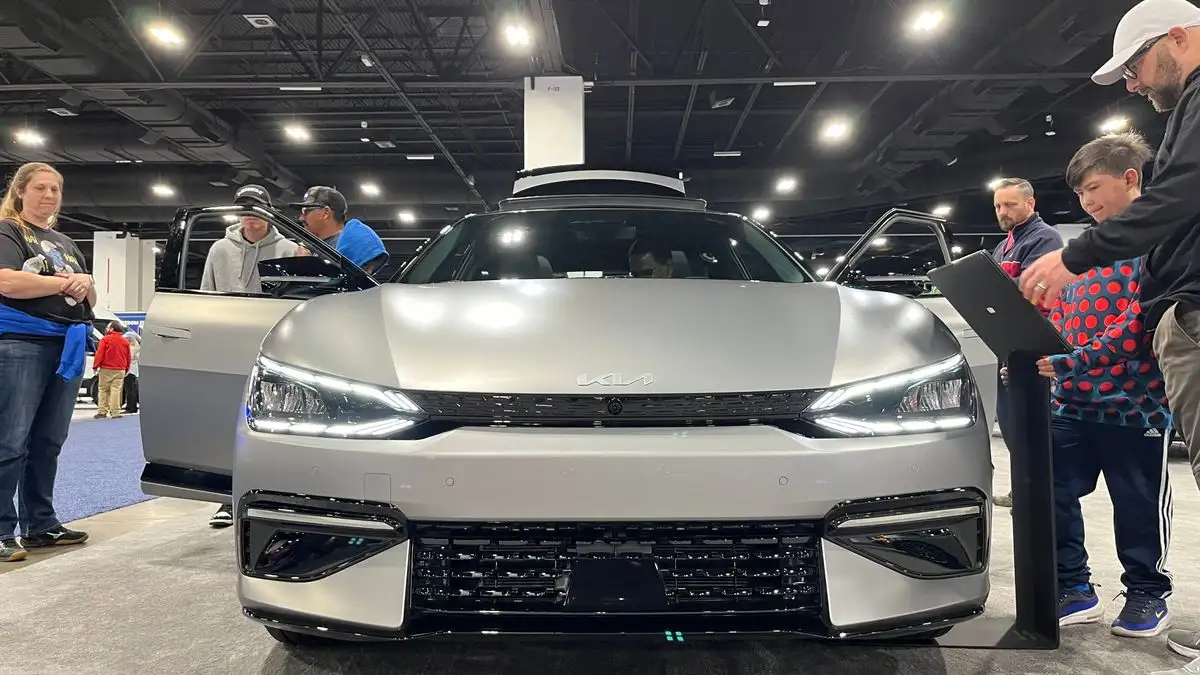
Ford Mustang Mach-E (2021-2024): the familiar SUV that happens to be electric
The Mach-E is the pick for a buyer who wants an electric SUV that feels like a normal car: a familiar dealer network, a normal dashboard, and a Mustang badge. The range spread is wide, so the trim matters more here than on any other pick. The best figure is 320 miles for a 2024 Premium Extended Range rear-wheel-drive car.
The 2024 Premium Extended Range all-wheel-drive car is rated at 290-300 miles; EPA listings vary by equipment, and Ford’s own order guide lists 300. The California Route 1 version tops out at 312 miles for 2023 rear-wheel drive and 2024 all-wheel drive, and it was dropped after 2024. A 2021 Select Standard Range rear-wheel-drive car is rated at 230 miles, and a 2024 Select is rated at 250 miles rear-wheel drive and 230 miles all-wheel drive. Do not quote the 320-mile figure for a Select: that car never had it.
Typical asking prices run $22,659 for a 2021, $25,568 for a 2022, $29,819 for a 2023 and $32,391-$32,644 for a 2024. When new, a 2021 Select rear-wheel-drive car cost $43,995 and a California Route 1 cost $51,500. The battery warranty is 8 years or 100,000 miles, so a 2021 car’s battery cover runs to 2029.
The Mach-E has the most serious recall history in this guide, and it is the reason to prefer a 2023 or newer car. The high-voltage battery junction box can overheat: campaign 22V-412 in June 2022 covered 48,924 cars from 2021-2022 with a software remedy, campaign 23V-687 in October 2023 covered 34,762 Extended Range cars for a replacement junction box, and campaign 25V-441 in June 2025 covered 239 cars with a do-not-drive order. There is also a door-latch recall, 25V404, covering about 197,000 cars from 2021-2024, and a battery-energy-control-module recall, 26S70, from September 2026 for 2023-2025 cars that had a module replaced. Check every one of these by VIN before you buy.
Charging is straightforward: CCS1 on every model year through 2026, with native NACS deferred to the next generation. Ford sells its own official NACS DC adapter for $200, and Supercharger access through that adapter opened in 2024.
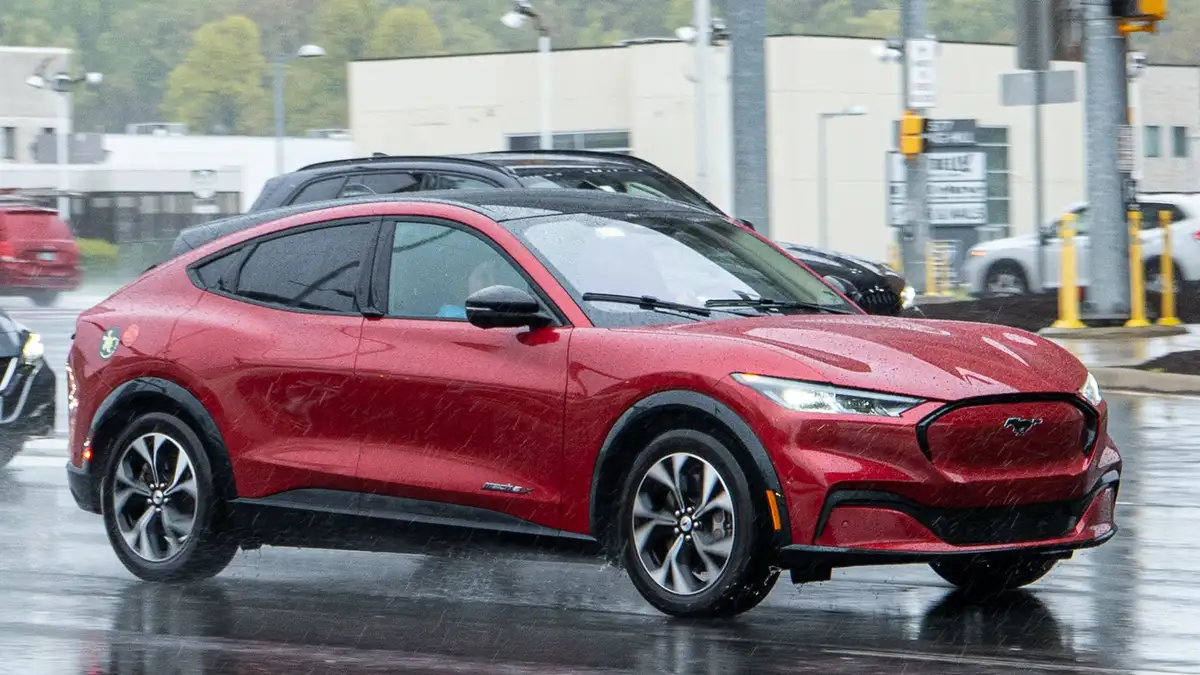
Volkswagen ID.4 (2021-2024): the cheapest good used EV SUV
The ID.4 is the pick when the budget is the deciding factor. A 2021 car typically asks $18,371-$18,704, a 2023 asks $21,762 and a 2024 asks $22,650, which makes it the cheapest pick in this guide by a clear margin. That is about $79.13 per EPA mile on the 2023 average and the 275-mile rating. When new, a 2021 Pro cost $39,995 and a Pro S cost $44,495.
Range depends on the model year more than on the trim name. A 2023 Standard is rated at 209 miles, a 2023 Pro or Pro S rear-wheel-drive car at 275 miles, and a 2023 all-wheel-drive car at 255 miles. A 2024 Pro or Pro S rear-wheel-drive car is rated at 291 miles, and a 2024 Standard at 206 miles. A 2021 Pro rear-wheel-drive car is rated at 260 miles. The lesson is simple: a 2024 Pro is a meaningfully better car than a 2021 Pro, and the price gap between them is small, so buy the newest ID.4 your budget allows.
The battery warranty is 8 years or 100,000 miles. The recall to check is the door handles: NHTSA campaign 24V-651 from September 2024 covers 98,806 cars from 2021-2024 because water can get into the door-handle circuit board and open a door unexpectedly. Volkswagen stopped sales and halted production at Chattanooga in September 2024 while it fixed the problem. Confirm the fix on the specific car, not just on the model. Door-handle recall report
Charging is CCS1 on every model year, with a 170 kW DC peak on rear-wheel-drive cars and 135 kW on all-wheel-drive cars. Supercharger access opened on November 18, 2024 through an adapter. We could not verify Volkswagen’s adapter price, so do not budget a number for it until a dealer quotes one.
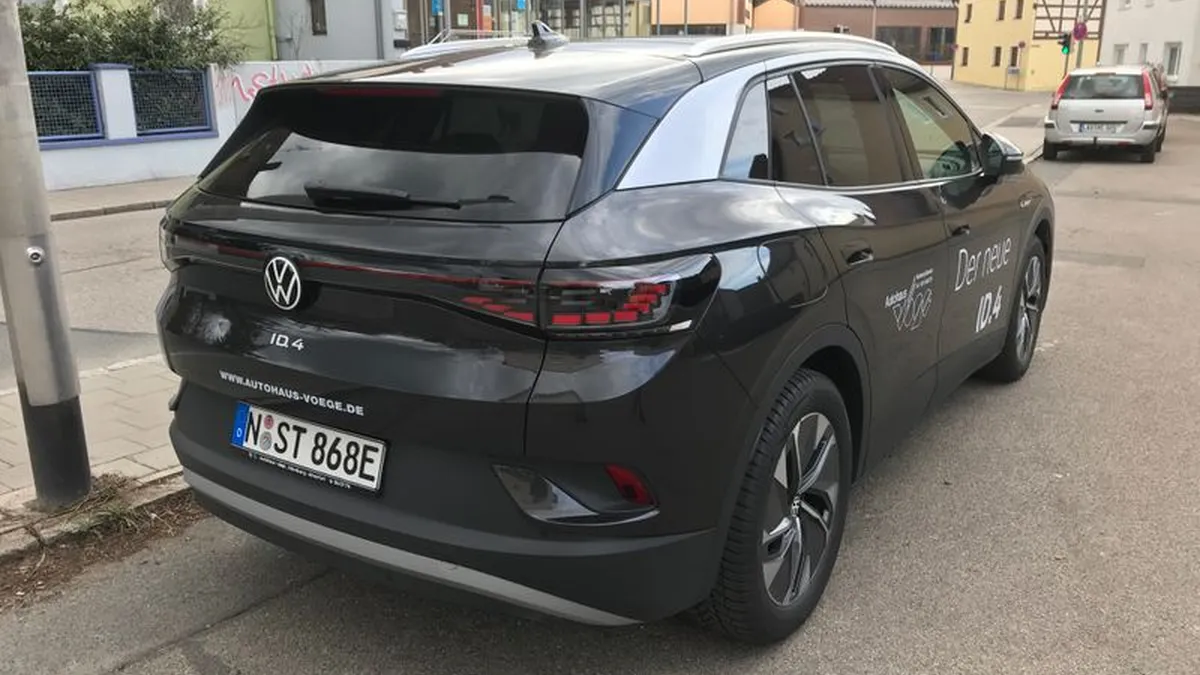
Kia EV9 (2024-2025): the three-row pick for families
The EV9 is the pick if you need three rows and you do not want a Rivian budget. It is the only three-row electric SUV in this guide under $50,000. The Light Long Range rear-wheel-drive version is rated at 304 miles by the EPA. The Wind and Land all-wheel-drive versions are rated at 280 miles, and the GT-Line all-wheel-drive version at 270 miles. Do not use the 2026 figures of 305, 283 and 280 miles for a 2024 or 2025 car; they belong to a different model year.
A 2024 EV9 typically asks $41,398. For 2025 cars, CarGurus had no average block, so the range we can report is $40,600-$50,900 from observed November 2026 listings. When new, a 2024 Light Long Range cost $59,200 before the $1,495 destination fee, a 2025 cost $59,900, and a 2026 costs $57,900. The 2026 price cut is the reason used 2024 and 2025 cars are worth less than their original sticker suggests, and it is also the reason a new 2026 EV9 deserves a look before you buy used.
Seating needs care. The Light and Wind seat seven as standard. The Land and GT-Line seat six as standard, with captain’s chairs in the second row, and seven seats are available on the Land. Do not assume any EV9 seats seven: check the second row of the car in front of you.
Charging is CCS1 on 2024-2025 cars, with native NACS from 2026. Kia gave a free NACS-to-CCS1 adapter to 2024-2025 EV9 customers who took delivery on or after September 4, 2024, and Supercharger access opened on January 15, 2025. The 800-volt system charges from 10% to 80% in about 24 minutes on a 350 kW charger, according to Kia. The battery warranty is 10 years or 100,000 miles under Kia’s standard terms, though we did not open the EV9 warranty page itself to confirm it. No major EV9 recall was flagged in our checks; verify by VIN anyway.

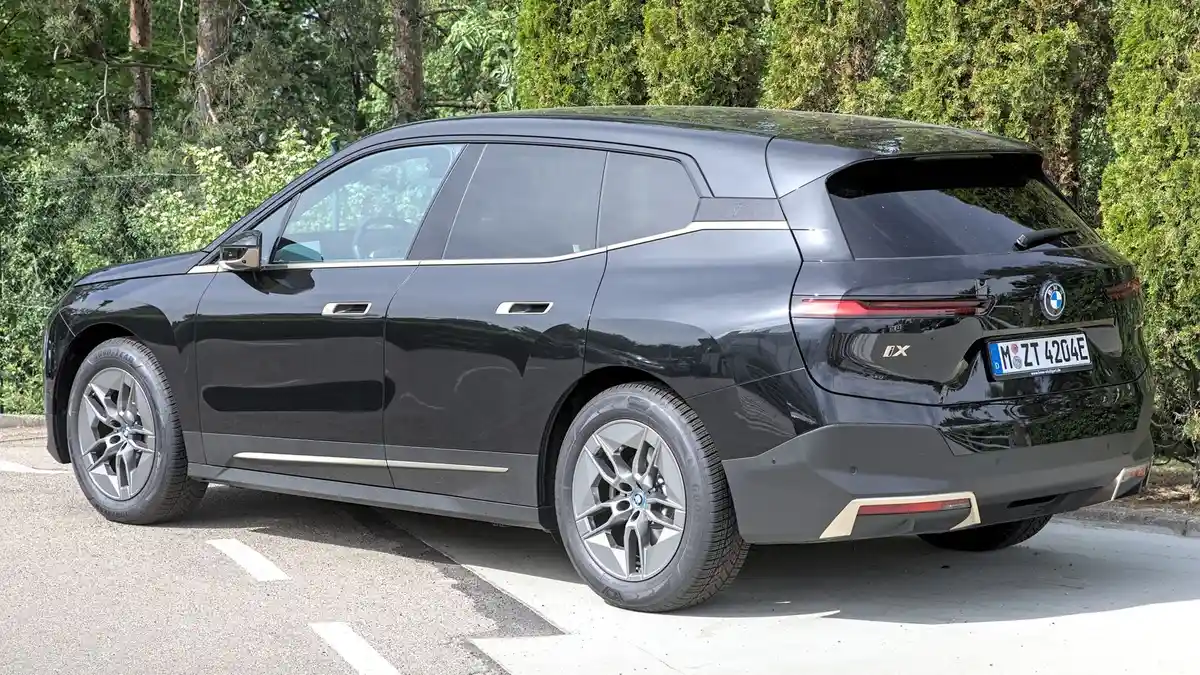
BMW iX xDrive50 (2022-2025): the luxury pick, now half price
The iX is the pick if you want a luxury electric SUV and you are happy to let the first owner take the depreciation. A 2022 xDrive50 started at $83,200 when new and typically asks about $40,809 used. A 2023 typically asks about $45,700. That is a luxury SUV with more than 300 miles of range for the price of a new mid-size gasoline SUV.
Range depends on the wheels, which is unusual and worth checking. For 2022-2024 xDrive50 cars, the EPA rating is 324 miles on 20-inch wheels, 305 miles on 21-inch wheels and 315 miles on 22-inch wheels. For 2025 cars the figures are 309, 303 and 302 miles. The 309-mile figure you will see quoted for the iX is the 2025 car on 20-inch wheels only, not a figure for the whole range. The M60 is rated at 288 miles for 2024 and 285 miles for 2025.
The battery warranty is 8 years or 100,000 miles. The 2024 iX has four NHTSA campaigns, including 25V395 from July 2025 for loss of drive power and 25V470 from July 2025 for battery module failure with a fire risk. A 2022 battery fire-risk recall is reported in Australia, but we could not verify the U.S. details separately, so check the VIN and ask a BMW dealer for the campaign list. We also could not verify BMW’s NACS adapter price, so do not budget one until a dealer quotes it. The iX charges at up to 195 kW on DC and uses CCS1 on every model year in this guide.
One data-quality note: the 2022 iX asking-price page we checked was about 108 days old, so treat the $40,809 figure as a guide rather than a fresh market read. We could not pull 2024 or 2025 used prices for the iX.
Rivian R1S (2022-2024): the adventure three-row
The R1S is the pick if you want seven real seats, proper off-road ability and the longest range in this guide. The 2023 Dual-Motor Large version on 21-inch wheels is rated at 352 miles by the EPA. The same car on 20-inch wheels is rated at 306 miles and on 22-inch wheels at 341 miles, so the wheels change the answer by 46 miles. The Quad-Motor Large version on 21-inch wheels is rated at 321 miles, and the 2022 Quad-Motor Large at 316 miles. Do not mix these up: 321 miles is the Quad figure, not the Dual figure. The Dual Max figure of up to 400 miles is a Rivian estimate, not an EPA rating.
A 2022 R1S typically asks $57,845 and a 2023 asks $59,414-$60,480. We could not pull a 2024 average. When new, a 2022 Launch Edition cost $91,500, and a 2023 Explore started at $72,500. Seven seats are standard on every trim, which is not true of the EV9.
The battery warranty is config-dependent, which is unusual: 8 years or 175,000 miles for Large battery with Quad motors, 150,000 miles for Large or Max battery with Dual motors, and 120,000 miles for Standard or Standard+ batteries. The basic warranty is 5 years or 60,000 miles. The recall to check is 26V-009 from 2026, where second-row seat-belt retractor bolts may be loose, covering 2022-2026 R1S cars. We did not pull a full recall list for 2022-2024 cars, so check the VIN.
Charging is CCS1 on 2022-2025 cars, with native NACS from 2026. We could not verify Rivian’s NACS adapter price, so do not budget one until Rivian or a dealer quotes it.
Chevrolet Equinox EV (2024-2025): the newest cheap pick
The Equinox EV is the pick if you want a nearly new electric SUV for used money. A 2024 typically asks $24,648 and a 2025 asks $26,530, which is about $14,868 less than a 2024 EV9 average for a car that still seats five and goes farther on a charge. The EPA rating is 319 miles for front-wheel drive and 307 miles for all-wheel drive, the same for every model year from 2024 through 2027.
When new, a 2024 2LT cost $43,295, and the entry 1LT at $34,995 arrived in October 2024. A 2025 LT cost $33,600. A 2026 LT 1 costs $34,995 before destination, or $36,795 with the $1,800 destination fee, according to GM’s own news page from August 2026. The 2026 price matters because a new Equinox EV is only about $8,000-$10,000 more than a used 2024 car, so compare the two before you buy used. GM 2026 Equinox EV pricing
Charging is CCS1 for 2024-2026 cars, with native NACS from 2027. GM’s own news page says the 2026 car keeps CCS1, so do not believe third-party guides that say the 2026 car switched to NACS. The GM NACS DC adapter costs $299 on the GM Energy store right now. The Chevrolet support page still says $225, but that page is stale. The Equinox EV charges at up to 150 kW on DC. The battery warranty is 8 years or 100,000 miles. We did not search Equinox EV recalls in depth, so check the VIN. GM Energy adapters
Chevrolet Bolt EUV (2022-2023): the cheapest way into an electric SUV
The Bolt EUV is the pick if the budget is under $21,000 and you can live with slow road-trip charging. A 2022 typically asks $19,495 and a 2023 asks $20,707. That is about $83.83 per EPA mile on the 2023 average and the 247-mile rating. When new, a 2022 LT cost $33,500 plus a $995 destination fee, then dropped to $28,195 in the June 2022 price cut. A 2023 LT cost $28,195.
The EPA rating is 247 miles on every trim and both model years, which makes it the simplest pick to shop: there is no range trap to fall into. The trap is charging. The Bolt EUV’s DC fast charging tops out at 55 kW, which adds about 95 miles in 30 minutes. On a road trip that is slow enough to change your plans. Around town and on a home charger it is fine, with 11.5 kW AC charging onboard.
The battery warranty is 8 years or 100,000 miles, and there is a detail worth money: recall-replacement batteries get their own 8-year or 100,000-mile warranty from the replacement date, under GM service bulletin 22-NA-119. Ask whether the car got a replacement battery, because that resets the battery warranty clock. The battery fire recall, NHTSA campaign 21V-650 from August 2021, covers 2020-2022 Bolt EV and 2022 Bolt EUV cars. Cars built after the April 2022 production restart, and all 2023 cars, were not in that campaign, so a 2023 Bolt EUV avoids the issue entirely. Production ended in December 2023, and the new 2027 Bolt is a different car with a NACS port.
How to check the battery on a used electric SUV
The battery is the most expensive part of the car, and it is the one thing a quick look cannot judge. Do these checks in order, before you negotiate.
1. Ask for a battery health report. A state of health, or SOH, report compares how much energy the battery can hold today with how much it held when new. Most reports give it as a percentage. A dealer can usually pull one from the manufacturer’s diagnostic system, and independent battery-testing companies can produce one too. Get the number and the date it was measured, in writing. A reading in the high 80s or above is a confident buy. Below 80%, only buy at a heavily reduced price.
2. Ask for a photo of the range at 100% charge. Ask the seller to charge the car to 100% and send a photo of the screen showing the rated range in miles, not a percentage. Divide that number by the original EPA range for that exact model year and configuration, from the table in this guide, and you have the pack’s remaining capacity to within a few percent. Do not trust the dashboard range alone on a part charge: it is a guess based on recent driving, not a measurement of the battery.
3. Check the warranty from the in-service date, not the model year. The battery warranty clock runs from the date the car was first put into service, not from January of its model year. A car first delivered in November of its model year has nearly a year more cover left than one delivered the previous January, and the advert will describe both the same way.
Ask for the in-service date in writing, then work out what is left: Hyundai and Kia give 10 years or 100,000 miles, Tesla gives 8 years or 120,000 miles on Long Range cars, and Ford, Volkswagen, BMW and GM give 8 years or 100,000 miles. Rivian’s battery warranty depends on the configuration, from 120,000 to 175,000 miles. The warranty floor is usually about 70% of original capacity: gradual wear is not covered unless capacity drops below that floor inside the warranty period.
4. Run the VIN through NHTSA. Go to nhtsa.gov/recalls, enter the 17-character VIN, and read every result. The ICCU failure on the Ioniq 5 and EV6, the junction-box failure on the Mach-E, the door handles on the ID.4 and the battery fire recall on early Bolt EUVs are all model-specific issues that a general inspection will not find.
5. Plug it in before you buy. Start a normal Level 2 charging session and check that it begins and keeps going. If you can, try a DC fast charger too: a battery in poor health often charges more slowly than a healthy one. Also ask for the service history and whether anyone has ever worked on the battery.
Charging: port, adapter and network are three separate checks
The most common mistake in used EV shopping is treating the charging plug as the whole story. Three things have to be true before a car can use a given network: the car needs the right port, or a compatible adapter, and the network has to allow that car. Check all three for the car in front of you.
| Pick | Port (model years in this guide) | Adapter for Superchargers | Supercharger access |
|---|---|---|---|
| Ioniq 5 | CCS1 (2022-2024); NACS from 2025 | Hyundai adapter, about $250 now; free only if bought/leased on or before Jan 31, 2025 | From Mar 2025 with adapter |
| Model Y | NACS always | None needed | Native |
| EV6 | CCS1 (2022-2024); NACS from 2025 non-GT | Kia adapter; free for 2024 cars delivered on/after Sep 4, 2024 | From Jan 15, 2025 |
| Mach-E | CCS1 through 2026 | Ford official NACS DC adapter, $200 | From 2024 with adapter |
| ID.4 | CCS1 all years | VW adapter; price not verified | From Nov 18, 2024 with adapter |
| EV9 | CCS1 (2024-2025); NACS from 2026 | Kia adapter; free for 2024-2025 cars delivered on/after Sep 4, 2024 | From Jan 15, 2025 |
| iX | CCS1 all years | BMW adapter price not verified | Via adapter |
| R1S | CCS1 (2022-2025); NACS from 2026 | Rivian adapter price not verified | Via adapter |
| Equinox EV | CCS1 (2024-2026); NACS from 2027 | GM NACS DC adapter, $299 | With adapter |
| Bolt EUV | CCS1 | GM NACS DC adapter, $299, but charging stays capped at 55 kW | With adapter |
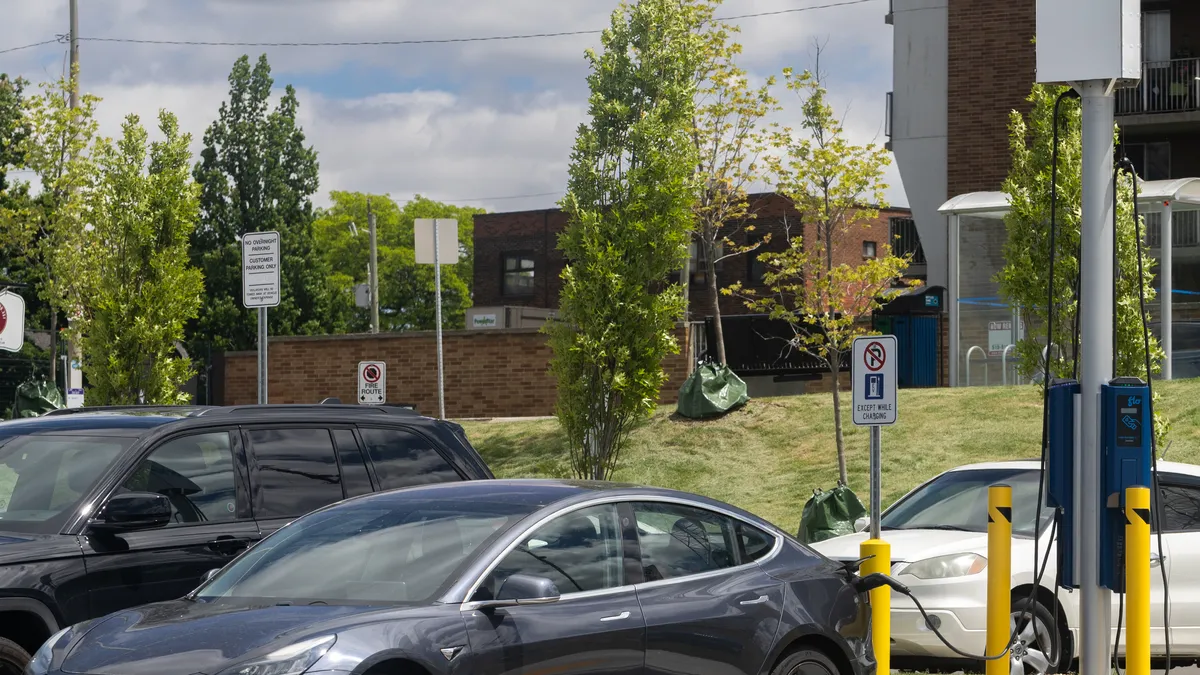
Two traps to avoid. First, a free adapter offer has an eligibility window, not just an existence: a Hyundai bought in February 2025 does not get the free adapter that a January 2025 buyer got. Second, a model year can change the port without changing the name: the 2025 Ioniq 5 and EV6 have native NACS, the 2024 cars do not, and the 2026 Equinox EV still has CCS1 even though some guides say it switched. Our connector guide explains the plug types in detail: Do All Electric Cars Use the Same Charger?
The federal used EV tax credit is gone
Do not subtract any federal credit from the price of a car you buy now. The previously owned clean vehicle credit, worth 30% of the price up to $4,000, is not available for vehicles acquired after September 30, 2025. The new-car credit of up to $7,500 and the commercial credit ended on the same date.
The cutoff was written into Public Law 119-21, signed July 4, 2025, and the IRS confirmed it in fact sheet FS-2025-05. The only exception is narrow: a buyer with a binding written contract and a payment on or before September 30, 2025 can still claim the credit for the year the car was placed in service. If you are buying in November 2026, that exception does not apply to you. IRS: Used Clean Vehicle Credit
Older guides still quote the $4,000 used credit as if it were live. They were written before the cutoff and have not been corrected. The asking prices in this guide already reflect a market without the credit, so compare them as they are.
Worked example: a 180-mile family trip
Take a family driving 180 miles to a cabin, leaving with a 90% charge and wanting a 20% reserve on arrival. That leaves 70% of the battery for planning, which is the same method we use in our other guides.
A 2022-2024 Ioniq 5 Long Range rear-wheel-drive car is rated at 303 miles. 70% of 303 is 212.1 miles of planning range. After the 180-mile drive, 32.1 miles are left in the plan. A 2023 Model Y Long Range all-wheel-drive car is rated at 330 miles. 70% of 330 is 231.0 miles. After the same drive, 51.0 miles are left.
Both cars make the trip without a charging stop in mild weather, and the Model Y arrives with more cushion. In cold weather, expect 20-30% less range from either car, which would put the Ioniq 5 at about 148-170 miles of planning range and force a charging stop. That is the practical difference between the two cars on this trip, and it is the reason to buy the Long Range version of either one rather than the Standard Range version.
Which one should you buy
Best for most buyers: Hyundai Ioniq 5 Long Range rear-wheel drive, 2022-2024. The lowest cost per EPA mile here, the fastest charging, and a 10-year battery warranty that still has years left.
Best for space and charging: Tesla Model Y Long Range all-wheel drive, 2022-2023. The biggest cargo area, native Supercharger access, and 330 miles of EPA range. Pay the roughly $6,936 premium over a same-year Ioniq 5 only if you will use the space and the network.
Best three-row for families: Kia EV9 Light Long Range, 2024. Seven seats as standard on the Light, 304 miles of EPA range, and a $41,398 average asking price. Check the second row before you buy, and compare a new 2026 car first: the 2026 price cut changed the used market.
Best three-row for adventure: Rivian R1S Dual-Motor Large, 2023. Seven seats standard and 352 miles of EPA range on 21-inch wheels, the longest range in this guide. Budget for the $59,414-$60,480 asking range and check the seat-belt recall.
Best under $25,000: Chevrolet Equinox EV, 2024-2025, or Volkswagen ID.4, 2023-2024. The Equinox EV gives you 319 miles and a nearly new car for $24,648-$26,530. The ID.4 gives you the lowest price in the guide at $18,371-$22,650, but buy a 2023 or 2024 car and confirm the door-handle recall is closed.
Best luxury value: BMW iX xDrive50, 2022-2023. More than 300 miles of range in a luxury SUV for about $40,809-$45,700. Check the wheels, because they change the range by up to 19 miles, and check the 2024 recall campaigns by VIN.
Best under $21,000: Chevrolet Bolt EUV, 2023. The cheapest car here at $20,707 on average, with a simple 247-mile rating on every trim and no battery-fire recall on 2023 cars. Only buy it if your driving is mostly local, because 55 kW DC charging is slow on road trips.
Before you buy any of them, read our general used-EV guide, Best Used EV: How to Compare Value Before Buying, and our budget guide, Best Used EV Under 20k. If you are comparing against a truck instead, see Used EV Truck: What to Compare Before You Buy One. And if the battery worries you, read How Much Does an Electric Car Battery Cost? before you decide how much warranty is worth to you.
How we checked
We checked every range figure against the EPA rating for the exact model year, trim, drivetrain and wheel size on FuelEconomy.gov, and every asking price against CarGurus asking-price averages by model year, checked November 9-17, 2026. Prices are asking prices before dealer fees, not verified inventory for any specific car, and they will have moved since we checked them.
Charging ports and adapter offers were checked against the manufacturer’s own pages and news releases, including the model-year traps: the 2025 Ioniq 5 and EV6 have native NACS, the 2026 Equinox EV does not, and the 2026 EV9 does. Recall campaigns were checked by NHTSA number. The federal credit cutoff was checked against the IRS. Where we could not verify a figure, such as the BMW, Rivian and Volkswagen adapter prices, we say so in the text instead of guessing.
Author note
By Sam Wilson. This guide was prepared with AI assistance and checked against the sources linked in the text. No vehicle in this guide was test-driven, and no dealer stock was audited. Prices are dated asking-price averages, not quotes for a specific car. Verify the EPA range, the battery health report, the warranty remaining and the open recalls on the specific car and VIN before you buy.
What is the best used EV SUV to buy?
For most buyers it is a 2022-2024 Hyundai Ioniq 5 Long Range rear-wheel drive. It typically asks $21,915-$27,534, is rated at 303 miles by the EPA, charges faster than any other mainstream pick here, and carries a 10-year or 100,000-mile battery warranty that transfers to later owners. Buy the Tesla Model Y Long Range instead if you want the most cargo space and native Supercharger access.
How much battery warranty is left on a used electric SUV?
It depends on the in-service date, not the model year. Hyundai and Kia give 10 years or 100,000 miles, Tesla gives 8 years or 120,000 miles on Long Range cars, and Ford, Volkswagen, BMW and GM give 8 years or 100,000 miles. Rivian’s battery warranty runs 120,000 to 175,000 miles depending on the configuration. Ask the seller for the original in-service date in writing and work out what is left from that date.
Do used electric SUVs still get the federal tax credit?
No. The previously owned clean vehicle credit, worth 30% of the price up to $4,000, is not available for vehicles acquired after September 30, 2025. The only exception is a buyer with a binding written contract and a payment on or before that date. If you are buying now, do not subtract any federal credit from the price.
Which used electric SUVs can use Tesla Superchargers?
The Tesla Model Y can, with its native NACS port and no adapter. The 2025 Ioniq 5 and 2025 EV6 have native NACS too. Every other pick in this guide uses CCS1 and needs an adapter: Hyundai about $250, Ford $200, GM $299. Kia gave free adapters to some 2024 EV6 and 2024-2025 EV9 buyers who took delivery on or after September 4, 2024. Always check the port, the adapter and the network access as three separate things.
What is a good battery health percentage on a used EV?
A state of health reading in the high 80s or above is a confident buy. Ask the seller for the report in writing, with the date it was measured. As a second check, ask for a photo of the range at 100% charge and divide it by the original EPA range for that exact model year and configuration. Below 80% state of health, only buy at a heavily reduced price, and get an independent diagnostic first.