Used EV Truck: What to Compare Before You Buy One
A used EV truck is worth buying only if its EPA range, towing capacity, charging access and remaining battery warranty fit the work you actually do, not the launch-day headline. For most U.S. buyers the Rivian R1T is the widest used choice and the Ford F-150 Lightning the most familiar truck shape, but the Lightning is now a used-only buy and the Cybertruck has the thinnest history. Compare the trucks on the same basis, same model year, same battery, same asking-price date, before you pay for one.
Checked November 13, 2026. Every range figure is the EPA combined rating for the exact trim and battery named, unless it is labeled a maker estimate. Every used price is a dated asking price from CarGurus, not a sale price and not a quote for a specific truck. Federal tax credits are not subtracted anywhere in this guide, because both credits ended for vehicles acquired after September 30, 2025.
Words to know before you shop
These words come up all through this guide. Here is what they mean in plain language.
- EPA range: the official U.S. test figure for a new car, measured unladen, with no trailer attached. Towing cuts it sharply.
- EPA-estimated vs maker-estimated: an EPA figure comes from the official test published on fueleconomy.gov. A maker estimate is the maker’s own number, and it is not the same thing. This guide labels each one.
- MSRP: the maker’s list price for a new truck, before destination, taxes and dealer fees. A used asking price is a different number on a different basis, so never compare the two as if they were the same.
- Asking price: what a seller lists a used truck for. It is not a sale price, and one listing is not the market.
- kWh and kW: kWh is the size of the battery; kW is how fast it charges. A bigger battery usually means more range, but it is not the whole story.
- NACS: the Tesla-style charging plug, also called J3400. Some trucks have it built in; others reach Tesla Superchargers with an approved adapter.
- CCS: the fast-charging plug most non-Tesla trucks used before NACS. A CCS truck needs an approved adapter to use a Supercharger.
- VIN: the vehicle identification number. It identifies one specific truck, and it is what you use to check recalls, warranty left and service history.
At a glance: the used electric trucks you can actually buy
On a narrow screen, swipe the table sideways to see all five columns.
| Truck | EPA range (exact trim) | Max towing | Charging port | Used asking range (CarGurus, dated) |
|---|---|---|---|---|
| Ford F-150 Lightning | 240 mi SR / 320 mi ER (2023-2025) | 5,000-10,000 lb by package | CCS1, Ford adapter $200 | $40,159-$55,951 by year (10 Nov 2026) |
| Rivian R1T | 258-420 mi by pack and wheels | 11,000 lb with weight-distributing hitch | CCS1 (2022-2025); NACS (2026) | $49,467-$70,534 by year (10 Nov 2026) |
| Tesla Cybertruck | 325-335 mi EPA (2025 AWD/RWD); no EPA figure for 2024 or Cyberbeast | 7,500-11,000 lb by trim | Native NACS | 2024 avg $83,652 (10 Nov 2026) |
| GMC Hummer EV Pickup | 311-314 mi (2024 2X/3X) | 7,500 lb | CCS1, GM adapter $299 | $71,840-$72,348 by year (10 Nov 2026) |
| Chevrolet Silverado EV | 450 mi 4WT (2024); 492 mi WT Max Range (2025) | 10,000 lb (2024); 12,500 lb (2026) | CCS1, GM adapter $299 | 2024 $52,757 (6 Oct); 2025 $65,059 (31 Aug) |
| GMC Sierra EV | 390 mi Extended / 460 mi Max (2025, GM-estimated) | 10,500 lb (2024); 12,500 lb (2027) | CCS1, GM adapter $299 | 2025 avg $74,344 (28 Aug 2026) |
All prices are asking prices in U.S. dollars, not sale prices. Range is the EPA combined figure for the trim named, unless it is labeled a maker estimate. The Sierra EV and Silverado EV 2025 prices use older CarGurus data (August 2026) because no newer dated analysis was published for those two models. No federal credit is included in any price, because both credits ended for vehicles acquired after September 30, 2025.
How to compare a used EV truck on the same basis
Most used-truck mistakes come from comparing unlike with unlike. Five rules keep the comparison honest.
First, compare the same model year. A 2022 Lightning and a 2025 Lightning are not the same truck: the Standard Range battery grew from 230 miles of EPA range in 2022 to 240 miles from 2023 on. A 2024 Cybertruck has no EPA range figure at all, while a 2025 Cybertruck does. Year first, price second.
Second, compare the same battery and trim. On the R1T, the Dual Standard pack is rated at 258 miles on 20-inch all-terrain tires and 270 miles on 22-inch wheels, while the Dual Max pack reaches 420 miles. On the Silverado EV, the 2025 WT Max Range is rated at 492 miles, but the LT is rated at 408 miles. The trim name is part of the range figure, so a listing that only says ‘Silverado EV’ tells you nothing yet.
Third, compare prices from the same date. Used prices move every month. Every price in this guide carries its data date, and prices from different months are never averaged into one number.
Fourth, treat charging as three separate checks: the port on the truck, the adapter it needs, and the network access that adapter buys. A CCS plug does not prove Supercharger access, and an adapter in the glovebox does not prove the seller’s account transfers. Check all three on the exact truck.
Fifth, check what warranty is left, not what the warranty was. Battery cover runs from the truck’s first delivery date, so ask for the in-service date and the odometer reading, then do the subtraction.
One more rule, specific to trucks: EPA range is measured with no trailer attached. Towing cuts range sharply, and the cut depends on the trailer, the speed and the weather. Rivian itself has said to expect around a 50 percent range reduction when towing at full capacity. Do not plan a towing trip on the unladen number.
Ford F-150 Lightning: the used-only buy
The Lightning is the most familiar truck shape in this guide, and it is now a used-only buy. Ford confirmed on December 15, 2025 that production of the current-generation Lightning has ended, and the next Lightning will be an extended-range EV with a gas generator, not a battery-only truck. The 2025 model year is the final model year sold. Do not trust a dealer page that lists 2026 Lightning trims and prices: that table comes from a November 2025 order guide published six weeks before Ford confirmed production had ended.
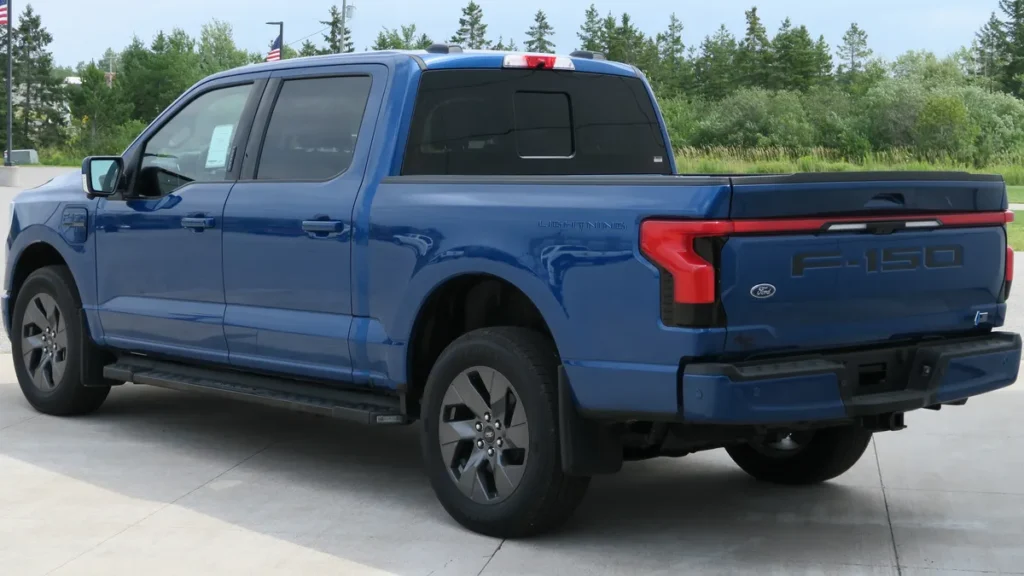
Range is straightforward once you know the battery. The Standard Range pack holds 98 kWh usable and is rated at 230 miles for 2022 and 240 miles for 2023 to 2025. The Extended Range pack holds 131 kWh usable and is rated at up to 320 miles, with the Platinum at 300 miles. All figures are EPA combined, confirmed on fueleconomy.gov and in Ford’s own technical specifications.
Towing needs the package, not just the battery. Without the Max Trailer Tow Package, a Standard Range truck tows 5,000 lb and an Extended Range truck tows 7,700 lb. With the package, the Standard Range truck tows 7,700 lb and the Extended Range truck tows up to 10,000 lb. The Platinum tows 8,500 lb. A listing that says ‘7,700 lb towing’ without naming the package has told you only half the story, so check the window sticker. Charging is fast enough for the job: 15 to 80 percent in 32 minutes on the Standard Range pack and 38 minutes on the Extended Range pack, on a 150 kW or faster DC charger, per Ford’s 2025 technical specifications.
Every Lightning has a CCS1 port. Ford sells an official Fast Charging Adapter (NACS) for $200, listed as backordered on ford.com, and it works for DC fast charging only, not for Level 1 or Level 2 AC charging. Ford retail customers gained Tesla Supercharger access on February 29, 2024 through the BlueOval Charge Network, and some late 2025 trucks shipped with the adapter included, so check the glovebox before you buy a second one.
The battery warranty is 8 years or 100,000 miles, with a 70 percent capacity floor, per Ford. Used asking prices, from CarGurus U.S. listings with data dated November 10, 2026, are $40,159 on average for a 2022, $46,308 for a 2023, $51,328 for a 2024 and $55,951 for a 2025, with a nationwide average of $48,053. Those are asking prices across all trims, so a high-trim Platinum will sit above the average and a base Pro will sit below it. Check the VIN for open recalls at nhtsa.gov/recalls before you pay: published recall counts for the Lightning disagree with each other, so no single number here is worth quoting.
Rivian R1T: the widest used choice
The R1T is the widest used choice in this guide, with the biggest price spread and the most configurations to sort through. Used asking prices from CarGurus, data dated November 10, 2026, average $49,467 for a 2022, $55,448 for a 2023 and $60,207 for a 2024, with a nationwide average of $53,378. The 2025 median is $70,534 from a separate October 1, 2026 listings scan of 32 trucks, so treat that figure as thinner evidence than the CarGurus averages.
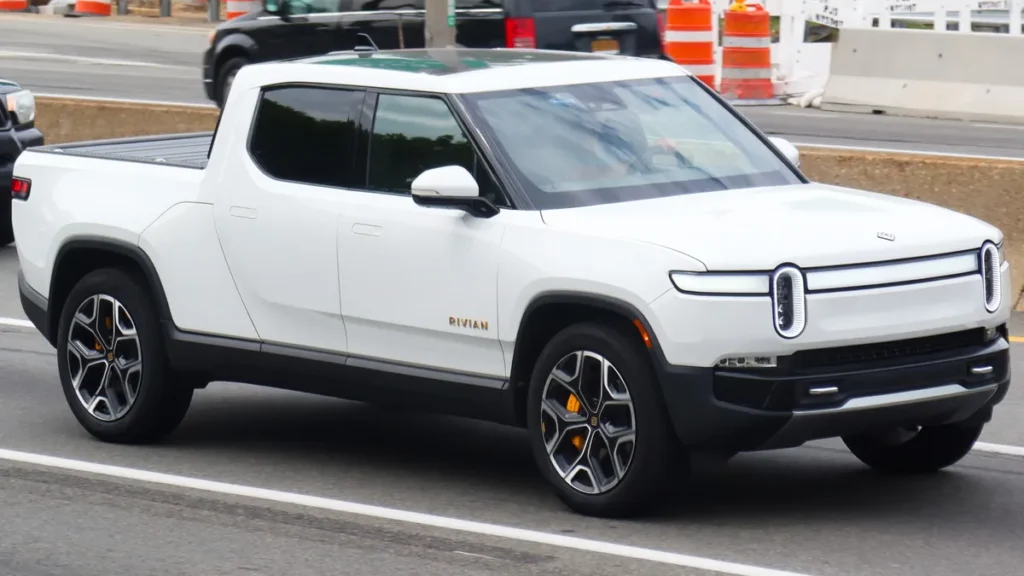
Range depends on the pack, the motors and the wheels, so read the window sticker, not the badge. The Dual Standard pack is rated at 258 miles on 20-inch all-terrain tires and 270 miles on 22-inch wheels for 2025. The Dual Large pack is rated at 329 to 352 miles depending on year and wheels. The Dual Max pack reaches up to 420 miles. The Quad Motor Large pack is rated at 314 miles for a 2022 on 21-inch wheels and 328 miles for a 2023, and the 2026 Quad Max pack is rated at 374 miles. The 400-mile figure you may see for the Quad Max is Rivian’s Conserve-mode claim, not an EPA figure.
Towing is the R1T’s strong suit: up to 11,000 lb with a weight-distributing hitch, and 5,000 lb without one, per Rivian’s own support page. If you plan to tow near the limit, budget for the hitch as well as the truck.
Charging splits by model year, and this is the year to get right. Trucks from 2022 to 2025 have a CCS1 port and reach Superchargers through a Rivian-approved NACS DC adapter. Starting with model year 2026, every Rivian R1 vehicle has a native NACS port, per Rivian, and 2026 trucks get access to more than 30,500 Tesla Superchargers without an adapter. A 2026 truck instead needs the opposite adapter, CCS, for Electrify America and EVgo stations. DC fast charging peaks at up to about 220 kW on the Large and Max packs, with 10 to 80 percent in roughly 30 to 41 minutes depending on the pack, per Rivian’s Gen 2 briefing. Rivian does not publish a standalone peak figure on its consumer pages, so treat the 220 kW number as a briefing figure, not a spec-sheet figure.
The battery warranty is the one place where a single number would be wrong. Per Rivian’s warranty guide, it is 8 years or 175,000 miles for the Large pack with Quad Motor, 8 years or 150,000 miles for the Large or Max pack with Dual Motor, and 8 years or 120,000 miles for the Standard and Standard+ packs, all with a 70 percent capacity floor. Pre-owned Rivians keep whatever factory warranty is left. Quote the warranty with the config, or do not quote it at all.
Tesla Cybertruck: the newest used pool, thinnest history
The Cybertruck is the newest used pool here and the one with the thinnest history, so it needs the most careful reading. New prices from CarGurus trim data, November 2026, are $69,990 for the Long Range rear-wheel-drive truck, $79,990 for the Dual Motor all-wheel-drive truck and $99,990 for the Cyberbeast. The single-motor Long Range arrived in 2025 and has almost no used presence yet.
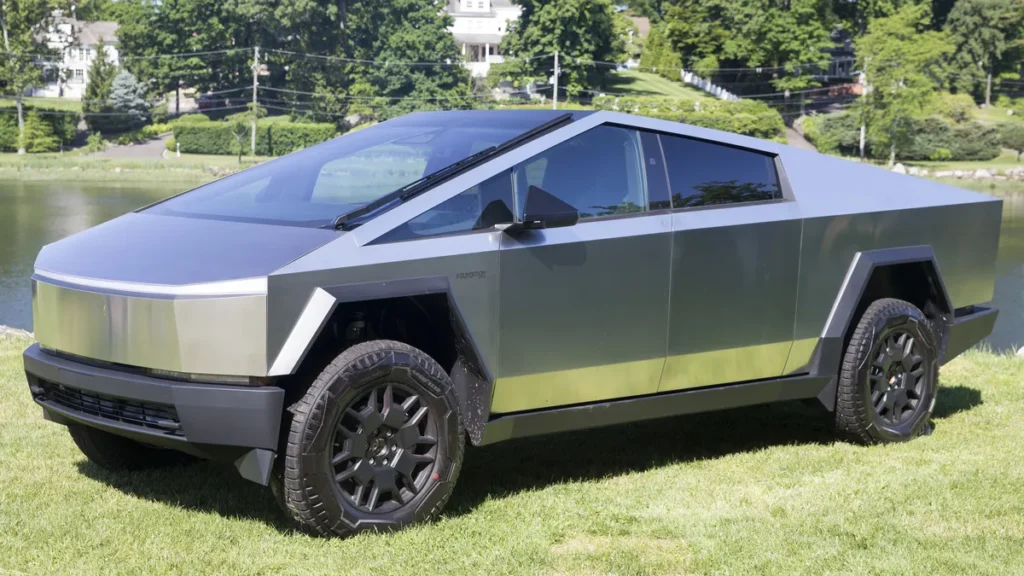
Range is where most guides get the Cybertruck wrong. There is no EPA range figure for any 2024 Cybertruck or for any Cyberbeast, because fueleconomy.gov lists no 2024 Cybertruck at all. The 340-mile and 320-mile figures quoted as EPA are Tesla’s own launch estimates: 340 miles for the all-wheel-drive truck on all-season tires, 318 on all-terrain tires, and 320 miles for the Cyberbeast on all-season tires, 301 on all-terrain tires. The only EPA figures are for 2025: the Long Range rear-wheel-drive truck at 335 miles and the Dual Motor all-wheel-drive truck at 325 miles, both confirmed on fueleconomy.gov. If a listing quotes an EPA figure for a 2024 Cybertruck, it is wrong.
Towing also splits by trim. The Premium all-wheel-drive truck and the Cyberbeast tow up to 11,000 lb on 20-inch wheels, while the Dual Motor all-wheel-drive truck and the Long Range truck tow 7,500 lb, per Tesla’s owner’s manual. Do not write a Cybertruck off as an 11,000-lb truck until you know which trim it is.
Charging is the simplest in this guide. The Cybertruck has a native NACS port and charges natively at Superchargers, with no adapter needed. It needs a CCS adapter for CCS networks instead. Tesla does not publish a peak DC charging figure for the Cybertruck, so the widely quoted 250 kW at a V3 Supercharger is a reported figure, not a Tesla figure, and this guide does not present it as one.
Two things to check before you pay. The Range Extender is a $16,000 option that adds an estimated 445 miles on the all-wheel-drive truck and 415 miles on the Cyberbeast, so check whether the specific truck has it. There were 11 recall campaigns on 2024 models, so a VIN check at nhtsa.gov/recalls is mandatory for a 2024 truck. The battery warranty is 8 years or 150,000 miles with a 70 percent capacity floor, per Tesla’s warranty page.
Used asking prices from CarGurus, data dated November 10, 2026, average $83,652 for a 2024 across all trims. The all-wheel-drive median is $77,075 and the Cyberbeast median is $90,199, from a separate October 1, 2026 listings scan. CarGurus publishes no 2025 average; the only 2025 median comes from 5 listings, too thin to quote. Early-2026 guides that put the all-wheel-drive truck at $62,000 to $72,000 are now stale; the market has moved about $5,000 to $8,000 higher.
Tesla has said Cybertruck production will wind down around mid-2027 to make room for the Cybercab, and the lead engineer has said parts and service support will continue, without giving a timeline. That does not change the warranty on a truck you buy today.
GMC Hummer EV Pickup: heavy, thirsty, steepest new-price drop
The Hummer EV Pickup is the heaviest truck in this guide and the one with the steepest drop from its new price, which is exactly why it tempts used buyers. Used asking prices from CarGurus, data dated November 10, 2026, average $71,840 for a 2024 and $72,348 for a 2025, with a nationwide average of $72,118. The 2025 truck started at $96,550 new, so the used average sits roughly $24,000 below that, but that gap mixes trims and years, so do not present it as a single model’s depreciation figure.
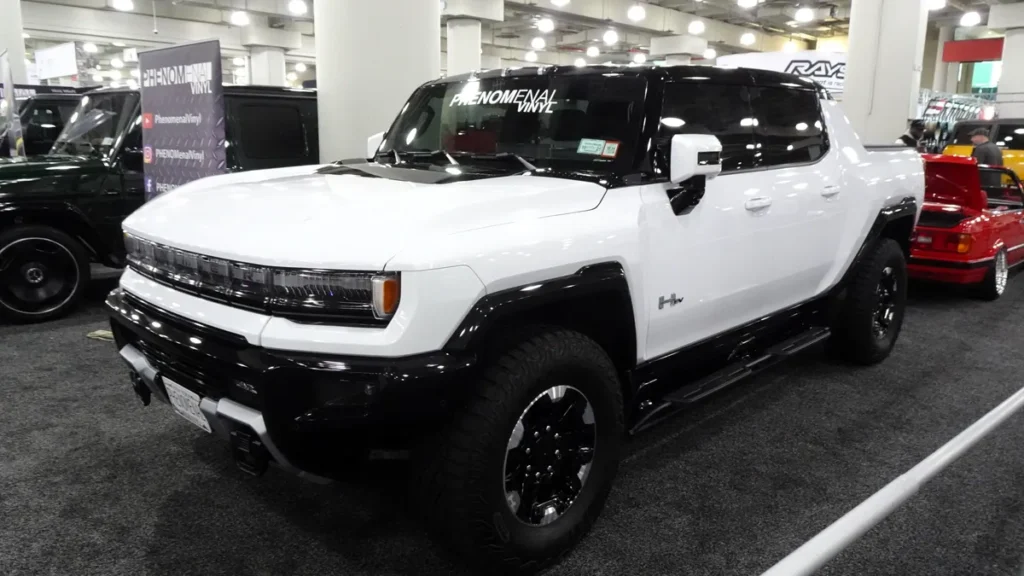
Range is where the Hummer’s numbers get tangled, so here they are by trim. The 2024 2X is rated at 311 miles EPA and the 2024 3X at 314 miles EPA, per GMC’s own 2024 brochure. The 2025 3X is rated at 312 miles EPA. The 2022 Edition 1 is rated at 329 miles EPA. Mud-terrain tires cut the figure: the 2024 2X drops to 279 miles and the 2025 2X to 282 miles. The “up to 350 miles” figure still quoted in some guides was a 2023 3X maker estimate, not an EPA figure, and the 381-mile figure is a maker estimate for the optional 24-module pack only. One guide lists the 2024 2X at 314 miles; that is the 3X figure attached to the wrong trim.
Towing is 7,500 lb for the pickup, the figure most sources agree on. A few guides quote 8,500 lb for the 3X with the Extreme Off-Road Package, and higher figures circulate that look unreliable, so confirm the rating on the door-jamb sticker of the truck you are buying. At nearly 9,000 lb and up to 1,000 horsepower in the 3X, the Hummer also drinks the most energy per mile, which is part of why its range looks modest next to its enormous battery.
Charging is CCS1 through model year 2026, with the GM-approved NACS DC adapter for Supercharger access. The adapter is $299 on GM Energy’s current store listing; Chevrolet’s support page still says $225, which appears to be the older price, so budget $299. Supercharger access also needs the adapter plus an activated account and a saved payment method in the myGMC app, and it covers V3 and newer stalls. Native NACS ports arrive with the 2027 models, so no used Hummer on the market today has one.
The battery warranty is 8 years or 100,000 miles. GM’s 2026 warranty booklet sets the capacity floor at 75 percent of original capacity, so check the booklet for the specific model year rather than assuming the industry-standard 70 percent. One single listing is not the market: a 2024 2X with 34,862 miles listed at $59,981 is an example of a cheap truck, not evidence that the market starts there.
Chevrolet Silverado EV: longest range, fleet-first used pool
The Silverado EV has the longest range in this guide and the most unusual used pool, because its 2024 launch was fleet-first. Most early used examples are ex-fleet work trucks, so check the equipment and the service history, not just the badge. A work truck with 36,000 miles and a fleet service record is a different buy from a private-owner RST with the same mileage.
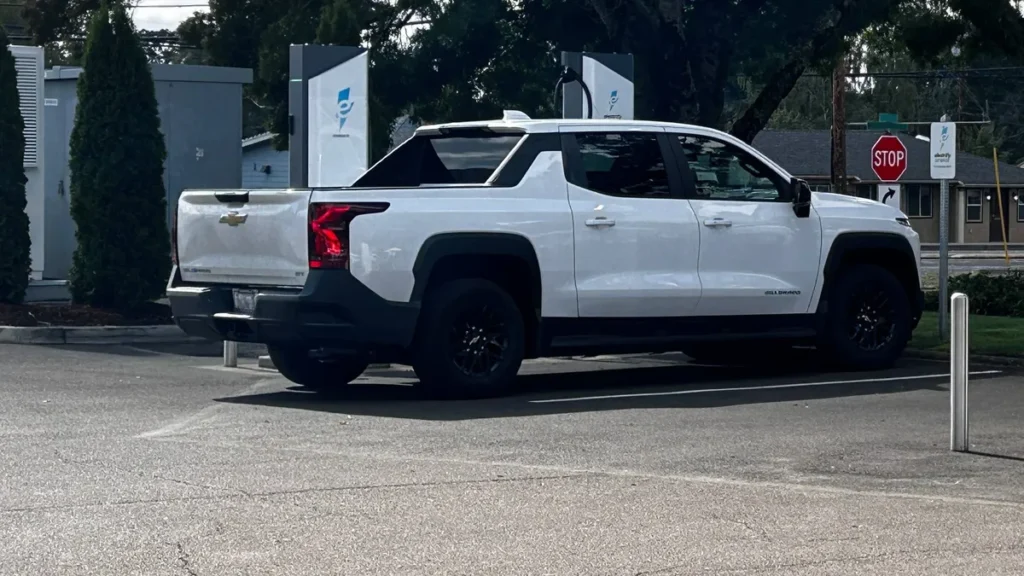
Range varies sharply by battery and trim, so the trim name matters more here than anywhere else in this guide. The 2024 4WT work truck is rated at 450 miles EPA-estimated, and the 2024 3WT at 393 miles. The 2024 RST First Edition is rated at 440 miles, but that is a maker estimate, not an EPA figure: Chevrolet’s own footnote said EPA estimates were not yet available for the RST at launch. For 2025, the WT Max Range is rated at 492 miles EPA, and that is the only trim the “up to 492 miles” claim belongs to. The 2025 WT Extended Range is rated at 422 miles, the LT at 408 miles, the LT Premium Package and RST 2SP at 390 miles, and the RST 3SP at 460 miles as a maker estimate. The 2026 WT Max Range is rated at 493 miles EPA. A buyer who pays for a 492-mile truck and gets a 390-mile truck has been misled by a headline, so match the figure to the trim on the window sticker.
Towing and power also split by year. The 2024 RST makes 754 horsepower and tows up to 10,000 lb. The 2026 RST makes up to 760 horsepower with Wide Open Watts and tows up to 12,500 lb. Scope both figures by model year, because the 2024 truck and the 2026 truck are not the same buy.
Charging is CCS1 through model year 2026, with the GM-approved NACS DC adapter at $299 on GM Energy’s current listing. Native NACS ports arrive with the 2027 models. The battery warranty is 8 years or 100,000 miles, with GM’s 2026 booklet setting the capacity floor at 75 percent.
Used asking prices from CarGurus are $52,757 on average for a 2024, with data dated October 6, 2026, and $65,059 for a 2025, with data dated August 31, 2026. The 2026 average is $67,232 from CarGurus data dated September 2026. Those figures are older than the November data for the Lightning, R1T, Hummer and Cybertruck, because no newer dated CarGurus analysis was published for the Silverado EV. One 2024 4WT sold for $43,000 at 36,000 miles through Carvana in October 2026, against an original sticker near $82,000. That is one sale, not the market, and it is the ex-fleet discount in action: the cheapest Silverado EVs are the ones that worked for a living.
GMC Sierra EV: the thin used pool
The Sierra EV is the newest GM truck in this guide and the one with the thinnest used pool, so quote its prices with the most care. Used asking prices from CarGurus average $74,344 for a 2025, with data dated August 28, 2026, and $69,997 nationwide. The 2026 average is $70,503 from data dated August 17, 2026. CarGurus publishes no Denali-only average, and the single 2025 Denali example found in this check is an anecdote, not a range, so this guide quotes the model-level averages and labels their dates. The 2025 model year has the most listings, at 151, which is still a small pool next to the Lightning’s much larger one.
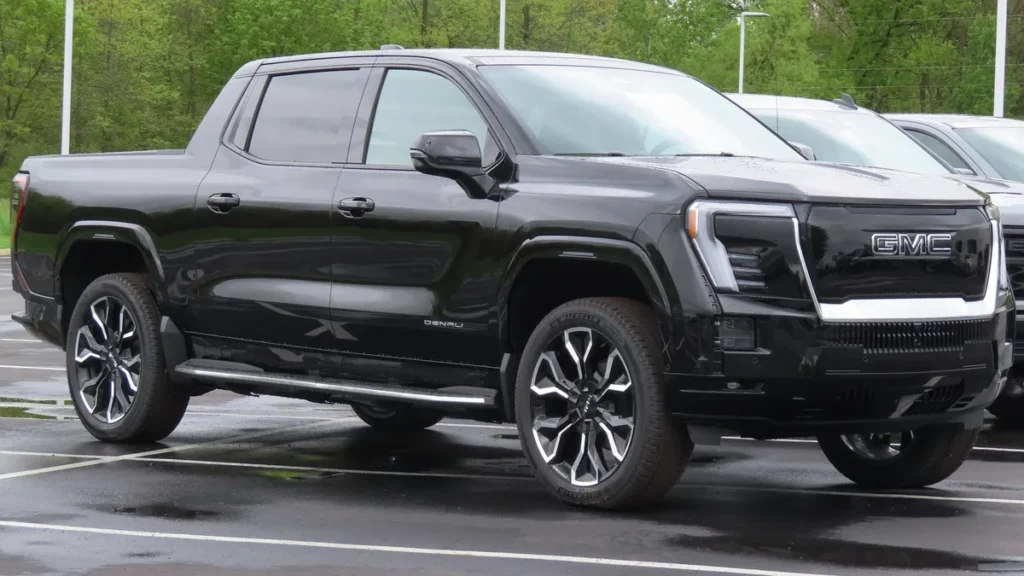
Range splits by battery, and the basis matters. The 2025 Denali Extended Range is rated at 390 miles EPA. The 2025 Denali Max Range is rated at 460 miles, but that is a maker estimate, not an EPA figure: sources disagree on the label, and this guide follows the maker-estimate label. The 2024 Denali Edition 1 is rated at 440 miles, also a maker estimate. For 2026, the Denali Standard Range is rated at 283 miles EPA-estimated, the Extended Range at 410 miles EPA-estimated, and the Max Range at 478 miles as a maker estimate. Do not quote the 460-mile or 478-mile figures as EPA figures; they are not.
Towing is up to 10,500 lb for the 2024 truck and up to 12,500 lb for the 2027 models. Confirm the 2025 rating on the specific truck, because published figures for that year are thin. Charging is CCS1 through model year 2026, with the GM-approved NACS DC adapter at $299, and native NACS arrives with the 2027 Sierra EV. The battery warranty is 8 years or 100,000 miles, with GM’s 2026 booklet setting the capacity floor at 75 percent.
The Sierra EV is the truck to buy slowly. With a thin pool and older price data, the right move is to check several listings, confirm the battery and the trim on each one, and treat any single asking price as one data point, not the market. If the pool stays thin, say so plainly rather than inventing a range, and that is what this guide does.
What about the Ram 1500 REV?
There is no used battery-electric Ram truck to buy, and this guide does not pretend otherwise. Stellantis cancelled the battery-only Ram 1500 REV on September 12, 2025, citing weak demand for battery-electric pickups. The REV name now belongs to a different truck: a range-extended model with a 92 kWh battery and a 130 kW generator, up to 690 miles of total range and 647 horsepower, with production targeted for mid-April 2027 and no pricing or EPA figures yet.
That 690-mile figure is a total range for a truck with a gas generator on board. It is not a battery-electric range, and it does not belong in a comparison of used electric trucks. If a listing ever claims to sell a used Ram 1500 REV as a battery-electric truck, it is either mislabeled or selling a different truck under the wrong name. The Lordstown Endurance is left out for a similar reason: tiny volume, a bankrupt maker, and no verified service or parts support, so this guide does not shortlist it.
The five-point check before you pay
Every used EV truck in this guide passes or fails on the same five checks. Run them in this order, and walk away from any truck that fails the first two.
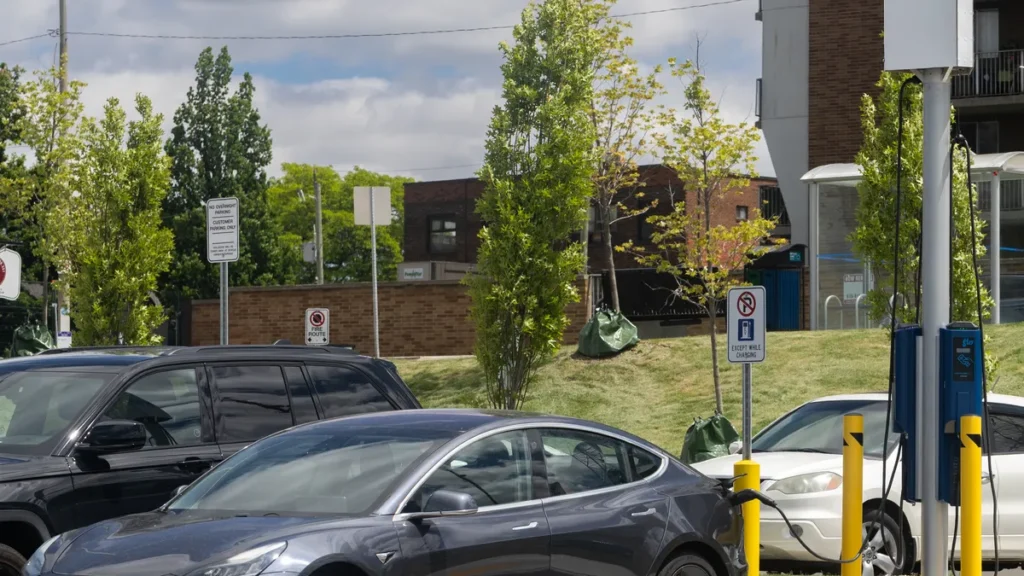
- 1. Check the VIN for recalls. Go to nhtsa.gov/recalls and enter the truck’s VIN. The Cybertruck had 11 recall campaigns on 2024 models, and the Lightning’s published recall counts disagree with each other, so no roundup number replaces the VIN check. A truck with an open recall is not a bad truck, but an open recall you did not know about is a surprise you do not need.
- 2. Get battery-health evidence. A dashboard range estimate is not evidence. Ask for a manufacturer-supported or qualified battery-health assessment, plus the service history, before you agree a price. The battery is the most expensive part of the truck, and it is the part you cannot see. Our battery cost guide explains what a replacement costs when the warranty has run out.
- 3. Check the charging port, the adapter and the network access. Confirm the port on the exact truck, because the model year decides it: a 2026 R1T has native NACS, a 2025 R1T does not, and no used GM truck has native NACS yet. Confirm the adapter is in the truck and is the maker’s approved one, because a third-party adapter is not the same thing and GM specifically discourages them. Confirm the network access works, because an adapter without an activated account buys nothing. Our connector guide explains CCS, J1772 and NACS in plain language.
- 4. Work out the warranty left. Take the in-service date and the odometer reading, then subtract from the warranty terms for that exact config: 8 years or 100,000 miles for the Lightning and the GM trucks, 8 years or 120,000 to 175,000 miles for the R1T depending on pack and motors, 8 years or 150,000 miles for the Cybertruck. A warranty with two years left is worth more than a warranty with two months left, and the difference belongs in the price.
- 5. Read the history, not just the odometer. Check the title, the service records and whether the truck was a fleet vehicle. The Silverado EV’s cheapest used examples are ex-fleet work trucks, and that shows up in the equipment list first. A clean title, a full service record and a battery-health report are worth more than a low odometer reading on a truck with no history. Our best used EV guide walks through the same checks for used electric cars, and the under-$20k used EV guide shows how the budget end of the used market works.
Worked example: two trucks on the same basis
Take two 2023 trucks and compare them on the same basis, with prices from the same date. A 2023 Ford F-150 Lightning Extended Range averages $46,308 in asking price, with 320 miles of EPA range and up to 10,000 lb of towing with the Max Trailer Tow Package. A 2023 Rivian R1T Dual Motor Large Pack averages $55,448, with 352 miles of EPA range on 21-inch wheels and 11,000 lb of towing with a weight-distributing hitch. Both prices are CarGurus asking averages with data dated November 10, 2026. Both trucks have CCS1 ports and reach Superchargers through an approved adapter.
The R1T costs about $9,140 more on average, and it gives 32 more miles of EPA range and 1,000 lb more towing. The Lightning is the familiar full-size shape with a bigger bed and a lower entry price. The R1T is the adventure truck with the Gear Tunnel and the longer warranty on the Dual Large pack: 8 years or 150,000 miles against the Lightning’s 8 years or 100,000 miles.
Neither number settles the buy. Check the package on the Lightning, because without Max Trailer Tow it tows 7,700 lb, not 10,000 lb. Check the wheels on the R1T, because the same pack on 22-inch wheels is rated at 341 miles, not 352. Check the warranty left on both, because a 2023 truck has already used three years of its battery cover. Then decide which truck fits the work you actually do. The point of the example is the method: same year, same battery, same price date, and the package and the wheels checked before the money moves.
How we checked
This guide was researched on November 12 and 13, 2026. Range figures are EPA combined ratings from fueleconomy.gov for the exact trim and battery named, unless they are labeled as maker estimates. Used prices are asking prices from CarGurus U.S. listings, with the data date given next to each figure, and they are not sale prices or quotes for a specific truck. Charging ports, adapters and network access were checked separately on the makers’ own pages: Ford, Rivian, Tesla, Chevrolet and GM Energy. Warranty terms come from the makers’ warranty documents. The federal credit position comes from the IRS: both the new-vehicle credit and the previously-owned clean vehicle credit are unavailable for vehicles acquired after September 30, 2025, with a narrow transition rule for buyers who signed a binding contract and paid by that date. See the IRS used clean vehicle credit page and the IRS new clean vehicle credit page.
Where sources conflicted, this guide followed the primary source and said so: the Cybertruck’s 340-mile and 320-mile figures are Tesla estimates, not EPA figures; the Hummer EV 2X is rated at 311 miles EPA, not 314 or 350; the Silverado EV’s 492-mile figure belongs only to the 2025 WT Max Range; the Rivian battery warranty depends on the pack and motors; and the Lightning’s towing rating depends on the Max Trailer Tow Package. Where the evidence stayed thin, this guide says so instead of inventing a number: the Sierra EV has no Denali-only used price, CarGurus publishes no 2025 Cybertruck average, and the KBB values for the 2025 R1T Dual Standard expired on November 11, 2026.
By Sam Wilson. This guide was prepared with AI research assistance. No vehicle in this guide was test-driven, no dealer stock was audited, and no price here is a quote for a specific truck. Verify the individual car and VIN before you buy. If you are new to electric cars, start with how electric cars work and the best used EV guide before you shortlist a truck.
Sources
- Ford press release, December 15, 2025 (Lightning production ended): https://www.fromtheroad.ford.com/us/en/articles/2025/ford-reinvests-trucks-hybrids-affordable-electric-vehicles
- Ford 2025 F-150 Lightning technical specifications (range, towing, DC charging times): https://www.fromtheroad.ford.com/content/dam/fordmediasite/us/en/library/2025/specs/2025-Ford-F-150-Lightning-Technical-Specifications.pdf
- Ford Fast Charging Adapter (NACS), $200: https://www.ford.com/product/ford-fast-charging-adapter-nacs-p2999073032
- Rivian R1 Gen 2 Quad Motor story (2026 native NACS): https://rivian.com/stories/r1-gen2-quad-motor
- Rivian R1T and R1S New Vehicle Limited Warranty Guide, December 31, 2024 (config-dependent battery warranty): https://assets.rivian.com/2md5qhoeajym/4Gu8v9hXmik94CHAKis9mG/c6008f410cac191abd746bd60274bb22/r1t_r1s-new-vehicle-limited-warranty-guide-us-en-us-20241231.pdf
- Rivian support, maximum towing capacity (11,000 lb with weight-distributing hitch): https://rivian.com/en-CA/support/article/what-is-the-maximum-towing-capacity
- Tesla vehicle warranty (Cybertruck 8 years or 150,000 miles, 70 percent): https://www.tesla.com/en_PR/support/vehicle-warranty
- Tesla Cybertruck owner’s manual (towing by trim): https://www.tesla.com/ownersmanual/cybertruck/en_us/GUID-B698C17B-0CCC-4376-9257-2E9118AE1E1C.html
- GM Energy EV charging adapters (CCS1 through 2026, NACS from 2027): https://gmenergy.gm.com/learn/ev-charging-adapters
- Chevrolet Supercharger access support page (GM NACS DC adapter): https://www.chevrolet.com/support/vehicle-support/ev-charging/ev-public-charging/public-charging-with-the-tesla-supercharger-network
- GMC 2024 Hummer EV Pickup brochure (2X 311 miles EPA-estimated): https://www.gmc.com/content/dam/gmc/na/us/english/index/about/download-brochures/2024-models/GMTH23CT100-2024-HUMMER-EV-PICKUP-FO-031924.pdf
- GMC 2026 Electric Vehicle Limited Warranty booklet (75 percent capacity floor): https://contentdelivery.ext.gm.com/content/dam/cope/en_us/public/pdf_assets/active/warranty_manuals_browse/2026/gmc/26_GMC_Electric_Vehicle_WM_en_US_U_19680588B_2025DEC12_2P.pdf
- IRS, used clean vehicle credit (unavailable after September 30, 2025): https://www.irs.gov/credits-deductions/used-clean-vehicle-credit
- IRS, credits for new clean vehicles (unavailable after September 30, 2025): https://www.irs.gov/credits-deductions/credits-for-new-clean-vehicles-purchased-in-2023-or-after
- EPA and DOE fuel economy data (EPA combined range by trim): https://www.fueleconomy.gov/
- CarGurus used listings, data November 10, 2026 (Lightning, R1T, Cybertruck, Hummer EV): https://www.cargurus.com/Cars/l-Used-Ford-F-150-Lightning-d3147, https://www.cargurus.com/Cars/l-Used-Rivian-R1T-d2837, https://www.cargurus.com/Cars/l-Used-Tesla-Cybertruck-San-Rafael-d3353_L2867, https://www.cargurus.com/Cars/l-Used-GMC-Hummer-EV-Pickup-La-Crosse-d3362_L40108
- CarGurus used listings (Silverado EV, data October 6, 2026; Sierra EV, data August 28, 2026): https://www.cargurus.com/Cars/l-Used-Chevrolet-Silverado-EV-Dallas-d3222_L33702, https://www.cargurus.com/Cars/l-Used-GMC-Sierra-EV-Atlantic-City-d3395_L22151
Which used EV truck is the best value?
There is no single best value, because the trucks do different jobs at different prices. The cheapest entry is a 2022 Lightning, averaging $40,159 in asking price. The widest choice is the R1T, with a nationwide asking average of $53,378. The longest range per dollar is the Silverado EV, with a 2024 work truck averaging $52,757 and 450 miles of EPA-estimated range. Pick the truck whose range, towing and charging access fit your work, then compare prices on the same basis.
Can a used electric truck tow a trailer?
Yes, within its rated capacity, and the rating depends on the trim and the package. The Lightning tows up to 10,000 lb with the Max Trailer Tow Package and 7,700 lb without it on the Extended Range pack. The R1T tows up to 11,000 lb with a weight-distributing hitch. The Cybertruck tows 11,000 lb on the Premium all-wheel-drive and Cyberbeast trims and 7,500 lb on the others. EPA range is measured with no trailer attached, so plan charging stops on the towing range, not the unladen number.
Can a used electric truck use Tesla Superchargers?
It depends on the port, the adapter and the network access, which are three separate checks. The Cybertruck has a native NACS port and charges natively at Superchargers. The 2026 R1T has a native NACS port; 2022 to 2025 R1Ts need a Rivian-approved NACS DC adapter. The Lightning needs Ford’s official $200 NACS DC adapter. The GM trucks need the GM-approved NACS DC adapter, $299 on GM Energy’s current listing. Every adapter here is DC fast charging only, and Supercharger access also needs an activated account.
Is there still a federal tax credit on a used EV truck?
No, not for a truck bought today. The previously-owned clean vehicle credit of up to $4,000 and the new-vehicle credit of up to $7,500 are both unavailable for vehicles acquired after September 30, 2025, per the IRS. The only exception is the transition rule: a buyer who signed a binding written contract and made a payment on or before September 30, 2025 can still claim. Do not let a seller subtract a credit from the price of a truck you buy now.
What should I check before paying for a used electric truck?
Five things, in this order: the VIN for open recalls at nhtsa.gov/recalls; battery-health evidence from a manufacturer-supported or qualified assessment, not a dashboard estimate; the charging port, the approved adapter and the network access on the exact truck; the warranty left, worked out from the in-service date, the mileage and the exact config; and the title, service history and fleet history. A truck that passes all five is a buy. A truck that fails the first two is a walk-away.