Level 3 EV Charging: A Driver’s Guide to DC Fast Charging
Level 3 EV charging is the informal name many drivers use for DC fast charging. It can add substantial range during a road-trip stop, but ‘Level 3’ does not promise one fixed power or time. The car, battery state, temperature, connector, station and site conditions all affect the session. For trip planning, look at usable energy and charging time across a range of battery percentages, not just the biggest kW number on a sign.
How DC fast charging differs from home charging
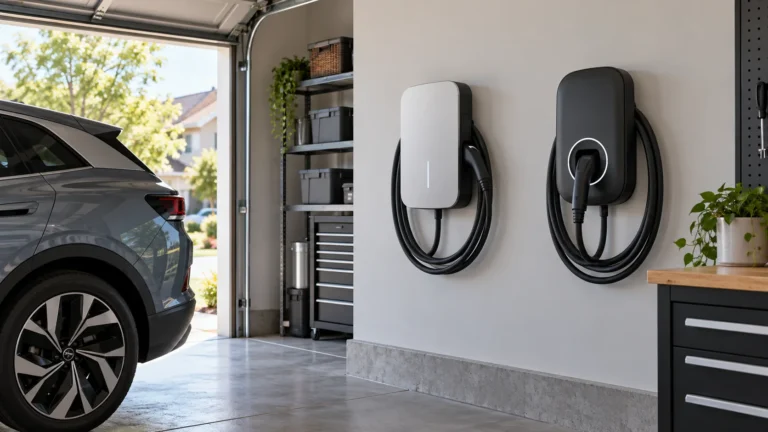
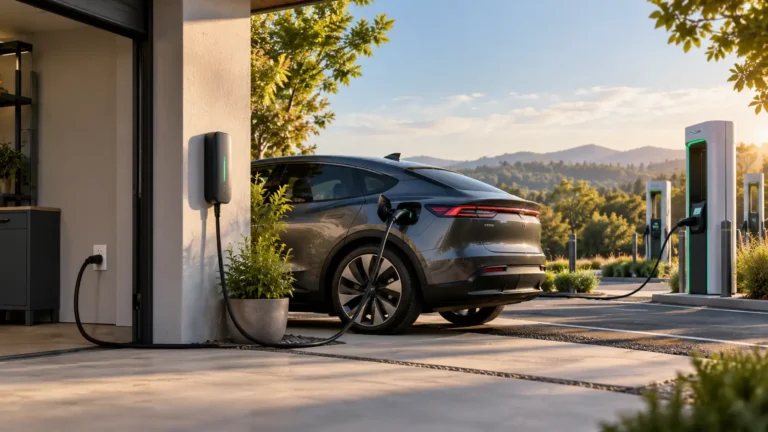
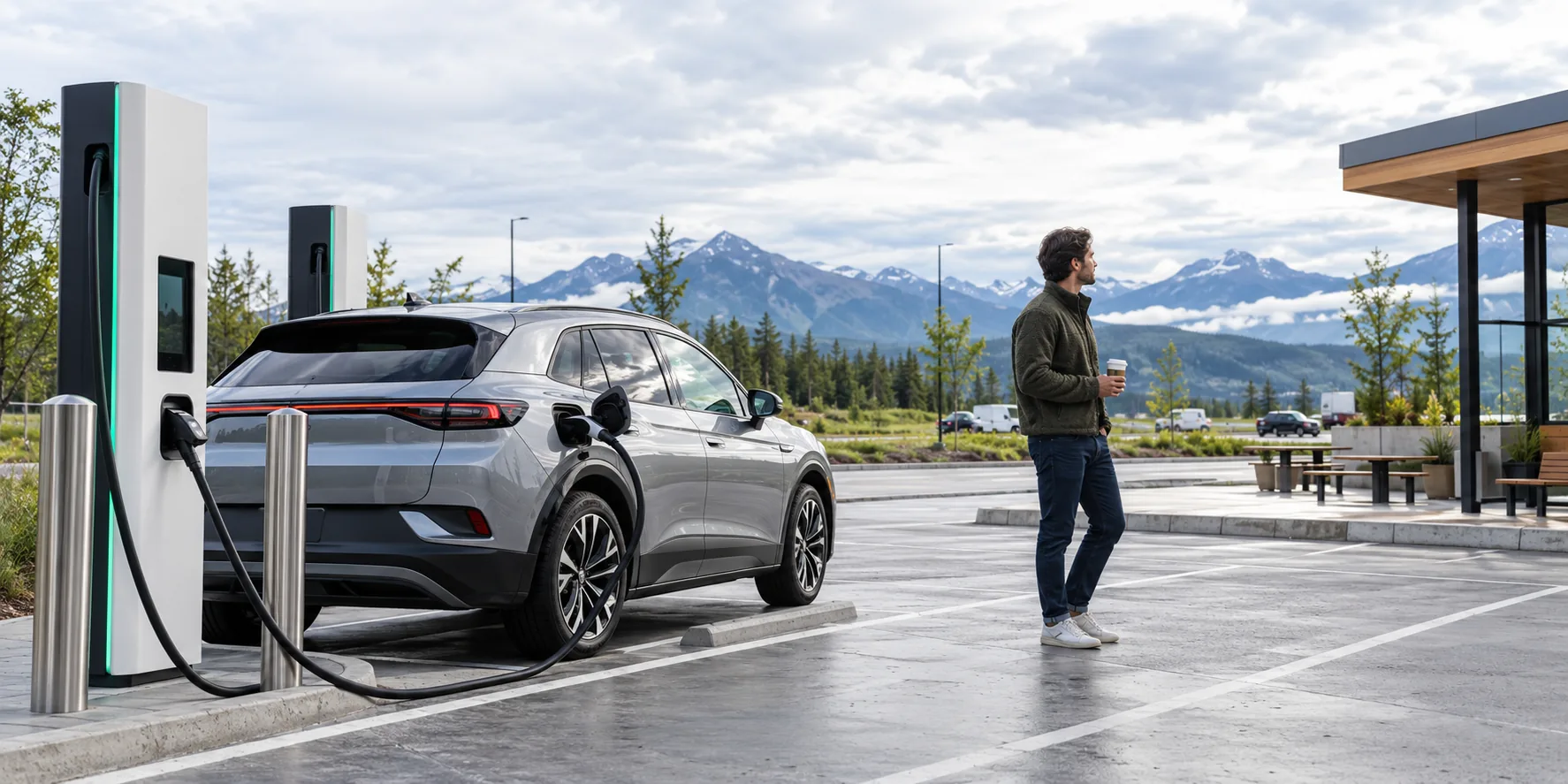
Level 1 and Level 2 equipment deliver AC electricity and the vehicle’s onboard charger converts it for the battery. At a DC fast charger, the station supplies DC electricity through the appropriate vehicle inlet and charging controls. DC systems typically deliver much higher power than a home Level 2 setup, but the vehicle decides how much it can accept at that moment. Most drivers use DC fast charging on longer journeys and AC charging where the car will stay parked for hours.
For a simple comparison of the charging levels, see our Level 1, Level 2 and Level 3 overview. This guide focuses on what happens in a DC session and how to plan an efficient stop.
Station kW is a ceiling, not your guaranteed rate
A stall labeled 150 kW can supply up to that figure under its specified conditions, but a car capped at 100 kW will not draw 150 kW. Even a car capable of a higher peak may reach that peak only for part of a session. Some sites share available power, reduce output because of equipment conditions or have a different power limit at a particular stall. The vehicle display and session screen show actual delivery.
Energy is measured in kilowatt-hours (kWh); instantaneous power is measured in kilowatts (kW). A steady 100 kW for 15 minutes would supply about 25 kWh before losses, but a real session rarely stays flat. The charging curve is more useful than a peak rating when comparing vehicles or estimating a stop.
Why the charging rate tapers
A battery generally accepts power differently as its state of charge rises. Vehicle controls also manage battery temperature and other limits. Tesla and Electrify America explain that charging often slows as the battery fills, commonly around the higher state-of-charge range such as 80%, although the exact point and shape vary by vehicle and conditions. It is not a switch that always flips at exactly 80%.
Arriving with a lower state of charge can sometimes let a capable vehicle use its faster part of the curve, but do not run the battery so low that an unavailable charger leaves you stranded. Preconditioning, when supported by the vehicle and initiated according to its instructions, can prepare the battery before arrival. In cold weather, a car may spend time warming its battery and charge more slowly until it reaches a suitable temperature.
Plan stops by energy needed to reach the next reliable station
If the car can reach the next stop comfortably at 70%, waiting for 100% may add a disproportionate amount of time. But 80% is no universal stopping rule: terrain, weather, speed, charger spacing, vehicle consumption and a backup route can justify a different target. Use the vehicle’s route planner, read current station status, and keep a buffer suited to the route.
- Check the next charger has a compatible connector, appropriate power and a workable payment method.
- Look at live availability and recent reliability information where provided; build in an alternate stop.
- Estimate energy to the next stop with a margin for cold, wind, hills or detours.
- Use the car’s preconditioning feature as directed when heading to a compatible fast charger.
- Stop charging when the next leg is comfortably covered, rather than chasing a percentage with no trip benefit.
Connector and access checks
North American DC fast charging uses connectors such as CCS, J3400 and CHAdeMO. A car must support DC charging through its inlet and, where applicable, an approved adapter. Network access rules can vary by vehicle, site and operator. A compatible connector shape alone is insufficient. Our EV charger compatibility guide explains the difference between AC adapters and DC access.
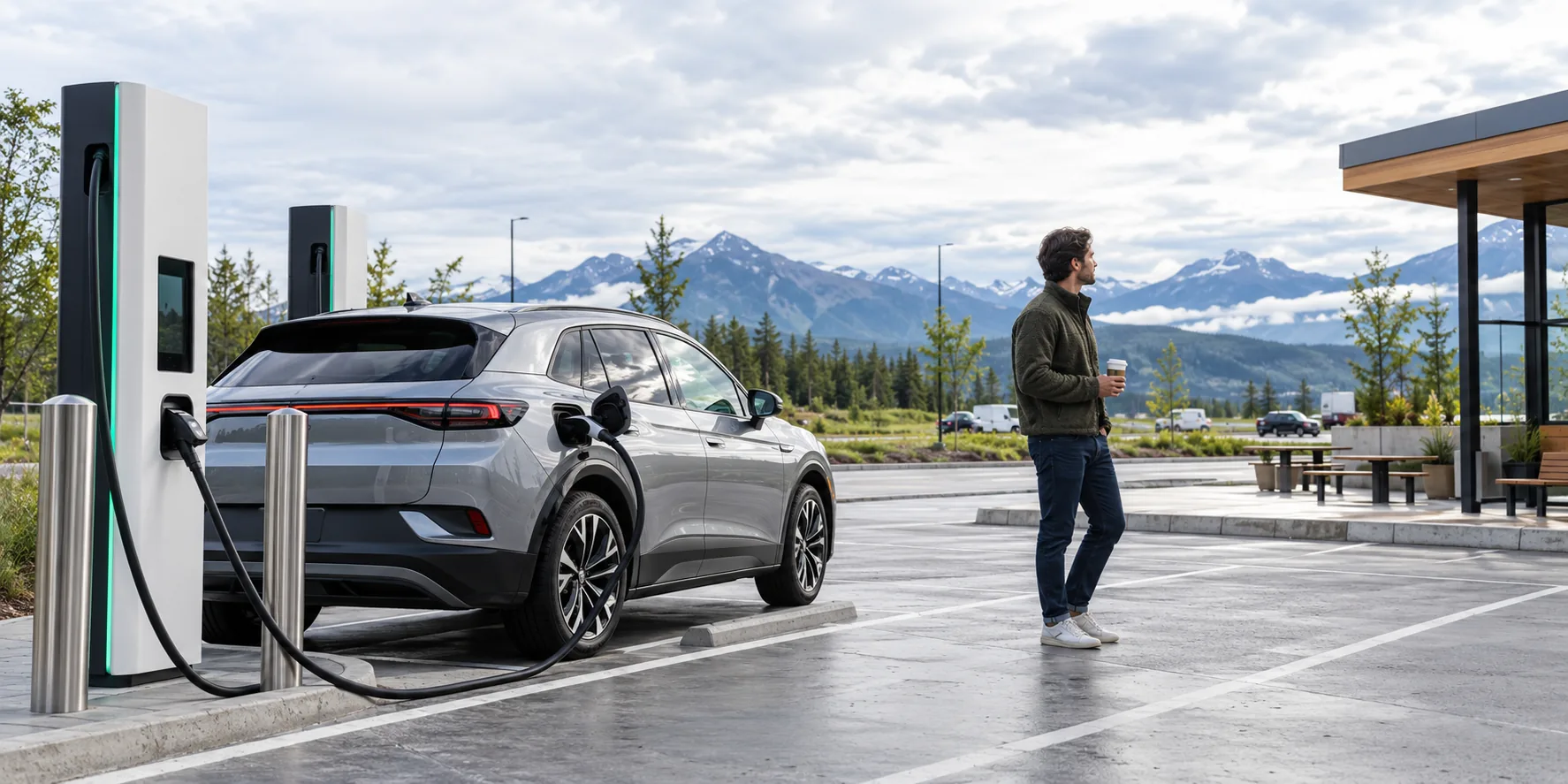
At the stall, park so the charging cable reaches without tension. Check the instructions on the station and vehicle, connect firmly, then confirm that the session has actually started on the screen or app. If it repeatedly fails, use the operator’s support channel or another stall. Never force a connector or use an improvised adapter.
What determines the total stop time?
Battery capacity and starting percentage
A larger battery can require more kWh for the same percentage change. Starting at 10% and leaving at 60% can be very different from starting at 60% and waiting until nearly full, even if the percentage span looks similar.
The vehicle’s charging curve
Two cars with the same peak DC rating can spend different amounts of time at high power. Look for manufacturer or independent measured charging curves for the exact vehicle, battery and model year, and treat published ’10 to 80%’ times as test-condition estimates.
Temperature, station and overhead
Cold or hot battery conditions, station derating, shared output, connector issues, authentication and queueing can all change a stop. A five-minute detour to a working station can be better than a nominally faster stall that is occupied or unavailable.
Cost and battery care
Public DC charging prices and billing models vary by operator and location. Review the price in the station app or screen before starting, including idle or congestion fees if shown. If your vehicle maker recommends a routine charge limit or a particular practice for battery care, follow that guidance. Occasional road-trip fast charging and overnight home charging serve different needs.
The useful question is not ‘How fast is Level 3?’ but ‘How much energy can this car add at this station before I need to leave?’ Use the live session rate, the next leg and a sensible buffer to decide.
Fast charging is one part of a wider travel and charging plan. Review charging levels. Use public charging sessions and battery capacity to check the related decisions before choosing equipment or a charging routine.
Sources
- U.S. DOE AFDC: Electric vehicle charging stations
- Electrify America: How to use EV charging stations
- Tesla: Supercharging factors and trip guidance
Frequently asked questions
Is Level 3 the same as DC fast charging?
In everyday North American usage, Level 3 usually means DC fast charging. Official technical sources often prefer the term DC fast charging because power levels vary widely.
Does a 350 kW charger make any EV charge at 350 kW?
No. The vehicle, battery conditions and station set the actual rate. A higher-rated stall cannot overcome the car’s maximum or its charging curve.
Why did the charger slow down near 80%?
The car typically requests less power as the battery fills, with timing that varies by model and conditions. A lower rate can also reflect temperature or station limitations. Check the vehicle and session displays.
Can I install Level 3 charging at home?
DC fast charging equipment has very different site, power, cost and installation needs from common home AC charging. For ordinary households, Level 2 is the practical home option. A qualified designer would assess any unusual DC installation.