EV Charger Amperage: How Much Power Do You Need?
Choosing EV charger amperage starts with your daily driving, the hours the car sits at home, and the vehicle’s AC charging limit. A higher number on the charger label does not automatically deliver a faster or better overnight charge. The electrical circuit and the car have their own limits, and an electrician must assess the installation.
Amps, volts and kilowatts in plain English
Amperage is electrical current. At a nominal 240 volts, approximate input power is volts multiplied by amps: 16 A is 3.84 kW, 24 A is 5.76 kW, 32 A is 7.68 kW, 40 A is 9.6 kW and 48 A is 11.52 kW. Actual voltage varies and some energy is lost, so these are planning figures, not guaranteed energy added to the battery. The car’s onboard AC charger may accept less power than the EV supply equipment can offer.
For example, a car limited to roughly 7.7 kW on AC will not draw 11.5 kW from a 48 A home unit. Likewise, a 48 A capable unit configured to 24 A for its installed circuit will offer about 5.8 kW. Check the vehicle manual, charging settings and charger installation instructions before treating an advertised maximum as your expected speed.
Charger output and circuit rating are different numbers
EV charging is typically a continuous load. The U.S. Environmental Protection Agency explains that the breaker rating is generally at least 125% of the charging current. That means common pairings include a 16 A output on a 20 A circuit, 24 A on 30 A, 32 A on 40 A, 40 A on 50 A and 48 A on 60 A. These are examples of the current relationship, not instructions to choose a breaker or wire size.
A ’50 amp EV charger’ can mean a 50 A circuit, a 50 A output setting, or loose retail wording. Ask which value the specification actually describes. A 50 A breaker normally corresponds to a maximum 40 A continuous charging setting; a unit capable of 50 A output needs an installation designed and approved for that output. Your electrician determines wiring, breaker, receptacle or hardwire arrangement, service load, permitting and equipment settings under the applicable code and manufacturer instructions.
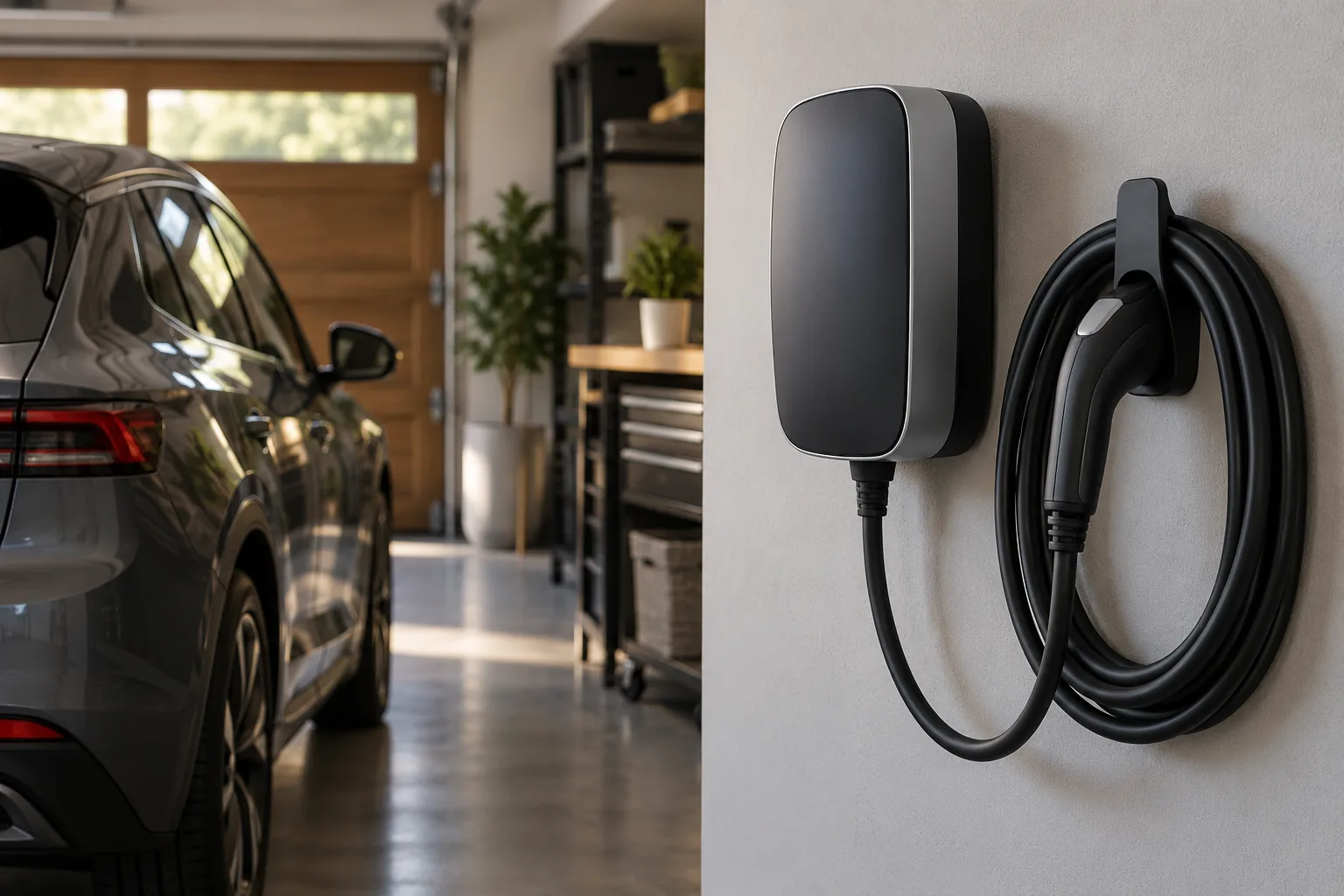
How much power do you actually need?
Start with miles driven on a demanding ordinary day, rather than the largest trip of the year. Estimate energy to replace from the car’s recent efficiency display, then divide by available plugged-in hours. If you use 20 kWh during a day and park for ten hours, the battery needs an average of roughly 2 kW delivered during that window, plus charging losses. Even a modest Level 2 setup may cover that routine. Faster charging adds flexibility for back-to-back trips and shared vehicles.
- Daily miles and overnight parking window: a short commute with long parking often needs less output than a two-car household with late arrivals.
- Vehicle AC acceptance: the car limits AC power even if a wall unit advertises more.
- Electrical capacity: the panel’s unused breaker slots alone do not establish service capacity. An electrician evaluates actual loads and installation conditions.
- Future use: a second EV, different parking spot or time-of-use electricity rate can change the useful charging window.
Common amperage choices
16 A and 24 A: a practical step up from a household outlet
At 240 V, these settings offer about 3.8 and 5.8 kW before losses. They can suit drivers who park for long stretches or have a vehicle with a modest AC limit. The installation may still require a new dedicated circuit, depending on the home’s wiring and equipment. A 16 amp EV charger is not interchangeable with a random existing outlet: the circuit and device must be assessed for sustained charging.
32 A and 40 A: useful middle ground
Approximately 7.7 and 9.6 kW at nominal 240 V gives many households a comfortable overnight margin. A 30 amp electric car charger may refer to a product name or a circuit rather than a precise output; verify the configuration. ChargePoint’s Home Flex installation guidance, for example, distinguishes plug-in configurations from higher-current hardwired settings. The maker’s permitted configurations matter as much as the number on a product listing.
48 A and above: value depends on the vehicle and the house
A 48 A setup is approximately 11.5 kW at 240 V, but only a compatible vehicle and appropriately designed installation can use it. Search phrases such as ’60 amp EV charger’ often refer to the breaker, while a charger may be configured for 48 A output. Higher current can increase equipment and installation demands without improving a car that is AC-limited. Treat a claimed 50 A charging output as a product-specific case for an electrician to verify.
Plug-in, hardwired and managed charging
A plug-in station is convenient where a suitable dedicated receptacle is properly installed, but its permitted settings and receptacle type come from the manufacturer’s instructions. Hardwiring can support some higher output settings and may suit outdoor placement. Neither method removes the need for a professional load assessment. Do not use extension cords, adapters or an underspecified outlet to bypass a circuit limit.
Where service capacity is tight, a listed load-management system or power-sharing equipment may offer a path to charging without assuming a full panel upgrade. Its suitability depends on the particular devices, local rules and electrician’s design. For a broader installation checklist, see our home EV charger installation guide; for the charging levels themselves, see the Level 1 versus Level 2 comparison.
A simple decision sequence
- Record typical daily energy use and hours parked at home.
- Confirm the car’s maximum AC acceptance and charging-port compatibility.
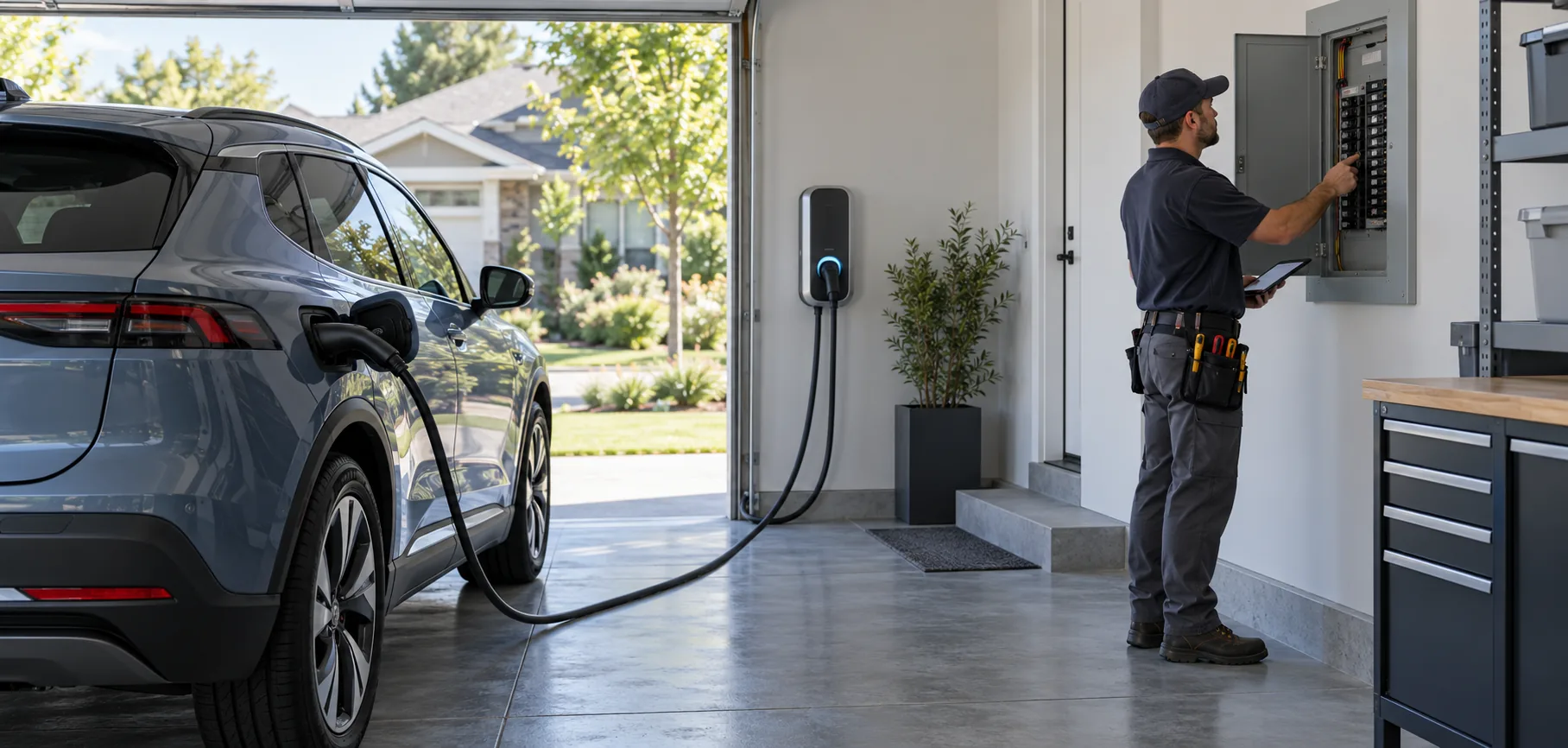
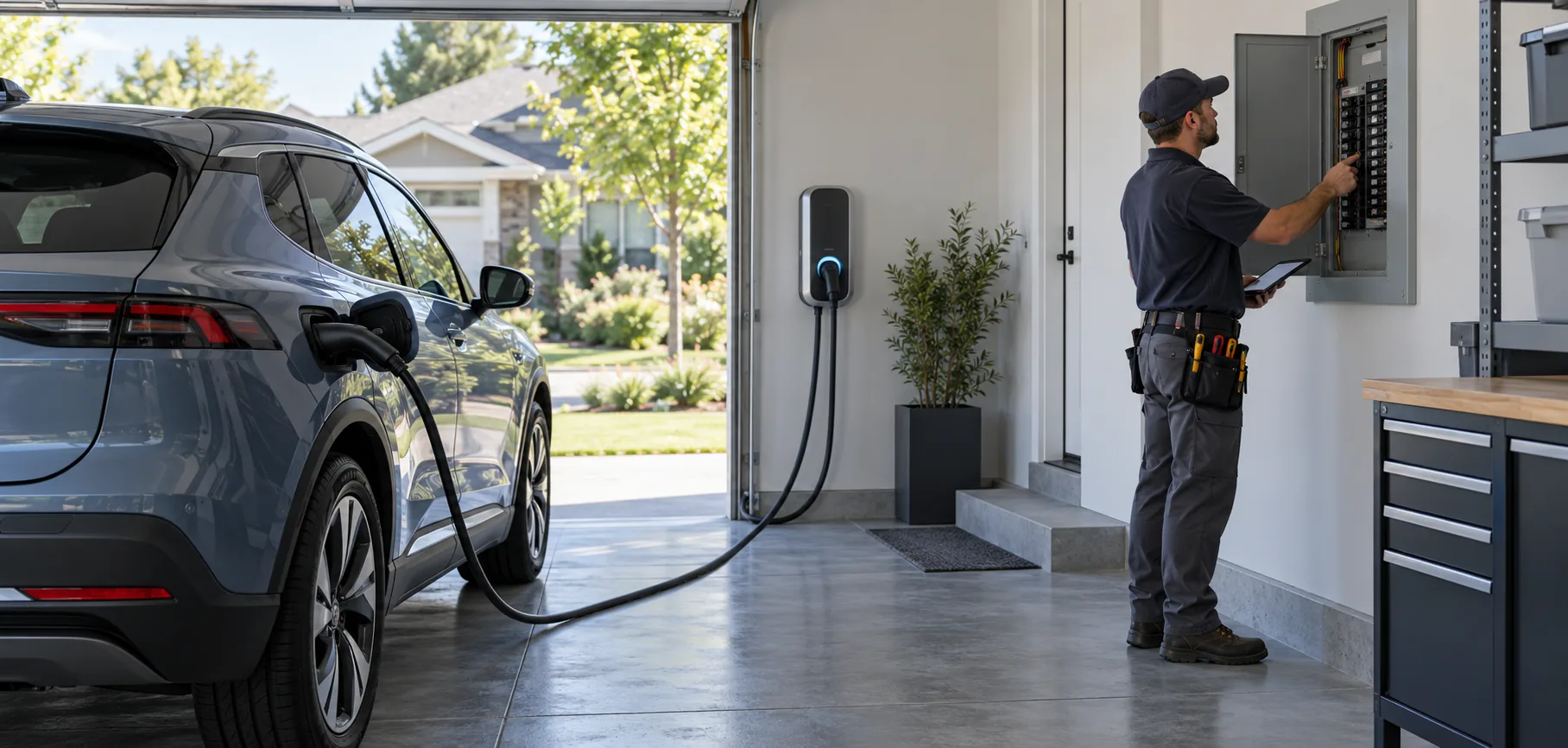
- Ask a qualified electrician to assess the service, dedicated circuit, location and local permit requirements.
- Choose equipment whose certified installation options and adjustable settings match the approved design.
- Configure and commission it exactly as the manufacturer specifies; revisit the setting if equipment or electrical work changes.
For most households, the right amperage is the lowest practical setting that comfortably replenishes routine driving within the available window, with a reasonable margin for busier days. Get the circuit assessed before buying around a headline amp figure.
Choose charging output around daily energy needs rather than the largest advertised number. Review home charging needs. Use electricity-use calculations and home charging equipment to check the related decisions before choosing equipment or a charging routine.
Sources and technical references
- U.S. EPA: Plug-in electric vehicle charging details
- U.S. EPA: Getting started with home EV charging
- ChargePoint: Home Flex installation and current settings
Frequently asked questions
Can I put a 40 A charger on a 40 A breaker?
A 40 A charging output generally needs a higher-rated circuit for a continuous load. A 40 A circuit commonly supports up to 32 A charging output, subject to the complete installation and local requirements. Have an electrician set the equipment accordingly.
Will a 60 A circuit make every EV charge faster?
No. A 60 A circuit may allow 48 A output with suitable equipment, but the car’s AC onboard charger and its settings can limit power below that. Charging speed also changes with the vehicle and conditions.
Is 16 A enough for an EV?
It can be, especially with a long overnight parking window and modest daily energy use. Calculate your routine energy replacement and leave room for charging losses and occasional busier days.