Best Electric Cars for City Driving: 5 U.S. Picks for Daily Commutes
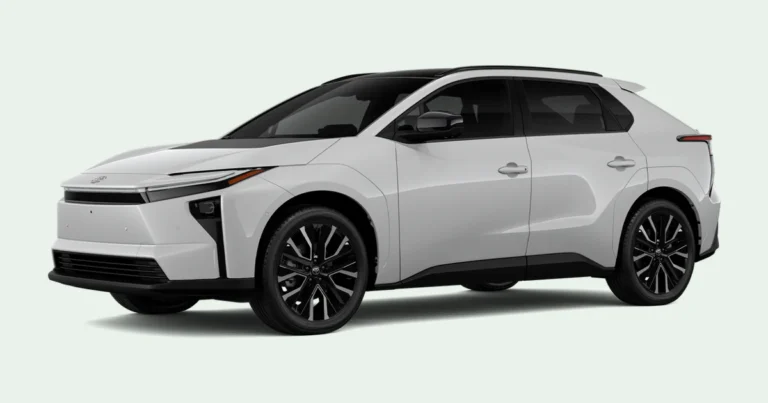
The best electric cars for city driving are the ones that fit your parking spot, cover your real weekly driving on one or two charges, and charge where you actually park. For most U.S. city drivers that means a compact EV with at least 200 miles of EPA range, a small footprint, and a charging plan that works without a private garage. The 2026 Nissan LEAF is the strongest all-round pick for that job, and the 2026 Chevrolet Equinox EV is the best choice if you need more space and range.
Checked November 12, 2026. Prices are MSRP, excluding destination unless stated, and every range figure is the EPA rating for the exact trim named. A listing price is not an out-the-door price, and a future model is not a car you can buy today.
Words to know before you shop
These words come up all through this guide. Here is what they mean in plain language.
- EPA range: the official U.S. test figure for a new car. City range is higher than highway range, because stop-and-go driving lets the car recover energy when it slows down.
- MPGe: miles per gallon equivalent. It measures efficiency, not range. A higher city MPGe means the car uses less energy in town.
- kWh: the size of the battery. A bigger number usually means more range, but it is not the whole story.
- kW: how fast a car can charge. kWh is the size of the tank; kW is how fast it fills.
- NACS: the Tesla-style charging plug, also called J3400. Some new cars have it built in; others reach Tesla Superchargers with an approved adapter.
- CCS: the fast-charging plug most non-Tesla EVs used before NACS. A CCS car needs an approved adapter to use a Supercharger.
- J1772: the standard plug for slower home and public AC charging. Every EV in this guide uses it for Level 1 and Level 2 charging.
- MSRP: the maker’s list price, before destination, taxes, and dealer fees.
- Destination charge: the fee to ship the car to the dealer. It is extra, and it differs by maker, so compare prices on the same basis.
At a glance: the best electric cars for city driving
On a narrow screen, swipe the table sideways to see all five columns.
| Vehicle | MSRP from (before destination) | EPA range (combined) | DC fast charging | Best for |
|---|---|---|---|---|
| 2026 Nissan LEAF | $29,990 | 303 mi (S+) | NACS, up to 150 kW | Best all-round pick |
| 2026 Chevrolet Equinox EV | $34,995 | 319 mi (FWD) | CCS plus adapter, up to 150 kW | Longest range |
| 2025 Hyundai Kona Electric | $32,975 | 261 mi (SEL) | CCS plus adapter | Compact crossover |
| 2025 Kia Niro EV | $39,600 | 253 mi | CCS plus adapter | Simplest lineup |
| 2025 Fiat 500e | $30,500 | 149 mi | CCS, up to 85 kW | Easiest to park |
All prices are MSRP before destination. Range is the EPA combined figure for the trim named. The 2025 Kona Electric and 2025 Fiat 500e are remaining 2025 stock; the makers now list newer model years, so confirm the exact car and price with the dealer before you buy.
How to pick a city EV: size, range, and charging access
Start with the parking spot, not the range number. Measure the space where the car will sit every night. The LEAF is 173.4 inches long; the Equinox EV is about 190 inches. That 16-inch difference is the gap between fitting a tight city garage and circling the block. If you park on the street, a shorter car also means easier parallel parking and fewer scraped bumpers.
Then set a range floor. For a city car, 200 miles of EPA range is a sensible minimum. It covers a 150-mile week on one charge with a reserve left over, and it leaves room for cold weather, which cuts range. The EPA’s own data shows about 12 percent less range at 20 degrees Fahrenheit without the cabin heater, and up to 41 percent less with the heater on. A 149-mile car like the Fiat 500e can still work, but only if your driving is short, predictable, and backed by reliable charging. Our EV range guide explains how speed, weather, and load change the miles you get from a charge.
Finally, answer three charging questions before you fall in love with a car. First, where will the car sit overnight: a home charger, a workplace charger, or the street? Second, is there a fast charger on your regular routes, not just somewhere in your city? Third, does the car’s plug, or its approved adapter, match those chargers? A plug that fits does not prove you can use a station. Our connector guide explains CCS, J1772, and NACS, and why the adapter matters as much as the port.
Those three answers sort most buyers into three groups. Home chargers can buy any car on this list, including the short-range 500e. Workplace-plus-public chargers should pick at least 250 miles of range, so a missed charging day never strands them. Public-only drivers need the longest range and the easiest fast-charging access, which points to the LEAF or the Equinox EV. If you are shopping used instead of new, our best used EV guide walks through the same checks for older cars.
2026 Nissan LEAF: the best all-round city EV
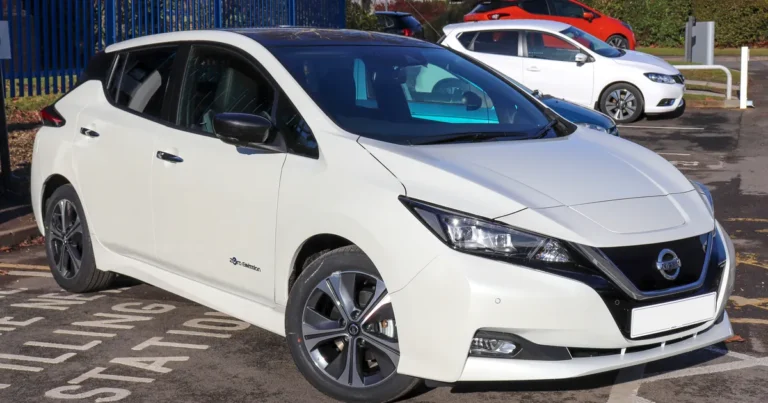
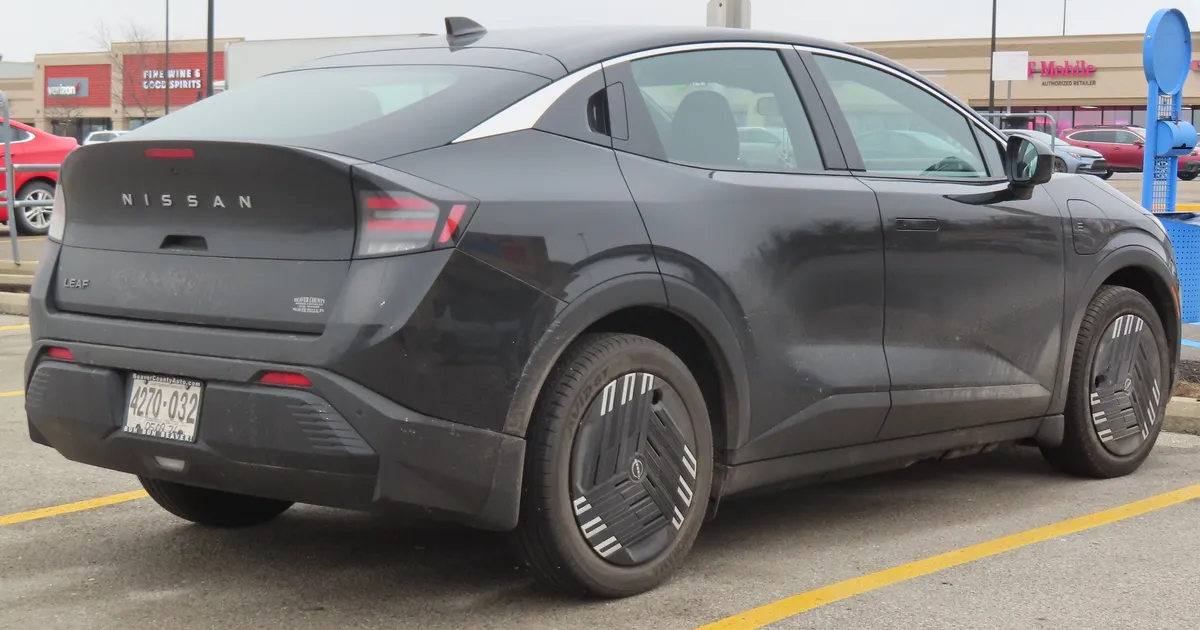
The redesigned 2026 LEAF is the strongest all-round pick for city driving, and it is also the cheapest car in this guide. It starts at $29,990 before the $1,575 destination charge, so the delivered starting price is $31,565. The SV+ costs $34,230 and the Platinum+ costs $38,990, both before destination. Every trim uses the same 75 kWh battery and the same 214-horsepower motor, with front-wheel drive only. Nissan’s 2026 LEAF specs page lists the full trim breakdown.
Range is certified by wheel size, not just by trim, so read the numbers carefully. The S+ rides on 18-inch steel wheels and is rated at 303 miles combined, 325 miles in the city, and 276 miles on the highway, per the EPA dataset published on fueleconomy.gov. The SV+ on 18-inch alloy wheels is rated at 288 miles combined and 305 miles in the city. The Platinum+ on 19-inch wheels is rated at 259 miles combined and 275 miles in the city. The most expensive trim has the shortest range, so do not pay more and expect more miles. The S+ is also the efficiency leader at 131 MPGe in the city against 111 on the highway, which is exactly the pattern city driving rewards.
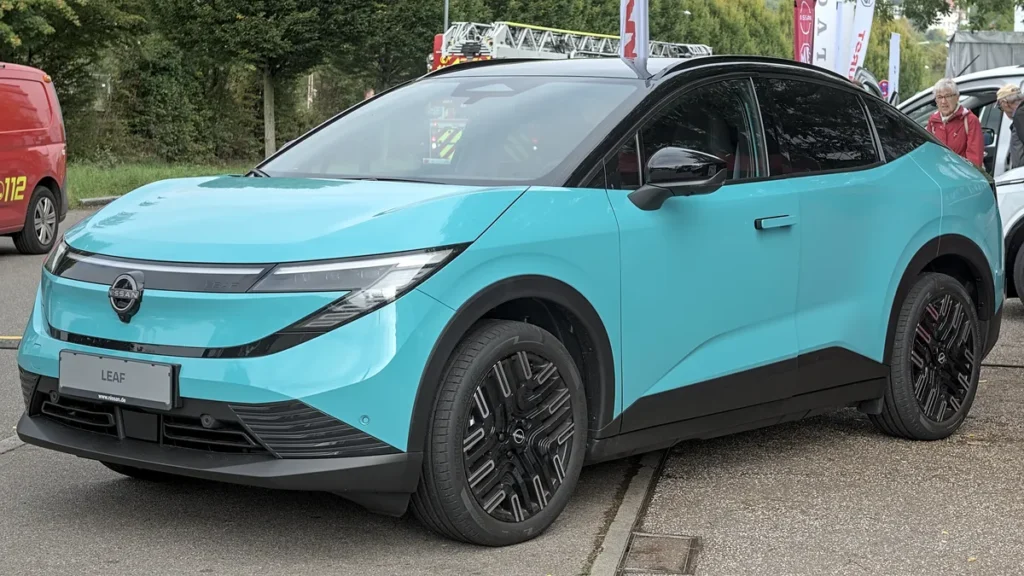
Charging is where the new LEAF pulls ahead. It has a native NACS port for DC fast charging, plus a separate J1772 port for AC charging, standard on all trims. No adapter is needed. It charges at up to 150 kW, from 10 to 80 percent in about 35 minutes, and it can use more than 20,000 Tesla Superchargers, per Nissan. That is the simplest fast-charging setup in this guide. Note the model year: a 2025-or-earlier LEAF uses CHAdeMO for DC fast charging, not NACS, so none of this applies to an older LEAF.
The LEAF is a compact crossover now, not the old hatchback. It is 173.4 inches long, with 20 cubic feet of cargo space behind the rear seats. That is small enough for tight parking and big enough for a weekly shop. At about $99 of sticker price per mile of EPA range, it is also the cheapest range in this guide. Buy the S+ if you want the most miles for the least money. Buy the SV+ if you want the bigger screens and heated front seats and can accept 288 miles. Skip the Platinum+ unless you specifically want its features, because you pay the most and get the least range.
2026 Chevrolet Equinox EV: the longest range
The Equinox EV is the longest-range car in this guide and the roomiest, and it is the pick if the LEAF feels too small. The 2026 LT 1 starts at $34,995 before destination, or $36,795 with destination per Cars.com’s August 2026 list. The LT 2 starts at $41,795 and the RS at $44,095. Edmunds’ 2026 Equinox EV specs table lists the $34,995 figure as the base MSRP excluding the destination fee, and Chevrolet’s Equinox EV page shows the same starting price.
EPA range is 319 miles with front-wheel drive and 307 miles with all-wheel drive, confirmed on Chevrolet’s 2026 model page. City efficiency is 117 MPGe with front-wheel drive and 112 MPGe with all-wheel drive. The front-wheel-drive car makes 210 horsepower; all-wheel drive raises that to 300 horsepower. The 85 kWh battery is the same across the range, so the base LT 1 gives you the full 319 miles. You do not sacrifice range by buying the cheapest trim.
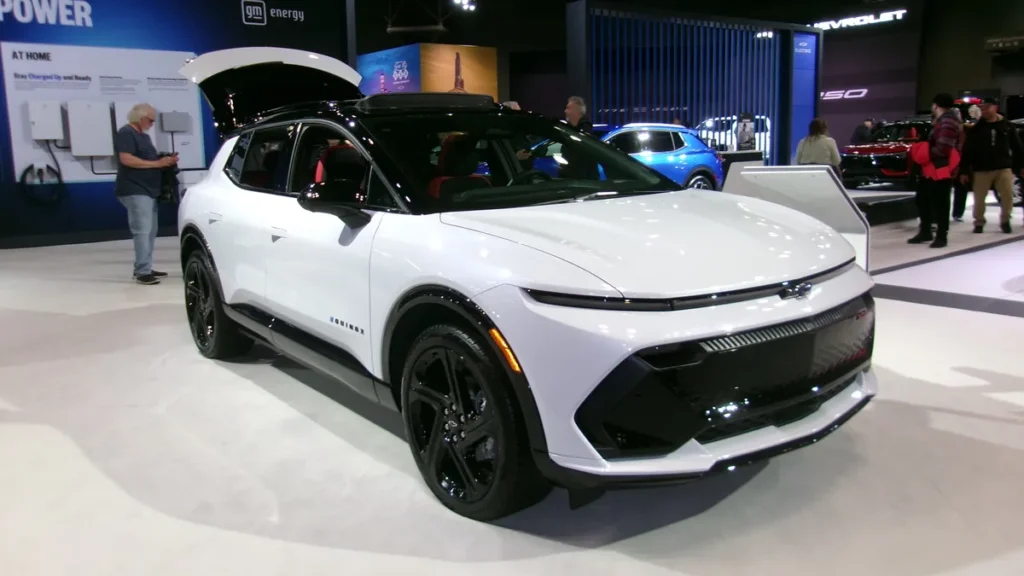
Charging needs care with the model year. The 2026 Equinox EV still uses a CCS1 port for DC fast charging, not a native NACS port. GM’s own charging update from August 2026 says the move to native NACS ports comes with the 2027 model year, and the 2026 cars need an adapter for Tesla Superchargers. GM’s approved NACS DC adapter, about $225, opens compatible Superchargers. The car charges at up to 150 kW on DC, from 10 to 80 percent in about 42 minutes, and accepts up to 11.5 kW on AC. Do not buy a 2026 car expecting it to charge like a 2027 car. Check the port on the exact car and the chargers on your actual routes.
On value, the Equinox EV costs about $110 of sticker price per mile of EPA range, against about $99 for the LEAF, so it is not the cheapest range per dollar. What the extra money buys is space and 319 miles: the longest range here, in a car about 190 inches long that fits a family and a full shop. If your city driving includes regular trips out of town, or you carry passengers and cargo every day, that trade is worth it. If your driving stays inside the city, the LEAF gives you nearly the same range for about $5,000 less.
2025 Hyundai Kona Electric: the compact crossover, while 2025 stock lasts
The Kona Electric is the compact crossover of this group, and the one with the clearest availability warning. Hyundai is skipping the 2026 model year for the Kona Electric, with the model returning as a 2027. What dealers have now is remaining 2025 stock, so verify the exact car, its model year, and its price before you buy. Do not let a listing call it a 2026.
Two batteries split the range. The SE uses a 48.6 kWh battery, costs $32,975, and is rated at 200 miles EPA. The SEL, N Line, and Limited share a 64.8 kWh battery: the SEL costs $36,975 and is rated at 261 miles, the N Line costs $38,375 and is rated at 230 miles because of its 19-inch wheels, and the Limited costs $41,150 and is rated at 261 miles. All prices are MSRP before destination. City efficiency is 131 MPGe for the SE and 129 MPGe for the long-range cars, per EPA figures on fueleconomy.gov. The SEL is the pick: it has the long range without the Limited’s price.
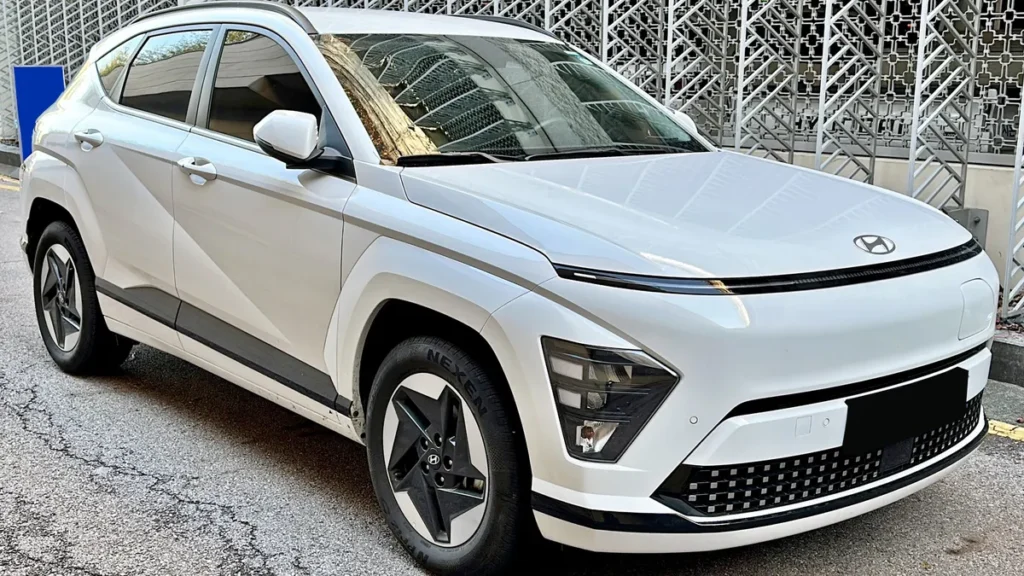
Charging is a CCS port, with Supercharger access through an adapter. Hyundai offers a complimentary NACS adapter to eligible owners, and the Kona Electric is on the eligible list, but the offer requires a purchase or lease on or before January 31, 2025, with redemption within 60 days of the offer email. If you buy remaining 2025 stock now, that window has passed for you, so ask the dealer whether the adapter is included with the car or available to buy, and at what price, before you rely on Supercharger access. The port and the access are two separate facts: the car has a CCS port either way.
The Kona Electric makes 201 horsepower and drives the front wheels only. It is a good city car if you want a crossover shape with a higher seat and a longer range than the 500e, and if you find a 2025 SEL at a fair price. It is a poor buy if the dealer cannot confirm the adapter, and you plan to depend on Superchargers.
2025 Kia Niro EV: the simplest lineup
The Niro EV is the straightforward pick in this guide: one battery, one range figure, two trims. The Wind costs $39,600 and the Wave costs $44,600, both MSRP before destination. Both use a 64.8 kWh battery, make 201 horsepower, drive the front wheels only, and are rated at 253 miles EPA with 126 MPGe in the city. There is no all-wheel-drive option and no smaller battery to puzzle over. Pick the Wind for value; the Wave adds features, not miles.
Charging is the same story as the Kona Electric: a CCS port, with Tesla Supercharger access through an approved NACS adapter. Ask the dealer whether the adapter is included with the car or sold separately, and confirm enrollment, before you buy. Do not assume a Niro EV plugs straight into a Supercharger, because it does not.
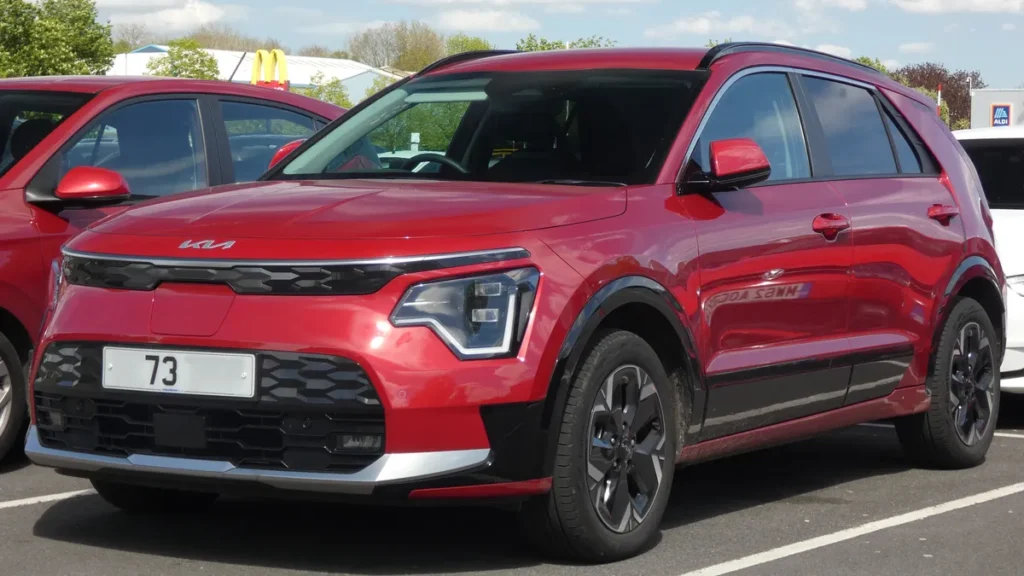
The Niro EV is the most expensive car in this guide before destination, and its range is shorter than the Kona SEL’s and the Equinox EV’s. What it offers instead is simplicity and space in a familiar crossover shape, with a heat pump available as an option on the Wind and Wave for cold-weather efficiency. If you want one decision instead of four trims, and you have reliable charging, it is a calm, easy buy. If value per mile is the priority, the LEAF and the Equinox EV beat it.
2025 Fiat 500e: the true city car, for short predictable commutes
The Fiat 500e is the smallest car in this guide by a clear margin, and the easiest to park anywhere. It is also the shortest-range car here, so it suits only short, predictable driving. Buy it for the parking, not for the range.
The base Inspi(Red) trim costs $30,500 before destination, or $32,495 with the $1,995 destination charge. The Icona costs $32,500 before destination and the Giorgio Armani costs $35,500. EPA range is 149 miles with summer tires and 141 miles with all-season tires, from a 42 kWh usable battery. DC fast charging runs at up to 85 kW. Those are 2025 figures from 2025 listings; Fiat’s site now shows the 2026 model, so confirm the exact car and price with the dealer. The 2026 model carries a manufacturer-estimated city range of up to 153 miles on all-season tires and 162 miles on summer tires. That is a city estimate from the maker, not the EPA combined rating, so do not compare it directly with the 149-mile EPA figure.

At 149 miles, the 500e covers a short daily routine and little else. A 20-mile round-trip commute uses about 13 percent of its range, which is fine. A 40-mile day with an unplanned errand starts to need a charging plan. If you can charge at home or at work, and your driving rarely passes 100 miles in a day, the 500e is a cheerful, easy city car. If you cannot charge reliably, or your days are unpredictable, the LEAF’s extra 154 miles of range is worth the similar money.
What about the Volvo EX30 and the new MINI Cooper SE?
Two cars that look like city EV picks are left out on purpose, and the reasons matter.
The Volvo EX30 is not on the list because Volvo ended U.S. EX30 sales after the 2026 model year, closed the order bank in March 2026, and now sells only remaining dealer stock. The $34,950 starting price you may still see quoted was the announced 2025 single-motor price, and that car was never sold in volume in the U.S. A 2025 EX30 “starting at $34,950” claim would mislead a buyer today.
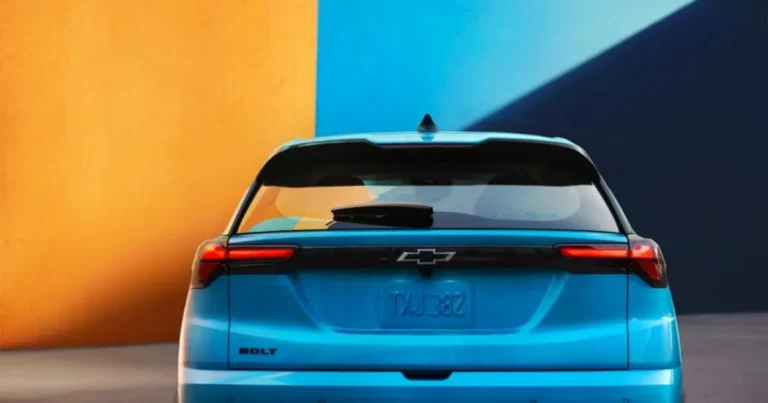
The redesigned MINI Cooper SE, with a 54.2 kWh battery, is also left out, because its U.S. availability and EPA range were not confirmed when this guide was checked. Do not mix it up with the 2020-2024 Cooper SE, which is rated at 110 to 114 miles EPA and is a used buy now, not a new one. The Chevrolet Bolt is also returning as a 2027 model, but its U.S. pricing and EPA range were not confirmed for this guide, so it is not in the shortlist either. Check the current Chevrolet listing before you buy.
City charging without a garage
Not every city driver has home parking, and this guide does not assume you do. If you have a driveway or a garage, a Level 2 charger is the easy answer: the car charges overnight, and you rarely think about it. Our home charging guide helps you work out whether Level 1 (120-volt) charging covers your daily miles or whether Level 2 (240-volt) equipment is worth paying for. Have a qualified electrician assess any new circuit first.
If you park on the street or in an apartment block, your charging plan has three parts. First, workplace charging: ask your employer what exists, what it costs, and whether you can count on a spot. Second, public Level 2 charging near home: curbside and lamppost chargers are growing in U.S. cities, and they suit cars that sit parked for hours. Third, DC fast charging for top-ups: a 30-minute stop once or twice a week covers most city driving. Our public charging guide explains how public charging works, what it costs, and what to check before you rely on it.
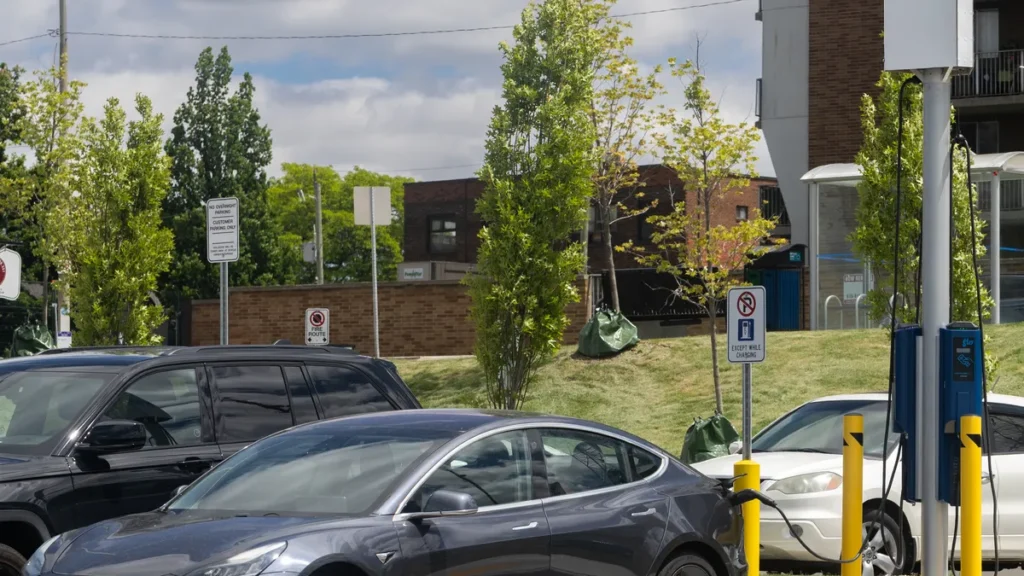
Two practical rules follow. Check the chargers on your actual routes, not just the ones near your home, and check them at the times you would use them. A charger that is free at noon and busy at 6 p.m. is a different charger. And match the car to the network: the LEAF’s native NACS port makes Supercharger access simple, while the CCS cars in this guide need their maker’s approved adapter. Buy the adapter question first, not after the car.
Worked example: a 30-mile weekday commute in each car
Illustrative example: One driver commutes 30 miles round-trip on weekdays, 150 miles a week, charges at home overnight, and wants to arrive with at least 20 percent charge left.
Assumptions, in plain sight: She leaves at 90 percent and plans to arrive at 20 percent, so she budgets 70 percent of the battery. EPA figures are new-car ratings for the exact trim named; cold, speed, and load reduce the result further. These are planning numbers, not predictions. Our EV range guide explains how speed, weather, and load change the miles you get from a charge.
| Car | EPA range | 70% planning window | What the 150-mile week looks like |
|---|---|---|---|
| 2026 LEAF S+ | 303 mi | About 212 mi | One charge covers the week, with about 60 miles to spare. |
| 2026 Equinox EV FWD | 319 mi | About 223 mi | One charge covers the week, with about 70 miles to spare. |
| 2025 Kona Electric SEL | 261 mi | About 183 mi | One charge covers the week, with about 30 miles to spare. |
| 2025 Niro EV | 253 mi | About 177 mi | One charge covers the week, with about 25 miles to spare. |
| 2025 Fiat 500e | 149 mi | About 104 mi | Needs a second charge mid-week. |
The lesson is that range differences matter most at the bottom of the list. The LEAF, Equinox EV, Kona Electric, and Niro EV all cover the week on one charge, so the choice between them comes down to size, price, and charging access. The 500e needs two charges a week for the same routine, which is fine if charging is easy and annoying if it is not. Run your own numbers before you buy: take your weekly miles, divide by the EPA range, and see how many charges your week needs.
How we checked
This guide covers new electric cars on sale in the U.S. in November 2026, checked on November 12, 2026. Prices are the makers’ list prices before destination unless stated, and range figures are the EPA ratings for the exact trim named, from the makers’ spec pages and the EPA dataset on fueleconomy.gov. Where a maker’s site had moved on to a newer model year, the figures used are from the model year’s own listings, and the guide says so. The federal $7,500 clean-vehicle credit ended for vehicles acquired after September 30, 2025, so no price in this guide subtracts it. State, local, or utility programs may differ and can change; verify any specific current offer with its administrator before you sign.
No car in this guide was test-driven for this article, and no dealer’s stock was audited. Prices, availability, and charging access change, so confirm the exact car, trim, and out-the-door price with the dealer, and check the chargers on your own routes, before you buy. This article was drafted with AI assistance and checked against the sources named above. The final decision is yours, and the best electric car for city driving is the one that fits your parking spot, your week, and your charging.
By Sam Wilson. EVPalace’s editorial pen name for EV buying guides.
What is the best electric car for city driving?
The 2026 Nissan LEAF is the best all-round pick for most U.S. city drivers. It starts at $29,990 before destination, is rated at 303 miles EPA combined and 325 miles in the city on the S+ trim, and it has a native NACS port, so Tesla Supercharger access needs no adapter. It is also the cheapest range in this guide, at about $99 of sticker price per mile of EPA range.
How much range do I need for city driving?
At least 200 miles of EPA range is a sensible minimum for a city car. It covers a 150-mile week on one charge with a reserve left over, and it leaves room for cold weather, which cuts range. A 149-mile car like the Fiat 500e works only if your driving is short and predictable and your charging is reliable.
Can I own an EV in the city without home charging?
Yes, if you have workplace charging or reliable public charging near where the car sits. Pick at least 250 miles of range, so a missed charging day never strands you, and check the chargers on your actual routes at the times you would use them. The LEAF and the Equinox EV are the easiest picks for a public-only driver; the 500e is the hardest.
Do these cars work at Tesla Superchargers?
The 2026 LEAF does, through its built-in NACS port, with no adapter needed. The Equinox EV, Kona Electric, and Niro EV use a CCS port and reach compatible Superchargers with their maker’s approved NACS DC adapter, so ask the dealer whether the adapter is included or available to buy before you rely on it. The 500e also uses CCS, so confirm its adapter situation too.
Is the $7,500 federal tax credit still available?
No, not for a new EV bought now. The federal clean-vehicle credit ended for vehicles acquired after September 30, 2025. Do not let a listing’s “after credit” price decide the purchase. State, local, or utility programs may still exist; verify any specific offer with its administrator.