Best Level 1 EV Charger: Compare 120V Options
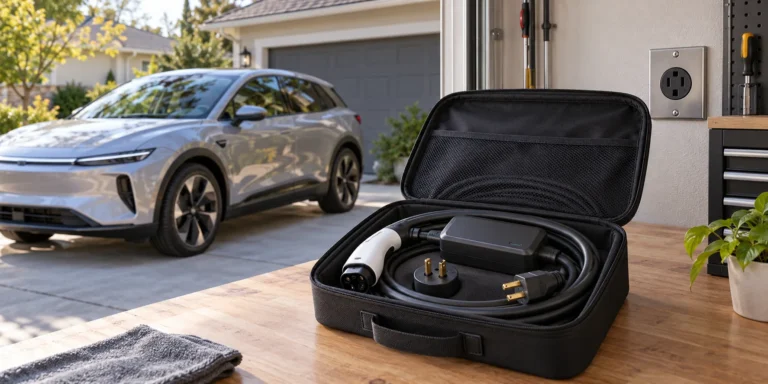
Quick answer: The best Level 1 EV charger is a safety-certified 120 V cordset with the right connector for your car, an appropriate plug, enough cable reach and a suitable household circuit. First check whether the vehicle’s supplied mobile cord already meets those needs. Tesla’s Mobile Connector suits NACS/Tesla households; Enphase’s Mobile EV Charger and Lectron’s 12 A J1772 model are current aftermarket choices for J1772 cars.
Level 1 is the slow, practical option for a car parked many hours and driven a modest distance each day. It can be a good permanent routine or a backup, but a product purchase cannot make an unsuitable outlet safe. This guide compares current manufacturer-listed options using desk research, not hands-on tests, and shows how to assess the existing circuit with an electrician when uncertain.
Start with the cordset you may already own
Some EVs include a mobile charging cord or offer it as an optional accessory; packages change by model and year. Check the car’s delivery kit and owner’s manual before buying another. The U.S. DOE Alternative Fuels Data Center says many owners can meet daily charging needs overnight with Level 1 when a suitable outlet on a dedicated branch circuit is available. That condition matters as much as the charger.
The EPA’s home charging guidance gives a broad illustration of a few miles of range per hour for Level 1; the number varies with the car, electrical setting and conditions. Compare miles used each day with hours parked. A 12-hour overnight window can be useful, but do not assume it will replenish every commute or a nearly empty large battery.
| Choice | Vehicle connector and supply | Reason to consider | Check before purchase |
|---|---|---|---|
| Vehicle’s supplied or OEM cord | Exact car-specific kit; verify 120 V adapter | Potentially no extra unit to buy | Whether your vehicle actually includes it and outlet instructions |
| Tesla Mobile Connector | Tesla/NACS handle; included NEMA 5-15 for 120 V | Native match for Tesla, with a 240 V adapter also in current bundle | Vehicle compatibility, outlet suitability and current bundle |
| Enphase Mobile EV Charger | J1772, NEMA 5-15; rated 12 A at 120 V | Simple dedicated Level 1 J1772 option, 25-foot output cable | Exact certification, cable reach and model availability |
| Lectron 12 A Wi-Fi Level 1 | J1772, NEMA 5-15; 12 A at 120 V | App scheduling/monitoring on a 120 V unit | 16-foot cable, connectivity and certification of exact SKU |
These are use-case selections, not measured performance rankings. Prices, stock and product bundles change. The manufacturer is the source for each specification; verify independent safety listing and the exact model before ordering. No affiliate links or paid placements appear in this draft.
Tesla Mobile Connector: native NACS option
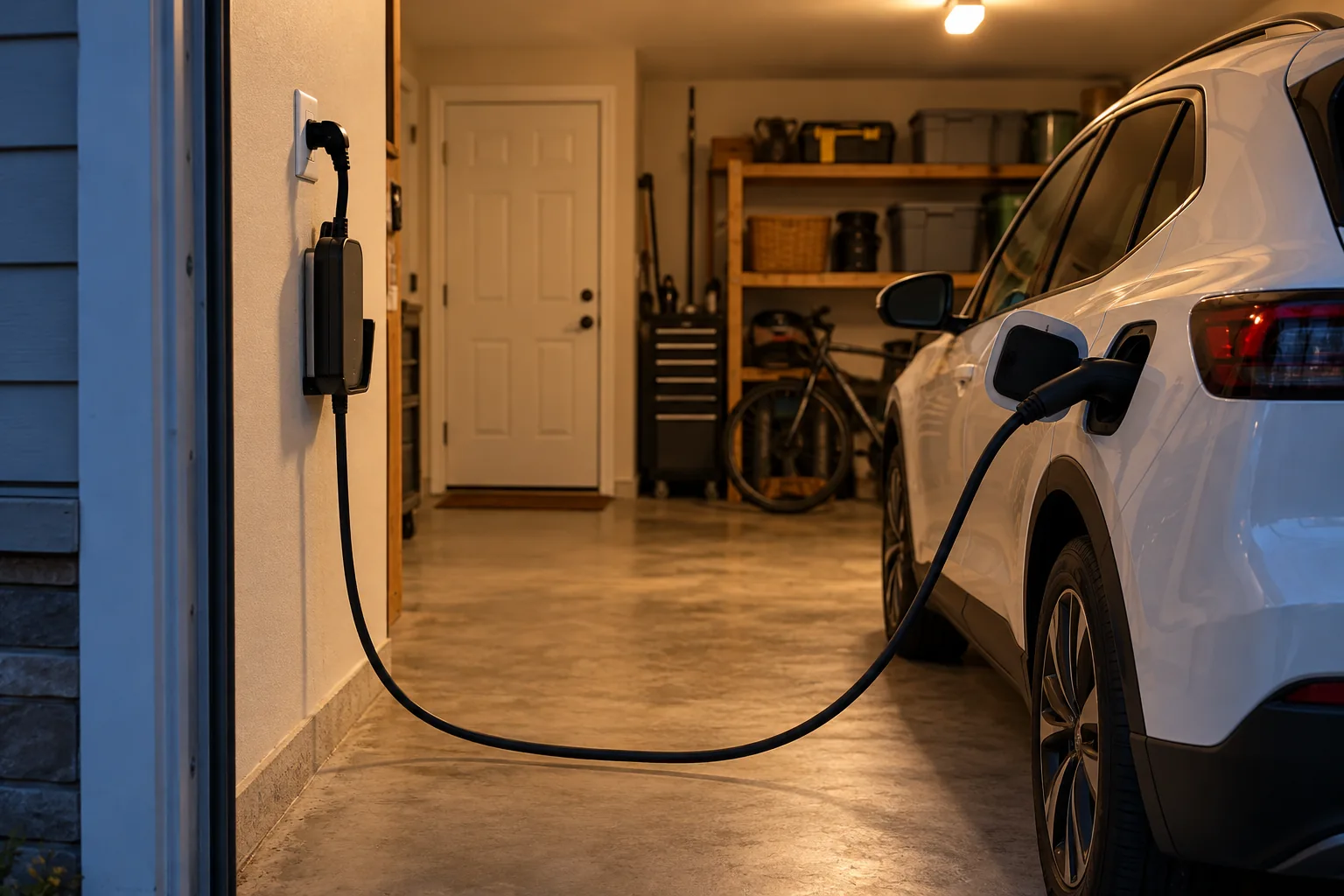
Tesla’s current Mobile Connector bundle includes a 20-foot cordset and adapters for a standard NEMA 5-15 household outlet and a NEMA 14-50 connection. The 120 V adapter makes it a Level 1 choice for a compatible Tesla; a suitable 240 V installation enables a separate Level 2 use case. Tesla’s stated range-per-hour estimates vary by model and are illustrations, not guaranteed output.
Choose it when your car has the matching NACS inlet and you want a manufacturer-supplied mobile system. Confirm whether it is already included with your vehicle; do not rely on an old review. Do not assume a non-Tesla NACS vehicle supports every Tesla accessory without checking its own manual. If you use the 240 V adapter later, have that outlet assessed separately; a mobile cord does not make a household circuit universal.
Enphase Mobile EV Charger: a straightforward J1772 option
The Enphase data sheet lists a 120 V NEMA 5-15 supply plug, 12 A continuous output, a J1772 vehicle connector and a 25-foot cable. It also lists an outdoor-capable enclosure and third-party safety compliance. Those specifications make it worth considering for a J1772 car when cable reach matters and you want a dedicated Level 1 cordset.
Check the exact product and current availability, and verify that the cable route from a suitable outlet is safe in your parking space. A 25-foot cable is not permission to drape it across a walkway. For a NACS car, use only a manufacturer-approved AC adapter if applicable. We have not tested its long-term durability or compared measured standby consumption.
Lectron 12 A Wi-Fi Level 1: app features
Lectron’s 12 A J1772 Wi-Fi model lists 120 V NEMA 5-15 input, a 16-foot cord and app monitoring and scheduling. The manufacturer states UL 2594/2231 certification. Confirm the exact SKU’s listing with the certification body and inspect the product label at purchase; a general brand claim is not a substitute for model-level verification.
This option is for a J1772 owner who specifically wants app control from a portable Level 1 cordset. The shorter cable can be limiting, and app features should not outweigh outlet safety and compatibility. The page describes overnight range estimates; treat them as vehicle-dependent marketing illustrations, not a promise. Check what the unit does when Wi-Fi is unavailable.
How to choose a safe 120-volt setup
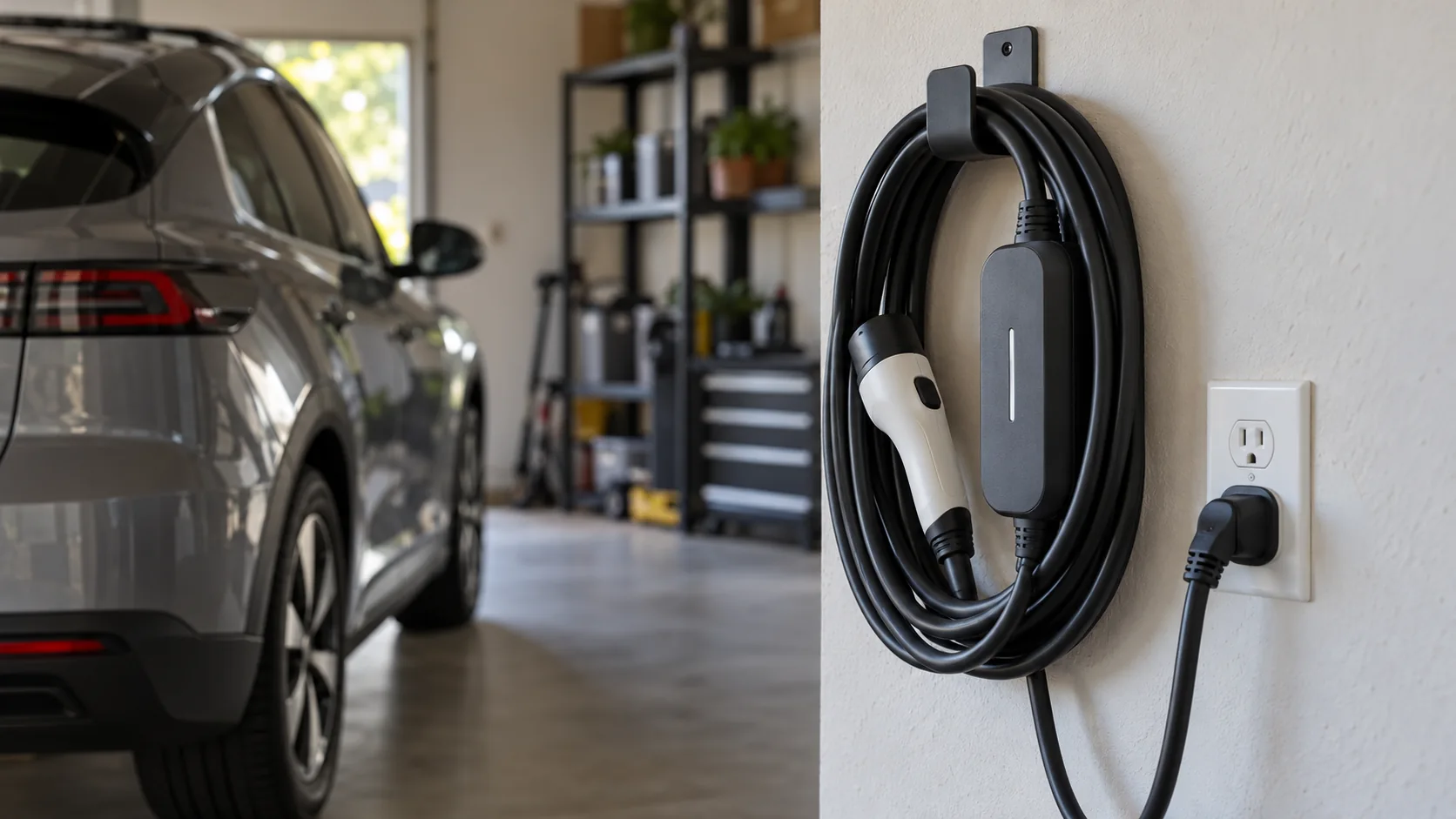
- Connector: Match J1772 or NACS at the vehicle, or verify a suitable AC adapter approved for your car and EVSE.
- Supply plug: Confirm the EVSE’s NEMA 5-15 plug and specified current. Do not use improvised plug adapters or an extension cord to bridge the distance.
- Outlet and circuit: The DOE describes an appropriate dedicated branch circuit for Level 1. Ask an electrician to check old, loose or shared outlets and any doubt about capacity.
- Cable reach: Measure from the outlet to the charge port in the actual parked position. Support the control box as directed by its manual.
- Safety listing: Look for the exact model’s third-party certification rather than trusting a logo in an online listing. ENERGY STAR cautions that some chargers sold online may display false safety certifications.
- Weather exposure: Use equipment rated for the location, and follow manufacturer instructions for the plug and outlet as well as the control box.
If the circuit trips, a plug or receptacle feels hot, or the cable is damaged, stop using the setup and seek qualified help. This is a buyer’s checklist, not a guide to rewiring a receptacle. Our outlet guide explains wall outlets versus car-side connectors.
When is Level 2 worth the upgrade?
If daily driving exceeds what Level 1 can replace during your normal parking window, Level 2 may be more convenient. It generally needs a suitable 240 V installation and an electrician’s assessment. Compare the whole installed cost and expected use, rather than assuming a faster charger always saves money. The home charging guide covers the routine, while our installation cost guide breaks down a quote.
Portable dual-voltage chargers that switch between 120 V and 240 V belong to a different comparison: our portable EV charger guide will cover their adapters and travel use. This shortlist focuses on products that serve the 120 V Level 1 need.
Check whether 120-volt charging can replace your daily driving before buying a cordset. Review Level 1 and Level 2 compared. Use home charging needs and dual-voltage portable chargers to check the related decisions before choosing equipment or a charging routine.
Sources and method
- U.S. DOE AFDC: Charging at Home
- U.S. EPA: Getting Started with Home EV Charging
- ENERGY STAR: EV Chargers
- Tesla: Mobile Connector
- Enphase: Mobile EV Charger data sheet
- Lectron: 12 A Level 1 model
Reviewed October 2026 from official sources. We did not buy or laboratory-test these units. Verify model listings, stock and instructions before purchase.
Frequently asked questions
Is a Level 1 charger enough for an EV?
It can be if a suitable 120 V circuit is available and the car remains parked long enough to replace daily use. A longer commute or limited parking time can favor Level 2.
Do new EVs come with a Level 1 charger?
Some do, while others offer a mobile cord as an option. Check the specific model year, trim and purchase package rather than assuming it is in the trunk.
Can I use a regular outlet for Level 1 charging?
Only if the outlet and circuit are suitable for the EVSE and sustained use. A qualified electrician should assess any uncertainty, especially an old or shared garage receptacle.
Can I use a J1772 Level 1 cord with a NACS car?
Potentially with a compatible AC adapter approved for the vehicle and cordset. Confirm the exact fit and instructions; do not confuse AC adapters with DC fast-charging adapters.
Will an app make a Level 1 charger faster?
No. An app can manage schedules and monitoring, but the EVSE setting, supply and car determine charging power.