Should I Charge My Electric Car Every Night?
Should I charge my electric car every night? You can plug in every night if it fits your routine and your vehicle’s instructions. That does not mean you need to refill the battery to 100% each night. Set the manufacturer’s recommended daily charge limit for your exact model and battery, then let the car stop at that limit. How often you actually add energy depends on your driving and the range you want ready each morning.
Plugging in is different from charging to full
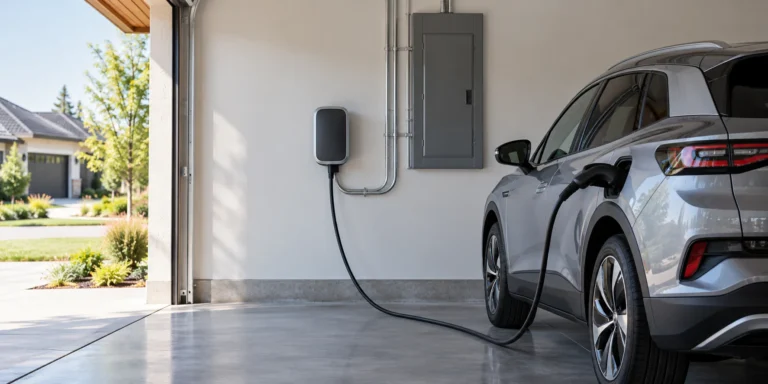
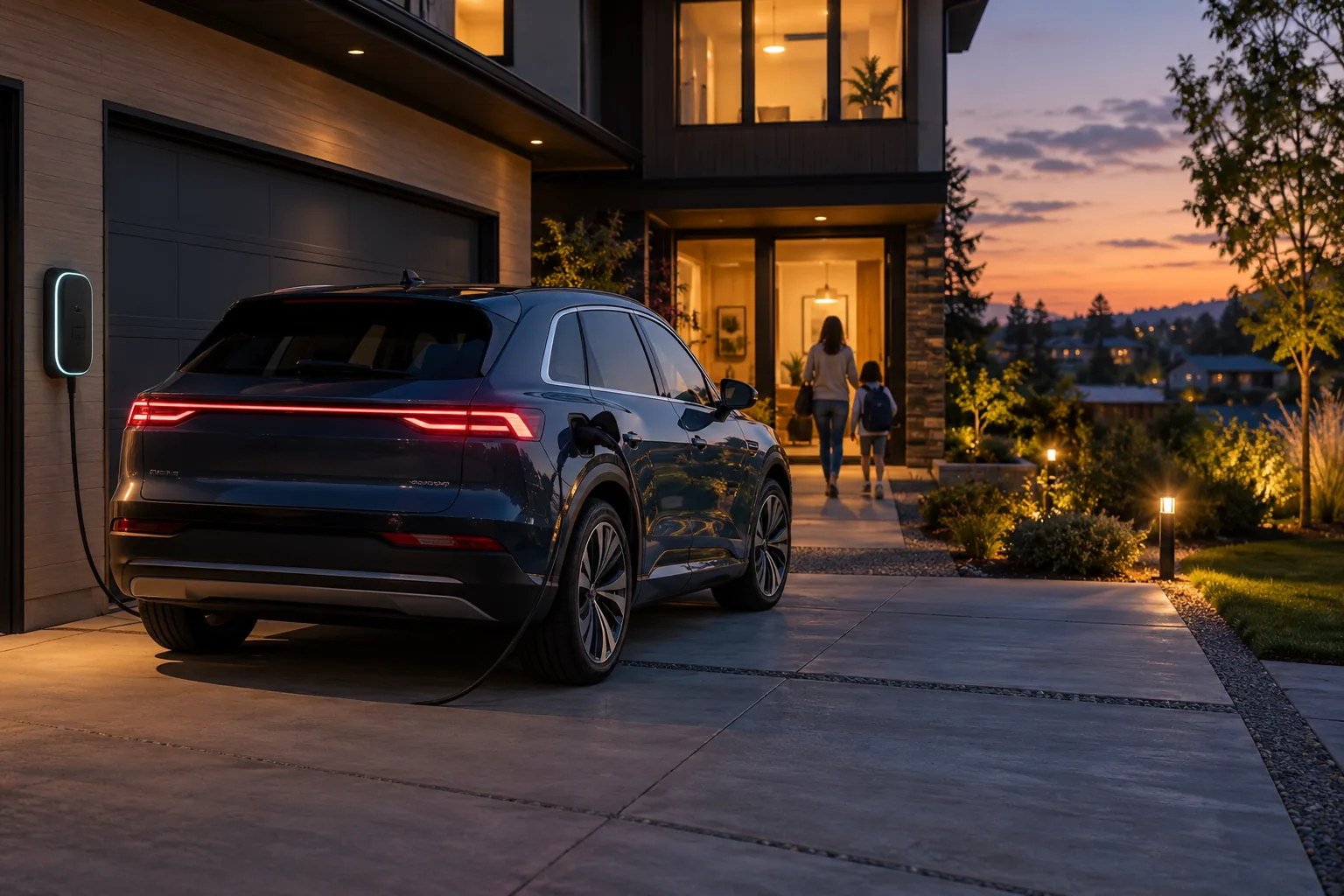
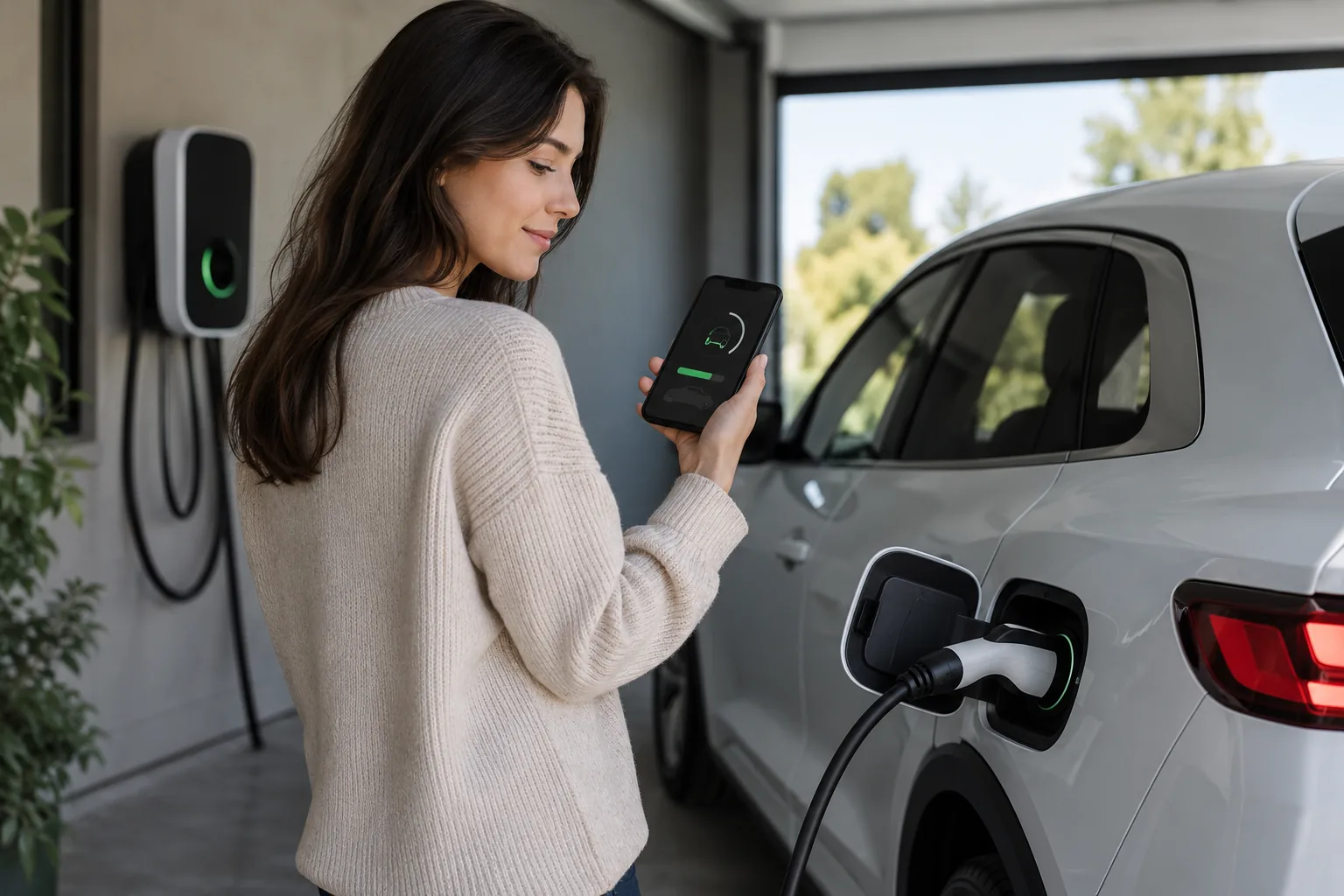
A charging cable connected to a vehicle with a suitable charge limit may deliver only the energy used since the previous drive. If you drove 20 miles, it does not repeat a full battery cycle simply because you plugged in again. The vehicle manages the session and stops at the set limit. Check the display or app after connecting to confirm that the car recognizes the charger and the intended target.
Many owners like the predictability of plugging in at home each evening. Someone with a short commute and generous remaining range may charge less often. Either routine can work when it meets the vehicle maker’s guidance and leaves enough energy for unexpected trips. A plug-in hybrid with a small battery may have a different daily pattern from a long-range battery EV.
What charge limit should you use?
There is no universal 80% or 100% rule. The correct daily target depends on the model, battery chemistry, software and manufacturer recommendations. Tesla’s current Model 3 manual tells owners to consult the vehicle screen or app for daily and trip limits; it separately says vehicles that recommend an 80% daily limit should generally keep it near that value. Ford describes a 90% daily target for certain extended-range models. Chevrolet’s guidance generally recommends 80% for most GM EVs but identifies an exception for newer Bolt models that should regularly reach 100%. Those examples show why generic advice is inadequate.
Set the target displayed for your exact vehicle rather than copying another car’s percentage. If the manual recommends an occasional full charge for battery calibration or a particular chemistry, follow that instruction. A higher limit for a long trip can also be appropriate when the vehicle maker permits it. Avoid leaving the battery near empty for long periods, and use the manufacturer’s storage guidance if the car will sit unused for weeks.
How often do you actually need to charge?
Think in energy and next-day needs. If your ordinary route uses 12 kWh and you have a reliable home charger, replacing that energy overnight is simple. If the car can comfortably cover several days and the charging spot is inconvenient to access, you may plug in less often. Leave a buffer for detours, temperature and changing plans. A percentage alone is not a substitute for the car’s realistic remaining range.
Check how long your home setup needs to restore a busy day’s driving. A lower-power Level 1 outlet may take much longer than a properly installed Level 2 station. The EV charging levels guide explains the differences. The home charging guide covers practical setup and routine.
Daily charging and battery health
Battery management systems help control charging, but owners should still follow the automaker’s stated limits. Battery chemistry and design differ. The broad habit is to avoid treating 100% as the default for every car, or assuming it is harmful for every car. The exact recommendation may change with software updates, so check the latest owner’s manual and in-car guidance.
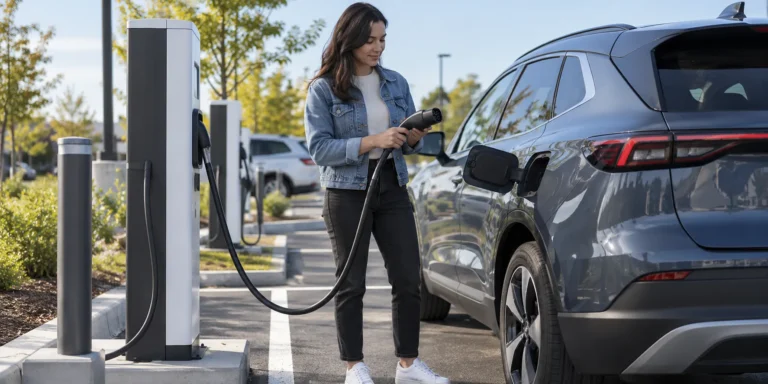
AC home charging is normally suited to routine overnight use. DC fast charging is useful for trips but follows a different power profile and can slow as the battery fills. If a manual has specific recommendations on frequent fast charging, follow them. Do not confuse ‘charge every night’ with ‘fast-charge every night.’
Make the routine work with your tariff
If your utility has a lower off-peak rate, schedule the session so the car reaches its daily limit before departure. If the plan has a flat rate, the timing decision may be about convenience. Charging frequency is a battery and driving-routine question; the detailed tariff comparison is in our best time to charge an EV at home guide.
Use one scheduling control unless the car and charger instructions say otherwise. Confirm a scheduled session actually began, especially after a power interruption or software change. An overnight cable connection is only useful if the car will be ready in the morning.
A practical nightly checklist
- Check the exact model’s recommended daily and trip charge limits in the vehicle or owner’s manual.
- Set the daily target and confirm the charging schedule and departure time.
- Use charging equipment installed and configured for the circuit and location.
- After connecting, verify the car reports plugged-in or scheduled status.
- Before a longer trip, adjust the target according to the maker’s guidance and the route, then restore the daily setting if appropriate.
If your routine changes, revisit the target. A second driver, cold winter commute or a regular detour may require more range in the morning. There is no prize for the fewest plug-ins. The useful habit is a reliable, manufacturer-aligned charge limit and enough energy for tomorrow.
Build the nightly routine around your vehicle’s charge limit and daily driving. Review home charging routines. Use battery health and care and electricity use to check the related decisions before choosing equipment or a charging routine.
Sources
- Tesla Model 3 manual: Battery guidance
- Ford: Charging and daily range guidance
- Chevrolet: Home charging and model-specific limits
Frequently asked questions
Is it bad to plug in an EV every night?
Not inherently. A car can stop at its configured target. Follow the exact vehicle maker’s daily charge and equipment instructions, and use a properly installed charging setup.
Should I charge my EV to 100% every night?
Only if the manufacturer recommends that routine for your model or battery. Many models recommend a lower daily limit, while some specify regular full charges. Check the vehicle’s current guidance.
How often do you have to charge an electric car?
As often as needed to replace driving energy and maintain a useful reserve. Commute length, efficiency, battery size and access to charging determine the practical interval.