Level 2 EV Charger Installation Cost: What Your Quote Includes
Quick answer: A standard U.S. Level 2 home EV charger installation averages about $1,700 for the electrical work in Qmerit’s current pricing, with many projects at $749–$2,500. The charging unit is usually separate; Qmerit puts a typical unit at $500–$800. Permits, long cable runs, trenching or panel work can change the total. Get an itemized, site-specific quote before budgeting.
The price of a wall charger is only one line on an installation quote. A qualified electrician also has to assess the home’s capacity, plan a suitable circuit and route it to a useful parking location. Here is how to read the costs, compare bids and avoid treating a national average as a promise for your garage.
How much does a Level 2 EV charger installation cost?
For a useful U.S. benchmark, Qmerit reports a $1,700 average for a standard Level 2 installation, with most of its projects in a $749–$2,500 range. Its standard installation price excludes the charger, which it estimates at about $500–$800. That implies roughly $1,249–$3,300 when you simply add those two quoted ranges, before local permits and any work outside a standard scope. The endpoints are arithmetic illustrations, not a market-wide price survey or a guaranteed quote.
Qmerit’s data reflect one installation provider’s projects. Actual bids vary with the site, region, permit process and equipment. If your electrical panel lacks capacity or your parking spot is far away, expect a custom assessment. Conversely, a driver who can meet daily needs with suitable Level 1 equipment may not need a new Level 2 installation at all; the U.S. Department of Energy’s Alternative Fuels Data Center notes that many drivers can charge overnight on an appropriate dedicated 120 V circuit.
| Line item | What to budget or verify | Why it varies |
|---|---|---|
| Electrical installation | Qmerit’s standard benchmark: $749–$2,500; average about $1,700 | Panel-to-parking distance, cable route, materials, labor and scope |
| Level 2 charging unit | About $500–$800 in Qmerit’s equipment estimate; some models differ | Features, power rating, cable length and included accessories |
| Permit and inspection | Ask for the local amount in writing | Jurisdiction, application and inspection rules |
| Additional electrical work | Site-specific quote | Capacity changes, panel work, trenching, difficult access or repairs |
This article addresses the one-time installation cost. The electricity you use afterward is a separate operating expense, determined by energy use and your utility tariff. Our home charging guide covers the daily routine; this page focuses on what the installation quote includes.
What should an itemized installation quote include?
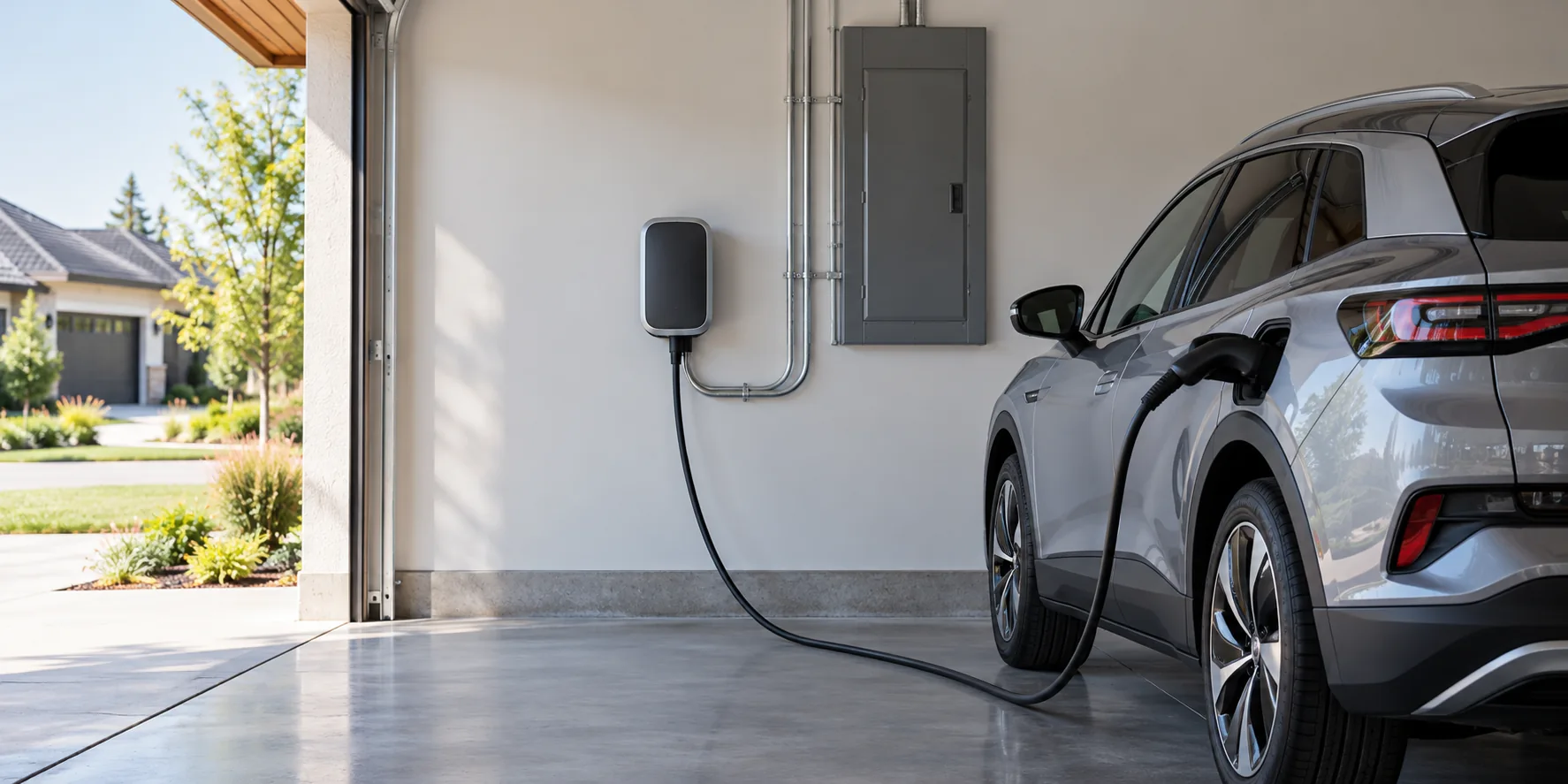
Ask the contractor to separate the equipment purchase from electrical work and local fees. In Qmerit’s described installation scope, labor and electrical materials support a hardwired charger or a suitable outlet for a Level 2 charging cord. The installer assesses panel capacity, prepares permit paperwork where required, installs the specified wiring and breaker, and tests the finished unit. Its charger and local permit charges are separate. Your own contractor may package these lines differently, so compare what each bid actually covers.
- Charger or EVSE: Model, connector fit, cable length, safety certification, indoor/outdoor rating and who supplies it. Confirm whether the unit is included.
- Electrical assessment: Panel/load calculation, existing service capacity, proposed charging output and whether the chosen location is feasible.
- New circuit and materials: Wiring, conduit or protective tubing, breaker and any required protection, with the planned route stated clearly.
- Labor and access: Mounting, electrical work, testing, patching or restoration if included, and whether a long run or difficult surface changes the price.
- Permits and inspection: Who obtains them, whether their fees are included and who attends or coordinates the inspection.
- Scope exclusions: Panel/service changes, trenching, utility work, drywall or concrete restoration, and any change-order process.
Do not compare only the headline price of two bids. A lower bid that leaves out a charger, permit, difficult cable route or restoration may cost more after change orders. Request the proposed equipment output and circuit plan in plain language, but leave electrical sizing and code compliance to the qualified contractor and local authority.
Why can one home cost much more than another?
Distance and the route from panel to parking
A charger beside an accessible panel can be simpler than one on the far side of the house or in a detached garage. The electrician may need longer wiring and conduit, more labor, or a route through finished surfaces. Underground trenching and concrete work can add substantial complexity. Ask the installer to show the route on the estimate and identify any assumptions about access.
Available electrical capacity
A spare breaker space does not by itself prove there is enough capacity for the proposed charging load. The electrician assesses the home as a system and may propose a lower charging setting, an approved load-management approach, a panel change or a service upgrade when appropriate. The DOE AFDC specifically advises homeowners to have an electrician assess capacity for Level 2 charging. Do not buy the highest-output EVSE first and assume the house can support it.
Permits, location and equipment choice
Local and state codes apply, and appropriate permits may be required. Outdoor equipment needs an outdoor-rated installation, according to the DOE. A hardwired EVSE and an outlet-based charging setup can also carry different equipment and installation details. Ask the electrician which option meets the applicable code and manufacturer instructions at your address. Our upcoming installation requirements guide goes deeper into readiness, while the outlet guide will distinguish a wall outlet from the vehicle’s charging connector.
An example of how to compare two quotes
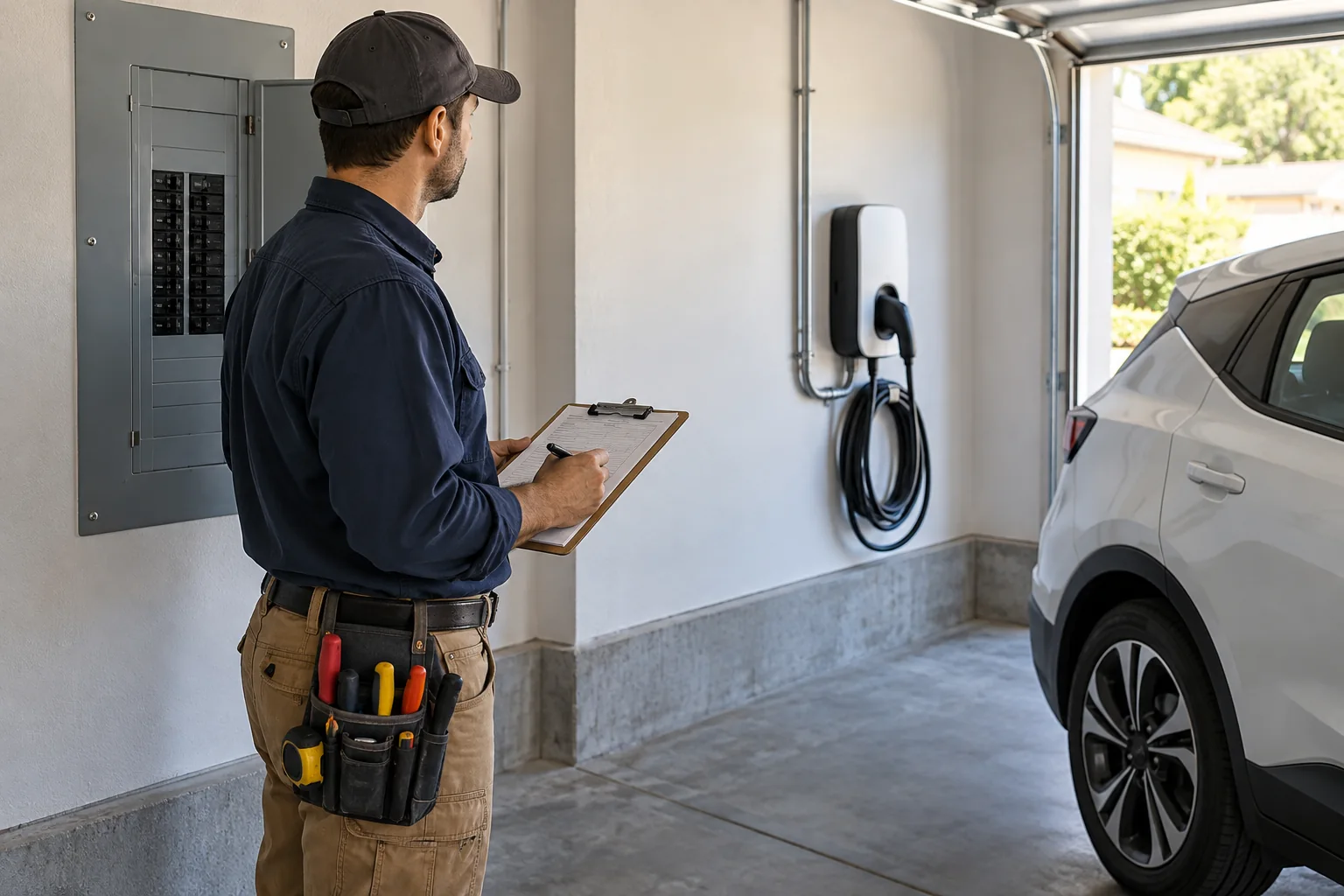
Imagine two contractors quoting the same garage. Bid A lists a $600 charger and $1,700 for the installation, while the local permit is another $150: the stated total is $2,450. Bid B says “EV charger installation: $2,100,” but does not specify whether the charger, permit or surface restoration is included. Those figures are hypothetical arithmetic, not observed local prices. Bid A is easier to evaluate even though Bid B has the lower headline number.
Ask Bid B to identify its exact equipment model, cable route, panel assumptions, permit and inspection responsibilities, and what triggers a change order. Then compare the full scope and contractor credentials. If a panel or service upgrade may be required, have that assessed before treating either price as final.
How to keep the project cost sensible
- Check whether Level 1 already fits: Estimate daily miles and available overnight hours. An appropriate existing dedicated circuit can be sufficient for some households.
- Choose a practical location: Place the charger where the car can park reliably and the cable reaches without strain. A feasible shorter electrical route may reduce work, but convenience and safety still matter.
- Match the output to the car and routine: The fastest product rating is not automatically useful if the vehicle’s AC charging limit or your overnight needs are lower.
- Seek comparable itemized bids: Send contractors the same parking location, charger model and known panel information; request a site visit when the route or capacity is uncertain.
- Check current incentives locally: Utilities and states may offer equipment or installation programs. Confirm eligibility, deadlines and approved products before purchasing. The DOE AFDC maintains laws and incentives information.
Avoid hiring by price alone. The DOE recommends safety-certified equipment and a certified electrical contractor, and says installations must meet applicable codes and permitting rules. The contractor should design and complete the electrical work; this cost guide is not a wiring tutorial.
Questions to ask before approving a quote
- Does the price include the charging unit? If so, what exact model and warranty?
- What charging output is being proposed, and what electrical assessment supports it?
- Where will the circuit run, and are conduit, wall repair or trenching included?
- Who obtains permits, pays fees and coordinates inspection?
- Does the quote allow for an existing panel limitation, and what would a change order cost?
- Will the contractor test the charger and explain handover and workmanship coverage?
Keep the signed scope and permit record with your home documents. A clear quote makes it easier to understand what was installed and compare any later expansion for a second EV.
Separate equipment selection from the electrical work when comparing quotes. Review home charging planning. Use home charging equipment and Level 1 and Level 2 compared to check the related decisions before choosing equipment or a charging routine.
Sources
- Qmerit: Home EV charger installation cost benchmark
- Qmerit: Whether the charger is included
- Qmerit: Standard installation scope
- U.S. DOE AFDC: Charging Electric Vehicles at Home
Frequently asked questions
Is the Level 2 charger included in installation cost?
Not always. Qmerit’s standard installation estimate excludes the charging unit. Ask every contractor whether the equipment model and purchase price appear in the bid.
How much does it cost to install an EV charger at home?
For a standard Level 2 installation, Qmerit reports $749–$2,500, averaging around $1,700 for electrical work. Add the charger and any applicable local permit or extra electrical work to understand your full project cost.
Do I always need a panel upgrade?
No. The answer depends on the home’s assessed electrical capacity and the proposed charging setup. Have a qualified electrician evaluate it rather than assuming an upgrade is always necessary or never necessary.
Can I install a Level 2 charger myself?
A new home charging circuit needs code-compliant electrical design and work. A qualified electrician should assess capacity, the installation method and local permit requirements; follow the equipment manufacturer’s instructions.
Is a 240-volt outlet cheaper than a hardwired charger?
There is no universal answer. The circuit route, equipment, local rules and electrician’s scope drive the bid. Request both code-compliant options for your situation and compare what each quote includes.