Are Electric Car Charging Stations Free? What to Check
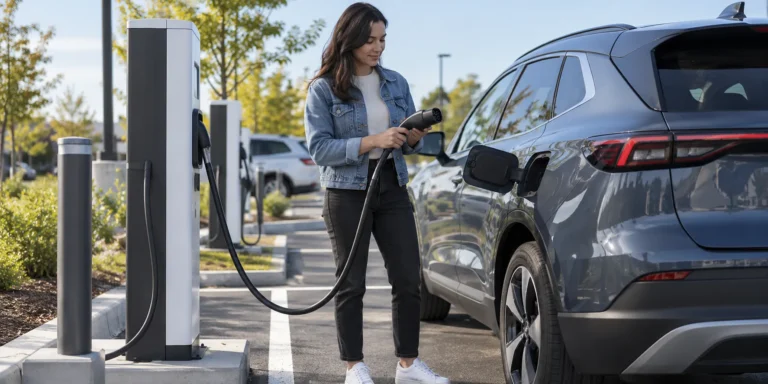
Some electric car charging stations are free, but many charge for electricity, time or a session. A free energy rate does not automatically include free parking or unrestricted access. Check the specific station’s current listing, posted signs, eligibility and time limits before plugging in, then confirm the session price.
A free charger can be a useful bonus during a visit you already planned. It is a less reliable foundation for an entire charging routine. This guide explains what “free” can mean, how to verify an offer and when paying for a nearby charger may be the more practical choice.
What does free EV charging actually include?
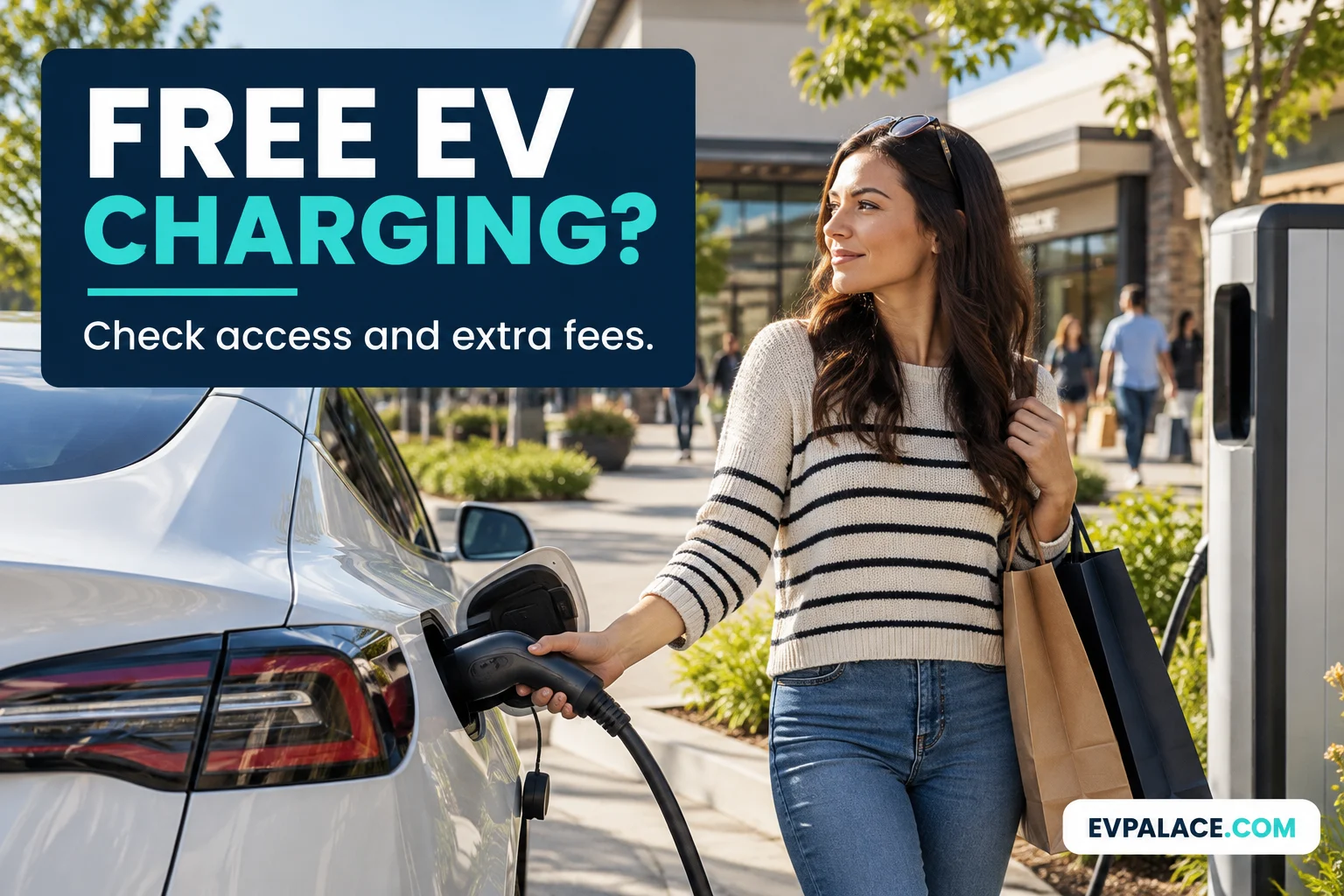
There are three separate questions: what electricity costs, what parking costs and whether you are allowed to use the equipment. A station might advertise no energy charge while sitting inside a paid garage. Another might offer charging only to employees, guests or customers. The connector can be physically accessible while the permission to use it remains restricted.
ChargePoint says station owners and roaming partners set pricing and may use energy, time, flat, minimum, maximum or idle fees. Its app can show prices and filter for free stations. Treat that listing as a starting point and read the local rules too. Do not assume all stations carrying the same network name use the same price.
| Label or situation | What to verify |
|---|---|
| Free charging | Whether parking and idle fees are separate |
| Customers only | Purchase or validation requirements |
| Hotel guest charging | Guest eligibility, reservations and parking fees |
| Workplace charging | Employee access and workplace time limits |
| Promotional charging | Expiration, eligible vehicle and network terms |
Where might you find a free station?
Check places where charging supports another activity: your workplace, an accommodation you are already using, a shopping destination or a community facility. These are possible categories to investigate, not guarantees of free service. Policies can change, and a site may charge even when a previous visitor reported a free session.
Start with the operator’s official map or app. Filter by your vehicle’s connector and then by price where that feature exists. Open the individual location, inspect access hours and read the pricing details for the actual stall. A map pin does not prove a station is operational, open or suitable for your car today.
For a trip, choose an accessible backup with sufficient range to reach it. Free stations may have few ports, slower charging or queues. For the connection and payment sequence, see our public charging guide.
A five-minute check before you plug in
- Confirm the connector and charging level suit the vehicle and any approved adapter.
- Read the current energy price, session fees and time-based charges in the operator’s interface.
- Check the parking entrance, bay signs and eligibility rules.
- Look for a maximum stay, idle fee, validation requirement or offer expiration.
- Start as directed and confirm the session is active before leaving the vehicle.
If the app and local signage disagree, ask the site or operator which terms apply. Take a moment to read any confirmation screen before accepting the session. A saved payment method may still be necessary for a free energy session, depending on the equipment and operator.
Why a free stop may still cost money
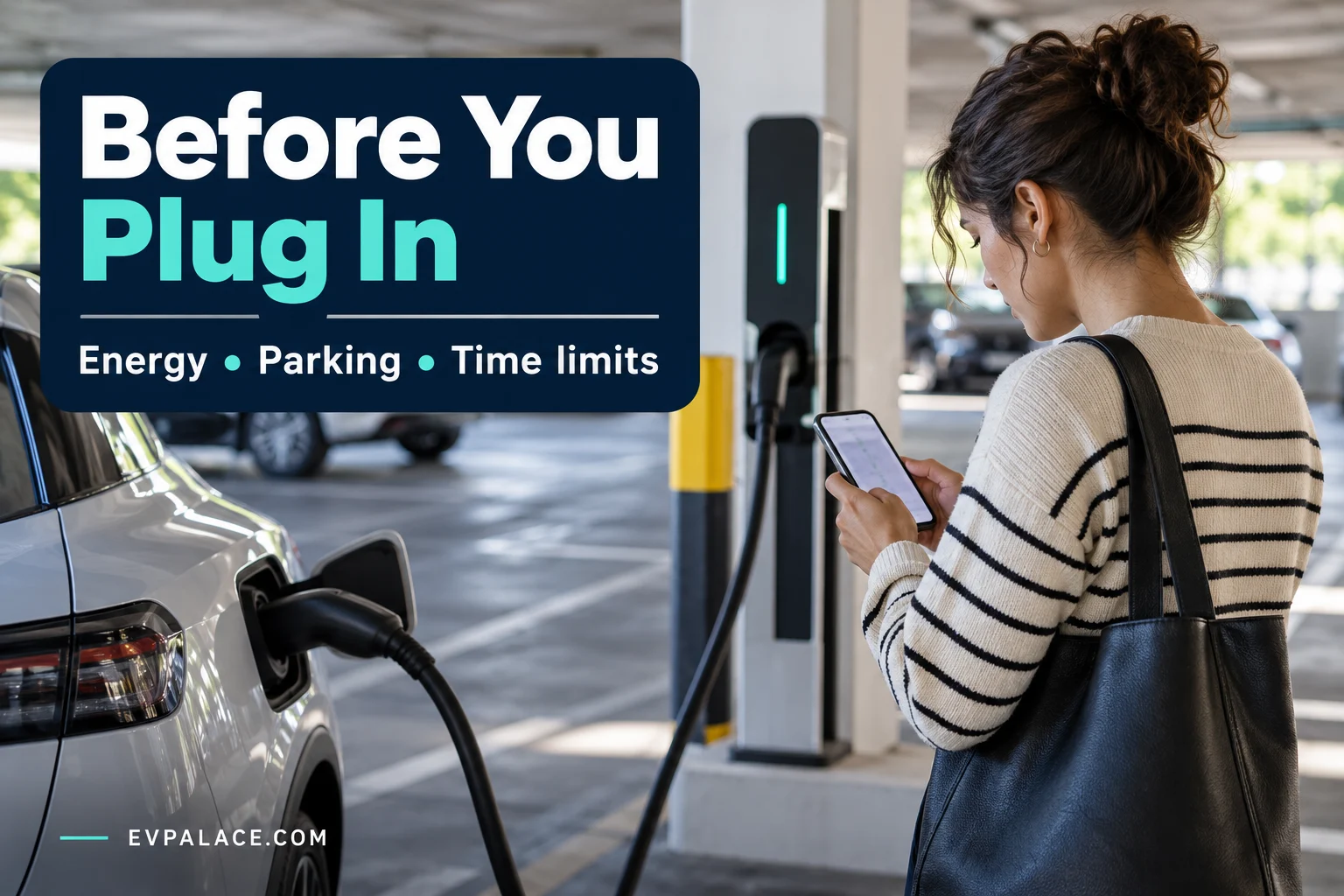
Imagine a station showing $0 for energy in a garage that charges $6 to park. If you already intended to use that garage, charging could be a helpful added benefit. If you drove there only for electricity, the parking charge becomes part of the charging decision. These are illustrative figures, not current rates at a named location.
Your time and the extra driving matter as well. A slower station may add too little energy during a short shopping trip to justify a detour. Estimate useful energy by multiplying actual average charging power by the time connected. For example, a hypothetical 6 kW average over two hours delivers about 12 kWh at the station; usable driving energy can be lower because of losses and vehicle needs.
There is also an opportunity cost when a trip depends on a busy free port. A paid charger closer to your route may finish sooner or provide a more dependable backup. Compare the complete stop, not just the word “free.” Our EV charging cost guide explains energy and fee calculations.
Free charging offers attached to a vehicle
A purchase or lease may include a charging benefit, but the contract governs what it provides. Check the eligible network, activation deadline, duration, energy allowance or session allowance, and any fees excluded from the benefit. Do not carry an offer from one model year into another without checking the current documents.
For a used car, ask whether the benefit transfers to a new owner. An advertisement mentioning charging is not enough to establish that the account or entitlement will transfer. Obtain the written terms before assigning a dollar value to it.
Use free charging considerately
Only use bays where you meet the access rules. Set a reminder to return before the time limit and move promptly after charging. Return the connector properly and leave accessible spaces and neighboring cables clear. Free electricity does not mean indefinite parking or permission to unplug someone else’s active session.
If a free station is out of service, report the stall through the operator’s support channel and use your backup. Avoid planning to arrive with so little reserve that a single occupied port leaves you stranded.
Is free charging a substitute for home charging?
It can supplement your routine when it is convenient and reliably available. It is harder to depend on when access, availability or price can change. Compare your weekly energy needs with the amount you can realistically obtain during normal visits. Renters and drivers without home access should evaluate dependable paid options too.
A sensible rule is to use verified free charging as a benefit, while keeping a workable alternative. Your charging plan should still function if the host starts charging, restricts access or temporarily closes the site.
Check access and session fees before treating a station as a free charging option. Review public charging payments and sessions. Use charging levels and home charging to check the related decisions before choosing equipment or a charging routine.
Sources
Frequently asked questions
Are all public EV charging stations free?
No. Pricing varies by site and operator. Check the individual station before starting.
Can a free charger charge an idle fee?
Yes, a zero energy price can coexist with time limits or other fees. Read the current terms.
Do I need an account for free charging?
Some stations require an app or account even when energy is free. Follow the operator’s instructions.
Is free charging worth a long detour?
Compare parking, extra driving and waiting time with the energy you will receive. It is usually most convenient during a visit you already planned.