Electric vs Hybrid Vehicles: Which Fits Your Driving and Charging?
A battery electric vehicle runs on externally charged electricity, while a conventional hybrid combines a gasoline engine with an electric motor and does not plug in. Choose by charging access, driving pattern and total cost. An EV can suit dependable home charging; a hybrid can suit drivers who need familiar gasoline refuelling.
The first question is simpler than a model shortlist: can you charge reliably where you normally park? After that, compare the journeys you make, the energy prices you will pay and the exact vehicles available. This guide compares battery electric cars with conventional hybrids, not a detailed plug-in-hybrid buying comparison.
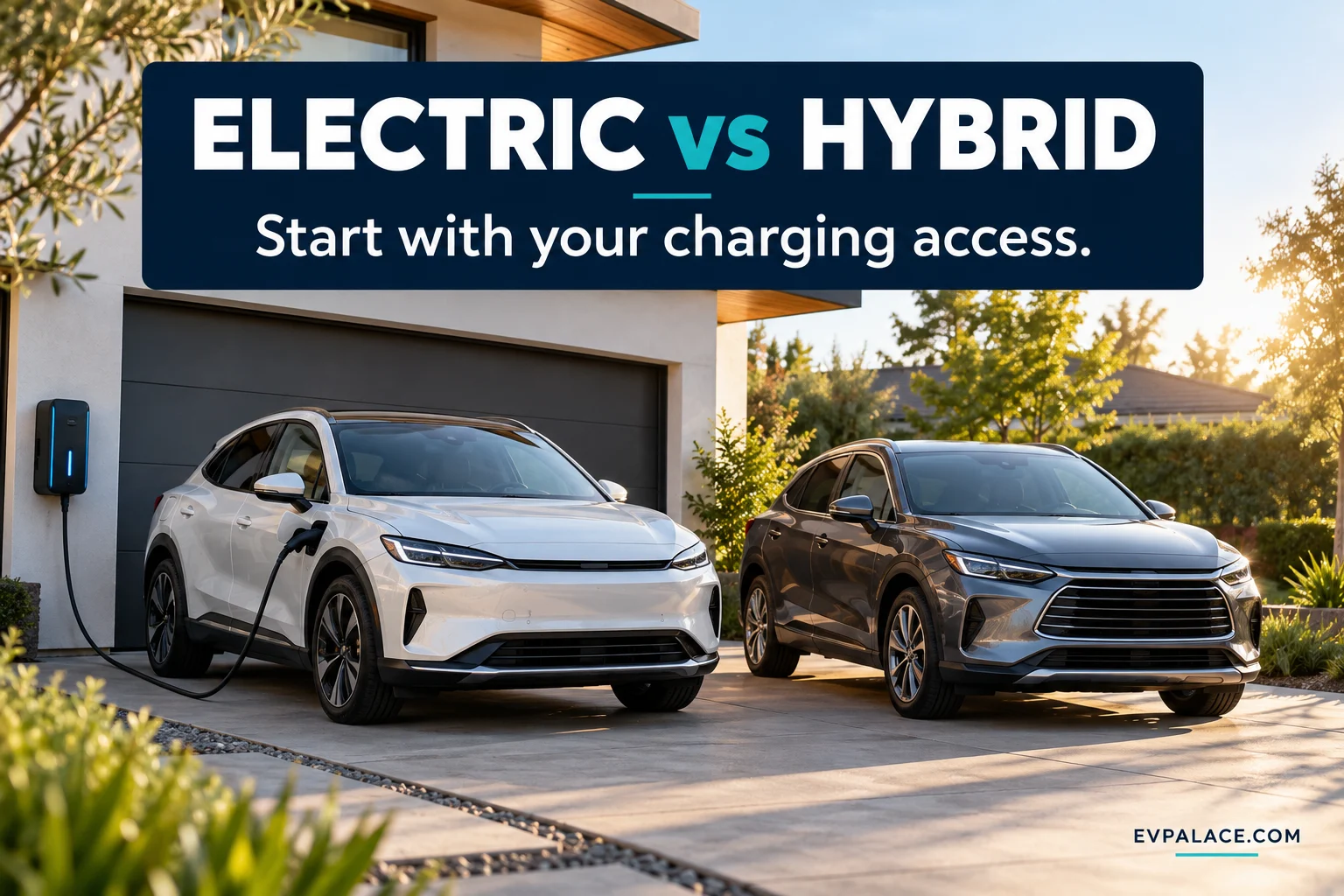
Understand the three terms
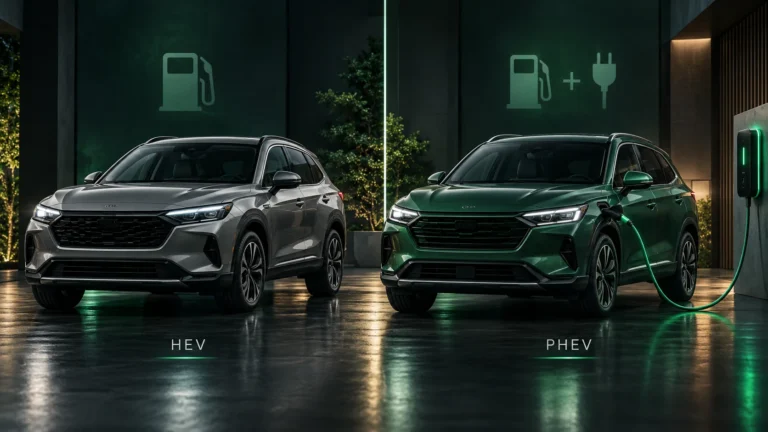
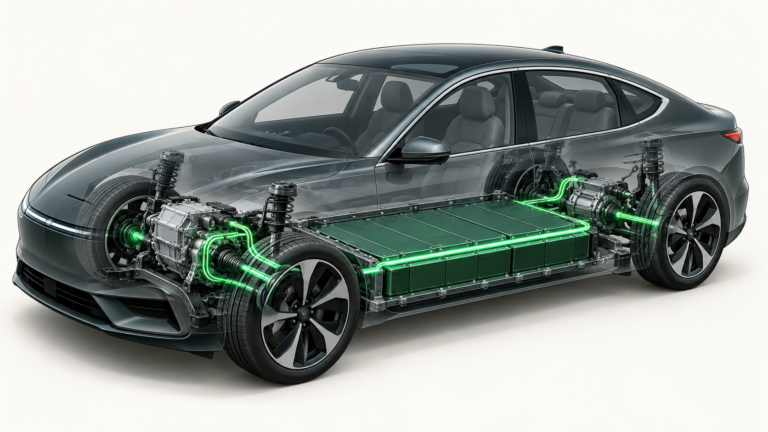
A battery electric vehicle, or BEV, stores externally supplied electricity and uses electric motors for driving. It has no gasoline engine. A conventional hybrid, or HEV, uses an engine and motor together; its battery is replenished through the vehicle’s operation and regenerative braking rather than a plug.
A plug-in hybrid, or PHEV, is a separate category. It has both an engine and a battery that can be charged externally. Do not assume a conventional hybrid provides the same electric-only driving capability or charging routine as a PHEV. Advertising that emphasizes electrification can blur these distinctions.
| Question | Battery electric vehicle | Conventional hybrid |
|---|---|---|
| Do you plug it in? | Yes, for external charging | No |
| Does it use gasoline? | No | Yes |
| Where does trip energy come from? | Charged battery | Gasoline, with motor and battery assistance |
| Does it need engine service? | No gasoline engine | Yes |
| Main access question | Reliable compatible charging | Fuel availability |
Charging access can settle the decision
If an EV can charge overnight where you park, the normal week can be convenient. You may start each day with the energy you need without a dedicated refueling trip. Confirm permission, equipment suitability and electrical readiness before treating that parking space as a charging solution. If home charging is possible, our home charging guide walks through the practical setup.
Renters should check written access arrangements rather than assuming a nearby outlet can be used. Workplace charging can be helpful, but ask about availability, fees and what happens if your working pattern changes. An EV plan should remain workable on days when the preferred charger is unavailable.
A conventional hybrid avoids those charging requirements. You refuel with gasoline and the vehicle manages its smaller battery as you drive. That can be appealing where public charging would require regular detours. It does not mean energy is created for free; the system still depends on fuel and recovered braking energy.
Match the car to a normal week
Write down daily mileage, overnight parking and the time available at each destination. An EV’s range needs to cover your routine with a margin under realistic conditions. A short commute with dependable charging is a different situation from irregular long days with no predictable parking.
Hybrids can be efficient in stop-and-go use because their motor assistance and regeneration reduce some engine work. The size of the benefit varies by design and driving. Compare the exact hybrid’s rated fuel economy and representative owner experience rather than assuming every hybrid has the same advantage.
Also consider the household’s other vehicle, if there is one. A predictable commuting car and a separate long-trip car may make a different choice sensible than a single vehicle serving every task. Focus on your arrangement rather than a universal winner.

Calculate energy cost without mixing units
For an EV, use electricity purchased per mile multiplied by the cost per kWh. For a hybrid, use gasoline price divided by mpg. Account for charging losses if your EV input describes driving energy rather than electricity purchased. For the kWh-per-mile part of the estimate, see how much electricity an EV uses.
Here is a hypothetical example. At 12,000 annual miles, an EV purchasing 0.33 kWh per mile at $0.18/kWh uses about $713 in electricity. A hybrid averaging 50 mpg at $3.50/gallon uses about $840 in gasoline. The assumed energy difference is roughly $127 per year, which is much smaller than a comparison against a less-efficient gasoline car.
If the EV relies on an assumed $0.50/kWh public rate, that electricity cost becomes $1,980 before additional fees. These are examples, not current prices or a forecast. Use your real utility rate, likely public charging mix and the specific hybrid’s efficiency.
This is why a low energy bill alone does not settle the purchase. Include the price difference and charging installation. A hybrid with a favorable purchase price may compete well against an EV even if the EV uses energy efficiently.
Maintenance and ownership trade-offs
DOE notes that conventional hybrids retain engine-related maintenance, while battery electric vehicles generally need less routine powertrain upkeep. Both still have tires, brakes and other wear items. Compare manufacturer service schedules and obtain insurance quotes for the exact vehicles.
A hybrid has both an engine and an electric system. That does not automatically make it unreliable, but it means you should not budget as though it were an engine-free EV. For either used vehicle, check service history, warranty terms and condition instead of treating the powertrain label as a quality guarantee.
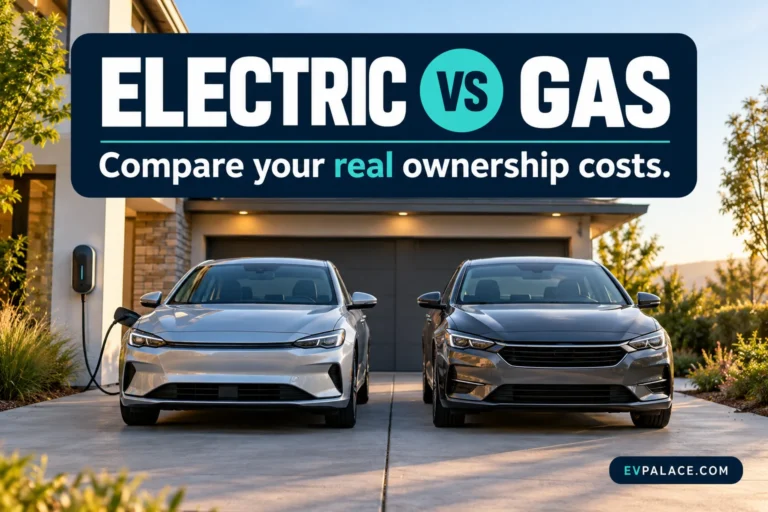
Include purchase fees, financing, energy, insurance, charging work and expected resale. Do not add an incentive unless current written terms confirm eligibility. The electric-versus-gas guide explains the broader ownership-cost checklist.
Long trips and cold weather
A conventional hybrid can refuel using the gasoline network, which makes unscheduled route changes familiar. A BEV requires compatible charging and enough time for planned stops. Test the routes you repeat, particularly remote destinations, rather than assuming a map’s station count guarantees convenient access.
Both types can lose efficiency in cold weather. An EV also needs a realistic arrival reserve and may need battery preparation for fast charging. A hybrid’s engine behavior and heating needs vary. Read the manual for your model rather than transferring one vehicle’s winter rules to another.
For an EV, try a route plan with the intended car’s specifications and review a backup charger. For a hybrid, compare actual highway fuel economy as well as the city rating. If towing is important, assess the specific vehicle’s approved capability and consumption.
Reasons to favor each option
- Consider a BEV when charging is dependable, your routine fits its realistic range and the complete ownership estimate works.
- Consider a conventional hybrid when plugging in is difficult and efficient gasoline driving suits your routes.
- Consider either only after comparing size, equipment, comfort, service history and insurance for the actual cars.
A test drive should include normal traffic, your usual parking and a chance to explore the controls. Check how the hybrid transitions between engine and motor and how the EV’s regeneration feels. Neither badge compensates for poor comfort or an unsuitable cargo layout.
A practical decision checklist
Answer four questions before shopping: where will you get energy, what are your hardest recurring journeys, what is the total budget and how long will you keep the car? Then compare equivalent vehicles against those answers. If charging access changes next year, include that possibility in the plan.
The best fit is the one that meets your daily needs at an acceptable complete cost. An EV can make charging part of parking; a hybrid can improve gasoline efficiency without adding a plug-in routine. Those are different strengths, and your normal week determines which matters more.
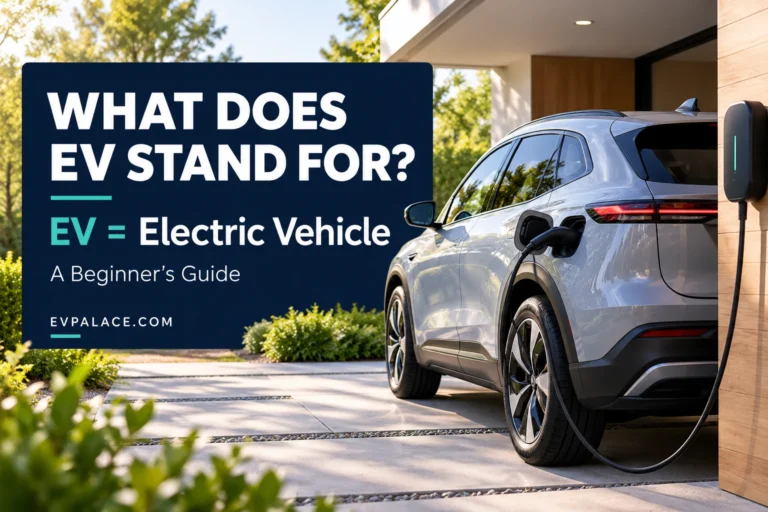
Separate vehicle terminology from the practical question of where you can charge. Review EV terminology. Use home charging access and public charging routines to check the related decisions before choosing equipment or a charging routine.
Sources
- DOE AFDC: conventional hybrids
- DOE AFDC: battery electric vehicles
- DOE AFDC: maintenance comparison
- DOE/EPA: advanced vehicle operating tips
Frequently asked questions
What is the difference between a hybrid and an electric car?
A conventional hybrid uses gasoline and motor assistance. A battery electric car runs on externally charged electricity.
Do conventional hybrids need a charger?
No. HEVs do not plug in. Plug-in hybrids are a separate category.
Is an EV always cheaper than a hybrid?
No. Purchase price, electricity rates, fuel economy, insurance and charging installation all matter.
Why buy a hybrid if an EV is more efficient?
A hybrid can suit drivers without reliable charging or those whose routes favor gasoline refueling. Compare complete costs and daily convenience.