Electric Cars vs Gas Cars: Pros, Cons and Ownership Costs
Electric cars can offer convenient home charging, efficient driving and lower routine powertrain maintenance, while gas cars offer familiar refueling and fewer charging-access requirements. The better choice depends on your purchase price, daily mileage, energy rates, parking and long trips. Compare total ownership costs for similar vehicles, not fuel alone.
A battery electric car can make an ordinary commute easier when it charges where you park. The same vehicle can feel less convenient if every charge requires a separate trip. This comparison focuses on battery electric vehicles versus conventional gasoline cars; hybrids have their own decision guide.
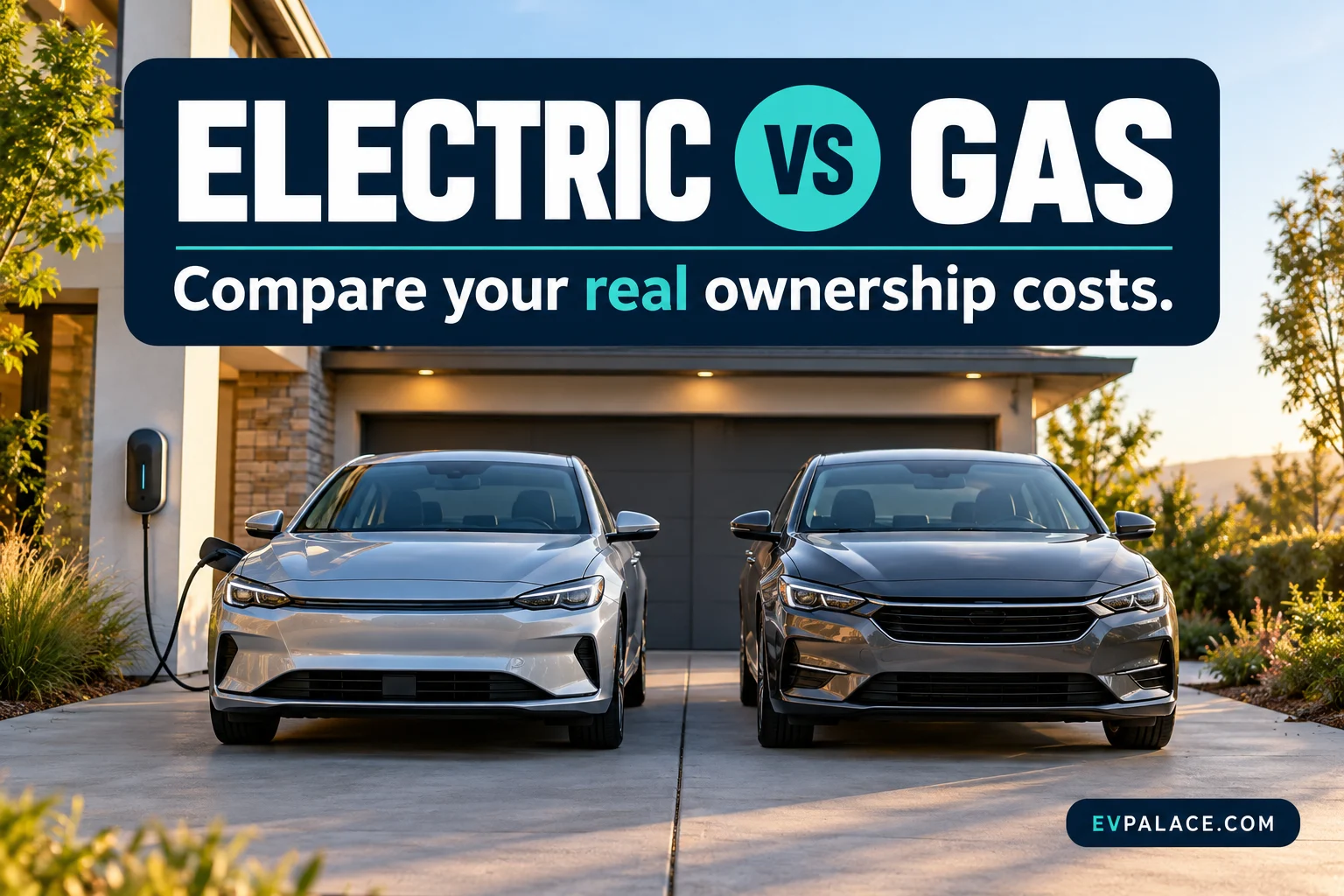
Compare the daily routine first
Ask where the vehicle will get energy on a normal week. Home or dependable workplace charging can turn refueling into something that happens while you do other things. For a driver relying on public charging, availability, access hours, payment and waiting become part of the routine.
A gas car is familiar: visit a fuel station and continue. That may suit a household without dependable parking or charging. Convenience is specific to your circumstances, so test your actual weekly schedule before comparing distant road-trip scenarios.
| Decision factor | Battery electric car | Conventional gas car |
|---|---|---|
| Normal refueling | Home, workplace or public charging | Fuel-station visits |
| Routine powertrain service | No engine-oil changes; other upkeep remains | Engine and associated service |
| Long trips | Compatible charging stops and time planning | Fuel availability and quick stops |
| Energy cost | Depends on electricity rates and charging mix | Depends on fuel price and mpg |
| Tailpipe emissions | None during driving | Combustion emissions |
Work out energy costs with your own rates
For an EV, multiply electricity purchased per mile by the price per kWh. For a gas car, divide the price per gallon by mpg. Use comparable driving and include charging losses in the EV estimate if your consumption figure excludes them.
Here is a hypothetical 12,000-mile year. An EV purchasing 0.33 kWh per mile at $0.18/kWh costs about $713 for electricity. A 30 mpg gas car using $3.50/gallon fuel costs $1,400. Under those assumptions, the energy difference is about $687 per year. These are illustrative inputs, not a current national price forecast.
If the EV instead buys all that energy at an assumed public rate of $0.50/kWh, the annual energy cost becomes $1,980 before other fees. That changes the conclusion. A claim that electric driving is always cheaper misses the importance of charging access and price.
Use a weighted rate when you mix home and public charging. Add session, parking or idle fees where relevant. Our charging-cost guide goes deeper into that calculation.
Routine maintenance is different, not absent
DOE explains that battery electric vehicles generally need less routine maintenance because they do not have the same engine components and fluid-change requirements. Regenerative braking can reduce friction-brake wear. That advantage does not remove tires, brakes, suspension, filters, cooling-system checks or model-specific service.
Price actual service schedules for the vehicles under consideration. Repair cost and scheduled upkeep are different categories. A lower engine-service bill does not guarantee every collision or electronic repair will be inexpensive. For a used EV, battery condition and warranty deserve a separate check.

Compare the full ownership bill
- Purchase price, negotiated fees and finance interest.
- Home charging equipment and any installation work.
- Energy costs using your likely charging and driving pattern.
- Insurance quotes for the exact vehicles.
- Routine maintenance, likely consumables and repair coverage.
- Expected resale value and the period you will keep the car.
Avoid comparing a small gas hatchback with a larger premium EV and treating the entire difference as an electric-versus-gas effect. Match size, equipment and purpose as closely as possible. Obtain real insurance and installation quotes rather than relying on a generic average.
A simple payback calculation can expose an unrealistic claim. If an EV costs an assumed $5,000 more and saves $700 per year in energy, energy savings alone need a little over seven years to offset the difference. This ignores finance, installation, maintenance and resale, so it is a first screen rather than a complete ownership forecast.
Do not assume an incentive remains available or that a vehicle qualifies. Verify current eligibility and written purchase terms at the time of the transaction before putting any credit or rebate into the calculation.
Road trips, weather and towing
An EV journey works best with compatible charging on the route and a backup. Charging time depends on the vehicle, battery temperature, state of charge and station performance. A high station rating is not a guarantee of a short stop. Consider the trips you actually take, including holiday queues and rural destinations.
Gas cars offer established refueling flexibility, but fuel stations can also be sparse or closed on remote routes. Both options deserve route planning when conditions are difficult. Winter and towing can increase energy consumption; do not use a mild-weather unladen range figure for every journey.
If frequent long-distance towing or unpredictable rural travel is central to your life, assess the route and vehicle carefully. If most driving is a repeatable commute and home charging is straightforward, the EV’s daily convenience may outweigh occasional charging stops.
Performance and driving feel
Electric motors can provide responsive acceleration, but being electric does not make every car faster than every gas car. Compare acceleration, handling, braking and towing specifications for the exact vehicles. A test drive should include the roads and parking situations you normally use.
Check comfort, controls, visibility and cargo space too. These characteristics affect ownership every day and are not determined solely by the powertrain. Learn how regeneration behaves, especially if you are moving from a conventional car.
Emissions need the right boundary
A battery electric car has no tailpipe emissions while driving. Electricity generation and vehicle manufacturing still have impacts, so “no tailpipe emissions” is a more precise statement than “no emissions.” The electricity mix and the vehicles being compared matter when evaluating wider environmental effects.
Which option fits your household?
An EV deserves a close look when charging is dependable, the normal driving range is comfortable and the total cost works with real quotes. A gas car may remain practical when charging access is poor or your routes demand refueling flexibility that available EV options do not meet.
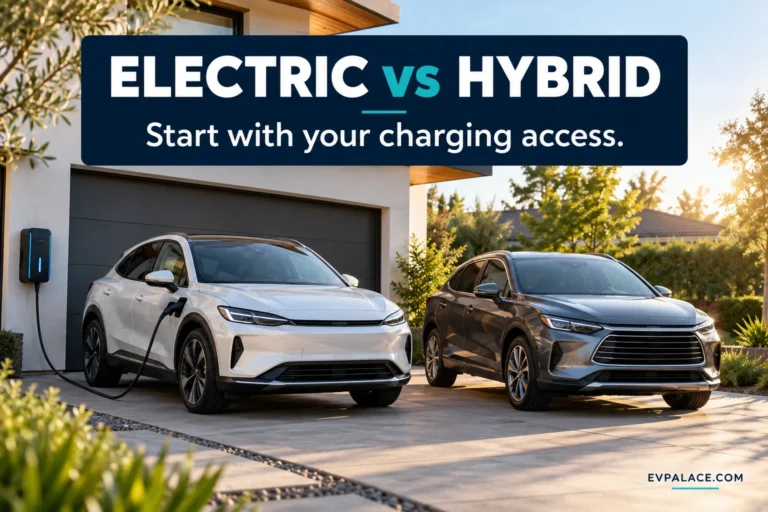
Write down a normal week, your three hardest recurring trips and the complete ownership estimate. Then test the decision against those facts. If a conventional hybrid might bridge the gap, read our electric-versus-hybrid comparison.
Research the EV side of your comparison
Compare the EV side of the decision against your actual parking and driving routine. Use EV terminology and home charging.
For the next stage of your research, read public charging, electricity consumption, battery health and capacity. Use the relevant guide to work through your own vehicle, parking and charging needs.
Sources
- DOE AFDC: EV consumer considerations
- DOE AFDC: maintenance comparison
- EPA: electric and plug-in hybrid vehicles
Frequently asked questions
Are electric cars cheaper to run than gas cars?
They can be, especially with affordable home electricity. Public charging rates and the exact vehicle efficiency can change the result.
Are electric cars faster than gas cars?
Some are, but powertrain type alone does not settle performance. Compare specific vehicles.
What is the biggest disadvantage of an electric car?
For many buyers it is inadequate charging access. Other trade-offs depend on the vehicle and driving pattern.
Do EVs need maintenance?
Yes. They avoid engine-oil changes but still need tires, brakes and the manufacturer’s scheduled checks.