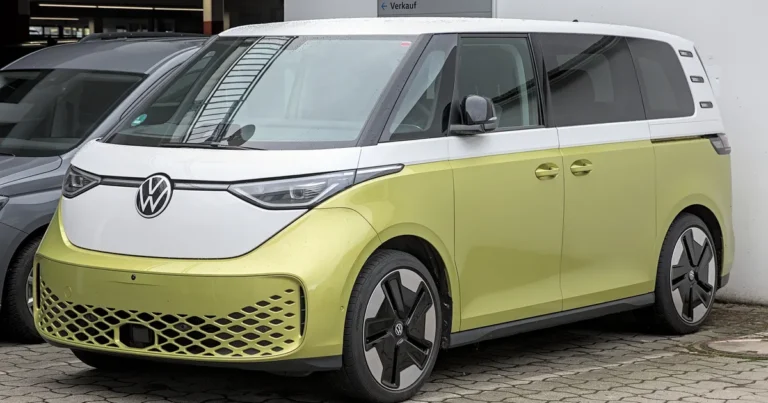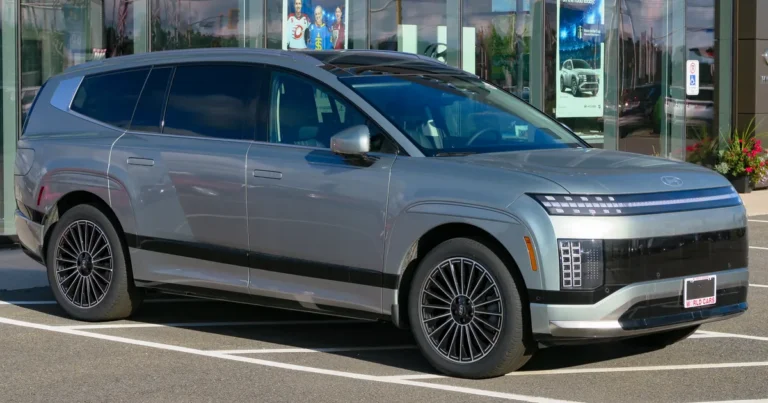
Best Electric Cars for Snow: What Matters Beyond AWD
The best electric cars for snow are not simply the ones with all-wheel drive. The car that stops shortest and climbs out of an unplowed driveway is usually the one with winter tires, enough ground clearance and a heat pump, and this guide compares six current US picks on exactly those points, with every price, range and clearance figure verified for the 2026 or 2027 model year on November 24, 2026.
Every price below is the manufacturer’s suggested retail price (MSRP) before the destination fee, with the destination fee stated separately. Every range is the EPA estimate for the exact configuration named, unless the text says it is a planning figure. Federal new and used EV tax credits are no longer available for vehicles acquired after September 30, 2025, so no price below subtracts a credit.
The best electric cars for snow at a glance
| Pick | EPA range | Winter range at 20 F* | Ground clearance | MSRP before destination | Best for |
|---|---|---|---|---|---|
| 2027 Rivian R1S Premium Long Range AWD | 410 mi | 312 mi | 8.8 to 14.9 in | $90,990 | Deep snow |
| 2027 Tesla Model Y Premium AWD | 327 mi | 239 mi | 6.6 in | $49,990 | Most buyers, plowed roads |
| 2026 Chevrolet Equinox EV LT 2 AWD | 307 mi | 193 mi | 6.4 in | $45,095 | Longest EPA range under $46,000 |
| 2026 Kia EV6 Wind AWD | 295 mi | 207 mi | 6.1 in | $48,800 | Fast charging |
| 2026 Subaru Solterra Premium AWD | 288 mi | 202 mi | 8.3 in | $38,495 | Best value snow pick |
| 2026 Hyundai Ioniq 5 XRT AWD | 259 mi | 186 mi | 7.0 in | $46,275 | All-terrain tires included |
* Winter range at 20 F is a planning figure, not a measured result: EPA range multiplied by the per-model range retention at 20 F from Recurrent’s November 2025 study of more than 30,000 US EVs (R1S 76%, Model Y 73%, Ioniq 5 72%, EV6 70%, Equinox EV 63%; the Solterra has no Recurrent figure, so the fleet average of 70% is used). Recurrent’s baseline is each model’s own maximum range, not its EPA rating. Treat these numbers as planning estimates for a cold day, not as guarantees.
Which EV is best for snow and icy roads?
The Rivian R1S is the best EV for deep snow, because it can raise its clearance to 14.9 inches. The Subaru Solterra is the best value snow pick, with 8.3 inches of clearance for $38,495. For most buyers on plowed roads, the Tesla Model Y Premium AWD is the sensible pick, as long as it wears winter tires.
Pick by your snow
One ranked list cannot answer this question, because snow is not one condition. Pick by the snow you actually drive in.
| Your snow | Snow depth | Minimum clearance | What you need | Pick |
|---|---|---|---|---|
| Plowed city streets | Under about 4 in | 6 in | AWD plus winter tires | Solterra or Equinox EV |
| Unplowed suburb, slush and drifted side streets | 4 to 8 in | 7 in | AWD, winter tires and a snow mode | Ioniq 5 XRT or Solterra |
| Deep snow and mountain driveways | Over 8 in | 8.3 in | AWD, winter tires, a snow mode and real clearance | R1S, or the Solterra on a budget |
Do not drive through snow deeper than your clearance. Once snow depth exceeds clearance, the underbody starts plowing snow and drag overwhelms traction. That is guidance from how clearance works, not a measured test, because no publication has measured a “stuck depth” for these cars. About 8 inches is the commonly cited minimum for serious deep snow, and only two picks in this guide clear it in their standard setting: the Solterra at 8.3 inches and the R1S at 8.8 inches at its lowest setting.
Is AWD enough for snow, or do you need winter tires?
No, all-wheel drive is not enough on its own. Winter tires decide whether you stop and steer, while all-wheel drive only decides whether you get moving. On snow and ice, buy the tires first and treat AWD as the second step.
Tire Rack tested this directly in October 2026, on a 2025 Toyota Camry in near-freezing temperatures with ten tires in the same 215/55R17 size. Braking from 25 mph on snow, the Michelin X-Ice Snow winter tire stopped in 56.1 feet and the Bridgestone Blizzak WS90 in 57.3 feet, while the Michelin Primacy Tour A/S all-season tire needed 81.1 feet and the Michelin Defender2 needed 84.5 feet. That is about 25 feet shorter from only 25 mph, roughly two car lengths.
Braking from 12 mph on ice, the winter tires stopped in 38.7 to 39.4 feet against 55.0 to 57.7 feet for the all-season tires. Accelerating from 0 to 12 mph on snow, the Blizzak covered 23.97 feet against 36.44 feet for the Defender2. Source: Tire Rack winter tire test, October 2026
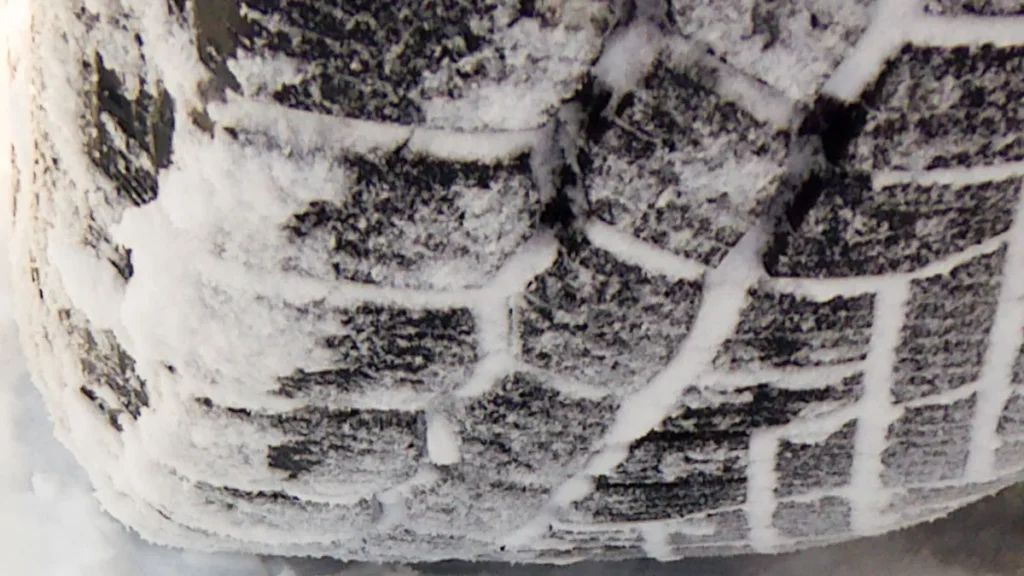
An older Tire Rack test on a rear-drive BMW 325i found the same pattern: braking from 30 mph on groomed packed snow took about 59 feet on winter tires against about 89 feet on all-season tires, and at 25 mph through a 90-degree corner only the winter-tire car stayed on the road. Consumer Reports found the same direction in its 2015 winter-tire test of 72 tire models: accelerating from 5 to 20 mph on packed snow took 63.5 feet on winter tires against 85.6 feet on all-season tires. Source: Consumer Reports winter tire test
The same Tire Rack test also shows the trade-off honestly: on cold wet roads from 50 mph, the all-season Primacy Tour A/S stopped in 99.3 feet while the X-Ice Snow needed 129 feet. Winter tires win on snow and ice and lose on wet tarmac, which is why they belong on the car only for the cold months. Swap to winter tires when temperatures stay below about 40 F, and fit them in sets of four, never two.
The money makes the same point. Adding all-wheel drive to the Hyundai Ioniq 5 costs $3,900 and cuts range by 28 miles, from 318 miles in rear-drive form to 290 miles with all-wheel drive. A set of four winter tires costs about $550 for a budget set (Firestone Winterforce 2 at $136.99 per tire on Tire Rack, checked November 24, 2026) to about $912 for a premium set (Michelin X-Ice Snow at about $228 per tire in a common 19-inch size).
A complete wheel and tire package costs about $1,800 to $2,500, and Tesla’s own Model Y winter package is $2,750 including wheels, tires, sensors and installation. So the tires cost less than the all-wheel-drive upgrade, last several winters, and do the job AWD cannot do: stop the car.
Look for the three-peak mountain snowflake (3PMSF) mark on the sidewall. That is the severe-snow-service symbol. All-weather tires carry the same mark and can stay on year-round, but they do not match a dedicated winter tire on snow and ice: in the Tire Rack test the best all-weather tire stopped in 58.6 feet on snow against 56.1 feet for the best winter tire, and the gap grows on ice. If your winters are mild and mostly wet, an all-weather tire is a fair compromise. If you drive on snow regularly, buy the winter set.
Do electric cars lose range in snow?
Yes. Cold weather cuts EV range, and snow makes it worse, because the heater runs constantly, the battery is cold, and rolling resistance rises. Plan on losing about a quarter of your range at freezing and about a third at 20 F, and check your own model’s number, because the spread between models is wide.
The best large-scale evidence comes from Recurrent’s November 2025 study of more than 30,000 US EVs across 34 models, using real-world telemetry. On average, cars kept 78% of their maximum range at 32 F and 70% at 20 F. The best car kept 88% at freezing and the worst kept 69%. Per model, the Rivian R1S kept 83% at 32 F and 76% at 20 F, the Tesla Model Y kept 81% and 73%, the Hyundai Ioniq 5 kept 79% and 72%, the Kia EV6 kept 78% and 70%, and the Chevrolet Equinox EV kept 73% and 63%. The Chevrolet Blazer EV kept the least, 69% at 32 F and 57% at 20 F.
The baseline is each model’s own maximum range in ideal conditions, not its EPA rating. Source: Recurrent winter range study, November 2025, via Electric Future
AAA’s lab tests show the worst case. In April 2026, AAA tested a 2025 Equinox EV, a 2025 Mustang Mach-E and a 2025 Model Y on a chassis dynamometer with the cabin set to 72 F, and found an average range loss of 39.0% at 20 F against 75 F. The Model Y fell from 297.7 to 157.7 miles (down 47.0%), the Equinox EV from 320.8 to 177.2 miles (down 44.8%), and the Mach-E from 287.3 to 214.6 miles (down 25.3%).
AAA notes the results should not be compared with EPA labels. An earlier AAA test from 2019 found a 41% range loss at 20 F with the cabin heat on, against only 12% with the heat off, on 2017-2018 cars from before the heat-pump era. Source: AAA EV vs hybrid efficiency report, April 2026
The winter range per pick, using the Recurrent retention figures above, looks like this. These are planning figures, not measurements.
| Pick | EPA range | Winter range at 32 F | Winter range at 20 F |
|---|---|---|---|
| 2027 Rivian R1S Premium Long Range AWD | 410 mi | 340 mi | 312 mi |
| 2027 Tesla Model Y Premium AWD | 327 mi | 265 mi | 239 mi |
| 2026 Chevrolet Equinox EV LT 2 AWD | 307 mi | 224 mi | 193 mi |
| 2026 Kia EV6 Wind AWD | 295 mi | 230 mi | 207 mi |
| 2026 Subaru Solterra Premium AWD | 288 mi | 225 mi | 202 mi |
| 2026 Hyundai Ioniq 5 XRT AWD | 259 mi | 205 mi | 186 mi |
Two things stand out. First, the Equinox EV keeps the least of its range in the cold of any pick here (63% at 20 F), so its 307-mile EPA figure shrinks to 193 miles on a 20 F day, behind the EV6 and the Solterra despite its longer EPA rating. Second, the Model Y keeps its range better than most (73% at 20 F), which is why it is the only affordable pick that still clears 230 miles of winter range. For more on how range figures are built and what changes them, see our EV Range Factors guide
Four things that matter more than the AWD badge
Ground clearance
Clearance decides whether you can move at all in unplowed snow. All-wheel drive cannot help once the underbody is plowing a drift. The picks span 6.1 to 14.9 inches: the EV6 sits lowest at 6.1 inches, the Equinox EV and Model Y at 6.4 and 6.6 inches, the Ioniq 5 XRT at 7.0 inches, the Solterra at 8.3 inches, and the R1S from 8.8 inches at its lowest setting to 14.9 inches at maximum height. If your driveway is plowed by the time you leave, 6 inches is enough. If you are the first car out after an overnight storm, you want 8 inches or more.
Heat pump
A heat pump moves heat instead of making it, so it warms the cabin with far less battery energy than a resistive heater. Recurrent’s study found heat-pump cars kept about 83% of their range at 32 F against about 75% for cars with resistive heating only. A laboratory comparison by Environment and Climate Change Canada, published in 2026, tested two cars of the same make and model, one with a heat pump and one with a resistive heater, and found the heat-pump car retained 1% to 15% more range depending on temperature and drive cycle, an average advantage of 7% on city and highway cycles.
What Car? drove two near-identical VW ID.7 cars to empty in December 2024 and found the heat-pump car went 268 miles against 254 miles without one, a 5.2% gain. Source: Environment and Climate Change Canada heat-pump study, 2026
Every pick in this guide has a standard heat pump. That is worth checking on any EV you compare against this list, because the difference is easy to miss on a spec sheet. The 2026 Volkswagen ID.4, for example, has no heat pump on any US trim and heats with a resistive heater only, which is one reason it kept only 75% of its range at 32 F and 66% at 20 F in Recurrent’s winter study. Source: Recurrent heat-pump list, November 2026
Snow mode
A snow mode changes how the car delivers power so the wheels do not spin on ice. The names differ by brand: Rivian Snow mode, Subaru and Toyota X-MODE, Hyundai and Kia Snow mode, Chevrolet Snow/Ice mode. The R1S, Solterra, Ioniq 5 XRT, Equinox EV and EV6 all have one. The Model Y does not have a dedicated snow mode; it has Slip Start, which lets the wheels spin so you can rock the car free when it is stuck, and Off-Road Assist.
Use Slip Start only to get unstuck, then switch it off once you are moving, or traction control stays relaxed when you need it most. On the Solterra and the Toyota bZ, X-MODE is a button on the centre console with Snow/Dirt and Deep Snow/Mud settings. On the Ioniq 5 XRT and the EV6, Snow is a drive mode you select from the drive-mode control. On the Equinox EV, Snow/Ice is a drive mode in the same menu as Normal and Sport.
Regenerative braking and weight
Two things about EVs cut both ways in snow. First, the battery sits low in the floor, which gives EVs a low centre of gravity and helps stability on slippery roads. Second, EVs are heavy, and weight increases stopping distances, which is another reason winter tires matter more than the drivetrain. Third, regenerative braking can unsettle a car on ice if you lift off the accelerator suddenly, because the car brakes hard on the driven wheels with no pedal input. Most EVs reduce regenerative braking automatically when they detect slip. If your car lets you set regenerative braking to Low, use the Low setting for winter driving, and ease off the accelerator gently on ice instead of lifting suddenly.
1. Rivian R1S Premium Long Range: the deep-snow pick
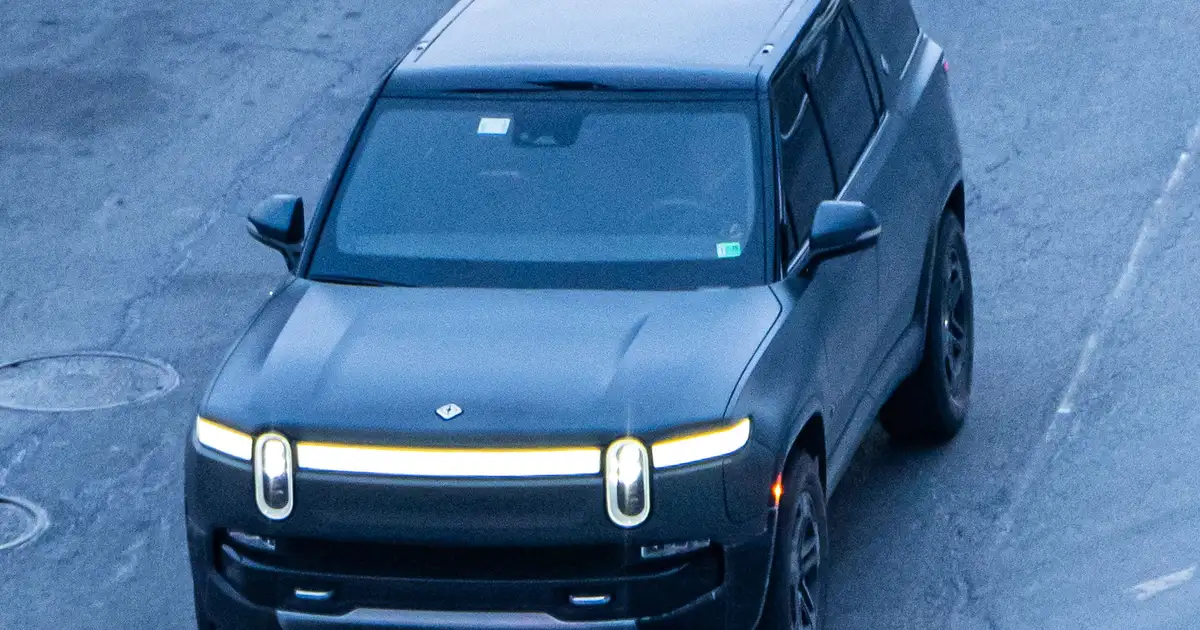
The R1S is the only pick that can genuinely handle deep snow, and the reason is clearance. Its adaptive air suspension lifts it from about 8.8 inches at its lowest setting to 14.9 inches at maximum height, which is well above every other pick in this guide. It has a dedicated Snow drive mode, a standard heat pump, and heated front seats and a heated steering wheel as standard. It seats seven with the standard bench, or six with the captain’s chairs.
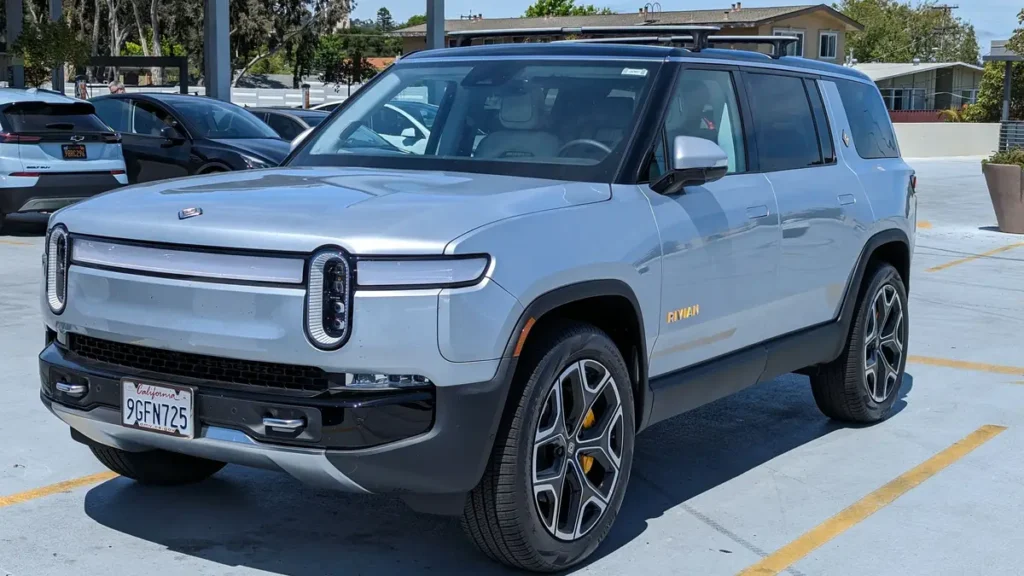
The 2027 Premium Long Range costs $90,990 before the $1,895 destination fee, $92,885 delivered, and is EPA-rated at 410 miles on 22-inch wheels, or 380 miles on 20-inch all-season tires. That is the longest EPA range of any SUV in this guide, and at 20 F it still plans to about 312 miles, the longest winter range here by a wide margin. It has a native NACS port from the 2026 model year, so it plugs straight into Tesla Superchargers with no adapter, and a CCS adapter is supplied for CCS stations.
The R1S is also the most expensive pick by more than $40,000, and its size counts against it on plowed city streets, where a smaller car is easier to park and cheaper to run. Buy it if your driveway or your road is unplowed more often than not, or if you drive to a mountain house in winter. If your roads are plowed, the Solterra does the same job for less than half the money.
Best for: buyers who drive in deep, unplowed snow and want the most clearance and the longest winter range in one car.
2. Subaru Solterra Premium: the value snow pick
The Solterra is the value pick in this guide, and the gap is large: at $38,495 before the $1,450 destination fee ($39,945 delivered), it is the cheapest pick here, and it has the highest fixed clearance of any affordable pick at 8.3 inches. Every Solterra has dual-motor all-wheel drive as standard, a standard heat pump, X-MODE with Snow/Dirt and Deep Snow/Mud settings plus Grip Control, heated front seats, and battery preconditioning. The 2026 car is a substantial redesign over the 2025 car: a larger 74.7 kWh battery, a native NACS port in the right front fender with Supercharger access, faster 150 kW DC charging, and a 10-80% charge in about 30 minutes.
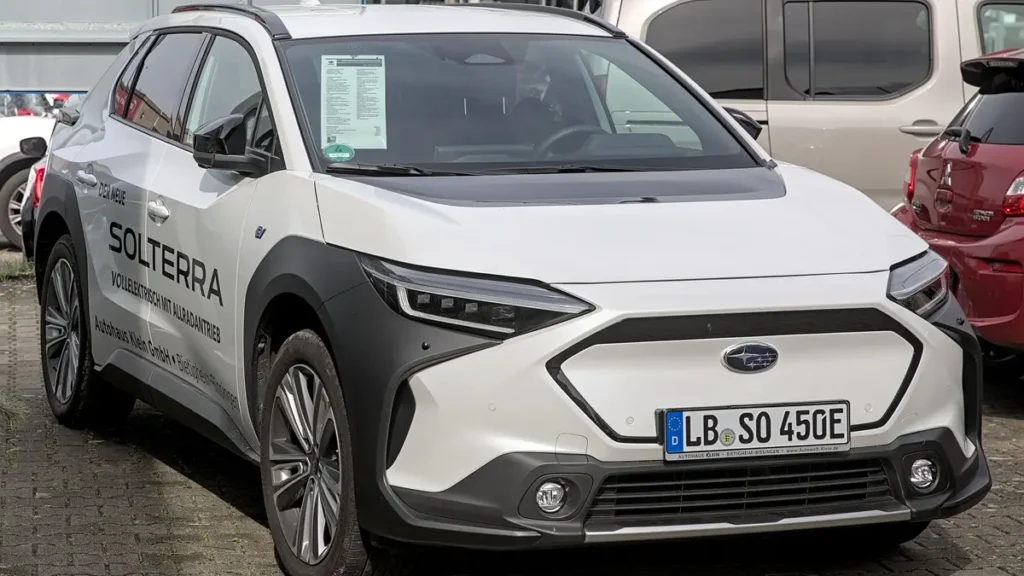
The Premium is EPA-rated at 288 miles on its 18-inch wheels, the longest range of any Solterra trim; the Limited, Limited XT and Touring XT all drop to 278 miles on 20-inch wheels. At 20 F it plans to about 202 miles using the fleet-average retention figure. Its twin, the 2026 Toyota bZ XLE AWD, is the same car under a different badge at $39,900 before destination, with 288 miles of range, 8.1 to 8.2 inches of clearance and the same X-MODE system, so buy whichever dealer gives you the better price.
Best for: buyers who want the most snow capability per dollar, with real clearance, a heat pump and Supercharger access included.
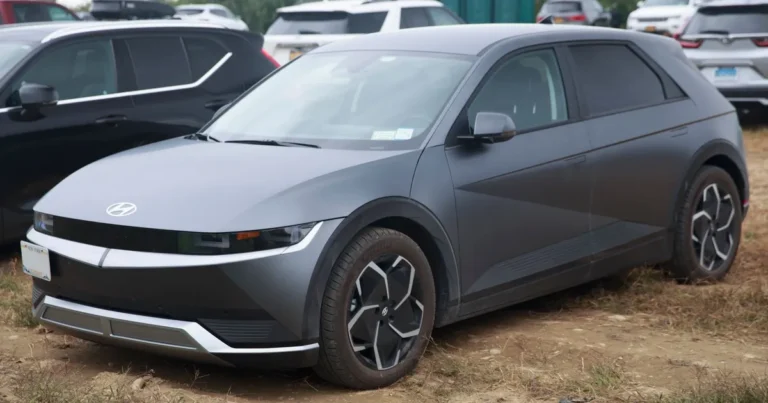
3. Hyundai Ioniq 5 XRT AWD: the all-terrain tires pick
The XRT is the only pick that arrives on all-terrain tires, and that is its whole point. It rides on 18-inch wheels with 235/60R18 Continental CrossContact all-terrain tires, a 23 mm suspension lift that takes clearance from 6.1 inches to 7.0 inches, and a dedicated multi-terrain drive mode alongside the standard Eco, Normal, Sport and Snow modes. The lift and the tires are standard, not optional, and there is no rear-drive XRT.
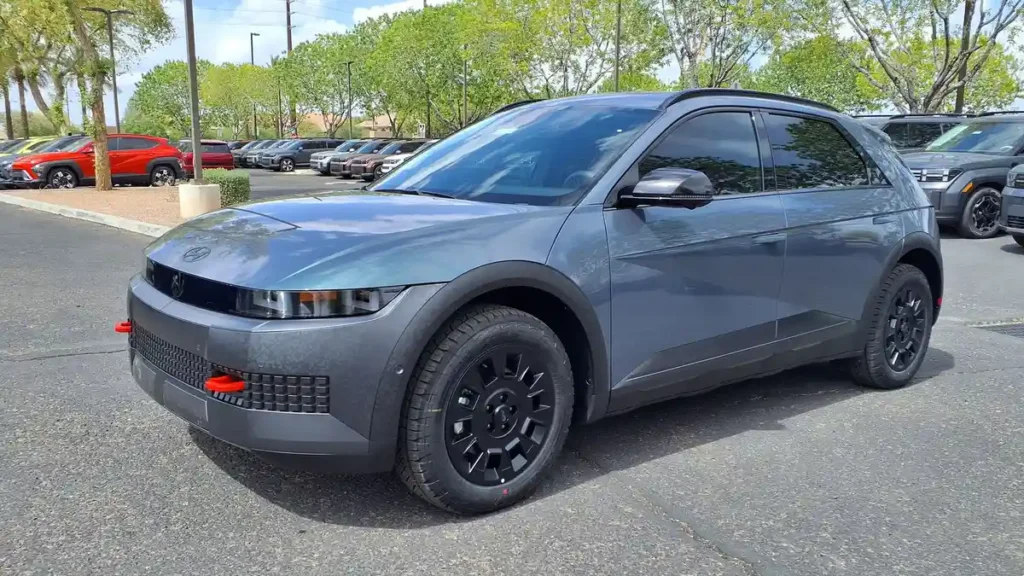
It costs $46,275 before the $1,600 freight charge ($47,875 delivered), and its 84 kWh battery is EPA-rated at 259 miles, the shortest range in this guide. That is the trade-off for the lift and the tires: the same car in rear-drive form is rated at 318 miles, and the all-wheel-drive SE and SEL are rated at 290 miles. It has a standard heat pump on all-wheel-drive models, a native NACS port with Supercharger access, and DC fast charging at up to about 240 to 250 kW. At 20 F it plans to about 186 miles, the shortest winter range here, so check the charging map on your route before you buy it for a mountain commute.
Best for: buyers whose snow driving includes unpaved roads, dirt driveways and rutted pullouts, where the all-terrain tires and the lift earn their keep.
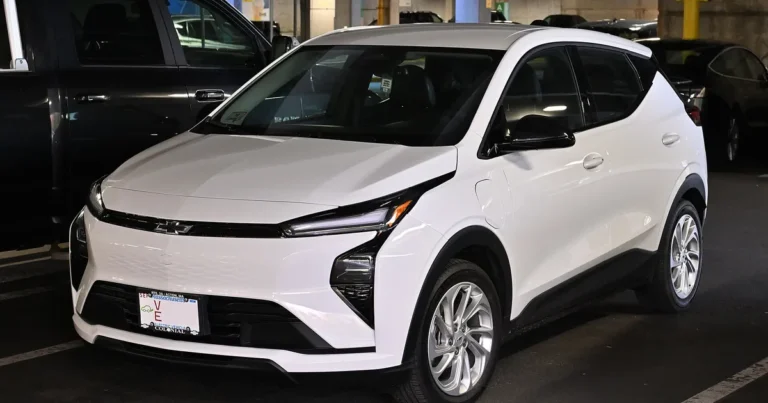
4. Chevrolet Equinox EV LT 2 AWD: the longest EPA range under $46,000
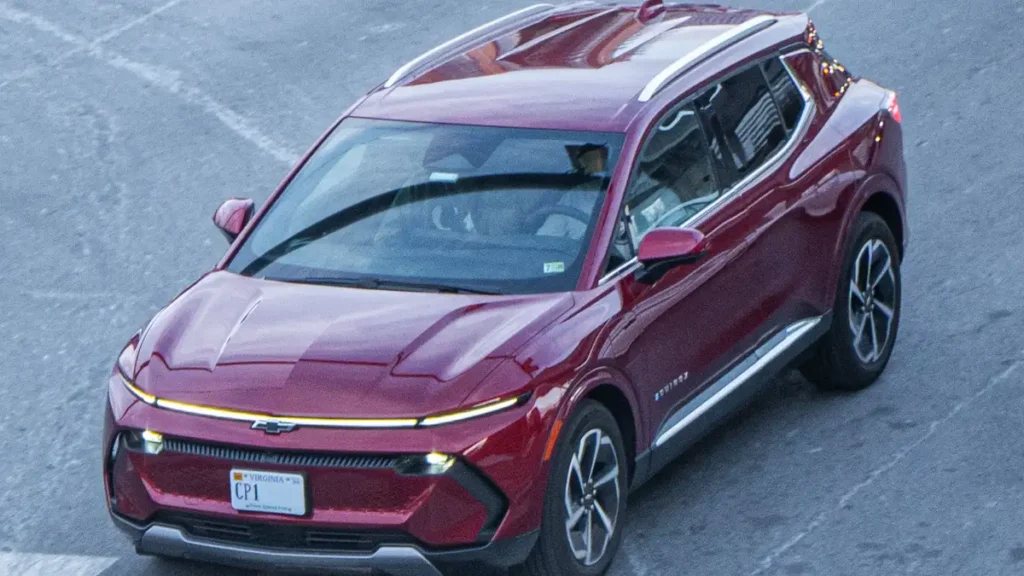
The Equinox EV LT 2 AWD is the range pick of the affordable half of this guide, but read the number carefully. Its EPA rating is 307 miles, the third-longest here, yet at 20 F it plans to only about 193 miles, because Recurrent found the Equinox EV keeps just 63% of its range at 20 F, the lowest retention of any pick in this guide. Even so, 193 miles still beats the Ioniq 5 XRT’s 186 miles, and it costs $45,095 before the $1,800 destination fee ($46,895 delivered).
The LT 2 is the trim to buy for snow: heated front seats and a heated steering wheel are standard, while the cheaper LT 1 AWD at $38,295 makes them part of an optional Comfort package. It has a standard heat pump, a Snow/Ice drive mode, a dual-motor setup with 300 horsepower, and 150 kW DC fast charging. Its charge port is CCS1, so Supercharger access needs GM’s approved NACS DC adapter, which costs $299 on GM Energy’s current store, or $275 as a factory option. The older $225 figure on a Chevrolet support page is stale; do not use it.
Best for: buyers who want the most winter range for under $46,000 and do not mind buying the $299 adapter for Supercharger access.
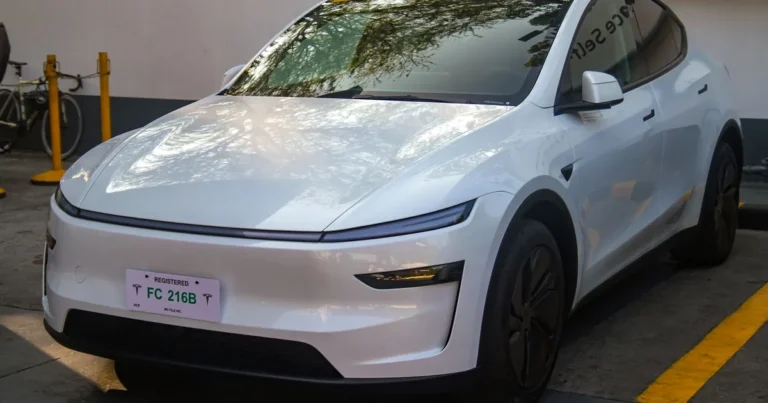
5. Tesla Model Y Premium AWD: the most-bought EV, honestly judged
The Model Y is the most-bought EV in the US, and its snow verdict is honest rather than glowing. On the plus side, it has the second-longest winter range in this guide at about 239 miles at 20 F, a standard heat pump, heated front and rear seats and a heated steering wheel as standard, a native NACS port with the best fast-charging network in the country, and automatic battery preconditioning when you navigate to a Supercharger. It costs $49,990 before the $1,390 destination fee and the $250 order fee, $51,630 including both, and is EPA-rated at 327 miles.
On the minus side, its clearance is modest at 6.6 inches unladen (4.8 inches laden, from Tesla’s own owner’s manual), and it has no dedicated snow mode, only Slip Start and Off-Road Assist. That combination is fine on plowed roads with winter tires and a poor match for an unplowed driveway. The cheaper $41,990 all-wheel-drive Model Y was removed from the US configurator in November 2026, so Premium AWD at $49,990 is now the cheapest all-wheel-drive Model Y on new orders.
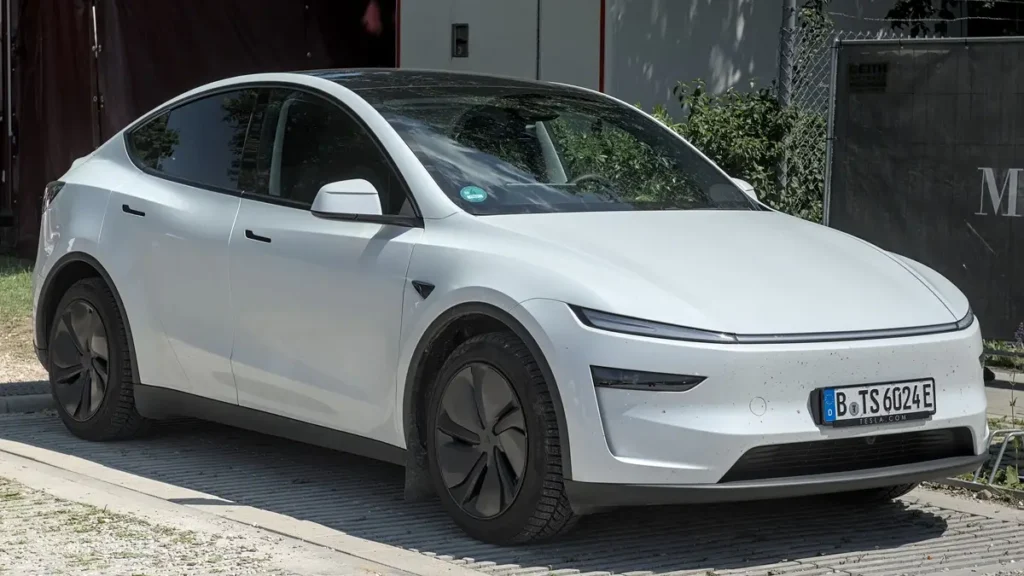
Best for: buyers whose roads are plowed, who want the longest affordable winter range and the easiest fast charging, and who will fit winter tires.
6. Kia EV6 Wind AWD: the fast-charging snow pick
The EV6 Wind AWD is the pick for buyers who will charge on the road in winter, because its 800-volt system charges from 10% to 80% in about 18 minutes on a 350 kW charger, the fastest charging here. It costs $48,800 before the $1,545 destination fee ($50,345 delivered), and its 84 kWh battery is EPA-rated at 295 miles on 19-inch wheels. The Light Long Range AWD is the same car with fewer features at $45,200 and the same 295 miles, so check it if the Wind’s extras do not matter to you.
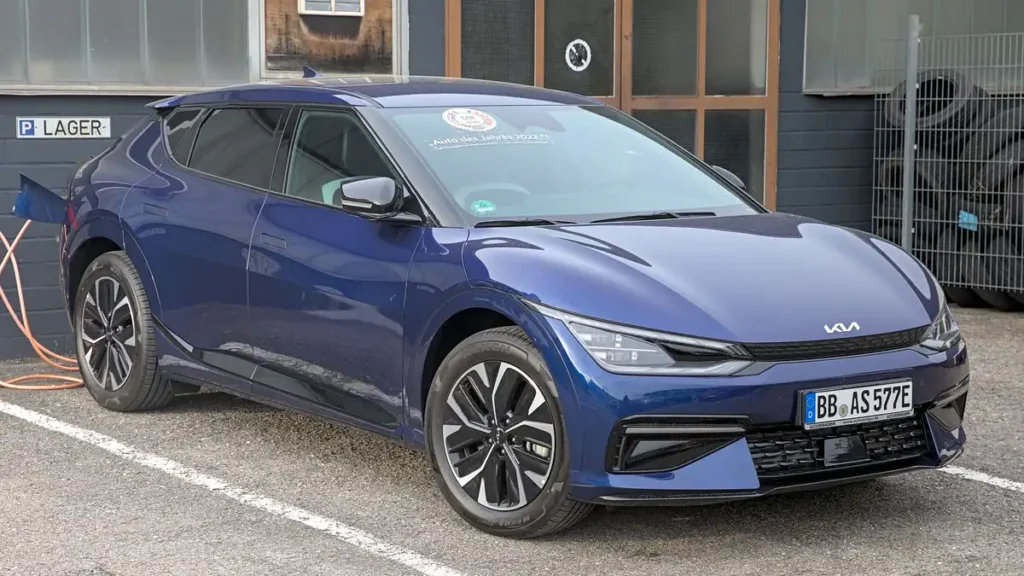
It has a standard heat pump, a Snow drive mode, heated front seats and a heated steering wheel as standard, battery preconditioning, and a native NACS port with Supercharger access. Its weakness is clearance: at 6.1 inches it sits lowest in this guide, so it belongs on plowed roads, not in deep snow. At 20 F it plans to about 207 miles, which beats the Equinox EV, the Solterra and the Ioniq 5 XRT despite the Equinox EV’s longer EPA figure, because the EV6 keeps 70% of its range in the cold against the Equinox EV’s 63%.
Best for: buyers who charge on the road in winter and want the fastest top-up, on roads that get plowed.
Worked example: the 180-mile ski trip at 20 F
Take a realistic winter trip: 90 miles to a ski town and 90 miles home, 180 miles in total, at 20 F, in a car that leaves home fully charged. The planning maths uses Recurrent’s per-model retention at 20 F, then keeps a 20% reserve on arrival, so usable miles are EPA range multiplied by retention multiplied by 0.80. These are planning estimates, not test results, and Recurrent’s baseline is each model’s own maximum range, not its EPA rating.
| Pick | EPA range | Winter range at 20 F | Usable miles (20% reserve) | 180-mile trip |
|---|---|---|---|---|
| 2027 Rivian R1S Premium Long Range AWD | 410 mi | 312 mi | 249 mi | Clears it, 69 mi to spare |
| 2027 Tesla Model Y Premium AWD | 327 mi | 239 mi | 191 mi | Clears it, 11 mi to spare |
| 2026 Kia EV6 Wind AWD | 295 mi | 207 mi | 165 mi | Short by 15 mi, needs a top-up |
| 2026 Chevrolet Equinox EV LT 2 AWD | 307 mi | 193 mi | 155 mi | Short by 25 mi, needs a top-up |
| 2026 Subaru Solterra Premium AWD | 288 mi | 202 mi | 161 mi | Short by 19 mi, needs a top-up |
| 2026 Hyundai Ioniq 5 XRT AWD | 259 mi | 186 mi | 149 mi | Short by 31 mi, needs a top-up |
Only the R1S and the Model Y make the round trip without charging under these assumptions, and the Model Y’s margin is only 11 miles, so a headwind or a detour eats it. The other four need one short top-up on the way home, or a charge at the mountain. That is the practical difference winter range makes: the Equinox EV’s 307-mile EPA figure looks comfortable on paper and still falls 25 miles short, while the Model Y’s better cold retention carries it through. Plan the charge stop before you leave, and precondition the battery on the way to the charger. For the longest EPA ranges regardless of snow, see our Longest Range EVs guide
Three checks before you buy
First, check the heat pump. It is the single most expensive thing to miss on a spec sheet, because you cannot add one later. The 2026 Volkswagen ID.4 AWD Pro looks like a fair snow pick at $48,995 with 263 miles of EPA range, 6.8 to 6.9 inches of clearance and a NACS DC adapter included as standard, but it has no heat pump on any US trim and heats with a resistive heater only, which is why it kept only 75% of its range at 32 F and 66% at 20 F in Recurrent’s winter study. Ask the dealer to point to the heat pump on the window sticker, not in a brochure.
Second, check the tires the car actually ships with. The Ioniq 5 XRT is the only pick here that arrives on all-terrain tires. Every other pick ships on all-season tires, which are not winter tires, whatever the badge says. Budget for the winter set when you buy the car, not after the first storm.
Third, check availability before you fall for a discontinued car. The 2026 Volvo EX30 Twin Motor is a good small snow car on paper at $44,950 with a standard heat pump and 253 miles of range, but Volvo told dealers in March 2026 that the EX30 ends after the 2026 model year, and the order bank closed on March 20, 2026, so dealers are selling remaining stock only. The same warning applies to the Ford Mustang Mach-E, which has the lowest clearance in the set at about 5.7 inches and a heat pump that only became standard for 2025: check the window sticker on the exact car, because earlier model years differ.
Charging and driving in snow
Cold batteries charge slowly, and the fix is preconditioning: warming the battery on the way to the charger. In one owner test reported by InsideEVs, a Tesla Model Y that had preconditioned its battery peaked at 238 kW and finished a 10-80% charge in 33 minutes at 30 F, while the same car with a cold-soaked battery peaked at 135 kW and took 42 minutes at 21 F. That was a single-owner test on different days, so the exact minutes do not transfer to other cars, but the direction is clear: navigate to the charger and let the car warm its battery. Source: InsideEVs preconditioning test
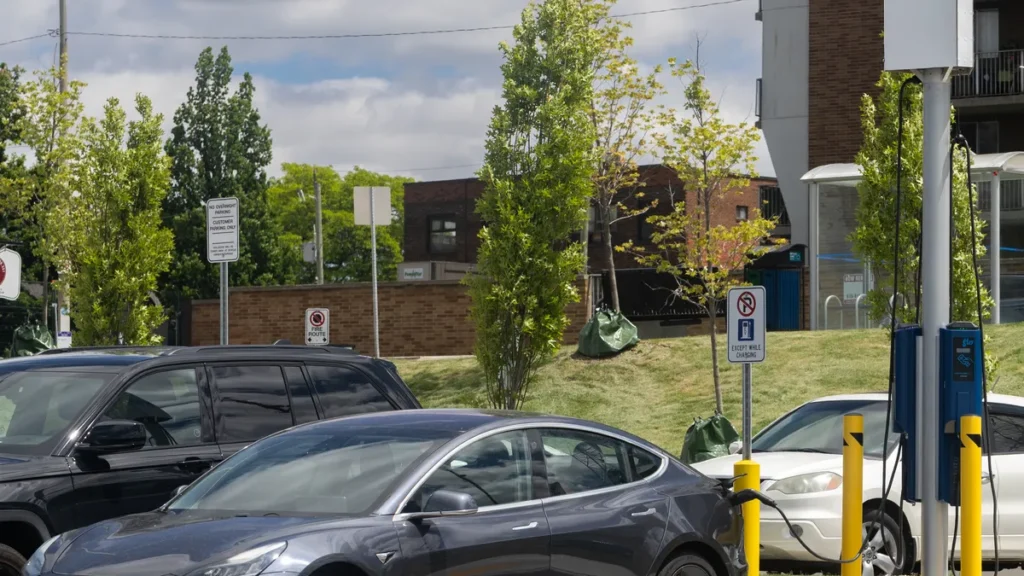
Snow also covers the parts of the car you do not think about. Clear the cameras, sensors and radar panels before you drive, or driver assistance features will switch themselves off or warn you. Clear the charge port door and the port itself before you plug in, and keep the port closed when it is snowing. If you charge outdoors, our Electric Car Charger Outside guide covers weatherproofing and setup
Know the chain law where you drive. In California, Caltrans runs three levels of chain control: R1 requires chains on all vehicles except passenger vehicles and light trucks under 6,000 pounds gross weight with snow tires on at least two drive wheels; R2 requires chains or traction devices on all vehicles except four-wheel and all-wheel-drive vehicles with snow-tread tires on all four wheels, and even those vehicles must carry traction devices in chain control areas; R3 requires chains on all vehicles with no exceptions. All-wheel drive does not exempt you from carrying chains. Check the rules in your own state before a mountain trip, because they differ. Source: Caltrans chain controls
How we checked
This guide covers new cars on sale in the US now, in the 2026 or 2027 model year. Prices are MSRP before destination, checked November 24, 2026, with the destination fee stated separately. Ranges are EPA estimates for the exact trim and wheels named. Charging is checked as three separate things: the charge port, the compatible adapter and network access.
Winter range figures are planning estimates built from Recurrent’s November 2025 fleet study, labelled as such wherever they appear, and the worked example states its assumptions in full. Tire claims come from Tire Rack’s October 2026 test and Consumer Reports’ 2015 test, not from marketing. No car in this guide was tested by us, and dealer stock was not audited: confirm the trim, the tires and the window sticker on the exact car before you buy.
This guide was prepared by Sam Wilson with substantive AI assistance in research and drafting. All figures were checked against the sources linked in the text on November 24, 2026. That is how this guide picked the best electric cars for snow: test evidence first, verified specs second, and the AWD badge last. Vehicles were not tested and dealer stock was not audited. If you already own an EV and want the ownership side of winter, our How to Winterize an Electric Car checklist covers charging, tires and cold-weather care, and our Best AWD Electric Cars guide compares nine all-wheel-drive picks on price, range and efficiency
Which EV is best for snow and icy roads?
The Rivian R1S is the best EV for deep snow, with up to 14.9 inches of clearance and a Snow drive mode. The Subaru Solterra is the best value snow pick at $38,495 with 8.3 inches of clearance. For plowed roads, the Tesla Model Y Premium AWD is the sensible pick, with about 239 miles of winter range at 20 F, as long as it wears winter tires.
Is AWD enough for snow, or do you need winter tires?
No. Winter tires decide whether you stop and steer, and AWD only decides whether you get moving. In Tire Rack’s October 2026 test, winter tires stopped about 25 feet shorter from 25 mph on snow than all-season tires. Buy the winter tires first, then AWD, then clearance.
Do electric cars lose range in snow?
Yes. Recurrent’s study of more than 30,000 US EVs found cars kept 78% of their range at 32 F and 70% at 20 F on average, with the worst model keeping 69% at freezing. AAA’s April 2026 lab test found an average loss of 39% at 20 F with the cabin heat on. Plan on losing about a quarter of your range at freezing and about a third at 20 F.
Does a heat pump matter for winter driving?
Yes. Heat-pump cars kept about 83% of their range at 32 F against about 75% for cars with resistive heating only, in Recurrent’s study. A laboratory comparison by Environment and Climate Change Canada found the heat-pump car retained 1% to 15% more range depending on temperature. Check the window sticker, because some EVs sold in the US have no heat pump at all.
How much ground clearance do you need for snow?
About 6 inches is enough for plowed streets, about 7 inches for unplowed suburbs, and 8.3 inches or more for deep snow and mountain driveways. Do not drive through snow deeper than your clearance. The Solterra has 8.3 inches and the R1S up to 14.9 inches; the EV6 has the least in this guide at 6.1 inches.