Best Small Electric Cars: 6 Picks for Tight Spaces
Checked November 23, 2026. By Sam Wilson.
The best small electric cars you can actually buy in the US are the 2027 Kia EV3, the 2027 Chevrolet Bolt, the 2026 Nissan LEAF, the Volvo EX30, the Kia Niro EV and the Fiat 500e. The EV3 goes furthest at 321 miles of EPA range, the Bolt costs least at $28,995 delivered, and the 500e is the smallest at 143 inches long. Every pick below is on sale in the US now, with its price before destination, its EPA range for the exact trim, and its charging plug checked.
A warning first: most “best small electric car” lists on the internet are written for the UK and Europe. Their top picks, the Renault 5, the Dacia Spring, the Citroen e-C3, the VW ID. Polo and the MG4, are not sold in the US at all. This guide covers only cars a US buyer can actually buy, and it names the ones you cannot, so you do not waste a weekend chasing a car that has no US dealer.
The six picks at a glance
| Pick | Model year and trim | MSRP before destination | Delivered | EPA range | Length | Best for |
|---|---|---|---|---|---|---|
| Fiat 500e Pop | 2026 Pop | $35,700 | $37,695 | 149 mi | 143.0 in | Smallest footprint |
| Kia EV3 Wind FWD | 2027 Wind FWD | $34,990 | $36,485 | 321 mi | 169.3 in | Longest range |
| Chevrolet Bolt LT | 2027 LT | $27,600 | $28,995 | 262 mi | 169.6 in | Lowest price |
| Nissan LEAF S+ | 2026 S+ | $29,990 | $31,565 | 303 mi | 173.4 in | Best all-rounder |
| Volvo EX30 Single Motor Extended Range | 2026 Single Motor Extended Range | $38,950 | $40,345 | 261 mi | 166.7 in | Premium feel, 153 kW charging |
| Kia Niro EV Wind | 2026 Wind | $39,700 | $41,195 | 253 mi | 174.0 in | Most cargo space |
MSRP is the maker’s price before the destination fee. Delivered is MSRP plus destination. Range is the EPA combined figure for the exact trim named. The federal new-EV tax credit is not subtracted anywhere in this guide, because it is unavailable for vehicles acquired after September 30, 2025.
How small is small? The size test
A small car earns its keep in two places: the parking space and the garage. A standard US parking space is 9 feet wide by 18 feet long, which is 108 inches by 216 inches. Every pick below fits that space with room to spare, but the gap between the smallest and the largest is more than two and a half feet, and that gap is the difference between an easy park and a careful one.
| Pick | Length | Width without mirrors | Turning circle | Cargo seats up | Cargo seats down | Seats |
|---|---|---|---|---|---|---|
| Fiat 500e | 143.0 in | 66.3 in | 31.8 ft | 6.5 cu ft | 19.4 cu ft | 4 |
| Volvo EX30 | 166.7 in | 72.3 in | 35.1 ft | 14.1 cu ft | 31.9 cu ft | 5 |
| Kia EV3 | 169.3 in | 72.8 in | 34.1 ft | 26.1 cu ft | 56.5 cu ft | 5 |
| Chevrolet Bolt | 169.6 in | 69.7 in | 37.7 ft | 16.2 cu ft | 56.3 cu ft | 5 |
| Nissan LEAF | 173.4 in | 71.3 in | 35.4 ft | 20.0 cu ft | 55.5 cu ft | 5 |
| Kia Niro EV | 174.0 in | 71.9 in | 34.8 ft | 22.8 cu ft | 63.7 cu ft | 5 |
The worked example: park each pick nose-in in a standard 9 by 18 foot space, which is 216 inches long. The 500e leaves 73.0 inches spare, the EX30 leaves 49.3 inches, the EV3 leaves 46.7 inches, the Bolt leaves 46.4 inches, the LEAF leaves 42.6 inches and the Niro EV leaves 42.0 inches. Every pick also fits width-wise: even the widest car measured here, the LEAF at 82.6 inches including mirrors, is well inside the 108 inch space.
The turning circle decides how easily you get into that space: the 500e turns in 31.8 feet, the tightest here, while the Bolt needs 37.7 feet, the widest, so the Bolt asks for more room to swing in even though it is only 26.6 inches longer than the 500e. Check your own garage the same way: measure the depth, subtract the car’s length, and keep at least 24 inches for walking around the front and for the charger cable.
Two honest notes on the size figures. The 500e dimensions, turning circle and cargo come from the global specification, because Fiat USA does not publish them; the car is the same size everywhere it is sold. The Bolt dimensions and turning circle come from GM’s specification sheet, because chevrolet.com carries no dimension table.
Fiat 500e: the smallest
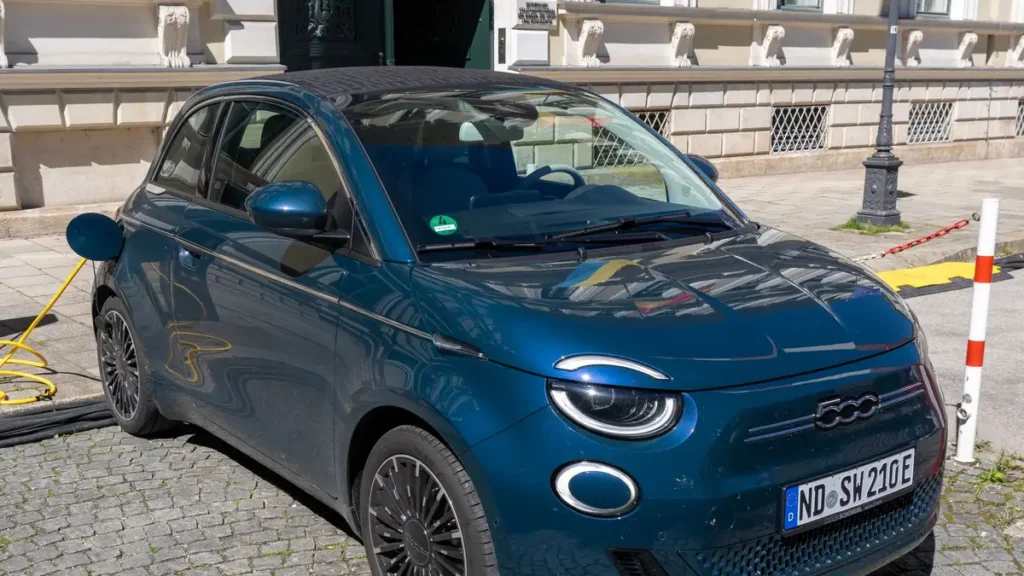
The 500e is the smallest highway-capable electric car on sale new in the US, and it is not close. At 143.0 inches long it is 23.7 inches shorter than the next smallest pick, the EX30, and 31 inches shorter than the Niro EV. It turns in 31.8 feet, parks anywhere, and looks like nothing else on the road. It seats four, not five, which is the trade you make for that size.
The 2026 Pop costs $35,700 before destination, $37,695 delivered, and its EPA range is 149 miles. The Icona costs $37,700 before destination and its EPA range is 141 miles on all-season tyres. That is the shortest range in this guide by a wide margin, and it is the reason the 500e is a second car or a city-only car for most buyers, not a one-car household’s only car. Its 70 percent planning window, the range to plan around on a normal day, is 104.3 miles.
Charging is the other limit. The 500e uses a CCS1 plug for DC fast charging and a J1772 plug for AC, with a peak of 85 kW and a 0 to 80 percent charge in about 35 minutes on an 85 kW charger. Fiat does not publish a 10 to 80 percent time, so this guide does not invent one. For Tesla Superchargers you need the Stellantis-approved Free2move Charge NACS to CCS1 adapter, bought at a LEV-certified dealer or from Mopar. Its 42 kWh battery is the smallest here, and Fiat USA does not state its chemistry, so this guide does not claim one.
Buy the 500e if your parking is genuinely tight, your daily driving is under 60 miles, and you can charge at home. Skip it if you need a fifth seat, a highway road trip car, or more than about 100 miles of real range in winter.
What is the smallest electric car you can buy in the US?
The Fiat 500e, at 143.0 inches long, is the smallest highway-capable electric car on sale new in the US. Smaller electric vehicles exist, such as the Microlino, but they are microcars or low-speed vehicles that cannot legally or practically drive on highways, and they are not sold through normal US car dealers.
Kia EV3: the longest range
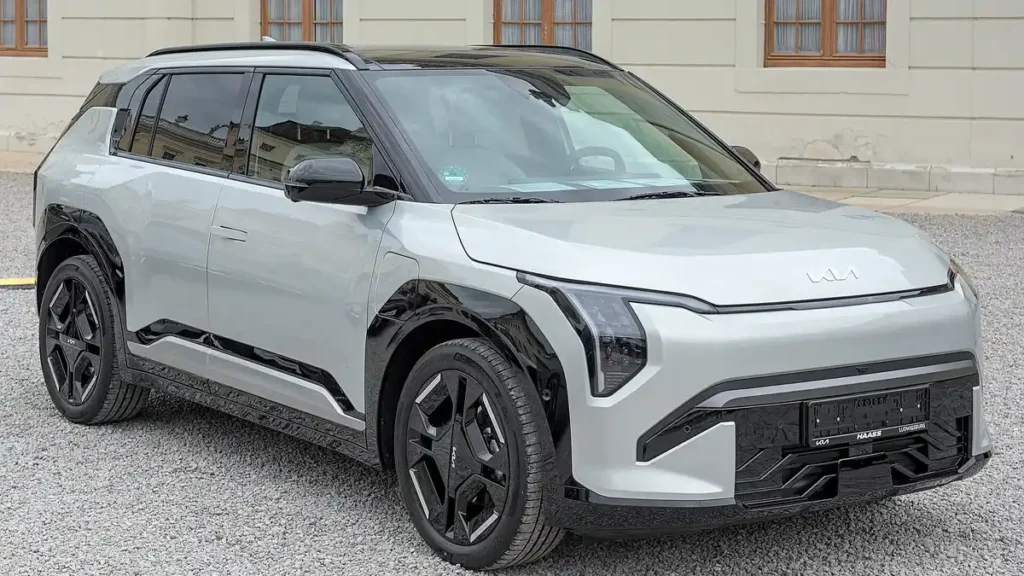
The EV3 is the surprise of this guide, and the reason this guide exists in its current form. Kia launched the 2027 EV3 in the US on October 1, 2026, and it is the longest-range small EV you can buy: the Wind FWD and Land FWD reach 321 miles of EPA range. The Light FWD costs $29,890 before destination, $31,385 delivered, with 221 miles of EPA range from its 58.3 kWh battery. The Wind FWD costs $34,990 before destination, $36,485 delivered, with 321 miles from its 81.4 kWh battery. All-wheel-drive versions reach 280 miles. All prices exclude the $1,495 destination fee.
Is the Kia EV3 sold in the US?
Yes. The 2027 Kia EV3 arrived in US showrooms on October 1, 2026, starting at $29,890 before destination. It is easy to miss because most “best small EV” lists were written before it launched, and some still list it as a car that is not coming to America. It is here, it is on sale now, and it undercuts the Kona Electric and the Niro EV on both price and range.
The EV3 is also the most practical small EV here. It is 169.3 inches long, seats five, carries 26.1 cubic feet behind the second row and 56.5 cubic feet with the seats folded, plus a 0.9 cubic foot frunk. Its 70 percent planning window is 224.7 miles on the Wind FWD, the longest here. It charges from 10 to 80 percent in an estimated 31 minutes on the 81.4 kWh battery, or 29 minutes on the Light, and it has a native NACS port with standard Plug and Charge, so it uses Tesla Superchargers with no adapter. Available Vehicle to Load lets it power devices from its battery.
Buy the Wind FWD if you want the longest range in a small car. Buy the Light if your budget is under $32,000 delivered and 221 miles covers your week; its 70 percent planning window is 154.7 miles. Do not buy any EV3 trim expecting 321 miles: that figure belongs to the Wind and Land front-wheel-drive versions only.
Chevrolet Bolt: the cheapest
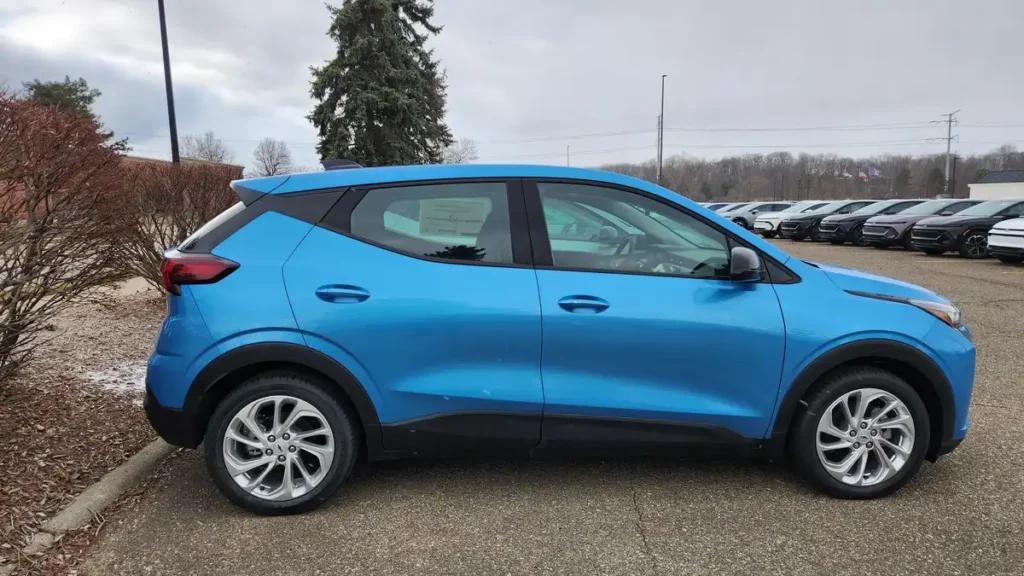
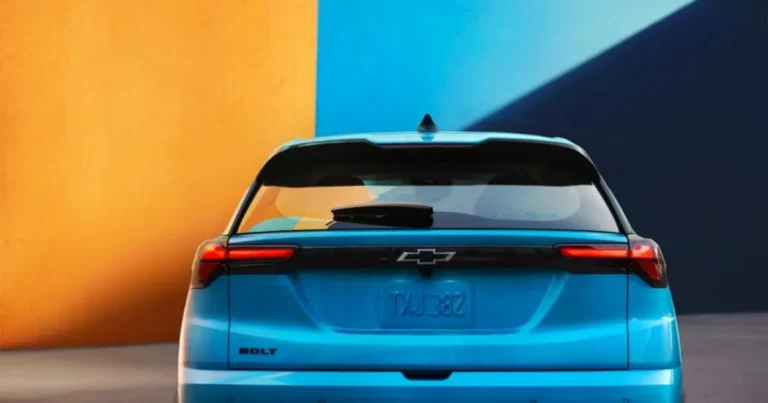
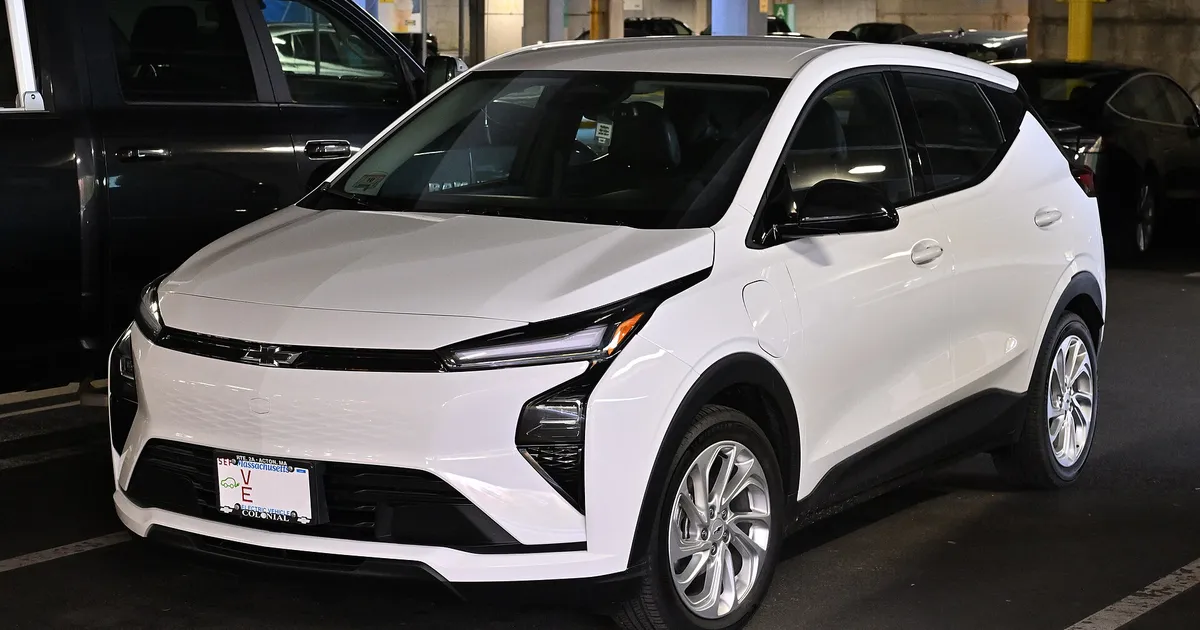
The new 2027 Chevrolet Bolt is the cheapest way into a small EV with real range. The LT costs $27,600 before destination, $28,995 delivered, and its EPA range is 262 miles, the same for the LT and the RS. The RS costs $31,600 before destination, $32,995 delivered. That makes the Bolt the lowest-priced pick here by $2,390 delivered against the EV3 Light, and the best value per mile of EPA range after the LEAF: $105.34 of MSRP per EPA mile, against $98.98 for the LEAF S+ and $109.00 for the EV3 Wind FWD.
The Bolt is a limited-run model, and Chevrolet has given no end date for the run, so treat “limited run” as a reason to buy sooner rather than later, not as a countdown. Do not confuse the two LT prices in circulation: the launch LT was $29,990 including destination, while the current cheaper LT is $27,600 plus $1,395 destination, which is $28,995 delivered. This guide uses the current price. The 262 mile figure is the official EPA rating, which supersedes GM’s 255 mile estimate from the reveal.
The Bolt is 169.6 inches long and seats five, with 16.2 cubic feet of cargo behind the second row and 56.3 cubic feet folded. Its 65 kWh battery uses LFP chemistry, which is why GM tells owners to charge to 100 percent regularly. It has a native NACS port, a single port for AC and DC, so it uses Tesla Superchargers with no adapter, and it charges from 10 to 80 percent in about 25 minutes on a DC fast charger, a GM estimate, at a peak above 150 kW. Its 70 percent planning window is 183.4 miles.
The Bolt’s weak spot is its turning circle, 37.7 feet, the widest here, so it needs more room to swing into a tight space than the shorter-feeling EV3. Buy the Bolt if you want the lowest price and the simplest charging story. Skip the RS unless you want its styling and extra equipment; it adds $4,000 and no range.
Nissan LEAF: the best all-rounder
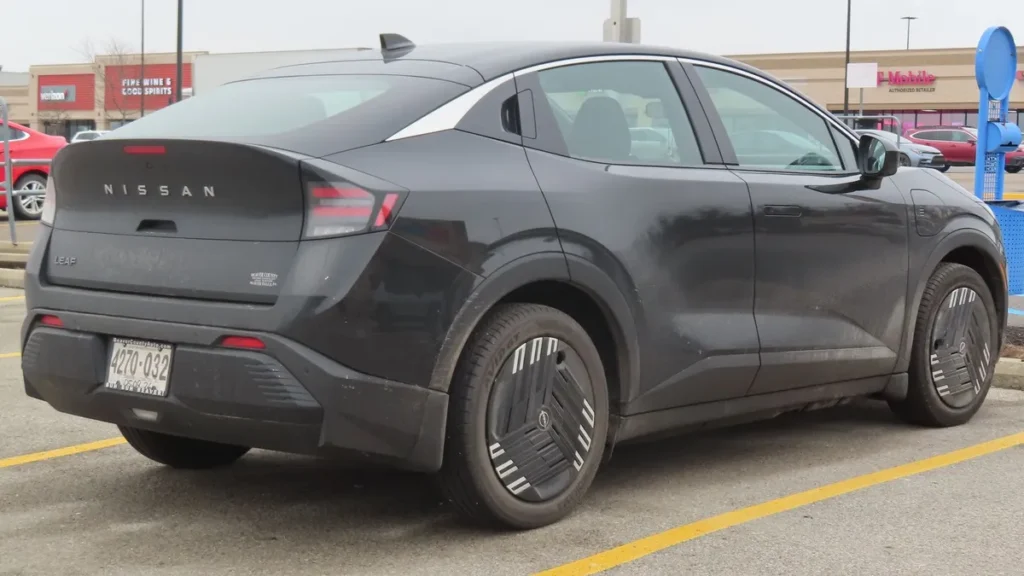
The redesigned 2026 LEAF is the best all-rounder in this guide: the longest range per dollar, a proper five-seat cabin, and the largest cargo space of the hatchback-shaped picks. The S+ costs $29,990 before destination, $31,565 delivered, with 303 miles of EPA range. That is $98.98 of MSRP per EPA mile, the lowest figure in this guide. The SV+ costs $34,230 before destination, $35,805 delivered, with 288 miles. The Platinum+ costs $38,990 before destination, $40,565 delivered, with 259 miles. The destination fee is $1,575 on every trim.
Range on the LEAF is set by wheel size, not just by trim: the S+ rides on 18-inch steel wheels for 303 miles, the SV+ on 18-inch alloys for 288 miles, and the Platinum+ on 19-inch wheels for 259 miles. Its 70 percent planning window is 212.1 miles on the S+. The battery is 75 kWh on every trim, liquid-cooled, with an 8-year or 100,000-mile warranty. Nissan USA calls it lithium-ion and does not publish the cathode chemistry, so this guide does not state one.
Charging is where the new LEAF is unusual. It has two ports: a J1772 port on the driver side for AC charging only, and a native NACS port on the passenger side for DC fast charging, so it uses Tesla Superchargers with no adapter. Peak DC charging is 150 kW, with 10 to 80 percent in about 35 minutes on a Nissan estimate. Genuine Nissan accessory CCS adapters are available for CCS-only DC stations, and a NACS to J1772 adapter is needed for Tesla home and destination AC chargers. The onboard AC charger is 7.2 kW per the US brochure; some secondary sources say 11 kW, and that conflict is unresolved, so this guide uses the brochure figure.
The LEAF is 173.4 inches long, the second longest pick, with a 35.4 foot turning circle and 20.0 cubic feet of cargo behind the second row, 55.5 folded. Do not shop for the base S with the 52 kWh battery: it is late availability only and is not a car you can buy now. Buy the S+ if you want the most range for the least money. Buy the SV+ only if you want its extra equipment enough to give up 15 miles of range.
Volvo EX30: the premium pick
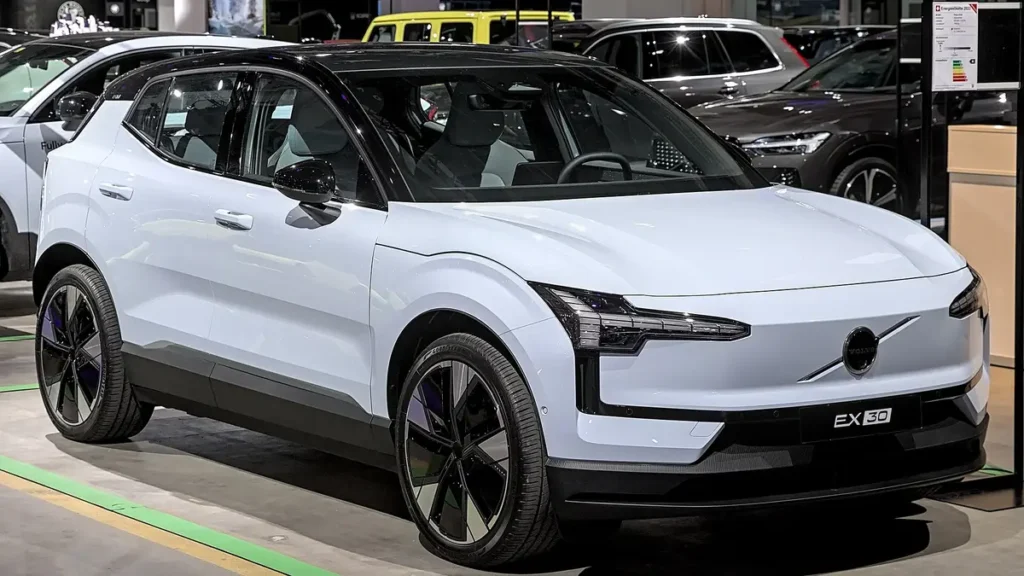
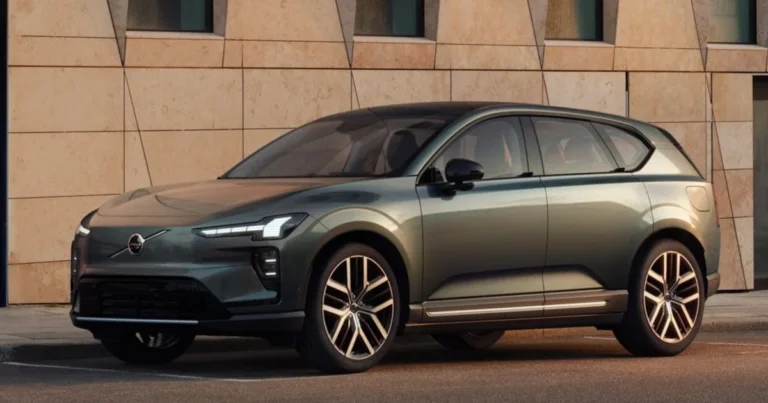
The EX30 is the premium small EV in this guide, with the highest peak charging power. The Single Motor Extended Range costs $38,950 before destination, and Volvo’s $40,345 headline price already includes the $1,395 destination fee, so do not add it again. Its EPA range is 261 miles. The Twin Motor Performance costs $44,950 in Plus trim and $46,650 in Ultra trim, with 253 miles of EPA range. The Cross Country Ultra costs $48,150, with 227 miles on 19-inch wheels.
One honest warning: the EX30 is remaining dealer stock only in the US. Volvo closed the order bank on March 20, 2026, and the EX30 is discontinued in the US after the 2026 model year. A reader who delays may find none. This guide lists it because stock is still findable now, not because it is a normal on-sale car.
At 166.7 inches long it is the second smallest pick, and its 35.1 foot turning circle is tight. It seats five, with 14.1 cubic feet of cargo behind the second row and 31.9 cubic feet folded, plus a small 0.25 cubic foot frunk. That is the smallest cargo space of the five-seat picks, so check it against a stroller or a weekly shop before you buy.
Its 69 kWh battery is NMC, and it charges at a peak of 153 kW, the highest peak in this guide, from 10 to 80 percent in about 26.5 minutes. Its 70 percent planning window is 182.7 miles. The 51 kWh LFP version was never sold in the US, so do not shop for one.
Charging uses CCS1 for DC and J1772 for AC. Volvo’s approved NACS Fast Charging Adapter, $230, gives access to Tesla Supercharger V3 and later stations, and the EX30 is explicitly listed as eligible. The adapter is DC-only; it does not work on Tesla home or destination AC chargers.
Buy the EX30 if you want the nicest cabin and the highest peak charging power in a genuinely small car, and you are ready to buy from remaining stock. Skip it if you need the most cargo space or the longest range; the EV3 and the LEAF beat it on both.
Kia Niro EV: the most cargo space
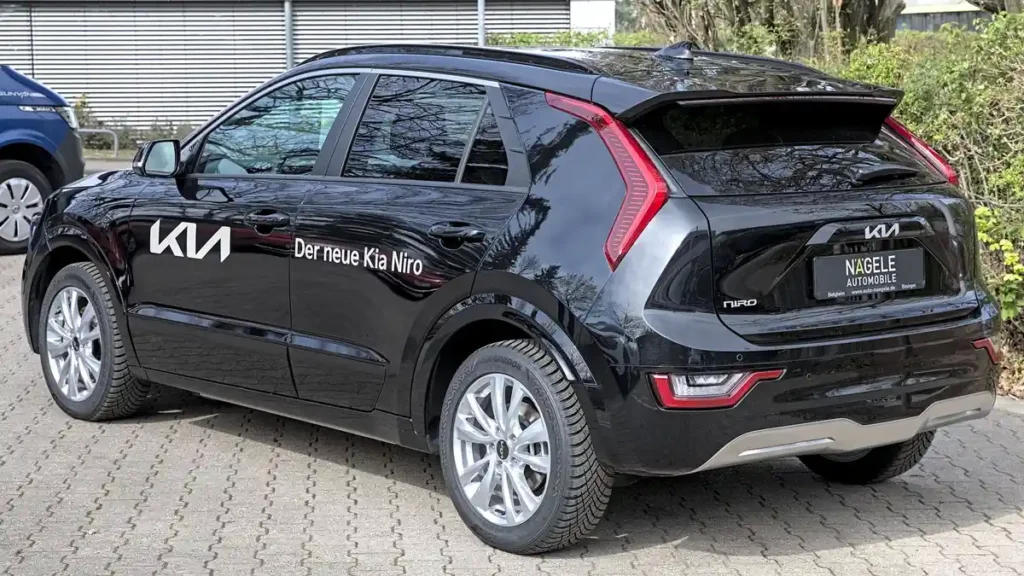
The Niro EV is the roomiest small EV in this guide, and the most expensive of the recommended trims. The Wind costs $39,700 before destination, $41,195 delivered, and the Wave costs $44,700 before destination, $46,195 delivered. Both trims share the same 253 miles of EPA range and the same 64.8 kWh usable battery, so buy the Wind unless you specifically want the Wave’s sunroof, Harman Kardon audio and ventilated seats.
The Niro EV is 174.0 inches long, the longest pick here, but it turns in 34.8 feet, tighter than the Bolt, and it carries the most: 22.8 cubic feet behind the second row and 63.7 cubic feet folded, the largest cargo figure in this guide. Its 70 percent planning window is 177.1 miles. It charges at a maximum of 85 kW per Kia, from 10 to 80 percent in under 45 minutes, with an 11 kW onboard AC charger.
The Niro EV is also the last of its line: 2026 is the final model year, there is no 2027 Niro EV, and the EV3 is its successor. Buy it while 2026 stock lasts if you need the most space in a small footprint and you like the Niro’s taller seating position. If you can wait, compare it with the EV3 Wind first: the EV3 costs $4,710 less delivered, goes 68 miles further, and charges faster, though it carries 7.2 cubic feet less with the seats folded.
Are small electric cars good on the highway?
Yes, with one condition: pick by range, not by size. Every pick in this guide is highway-capable, with a top speed and crash structure like any normal car. The difference is range. The 500e, at 149 miles of EPA range, is a poor highway car because it needs charging stops often. The EV3 Wind, the LEAF S+ and the Bolt, at 262 to 321 miles, handle highway trips the way any EV does: plan stops around their 70 percent windows of 183 to 225 miles.
Charging: which plug, which adapter
Three of the six picks have a native NACS port and use Tesla Superchargers with no adapter. The other three need an adapter, and the adapter is a separate purchase with its own rules.
| Pick | DC fast charge port | AC port | Adapter for Tesla Superchargers | 10 to 80 percent |
|---|---|---|---|---|
| Fiat 500e | CCS1 | J1772 | Stellantis Free2move NACS to CCS1 adapter, buy at dealer | 0 to 80 percent about 35 min |
| Kia EV3 | Native NACS | Native NACS | None needed | About 31 min (81.4 kWh) |
| Chevrolet Bolt | Native NACS | Native NACS | None needed | About 25 min (GM estimate) |
| Nissan LEAF | Native NACS | J1772 | None needed for DC; NACS to J1772 adapter needed for Tesla AC chargers | About 35 min (Nissan estimate) |
| Volvo EX30 | CCS1 | J1772 | Volvo NACS adapter, $230 | About 26.5 min |
| Kia Niro EV | CCS1 | J1772 | Kia NACS to CCS1 adapter, about $249 | Under 45 min (Kia) |
Two things to check before you buy any CCS1 car here. First, the free-adapter offers are over: Hyundai’s free adapter required purchase or lease by January 31, 2025, and Kia’s free adapter covered only the 2024 to 2025 EV9 and the 2024 EV6, not the Niro EV. A new buyer pays for the adapter. Second, an adapter for DC fast charging does not work for AC charging: the LEAF’s NACS port is DC only, and the EX30’s adapter is DC only, so Tesla home and destination AC chargers need a different adapter or a J1772 charger.
Small EVs you cannot buy in the US
If your search results are full of small EVs that sound perfect, check the country first. These are the ones US buyers ask about most, and none of them is sold in the US:
- New MINI Cooper SE: the new electric MINI hatchback is not imported to the US. MINI USA confirmed in December 2024 that it will not bring the new Cooper Electric or the Aceman in the near future, because they are built in China and face tariffs. MINI USA’s only electric car is the larger Countryman SE ALL4, from $45,200.
- Renault 5: not sold in the US. Renault has no US sales operation.
- Dacia Spring: not sold in the US. Dacia is a Europe-only budget brand with no US dealer network.
- VW ID. Polo: not sold in the US. Volkswagen of America confirmed in November 2026 that all versions of the ID. Polo are sold only in Europe.
- MG4: not sold in the US. MG has no US sales operation.
- Microlino, GEM e2, Eli ZERO: these are microcars or low-speed vehicles, not highway cars. They top out at 25 to 56 mph and are not sold through normal US car dealers as full cars.
- Smart EQ ForTwo: US sales ended in 2019. Any listing you find is a used car.
The trap is not that these are bad cars. The Renault 5 and the ID. Polo are genuinely good small EVs. The trap is that a US buyer cannot buy one, and a guide that ranks them without saying so wastes the reader’s time. This guide ranks only cars with a US price, a US dealer and a US EPA range figure.
Hyundai Kona Electric: check stock first
The Kona Electric deserves a mention, not a full pick. There is no 2026 model year: Hyundai is selling remaining 2025 stock, and stock was already very low in February 2026, at about 25 cars nationwide by one count. The SE costs $32,975 before destination, $34,470 delivered, with 200 miles of EPA range from its 48.6 kWh battery. The SEL and Limited, with the 64.8 kWh battery, reach 261 miles, but their prices are not published on Hyundai’s page, so this guide does not quote them as verified.
It is 171.5 inches long, turns in 34.8 feet, and carries 25.5 cubic feet behind the second row. It uses CCS1, and its free-adapter programme ended on September 30, 2025, so a new buyer pays for an adapter. If you find a 2025 SEL or Limited at a dealer near you, it is a good car at a fair price. If you cannot find one, the EV3 Wind is the car that replaces it, with more range and a native NACS port. A 2027 Kona Electric return has been announced as a single SE trim, with no US pricing yet.
Which of the best small electric cars should you buy?
- Cheapest small EV with real range: the 2027 Chevrolet Bolt LT, $28,995 delivered, 262 miles. Buy it if price matters most and you can live with the widest turning circle here.
- Longest range in a small car: the 2027 Kia EV3 Wind FWD, $36,485 delivered, 321 miles. Buy it if you want one small car to do everything, including highway trips.
- Best all-rounder: the 2026 Nissan LEAF S+, $31,565 delivered, 303 miles. Buy it if you want the most range per dollar and the biggest hatchback cargo space of the value picks.
- Smallest car: the 2026 Fiat 500e Pop, $37,695 delivered, 149 miles. Buy it only if your parking is genuinely tight and your driving is short and city-only.
- Premium pick: the 2026 Volvo EX30 Single Motor Extended Range, $40,345 delivered, 261 miles. Buy it from remaining stock if you want the nicest cabin and the highest peak charging power.
- Most space: the 2026 Kia Niro EV Wind, $41,195 delivered, 253 miles. Buy it while 2026 stock lasts if cargo space is the deciding factor.
If you are torn between the Bolt and the LEAF, the LEAF costs $2,570 more delivered and gives you 41 more miles of EPA range and 3.8 cubic feet more cargo with the seats up, plus a tighter turning circle. If you are torn between the EV3 and the LEAF, the EV3 costs $4,920 more delivered than the LEAF S+ and gives you 18 more miles, a native NACS port with Plug and Charge, and 6.1 cubic feet more cargo with the seats up. If your budget is under $30,000 delivered, the Bolt LT is the only pick that fits, and it is a good car, not a compromise.
If a small EV is too small, the next step up is a compact SUV with the same idea: our city-driving guide covers the same cars judged for daily commutes, and our family EV guide covers the three-row electrics for readers who need seven seats. If you are open to a used car, our used EV guide is the parent guide for this whole cluster, and our used EV under $20,000 guide shows what $10,000 to $30,000 buys.
How we checked
Checked November 23, 2026. Prices are the makers’ US MSRP before destination, with the destination fee stated separately and added to give the delivered price. Range is the EPA combined figure for the exact trim named, from fueleconomy.gov or the maker’s EPA table; where a maker gives only an estimate, this guide says so. Dimensions are the makers’ figures unless flagged as global specification. Charging times are the makers’ estimates unless stated otherwise.
No car in this guide was tested by EVPalace, and no dealer stock was audited: the EX30, the Niro EV and the Kona Electric are all remaining-stock cars, so check with a dealer before you travel. The federal new-EV tax credit is unavailable for vehicles acquired after September 30, 2025, so no price in this guide subtracts it. Research was assisted by AI and every figure was checked against the maker’s US page, press kit or fueleconomy.gov before publication. By Sam Wilson.
What is the smallest electric car you can buy in the US?
The Fiat 500e, at 143.0 inches long, is the smallest highway-capable electric car on sale new in the US. Smaller vehicles such as the Microlino are microcars or low-speed vehicles that cannot drive on highways and are not sold through normal US car dealers.
What is the cheapest small electric car in the US?
The 2027 Chevrolet Bolt LT, at $27,600 before destination and $28,995 delivered, with 262 miles of EPA range. It is the cheapest pick in this guide by $2,390 delivered against the next cheapest, the Kia EV3 Light.
Is the Kia EV3 sold in the US?
Yes. The 2027 Kia EV3 arrived in US showrooms on October 1, 2026, starting at $29,890 before destination. The Wind and Land front-wheel-drive versions reach 321 miles of EPA range, the longest of any small EV in this guide.
Which small electric car has the longest range?
The 2027 Kia EV3 Wind FWD and Land FWD, at 321 miles of EPA range. The 2026 Nissan LEAF S+ is next at 303 miles, and the 2027 Chevrolet Bolt LT is third at 262 miles.
Do small electric cars work for highway driving?
Yes, if you pick by range rather than size. The EV3 Wind, LEAF S+ and Bolt, at 262 to 321 miles of EPA range, handle highway trips with planned charging stops. The Fiat 500e, at 149 miles, is a poor highway car and suits city-only driving.