What Is the Fastest Electric Car? Top Speed vs 0-60
What is the fastest electric car? By top speed it is the Yangwang U9 Xtreme, which hit 312.66 mph on 1 November 2026, but it is a China-only car that no U.S. buyer can order. The quickest production EV from 0 to 60 mph is the Rimac Nevera R, at 1.74 seconds on the maker’s claim, and the fastest electric car you can actually buy in the U.S. today is the Lucid Air Sapphire: 1.89 seconds to 60 mph and a 205 mph top speed, at $249,000 before destination. This guide keeps those three answers separate, because “fastest” means different things, and most ranking pages mix them together.
Every figure in this guide is dated 25 November 2026 and labelled as a manufacturer claim or an independent test, with the tester named. Prices are U.S. MSRP before destination unless a delivered total is stated. The federal EV credit is not subtracted anywhere, because it is unavailable for vehicles acquired after 30 September 2025.
Fastest vs Quickest: Two Different Questions
Top speed and acceleration crown different cars, and that is the whole point of this guide. Top speed is the fastest a car can go, usually measured on a closed course with a professional driver. Acceleration, usually quoted as 0 to 60 mph, is how fast a car gets moving from a standstill. A car can win one and lose the other: the Rimac Nevera R is the quickest car here but not the fastest by top speed, and the Yangwang U9 Xtreme holds the top-speed record without a published 0 to 60 time.
Two details change how you should read every number below. First, Tesla’s 0 to 60 times subtract the first foot of rollout, the distance a car covers before the timing starts, which flatters the figure by about 0.2 seconds against a dead-stop start. Car and Driver’s test times use the same one-foot rollout, so a Car and Driver time and a Tesla claim are comparable, but neither is what you will see from a cold start at a traffic light.
Second, a manufacturer claim and an independent test are not the same kind of evidence. Porsche claims 2.1 seconds for the Taycan Turbo GT with the Weissach package, but Car and Driver timed a non-Weissach car at 1.9 seconds. When a test exists, this guide gives it next to the claim.
Fastest Electric Cars by Top Speed
The global top-speed ranking is led by cars almost nobody can buy. That is worth stating plainly, because the record holder is a 30-unit Chinese hypercar, and the next two are multi-million-dollar prototypes or near-prototypes. The fastest production EV top speed that a U.S. buyer can actually reach is the Rimac Nevera at 258 mph, verified in a 2022 run, and the fastest usable U.S. sedan is the Lucid Air Sapphire at 205 mph.
| Rank | Car | Top speed | 0-60 mph | Price | How the figure was verified |
|---|---|---|---|---|---|
| 1 | Yangwang U9 Xtreme (2026) | 312.66 mph | Not published | About $2.76 million, 30 units | FIA and Guinness-recognised record run, 1 Nov 2026, single direction, closed public road in Abu Dhabi |
| 2 | Aspark Owl SP600 (2024) | 272.6 mph | 1.72 s (Aspark claim) | About $3-3.5 million, 50 units | Guinness-certified run, 8 Jun 2024; production-intent prototype, not a normal production car |
| 3 | Rimac Nevera (2025) | 258 mph | 1.74 s (Rimac claim) | About $2.2 million, 150 units | Verified 2022 run, Racelogic V-Box, Papenburg |
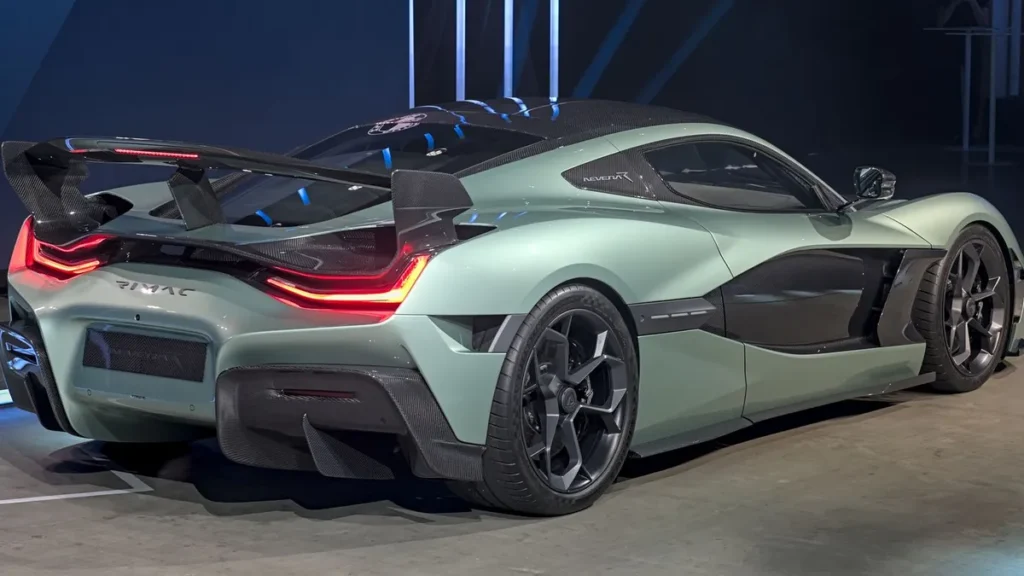
| 4 | Rimac Nevera R (2025) | 256 mph with manufacturer oversight; 268 mph reported from record runs | 1.74 s (Rimac claim); 1.66 s reported | About $2.5 million, 40 units | Rimac’s own release states 256 mph; CarBuzz and CarGurus report 267-268 mph from July 2025 record runs |
| 5 | Pininfarina Battista (2025) | 217 mph | 1.79 s (independent test) | About $2.2-2.5 million, 150 units | Manufacturer claim for top speed; 0-60 from an independent test reported by CarBuzz |
| 5 | Lotus Evija (2025) | 217 mph | Under 3.0 s 0-62 mph (Lotus claim) | About $2.0 million and up, 130 units | Manufacturer claim; not legal to drive in the U.S. |
| 7 | Lucid Air Sapphire (2026) | 205 mph | 1.89 s (Lucid claim) | $249,000 | Manufacturer claim, current 2026 Lucid page |
| 8 | Tesla Model S Plaid (2026) | 149 mph (19-inch wheels); 163 mph (21-inch); 200 mph with Track Package on earlier cars | 1.99 s (Tesla claim, rollout subtracted) | $124,990, final inventory only | Manufacturer claim; 2026 cap reported by The Drive and listed by KBB |
| 9 | Porsche Taycan Turbo GT Weissach (2026) | 190 mph | 2.1 s (Porsche claim); 1.9 s (Car and Driver test) | $243,700 | Manufacturer claim for top speed; independent test for 0-60 |
| 10 | Tesla Model 3 Performance (2026/2027) | 163 mph | 2.9 s (Tesla claim); 2.8 s (Car and Driver and MotorTrend tests) | $54,990 | Manufacturer claim; independent tests for 0-60 |
Can Any Electric Car Go Over 300 mph?
Yes. The Yangwang U9 Xtreme reached 312.66 mph (503.17 km/h) on 1 November 2026, making it the first production car ever to pass 500 km/h. The run was recognised by the FIA and Guinness World Records, but it was a single-direction run on a closed stretch of public road in Abu Dhabi, not a two-way average, and only 30 cars will be built. No U.S. buyer can order one.
Quickest Electric Cars by 0-60 mph
Acceleration is where electric cars embarrass petrol cars, because an electric motor makes full torque from zero revs. This ranking uses 0 to 60 mph only, and every entry carries its label: claim or test.
| Rank | Car | 0-60 mph | Top speed | Power | Price |
|---|---|---|---|---|---|
| 1 | Aspark Owl SP600 (2024, prototype) | 1.72 s (Aspark claim) | 272.6 mph | About 2,012 hp | About $3-3.5 million |
| 2 | Rimac Nevera R (2025) | 1.74 s (Rimac claim); 1.66 s reported | 256 mph with oversight | 2,107 hp | About $2.5 million |
| 3 | Pininfarina Battista (2025) | 1.79 s (independent test) | 217 mph | 1,900 hp | About $2.2-2.5 million |
| 4 | Lucid Air Sapphire (2026) | 1.89 s (Lucid claim) | 205 mph | 1,234 hp | $249,000 |
| 5 | Porsche Taycan Turbo GT (2026) | 1.9 s (Car and Driver test); 2.1 s (Porsche claim, Weissach) | 190 mph (Weissach) | 1,019 hp (1,092 hp with Attack Mode) | $243,700 |
| 6 | Tesla Model S Plaid (2026) | 1.99 s (Tesla claim, rollout subtracted); 2.3 s (Edmunds, real world) | 149 mph (19-inch) | 1,020 hp | $124,990 |
| 7 | Audi RS e-tron GT performance (2026) | 2.4 s (Audi claim) | 155 mph | 912 hp (launch control) | $170,500 |
| 8 | Tesla Model X Plaid (2026) | 2.5 s (Tesla claim) | 163 mph | 1,020 hp | $129,900 |
| 9 | Rivian R1T Quad (2026/2027) | 2.5 s (Rivian claim); 2.6 s (Car and Driver test) | 130 mph | 1,025 hp | $115,990 |
| 10 | Rivian R1S Quad (2026/2027) | 2.6 s (Rivian claim) | 130 mph | 1,025 hp | $121,990 |
| 10 | Tesla Cybertruck Cyberbeast (2026) | 2.6 s (Tesla claim and Car and Driver test agree) | 130 mph | 845 hp | $102,490 |
| 12 | Lotus Emeya R (2026) | 2.78 s (Lotus claim, 0-62 mph) | 159-160 mph | 905 hp | About $142,900 |
| 13 | Lotus Eletre R (2026) | 2.9 s (Lotus claim) | 155 mph | 905 hp | About $145,900 |
| 14 | Tesla Model 3 Performance (2026/2027) | 2.9 s (Tesla claim); 2.8 s (Car and Driver and MotorTrend tests) | 163 mph | 528 hp | $54,990 |
| 15 | Hyundai Ioniq 5 N (2026) | 3.25 s (Hyundai estimate, launch control and N Grin Boost) | 162 mph | 601 hp (641 hp with boost) | $59,900 |
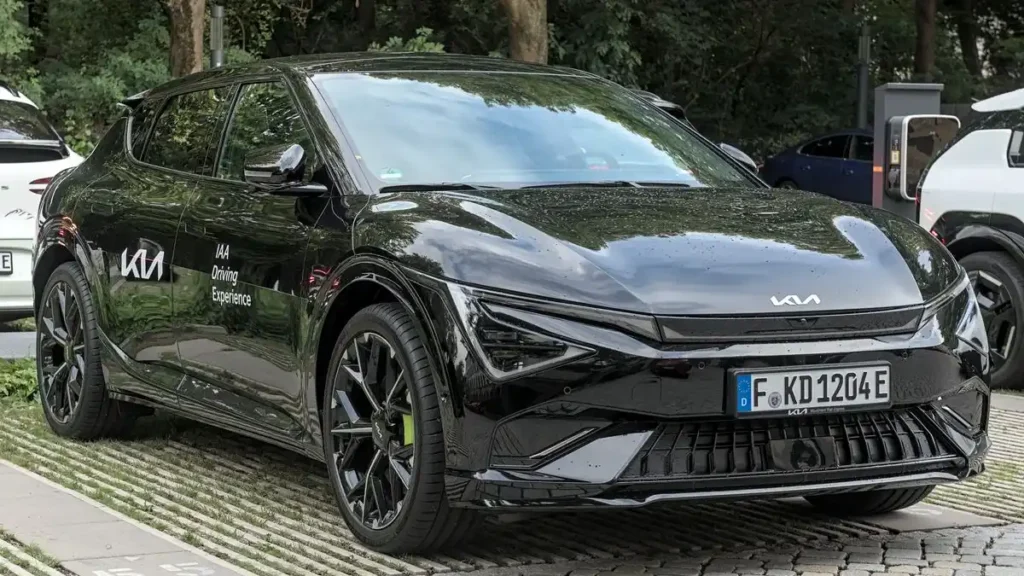
| 16 | Kia EV6 GT (2026 facelift) | 3.4 s (Kia claim, launch control) | 161 mph | 601 hp (641 hp with GT Mode) | $63,800 |
The most useful line in that table is not at the top. The Porsche Taycan Turbo GT at 1.9 seconds is the quickest car Car and Driver has ever tested, faster in independent testing than the Lucid Air Sapphire and the Tesla Model S Plaid, even though Porsche’s own claim of 2.1 seconds is slower than both rivals’ claims. Claims rank the cars one way; tests rank them another. That is why this guide labels every figure.
What Is the Fastest Electric Car You Can Buy in the U.S.?
The fastest electric car you can buy in the U.S. is the Lucid Air Sapphire, at 1.89 seconds to 60 mph and a 205 mph top speed. If money is no object, the Rimac Nevera R is faster on both measures, at 1.74 seconds and 256 mph with manufacturer oversight, but only 40 will be built at about $2.5 million each. For everyone else, the Sapphire is the answer, and the table below is the U.S.-buyable ranking that matters.
| Car | 0-60 mph | Top speed | Power | MSRP | Delivered | EPA range |
|---|---|---|---|---|---|---|
| Lucid Air Sapphire (2026) | 1.89 s, claim | 205 mph, claim | 1,234 hp | $249,000 | $250,500 | 427 mi |
| Porsche Taycan Turbo GT (2026) | 1.9 s, Car and Driver test | 190 mph, claim | 1,019 hp | $243,700 | Delivery fee not confirmed | 276 mi |
| Tesla Model S Plaid (2026) | 1.99 s, claim | 149 mph, claim | 1,020 hp | $124,990 | Delivery fee not confirmed | 368 mi |
| Audi RS e-tron GT performance (2026) | 2.4 s, claim | 155 mph | 912 hp | $170,500 | $171,795 | 278 mi |
| Tesla Model X Plaid (2026) | 2.5 s, claim | 163 mph | 1,020 hp | $129,900 | Delivery fee not confirmed | Not stated |
| Rivian R1T Quad (2026/2027) | 2.5 s, claim | 130 mph | 1,025 hp | $115,990 | $117,885 | 374 mi |
| Rivian R1S Quad (2026/2027) | 2.6 s, claim | 130 mph | 1,025 hp | $121,990 | $123,885 | Not stated |
| Tesla Cybertruck Cyberbeast (2026) | 2.6 s, claim and test | 130 mph | 845 hp | $102,490 | $104,735 | 320 mi |
| Tesla Model 3 Performance (2026/2027) | 2.9 s, claim | 163 mph | 528 hp | $54,990 | $56,380 | 314 mi (2026); 316 mi (2027) |
| Lotus Emeya R (2026) | 2.78 s, claim | 159-160 mph | 905 hp | About $142,900 | Delivery fee not found | 272 mi |
| Lotus Eletre R (2026) | 2.9 s, claim | 155 mph | 905 hp | About $145,900 | Delivery fee not found | 266 mi |
| Hyundai Ioniq 5 N (2026) | 3.25 s, estimate | 162 mph | 601 hp | $59,900 | $61,500 | 221 mi |
| Kia EV6 GT (2026 facelift) | 3.4 s, claim | 161 mph | 601 hp | $63,800 | $65,345 | 231 mi |
A note on the two gaps in that table. Porsche and Tesla do not publish a single destination figure this guide could verify for the Taycan Turbo GT or the Model S Plaid, so no delivered total is stated for them. The Lotus prices come from a secondary source, AutoEdgeView, because Lotus does not list U.S. prices for the Emeya R and Eletre R on its own site in the sources this guide could verify, so treat those two prices as approximate.
Lucid Air Sapphire: The Fastest Usable U.S. Sedan
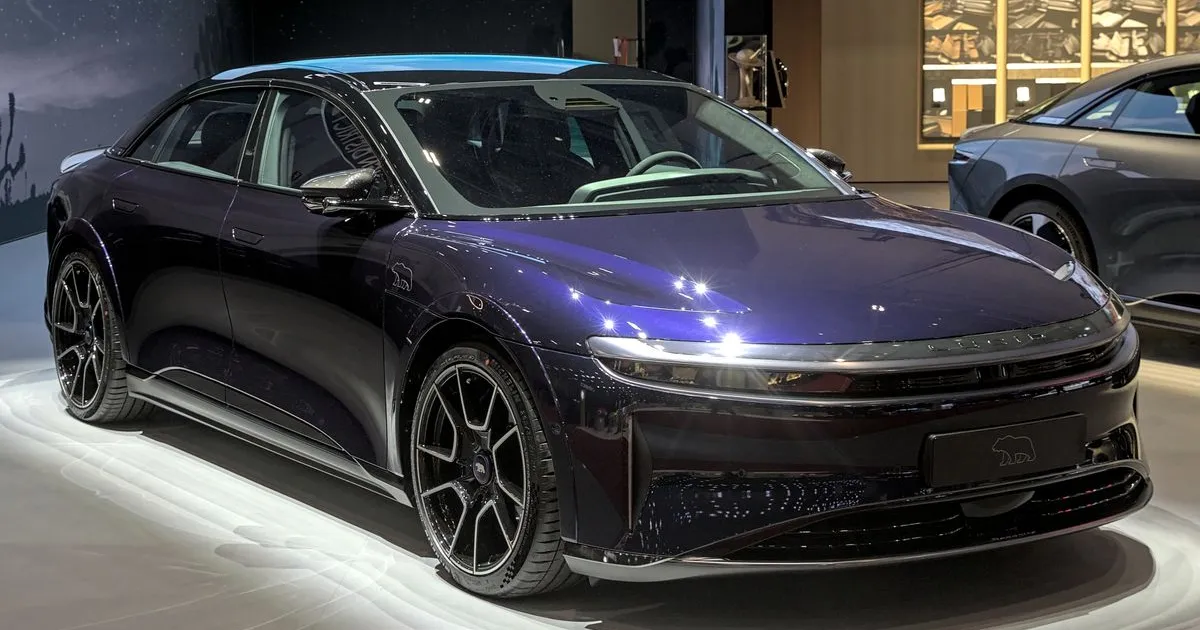
The Lucid Air Sapphire is the fastest electric car a U.S. buyer can realistically own and drive every day. Its tri-motor powertrain makes 1,234 horsepower, Lucid claims 0 to 60 mph in 1.89 seconds, a quarter mile in 8.95 seconds at 158 mph, and a 205 mph top speed, per Lucid’s current 2026 figures. It also has an EPA-rated 427 miles of range, which is the longest range of any car on this page and the reason the Sapphire is usable in a way the hypercars are not. Our longest-range EV guide explains how that range compares across the whole market.
The Sapphire costs $249,000 before destination, or $250,500 delivered with Lucid’s $1,500 destination charge. That is $124,010 more than the Tesla Model S Plaid’s $124,990, for 0.10 seconds of claimed 0 to 60 advantage and 56 mph of top speed. The Sapphire is the fastest usable sedan; it is not the best value for speed. One correction to older pages: some aggregators still list a 235 mph top speed for the Sapphire. Lucid’s current 2026 page says 205 mph, and that is the figure this guide uses.
Porsche Taycan Turbo GT: The Quickest Car Ever Tested by Car and Driver
Porsche claims 2.2 seconds to 60 mph for the Taycan Turbo GT, or 2.1 seconds with the Weissach package. Car and Driver timed a non-Weissach car at 1.9 seconds, with two runs of 1.898 and 1.910 seconds, making it the quickest car the magazine has ever tested in its 69-year history. The test car ran on Pirelli P Zero Trofeo RS tyres on a regular concrete surface, not a prepared drag strip, and the result was repeatable across both directions. A Weissach car, which drops about 165 pounds and its rear seats, could in theory go quicker still.
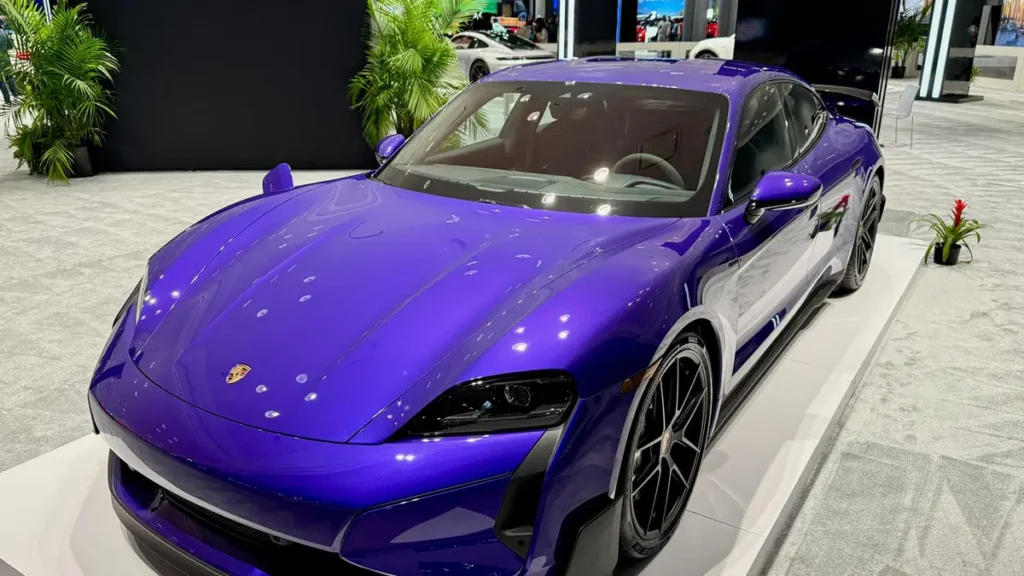
The Taycan Turbo GT makes 1,019 horsepower, or 1,092 horsepower for two seconds with Attack Mode, and tops out at 180 mph, or 190 mph with the Weissach package. It costs $243,700 for 2026, and its EPA range is 276 miles, or 269 miles with the Weissach package. The Taycan also
features in our best luxury electric cars guide, which compares it on comfort and range rather than speed. At the Nürburgring it set a production-EV lap record of 6 minutes 55.533 seconds with the Manthey kit, per evo’s 2026 roundup, which is the handling counterpoint to the straight-line numbers: this is the fast EV that also turns.
Tesla Model S Plaid: Final-Inventory Speed, With a Catch
The Tesla Model S Plaid is the trap in every “fastest electric car” list, because the familiar figures are out of date. Production ended in May 2026, custom orders closed in late March 2026, and only remaining inventory is for sale. In April 2026 Tesla raised the price of every remaining car by $15,000, so the Plaid now costs $124,990, not the $109,990 most pages still show, per the final-inventory price reporting. And for the 2026 car Tesla capped the top speed at 149 mph on 19-inch wheels, down from the 200 mph quoted for earlier cars. The 200 mph figure now needs the Track Package, and only on earlier cars.
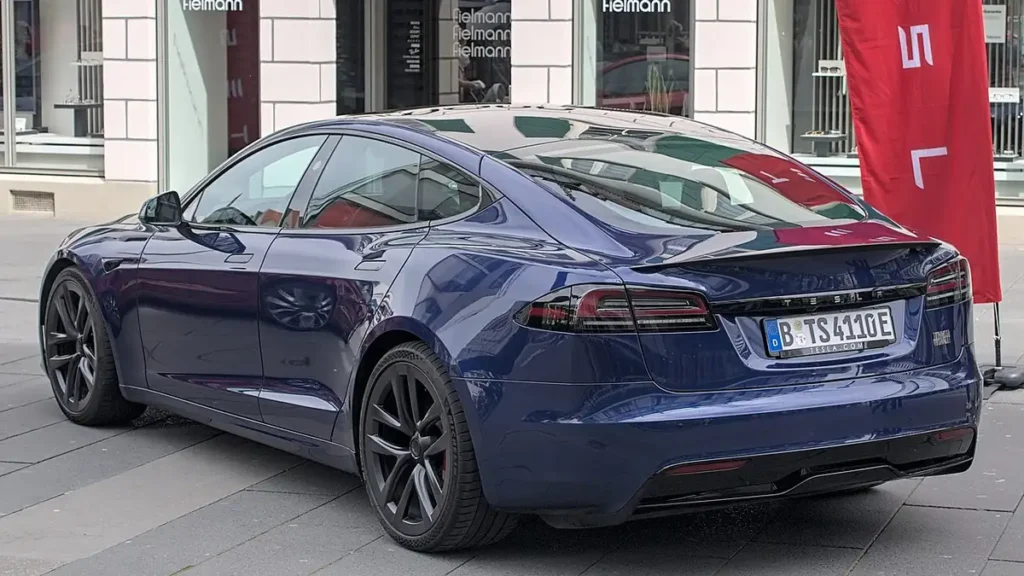
What has not changed is the launch. Tesla claims 1.99 seconds to 60 mph with the first foot of rollout subtracted, and Edmunds recorded 2.3 seconds in real-world testing. The tri-motor Plaid makes 1,020 horsepower, and the EPA range is 368 miles on 19-inch wheels or 309 miles on 21-inch wheels. At $124,990 it is still the cheapest way to a sub-2-second claim, and it is the only car in this guide you cannot order any more. If you are cross-shopping Tesla, our guide to whether a Tesla is a good first car covers the ownership side that speed figures do not.
Tesla Model 3 Performance: The Fastest EV Under $60,000
The Model 3 Performance is the fastest electric car most people can actually afford, and it is the cheapest car in this guide by a wide margin. Tesla claims 2.9 seconds to 60 mph with rollout subtracted, and both Car and Driver and MotorTrend timed it at 2.8 seconds, with an 11.0-second quarter mile at 125 mph, per the tested figures.
Its top speed is 163 mph, which is faster than the Model S Plaid’s 149 mph cap for 2026. In October 2026 Tesla raised its peak power from 510 to 528 horsepower without changing the price or the 0 to 60 claim, and the EPA range rose to 316 miles for the 2027 car (314 miles for the 2026 car).
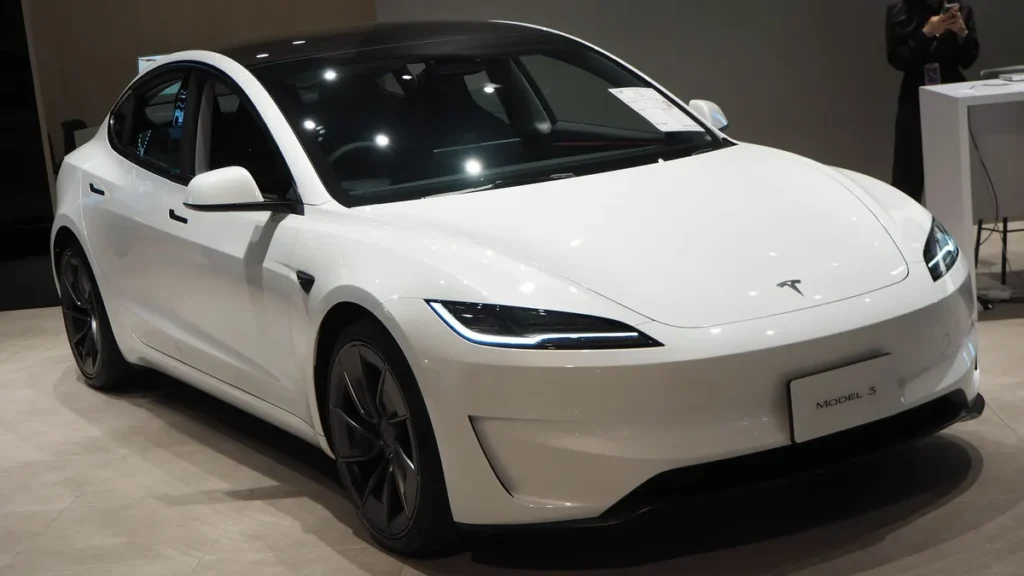
The Model 3 Performance costs $54,990 before destination, or $56,380 delivered with Tesla’s $1,390 destination charge (a $250 order fee brings the with-fees total to $56,630). That is $70,000 less than the Model S Plaid’s $124,990 MSRP before destination, for a car that is 0.9 seconds slower to 60 mph on the claims but 14 mph faster at the top end. For a buyer who wants speed and still needs a daily car, this is the value pick in the whole guide.
Hyundai Ioniq 5 N and Kia EV6 GT: Fast SUVs Under $66,000
The Ioniq 5 N and EV6 GT are the two fast electric SUVs a normal budget reaches, and they are the only cars here that make speed fun rather than just fast. The Ioniq 5 N makes 601 horsepower in normal driving and 641 horsepower for 10 seconds with N Grin Boost, and Hyundai estimates 0 to 60 mph in 3.25 seconds with launch control and the boost engaged, on the way to a 162 mph top speed. Hyundai cut the price by $6,300 for 2026, to $59,900, or $61,500 delivered with the $1,600 destination charge, and the 2026 car gains a native NACS port for Tesla Supercharger access, per the 2026 announcement coverage. Its EPA range is 221 miles.
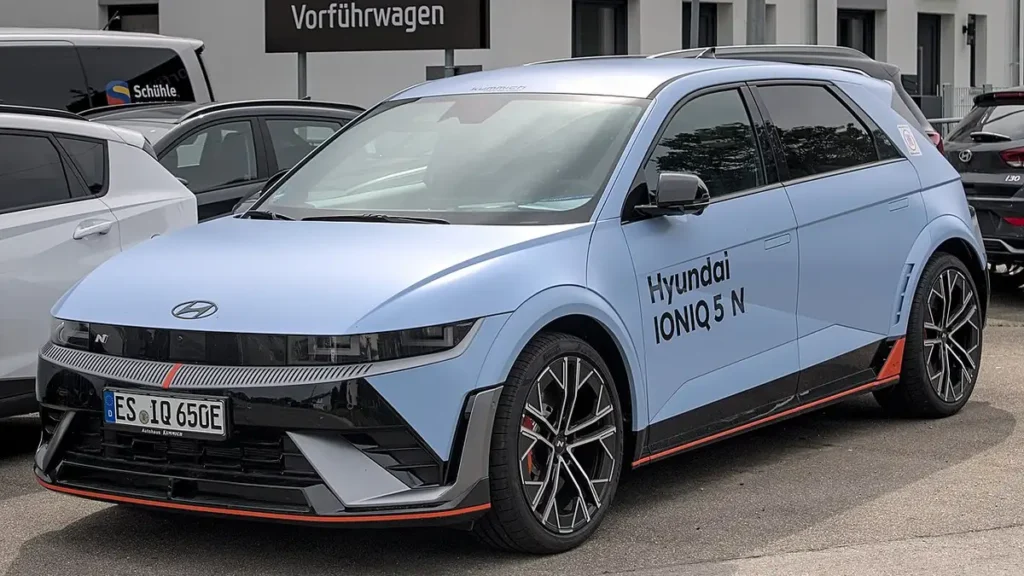
The Kia EV6 GT is the Ioniq 5 N’s platform twin with a different character. The facelifted 2026 car makes 601 horsepower, or 641 horsepower with GT Mode and launch control, claims 3.4 seconds to 60 mph, and tops out at 161 mph, per the facelift test coverage. It costs $63,800, or $65,345 delivered with the $1,545 destination charge, and its EPA range is 231 miles. Be careful with older pages: the pre-facelift EV6 GT made 576 horsepower, cost about $61,600, and managed 206 miles of EPA range. The facelift figures in this guide are the 2026 ones.
A worked comparison shows what the numbers mean. The Model 3 Performance, at $56,380 delivered, is $5,120 cheaper than the Ioniq 5 N at $61,500 delivered, 0.35 seconds quicker to 60 mph, 1 mph faster at the top end, and goes 93 miles farther per charge on EPA range (314 miles against 221 miles). The Ioniq 5 N answers with a hatchback body, a fake gearbox that makes it more engaging, and a drift mode. Speed alone would pick the Tesla; the driving experience is the reason to pick the Hyundai.
Rivian R1T Quad and Tesla Cyberbeast: The Fastest Electric Pickups
The fastest electric pickup depends on whose stopwatch you trust. Rivian claims 2.5 seconds to 60 mph for the R1T Quad, Tesla claims 2.6 seconds for the Cyberbeast, and Car and Driver timed both at 2.6 seconds, per the Rivian specification guide and the Cyberbeast test reporting. Both are limited to 130 mph, and both make over 800 horsepower: 1,025 for the Rivian, 845 for the Cyberbeast.
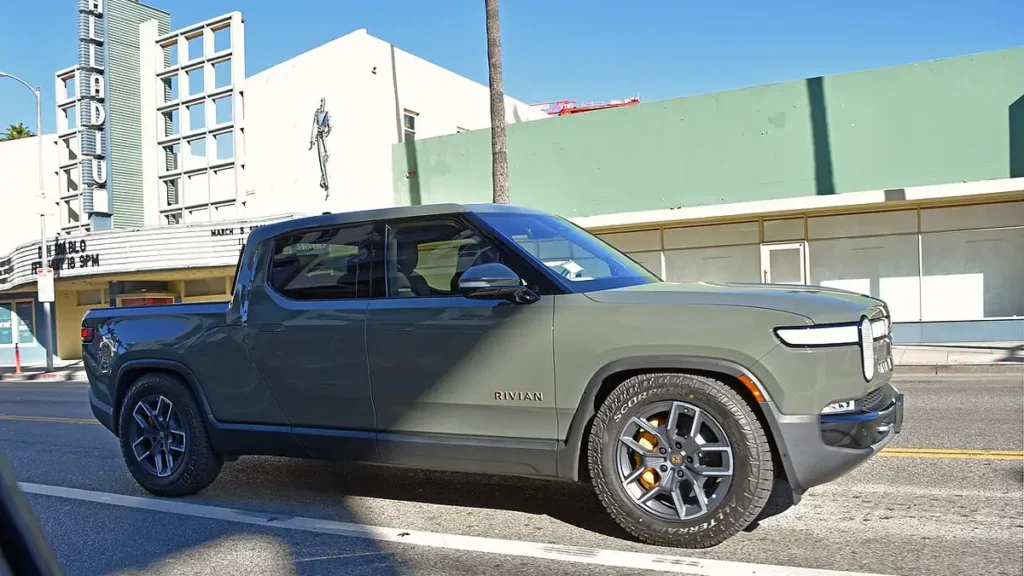
The prices are far apart. The R1T Quad costs $115,990, or $117,885 delivered with the $1,895 destination charge, and its EPA range is 374 miles on 22-inch wheels. The Cyberbeast costs $102,490, or $104,735 delivered with the $1,995 destination charge and $250 order fee, and its EPA range is 320 miles. Tesla raised the Cyberbeast price on 6 November 2026 from $99,990, so older pages showing $99,990 are out of date. The R1S Quad, the SUV version, claims 2.6 seconds and costs $121,990, or $123,885 delivered. Production of the Cybertruck is winding down around mid-2027, so the Cyberbeast is a final-run buy.

Audi RS e-tron GT Performance and Lotus Emeya R: The $140,000-Plus Tier
Two cars sit between the $130,000 band and the quarter-million Sapphire, and neither is the fastest at anything, which is itself useful information. The Audi RS e-tron GT performance claims 2.4 seconds to 60 mph with 912 horsepower on launch control, tops out at 155 mph, and costs $170,500, or $171,795 delivered. Its EPA range is 278 miles and it charges at up to 320 kW. Edmunds reported in October 2026 that 2026 supply was effectively gone, with 52 cars nationwide, so this is a car to ask a dealer about rather than assume you can order.
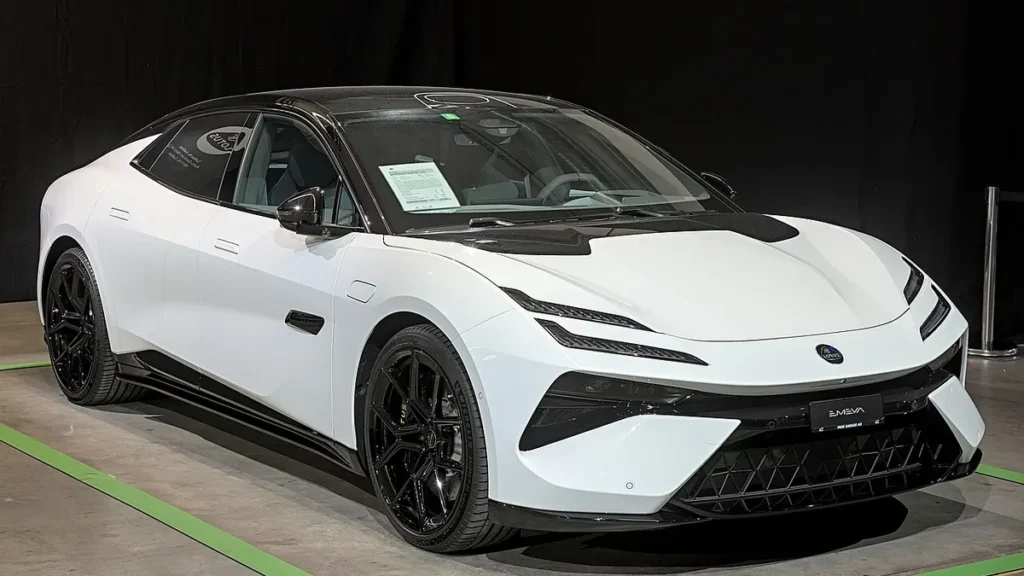
The Lotus Emeya R claims 2.78 seconds to 62 mph with 905 horsepower and a 159 to 160 mph top speed, at about $142,900, per Lotus’s 2026 update coverage. Its SUV twin, the Eletre R, claims 2.9 seconds and 155 mph at about $145,900.
Both Lotus prices come from a secondary source, because Lotus does not list U.S. prices for these trims on its own site in the sources this guide could verify, so treat them as approximate. One low-authority site claims 186 mph for the Emeya R; Lotus’s own figures say 159 to 160 mph, and this guide uses the maker’s number. The Emeya R is the fastest Lotus sedan, but it is slower than the Audi, slower than the Plaid, and more expensive than both, which is why it sits in this section rather than the headline ranking.
The Fastest EV at Every Budget
The fastest electric car depends on what you can spend, so here is the honest answer by budget band, using delivered prices dated 25 November 2026 and U.S.-buyable cars only.
| Budget | Fastest car | 0-60 mph | Top speed | Delivered price | EPA range |
|---|---|---|---|---|---|
| Under $60,000 | Tesla Model 3 Performance | 2.9 s, claim; 2.8 s, test | 163 mph | $56,380 | 314 mi (2026) |
| Under $130,000 | Tesla Model S Plaid (by 0-60) | 1.99 s, claim | 149 mph | $124,990 MSRP | 368 mi |
| Under $130,000 | Tesla Model 3 Performance (by top speed) | 2.9 s, claim | 163 mph | $56,380 | 314 mi (2026) |
| Unlimited | Lucid Air Sapphire | 1.89 s, claim | 205 mph | $250,500 | 427 mi |
| Unlimited, money no object | Rimac Nevera R | 1.74 s, claim | 256 mph with oversight | About $2.5 million | Not published |
The under-$130,000 band holds a surprise that shows why the two rankings must stay separate. By acceleration, the Model S Plaid wins the band at 1.99 seconds. By top speed, the Model 3 Performance wins it at 163 mph, because the 2026 Plaid is capped at 149 mph. A buyer who cares about top speed and has $130,000 to spend should not buy the Plaid for its top speed. The Cyberbeast at $104,735 delivered and the R1T Quad at $117,885 delivered are the truck picks in the same band. If you want a non-Tesla option in this price range, our best non-Tesla EV guide covers the alternatives.
What the Headline Number Actually Requires
A 1.9-second launch is not something a car does every time you press the pedal. It needs a set of conditions, and each tier of this guide needs different ones.
For the sub-2-second sedans, the list is long. The battery must be warm and near full charge, the tyres must be warm performance tyres, launch control must be engaged, and the surface must be clean and dry. The Taycan Turbo GT’s Car and Driver test used Pirelli P Zero Trofeo RS tyres, which are effectively track tyres.
The test car did not have the Weissach package, which drops about 165 pounds and its rear seats, so a Weissach car could in theory go quicker still, but no magazine test time for one has been published that this guide could verify. The Model S Plaid’s 1.99 seconds needs the first foot of rollout subtracted and a prepped surface; Edmunds recorded 2.3 seconds in real-world testing. The Sapphire’s 1.89 seconds is Lucid’s claim; this guide found no published independent test time to set against it.
For the top-speed figures, the conditions are stricter still. The Yangwang’s 312.66 mph needed a closed 6.2-mile stretch of public road in Abu Dhabi, two days of attempts, and changes to the rear wing, damping and tyre pressures overnight. The Nevera R’s 256 mph needs manufacturer oversight, and its standard top speed is 217 mph. The Model S Plaid’s 200 mph figure belonged to earlier cars with the Track Package; the 2026 car is capped at 149 mph on 19-inch wheels. A top speed you cannot reach on a public road, and in some cases cannot reach at all without paying for extra hardware, is a different kind of number from a 0 to 60 time.
The range penalty is the cost that shows up every day. Performance trims give up range against the same model’s normal version, and a 70 percent planning window, the share of the battery you can actually use between a 90 percent departure charge and a 20 percent arrival reserve, makes the gap concrete. The Sapphire’s 427 miles of EPA range leaves a 298.9-mile planning window. The Model 3 Performance’s 314 miles leaves 219.8 miles. The Ioniq 5 N’s 221 miles leaves 154.7 miles, which is the number that decides whether a fast SUV is also a usable road-trip car. Our longest-range EV guide ranks the cars that maximise that window.
What the Numbers Do Not Tell You
Three things matter more than the headline figures once you own the car. First, repeatability. A 1.9-second launch heats the battery and tyres, and the second launch is slower than the first. A car that does 1.9 seconds once on a warm day with a full battery will do something noticeably slower on a cold morning at 40 percent charge.
Second, tyres and brakes. The tyres that make a 1.9-second launch possible wear fast and cost far more than normal tyres, and the brakes on a 5,200-pound Taycan Turbo GT work hard at any speed. Third, the weather. A launch on cold asphalt with summer tyres is slower and less safe than the same launch in summer, and winter tyres change the grip entirely. Our snow guide explains what actually matters for traction when the temperature drops.
The quarter mile and the Nürburgring are the two numbers that add context the headline figures miss. The quarter mile shows whether a car keeps pulling after 60 mph: the Sapphire covers it in 8.95 seconds at 158 mph. The Nürburgring lap shows whether a car can turn and brake as well as it accelerates: the Taycan Turbo GT’s 6 minutes 55.533 seconds is a production-EV record, and the Ioniq 5 N’s 7 minutes 45.59 seconds shows a much cheaper car that is still genuinely fast around a circuit (both lap times per evo).
Not Yet Real: Cars That Do Not Count
Two cars appear in almost every “fastest electric car” list and belong in neither ranking, because neither one exists as a car you can buy.
Is the Tesla Roadster Faster Than the Rimac Nevera?
Nobody knows, because the next-generation Tesla Roadster has not been built, tested or sold. Tesla and Elon Musk have claimed 1.9 seconds to 60 mph and a top speed above 250 mph, but those are claims about a car with no independent test, no price, and a production target of 2028. A claim is not a measurement, and this guide does not rank claims against measurements.
The McMurtry Spéirling is the other name that shows up, with a claimed 1.4 to 1.55 seconds to 60 mph from a fan-driven single prototype. It is not in production, and no customer car exists. The Aspark Owl SP600, which does hold a Guinness-certified 272.6 mph run, is a production-intent prototype rather than a normal production car, which is why it sits in the global table with that label and not in the U.S.-buyable ranking. When the Roadster or the Spéirling becomes a real production car with a real test, this guide will need an update.
How to Choose
What is the fastest electric car for you? The one that is fastest at the thing you will actually do. If you want the fastest car you can buy in the U.S. and drive every day, buy the Lucid Air Sapphire. If you want the quickest car an independent magazine has ever tested, buy the Porsche Taycan Turbo GT. If you want the most speed for the least money, buy the Tesla Model 3 Performance.
If you want a fast electric pickup, the Cyberbeast is $13,150 cheaper delivered than the R1T Quad and matches it in independent testing, while the Rivian goes 54 miles farther per charge. And if you want the world record, the Yangwang U9 Xtreme holds it at 312.66 mph, but you cannot buy one in the U.S., and that is the difference between the fastest electric car in the world and the fastest electric car for you.
Method and Author Note
This guide was researched on 25 November 2026 from manufacturer pages, EPA and fueleconomy.gov data, FIA and Guinness World Records announcements, and named independent tests from Car and Driver, MotorTrend and Edmunds. Every figure is labelled as a manufacturer claim or an independent test, and prices are U.S. MSRP before destination unless a delivered total is stated. Where sources disagreed, this guide states both figures and attributes each, rather than picking one silently. Where a figure could not be verified, such as the Porsche and Lotus destination charges, no figure is stated.
Vehicles were not tested by the author, and dealer stock was not audited, so check the price and availability of the exact car you want before you buy. This article was prepared with substantive AI assistance and reviewed against the sources cited. Sam Wilson is the editorial pen name for EVPalace.com.
Frequently Asked Questions
What is the fastest electric car in the world?
The Yangwang U9 Xtreme is the fastest electric car in the world by top speed, at 312.66 mph (503.17 km/h), set on 1 November 2026 on a closed public road in Abu Dhabi and recognised by the FIA and Guinness World Records. It is a China-only car, only 30 will be built, and no U.S. buyer can order one.
What is the fastest electric car you can buy in the U.S.?
The Lucid Air Sapphire is the fastest electric car you can buy in the U.S., at 1.89 seconds to 60 mph and a 205 mph top speed, for $249,000 before destination. The Rimac Nevera R is faster at 1.74 seconds and 256 mph with manufacturer oversight, but only 40 will be built at about $2.5 million each.
What is the quickest electric car from 0 to 60 mph?
The Rimac Nevera R is the quickest production EV from 0 to 60 mph on the maker’s claim, at 1.74 seconds. The quickest car an independent magazine has actually tested is the Porsche Taycan Turbo GT, which Car and Driver timed at 1.9 seconds, faster than Porsche’s own 2.1-second claim.
Is the Tesla Roadster faster than the Rimac Nevera?
Nobody knows. The next-generation Tesla Roadster has not been built, tested or sold, so its claimed 1.9 seconds and 250-plus mph top speed are claims, not measurements. The Rimac Nevera R’s 1.74 seconds is a manufacturer claim about a real production car, and the Taycan Turbo GT’s 1.9 seconds is an independent test.
Can any electric car go over 300 mph?
Yes. The Yangwang U9 Xtreme reached 312.66 mph on 1 November 2026, the first production car ever to pass 500 km/h. The run was a single-direction attempt on a closed public road, and the car is limited to 30 units and not sold in the U.S., so no other production EV has gone over 300 mph.