Best EV Under 50k: 10 U.S. Picks, Prices and Ranges
The best EV under 50k for most buyers is the 2026 Nissan LEAF S+ at $31,565 delivered, because it gives 303 miles of EPA range for about $104 per mile of range, the lowest figure in this guide. If your budget is tighter, the 2027 Chevrolet Bolt LT is the cheapest new EV in America at $28,995 delivered with 262 miles of range. Every price in this guide was checked on 26 November 2026, and every range figure is tied to the exact trim that earns it.
This guide compares 10 picks under a $50,000 MSRP cutoff, and then lists every other new EV that fits the same cutoff, so you can see the whole market before you choose. Each pick shows three prices: the MSRP, the destination fee, and the delivered price you actually pay before tax and dealer add-ons. No federal tax credit is subtracted from any price, because the credit is no longer available for vehicles acquired after 30 September 2025.
What “under $50,000” means in this guide
The cutoff in this guide is the MSRP before destination: a car qualifies if its base MSRP is under $50,000. That is the same rule the top guides use, and it is the only rule that works, because destination fees run from $995 to $2,045 and would otherwise hide the real price gap between two cars.
Every pick therefore shows all three numbers. The MSRP is the maker’s base price. The destination fee is the maker’s delivery charge, which is not negotiable in the usual sense and is the same at every dealer. The delivered price is the two added together, before tax, registration, options and dealer add-ons. A car can qualify on MSRP and still cross $50,000 delivered: the Cadillac Optiq Luxury RWD ($51,790) and the Volkswagen ID.4 AWD Pro ($50,470) both do, and they are flagged where they appear.
Two more rules shape this guide. First, only new cars are listed. Used EVs are a different market with different checks, and our best used EV under $20k guide covers those. Second, only cars on sale in the U.S. now are listed. Announced cars that are not delivering yet, such as the Slate truck and the Rivian R2 standard version, are in the excluded list at the end, not in the tables.
Which EVs under $50k qualify for the federal tax credit?
None. The federal new-vehicle tax credit ended for vehicles acquired after 30 September 2025, so no EV in this guide gets $7,500 taken off its price. Any page that still subtracts the credit from a 2026 or 2027 price is out of date.
The 10 best EVs under $50k at a glance
The table below is ordered by delivered price, cheapest first. Cost per EPA mile is the delivered price divided by the EPA combined range, and it is the fairest way to compare value across cars with different ranges. The charging port column tells you whether the car plugs straight into a Tesla Supercharger (native NACS) or needs an adapter.
| Pick | Delivered price | EPA range | Cost per EPA mile | Charging port |
|---|---|---|---|---|
| 2027 Chevrolet Bolt LT | $28,995 | 262 mi | $110.67 | Native NACS |
| 2026 Nissan LEAF S+ | $31,565 | 303 mi | $104.17 | Native NACS |
| 2027 Kia EV3 Wind FWD | $36,485 | 321 mi | $113.66 | Native NACS |
| 2026 Chevrolet Equinox EV LT 1 FWD | $36,795 | 319 mi | $115.36 | CCS1, adapter $299 |
| 2027 Tesla Model 3 RWD | $38,630 | 321 mi | $120.34 | Native NACS |
| 2026 Hyundai Ioniq 5 SE, long range | $39,100 | 318 mi | $122.96 | Native NACS |
| 2026 Toyota bZ XLE FWD Plus | $39,350 | 314 mi | $125.32 | Native NACS |
| 2026 Subaru Solterra Premium AWD | $39,945 | 288 mi | $138.70 | Native NACS |
| 2027 Tesla Model Y RWD | $41,630 | 321 mi | $129.69 | Native NACS |
| 2026 Kia EV6 Light Long Range RWD | $42,745 | 319 mi | $134.01 | Native NACS |
The Model Y RWD figure needs one note. The EPA dataset on fueleconomy.gov still lists the 2027 Model Y RWD at 321 miles, while Tesla’s own configurator claims 348 miles. This guide uses the EPA figure of 321 miles and notes Tesla’s claim in the Model Y section, because the EPA figure is the one that can be compared with every other car here.
What is the best-value EV under $50,000?
The 2026 Nissan LEAF S+ is the best value in this guide, at $104.17 per EPA mile: $31,565 delivered for 303 miles of EPA range. The Bolt is cheaper to buy, but the LEAF gives you 41 more miles for $2,570 more, which is why it wins on value.
The 10 cheapest cars per EPA mile, in order, are the LEAF S+ ($104.17), the Bolt LT ($110.67), the EV3 Wind ($113.66), the Equinox EV LT 1 ($115.36), the Model 3 RWD ($120.34), the Model 3 Premium RWD ($121.57), the Ioniq 5 SE long range ($122.96), the bZ XLE Plus ($125.32), the Model Y RWD ($129.69) and the EV6 Light Long Range ($134.01). The Model 3 Premium RWD is not one of the 10 picks, but it earns its place in this list: at $44,130 delivered for 363 miles, it has the longest EPA range of any car under $50,000 MSRP.
How we picked and checked these cars
Every price and range in this guide comes from a primary source checked on 26 November 2026: the maker’s U.S. product page or a window sticker for the price, and the single-vehicle page on fueleconomy.gov for the EPA range. Where a fueleconomy.gov page could not be opened, the figure is marked as a maker estimate or a secondary-source figure in the specs sheet, and the article says so. Tesla prices come from Tesla’s configurator, not from fueleconomy.gov, because that site’s MSRP column is out of date for Tesla.
Three checks shaped the list. First, the range must belong to the trim with the headline price. Several guides show a car’s longest range next to its lowest price, but those two figures often describe different batteries, so this guide ties each range to its exact trim and battery. Second, charging access is checked as three separate things: the port on the car, the adapter if one is needed, and whether the network actually lets that car charge. A plug that fits does not prove access. Third, availability is checked, not assumed. Two models in the full market table are remaining-stock only, and three well-known names have no 2026 U.S. model year at all, which is why they are excluded rather than listed as 2026 picks.
The full market table later in this guide lists every new EV under $50,000 MSRP that could be verified on 26 November 2026. The sources for the key figures are the fueleconomy.gov single-vehicle pages for the Bolt, LEAF, Equinox EV, Ioniq 5, EV6, Mach-E, bZ, Solterra, Model Y, 500e, EX30 and Countryman SE, the IRS guidance ending the federal credit for vehicles acquired after 30 September 2025, and the GM Energy store for the $299 NACS adapter. The complete claim-by-claim log is in the research notes for this article.
1. 2027 Chevrolet Bolt LT: the cheapest new EV in America
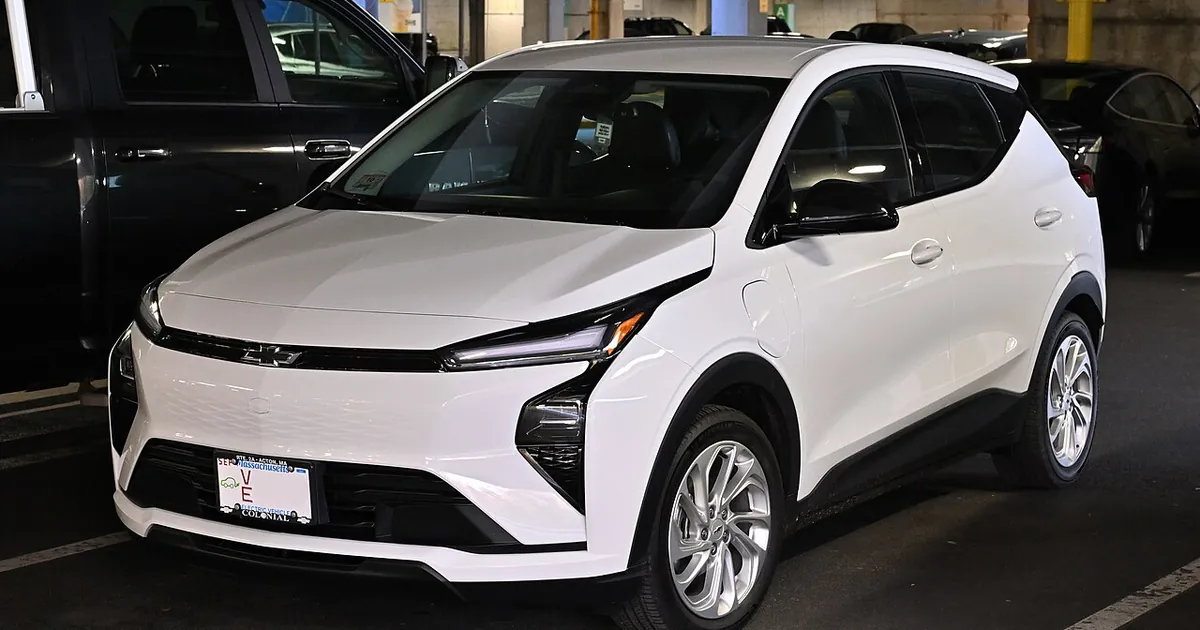
The Bolt LT costs $27,600 before destination, plus a $1,395 destination fee, for $28,995 delivered. That makes it the cheapest new EV on sale in the U.S., by $2,570 over the next car in this guide. Its 262 miles of EPA-estimated range come from a 65 kWh LFP battery, and it charges at up to 150 kW on a DC fast charger.
The 2027 Bolt is a new car, not a carryover. It is a limited run, and it is on sale now. It has a native NACS port, so it plugs straight into a Tesla Supercharger with no adapter to buy. That matters at this price, because the cheapest CCS1 cars in this guide need a $200 to $299 adapter before they can use the same network.
The Bolt is a small hatchback with five seats and a tight back seat, so it suits a single driver, a couple, or a small family that does not often carry three adults in the back. Its 150 kW peak charging is fast enough for road trips, but it is slower than the 800-volt cars in this guide, so a long trip means longer stops. The LFP battery is a practical choice for a cheap car: it tolerates frequent full charges better than the nickel-based batteries in most rivals, which suits a buyer who charges to 100 percent at home overnight.
Check before you buy: confirm the car is a 2027 Bolt, not leftover 2023 stock, because the old Bolt EV ended production and the two cars share a name but not a platform, a battery or a charging port. Also confirm the limited-run status with the dealer, because a limited run can mean fewer colour and option choices and no guarantee of a 2028 model.
Skip it if you need a roomy back seat, more than about 180 miles of usable range between charges on a cold day, or the fastest possible road-trip charging. On the 70 percent planning window this guide uses elsewhere, 262 miles of EPA range gives about 183 miles between a 90 percent departure charge and a 20 percent arrival reserve.
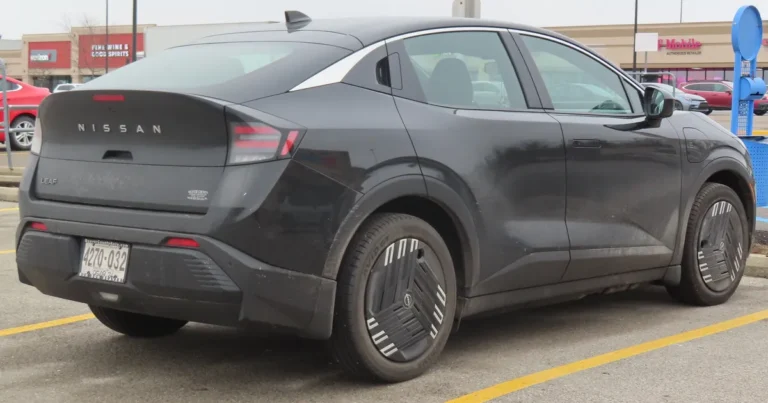
2. 2026 Nissan LEAF S+: the most range per dollar
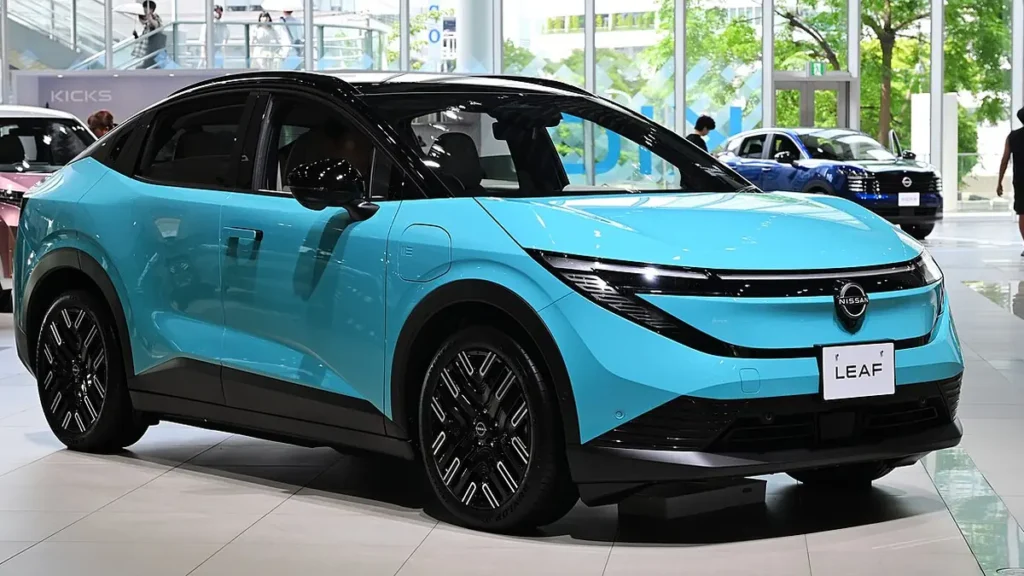
The LEAF S+ costs $29,990 before destination, plus a $1,575 destination fee, for $31,565 delivered. Its 303 miles of EPA range is the most range per dollar in this guide, at $104.17 per EPA mile. The battery is a 75 kWh pack, and the car charges at up to 150 kW on DC.
The 2026 LEAF is a redesigned car, and the redesign fixes the old LEAF’s biggest weakness. The new LEAF uses a NACS port for DC fast charging, so it plugs straight into a Tesla Supercharger, and it still has a J1772 port for Level 2 home charging. The old CHAdeMO port belongs only to 2025 and earlier LEAFs, so do not let a listing for a “2026 LEAF S” with 149 miles of range confuse you: that car does not exist. The 2026 LEAF comes only as the S+, the SV+ at 288 miles and the Platinum+ at 259 miles, all on the same 75 kWh battery.
At $31,565 delivered, the LEAF S+ undercuts every other 300-mile car in this guide by at least $4,920, and it does it with the simplest ownership story here: a proven hatchback shape, a big battery, and native Supercharger access with nothing to buy. Its weakness is that it is a hatchback, not an SUV, so cargo space and ride height are smaller than the Equinox EV or the EV3. It also has no all-wheel-drive option, so snow-country buyers should look at the Solterra instead.
Check before you buy: confirm the trim is the S+, because the SV+ and Platinum+ cost more and go fewer miles on the same battery. Also confirm the car has the NACS port, not a CHAdeMO port, which would mean it is a 2025 or earlier car.
Skip it if you need an SUV body, all-wheel drive, or more cargo space than a hatchback gives. If you drive mostly in the city and want the cheapest way to 300 miles of range, this is the pick.
3. 2027 Kia EV3 Wind FWD: the best small SUV value

The EV3 Wind FWD costs $34,990 before destination, plus a $1,495 destination fee, for $36,485 delivered. Its 321 miles of EPA range come from an 81.4 kWh battery, which makes it the longest-range car under $37,000 delivered in this guide, at $113.66 per EPA mile.
The EV3 is a 2027 model, not a 2026, and it only reached U.S. sales on 1 October 2026, so it is the newest car in this guide. It has a native NACS port, so it charges at Tesla Superchargers with no adapter, and it takes about 31 minutes to charge from 10 to 80 percent. The Wind is the sweet spot in the range: the cheaper Light FWD costs $29,890 before destination, or $31,385 delivered, but its smaller 58.3 kWh battery gives only 221 miles of range, which is a poor trade for $5,100 saved. The Land FWD costs $38,490 before destination and keeps the same 321 miles with more equipment, while the Wind AWD costs $38,690 and drops to 280 miles.
The EV3 is a small SUV, which is why it works as a family car where the Bolt and the LEAF do not: it has a higher seating position, a proper rear seat and a usable cargo area, and it is still short enough to park easily. Our best small electric cars guide compares the EV3 with the other small cars in this price range. The EV3’s main weakness is that it is new, so there is no long-term reliability record and no used market yet, and its DC charging peak is not published by Kia, so the 10 to 80 percent time is the only charging figure to go on.
Check before you buy: confirm the model year is 2027 on the window sticker, because several pages still list the EV3 as a 2026, and confirm the trim is the Wind, because the Light’s 221 miles is a different car in practice.
Skip it if you need all-wheel drive, which the Wind FWD does not have, or if you want the fastest charging in this price range, which belongs to the Ioniq 5. If you want the most range for the least money in a small SUV, this is the pick.
4. 2026 Chevrolet Equinox EV LT 1 FWD: the best family SUV value
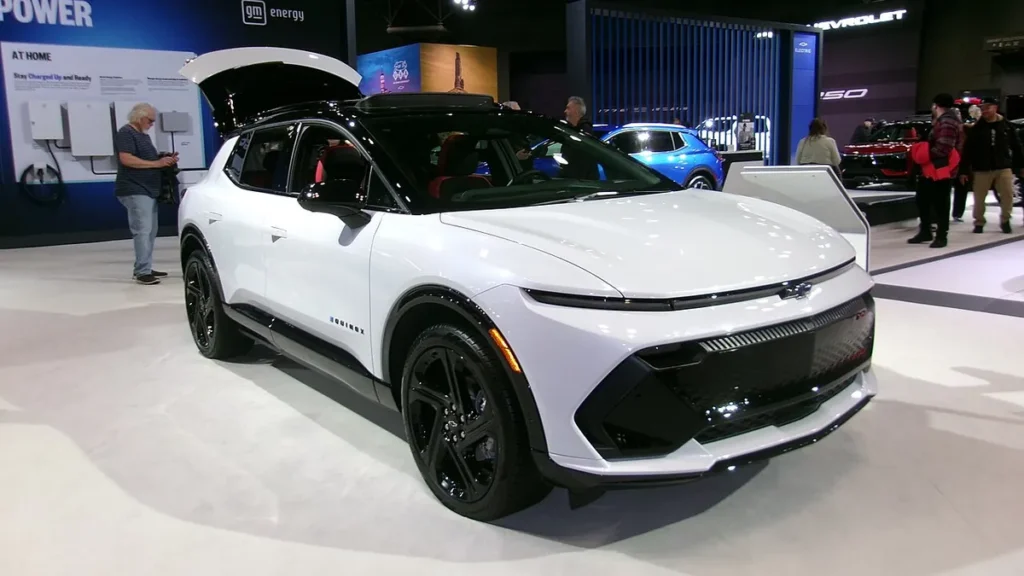
The Equinox EV LT 1 FWD costs $34,995 before destination, plus a $1,800 destination fee, for $36,795 delivered. Its 319 miles of EPA range come from an 85 kWh battery, at $115.36 per EPA mile, and it charges at up to 150 kW on DC.
The Equinox EV is the family SUV pick in this guide because it is the biggest car here for the money. It seats five with a proper rear seat, it has the cargo space a family actually uses, and it is the roomiest of the four cheapest picks. The LT 2 FWD costs $41,795 before destination, or $43,595 delivered, for the same 319 miles with more equipment, so the LT 1 is the value choice and the LT 2 is the comfort choice.
The Equinox EV has one catch, and it is the most important catch in this guide. The 2026 model has a CCS1 port, not a native NACS port. Native NACS comes with the 2027 model year, according to GM’s own August 2026 announcement. To charge a 2026 Equinox EV at a Tesla Supercharger you need GM’s approved NACS DC adapter, which costs $299 from the GM Energy store. That is a real cost and a real extra step, and it is the reason the Equinox EV sits behind the LEAF and the EV3 on value even though its range is nearly the same. Older pages that quote about $225 for the adapter are out of date.
Check before you buy: confirm the model year on the window sticker, because a 2027 Equinox EV charges natively at Superchargers and a 2026 does not, and confirm the destination fee is $1,800, because early-production stickers showed $1,500. Also ask the dealer to include the $299 adapter in the deal, or order it before your first road trip.
Skip it if you want native Supercharger access with nothing to buy, or if you want the fastest charging here. If you want the roomiest SUV under $37,000 delivered and you can live with a $299 adapter, this is the pick.
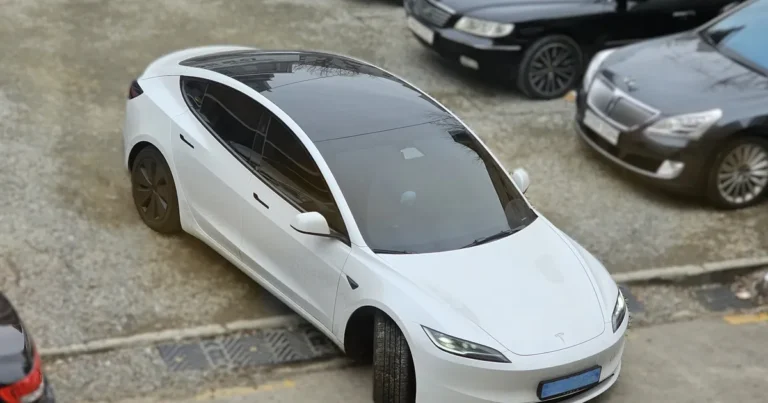
5. 2027 Tesla Model 3 RWD: the best sedan for road trips
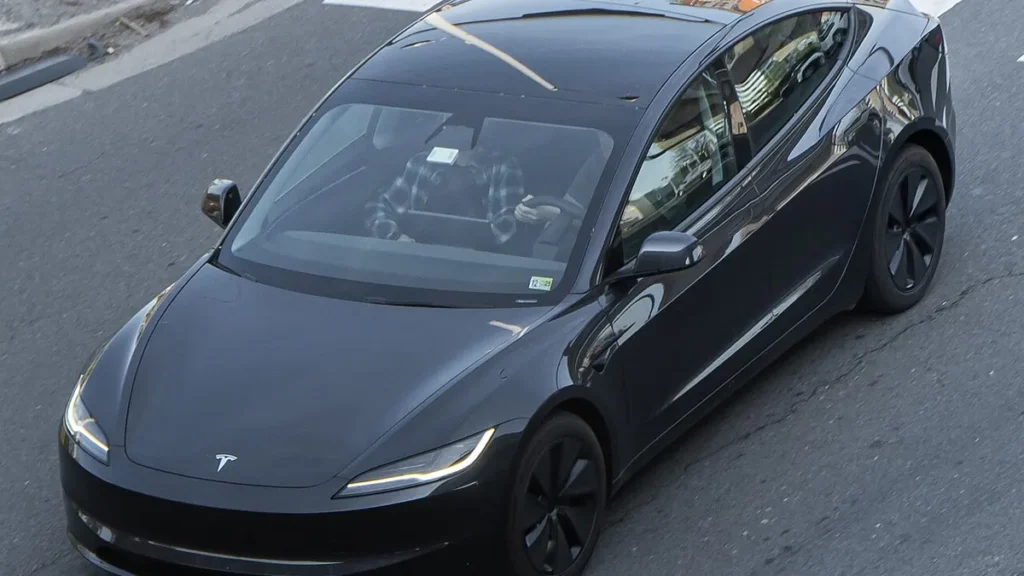
The Model 3 RWD costs $36,990 before destination, plus a $1,390 destination fee and a $250 order fee, for $38,630 delivered. Its 321 miles of EPA range come at $120.34 per EPA mile, and it charges at up to about 250 kW on a Supercharger, which is the fastest peak charging in this guide.
The Model 3 is the only sedan among the picks, and it earns its place on charging and efficiency rather than on space. It has a native NACS port and full Supercharger access with nothing to buy, and Tesla’s charging network is still the easiest to use on a road trip: you plug in and the car handles payment. The Model 3 Premium RWD costs $42,490 before destination, or $44,130 delivered, and gives 363 miles of EPA range, which is the longest range of any car under $50,000 MSRP. If your trips are long and your budget stretches, that is the better Model 3.
Two things to know before you buy a Tesla in 2026. First, prices come from Tesla’s configurator, not from fueleconomy.gov, because that site’s price column is out of date for Tesla. Second, new Model 3 and Model Y cars ordered since late January 2026 include Traffic-Aware Cruise Control and active safety features only. The old Autopilot bundle, including Autosteer, is no longer included, and Full Self-Driving is a $99 per month subscription with a 30-day free trial. Pages that still say Basic Autopilot is standard on every new Tesla are out of date.
Check before you buy: confirm the trim on the order page, because Tesla’s trim names changed with the 2027 models, and confirm the delivered price includes the $250 order fee, which is easy to miss. Also check the EPA figure against Tesla’s own claim: the Model 3 RWD is listed at 321 miles in the EPA dataset, which is the figure this guide uses.
Skip it if you need an SUV body, a higher seating position, or a hatchback opening for bulky cargo. If you want the easiest road-trip charging in this guide, this is the pick.
6. 2026 Hyundai Ioniq 5 SE, long range: the fastest charging
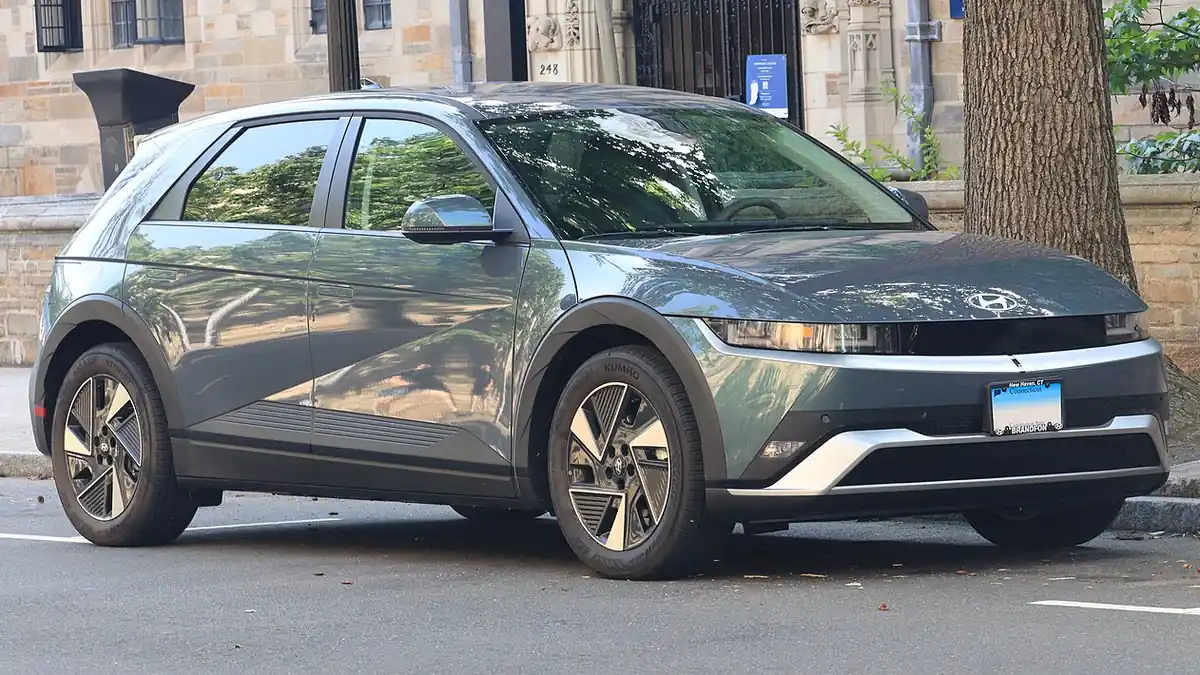
The Ioniq 5 SE with the long-range battery costs $37,500 before destination, plus a $1,600 destination fee, for $39,100 delivered. Its 318 miles of EPA range come from an 84 kWh battery, at $122.96 per EPA mile, and it charges at about 235 kW on an 800-volt DC fast charger, taking roughly 20 minutes from 10 to 80 percent.
The Ioniq 5 is the fastest-charging car in this guide, and that is a practical advantage, not a spec-sheet boast. On a road trip, a 20-minute stop is a coffee stop, while a 40-minute stop is a wait. The 2026 Ioniq 5 has a native NACS port, so it charges at Tesla Superchargers with no adapter, and a CCS adapter comes in the box for the older CCS1 networks. The SE with the standard-range battery costs $35,000 before destination, or $36,600 delivered, but its 63 kWh battery gives only 245 miles, so the $2,500 step up to the long-range battery buys 73 extra miles and is worth it for most buyers.
The trim trap matters here more than anywhere else in this guide. Several pages show the Ioniq 5 SE at 318 miles next to a $35,000 price, but those two figures describe different batteries. The $35,000 car goes 245 miles, and the 318-mile car costs $37,500. This guide ties each figure to its battery, and you should make any dealer do the same.
Check before you buy: confirm the battery is the 84 kWh long-range pack, because the SE badge alone does not tell you which battery the car has, and confirm the destination fee, because one dealer notes $1,650 for cars produced after July 2026. Also confirm the CCS adapter is in the car, since it is the only way to use a CCS1 fast charger.
Skip it if you need the lowest price or the most range per dollar, both of which belong to the LEAF and the Bolt, or if you need all-wheel drive, which the SE rear-wheel-drive car does not have. If you take road trips and you hate waiting at chargers, this is the pick.
7. 2026 Toyota bZ XLE FWD Plus: the longest-range Toyota
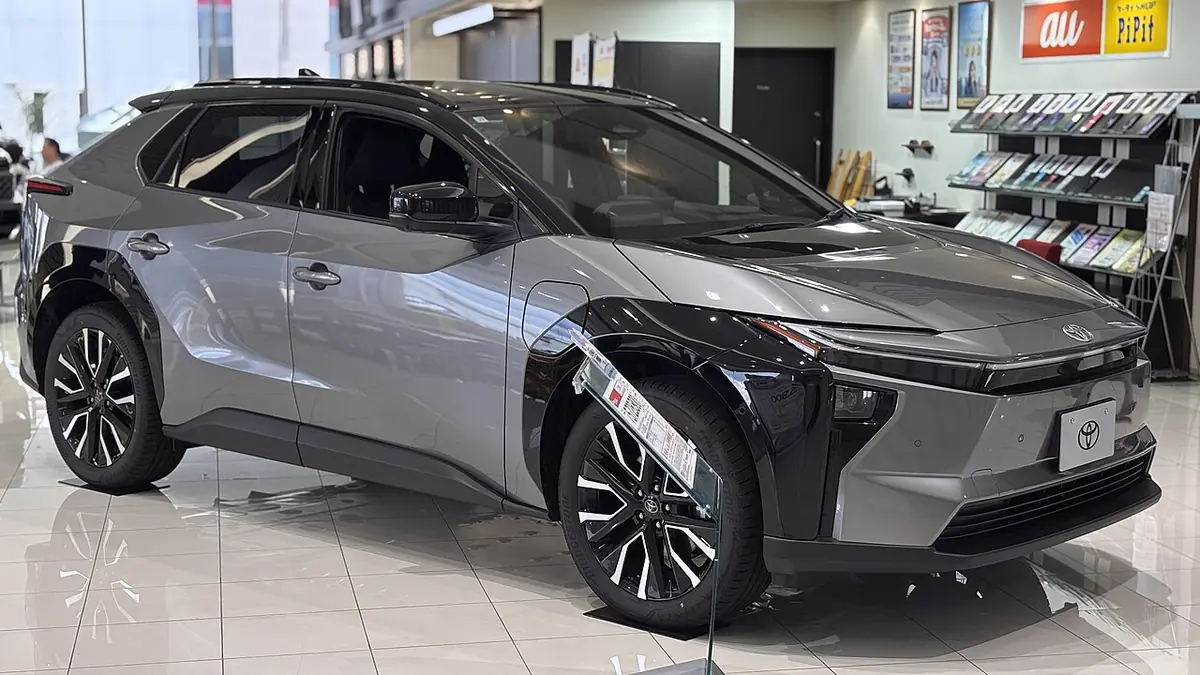
The bZ XLE FWD Plus costs $37,900 before destination, plus a $1,450 destination fee, for $39,350 delivered. Its 314 miles of EPA range come from a 74.7 kWh battery, at $125.32 per EPA mile, and it charges at up to 150 kW on DC.
The bZ is Toyota’s renamed electric SUV, the car sold before as the bZ4X, and the Plus is the version to buy. The base XLE FWD costs $34,900 before destination, or $36,350 delivered, but its smaller 57.7 kWh battery gives only 236 miles, so the $3,000 step up to the Plus buys 78 extra miles. That is the best $3,000 in this guide if you drive beyond the city often. The bZ has a native NACS port, so it charges at Tesla Superchargers with no adapter, and J1772 and CCS adapters come in the box for home and older public charging.
The bZ is a quiet, comfortable SUV with Toyota’s dealer network behind it, which is a real advantage for a first-time EV buyer who wants a familiar buying and service experience. Its weakness is charging speed: 150 kW is mid-pack here, and the base XLE’s 236 miles is too little for regular long trips, so the Plus is the only bZ this guide picks.
Check before you buy: confirm the trim is the XLE Plus, because the base XLE’s 236 miles is a different car in practice, and confirm the destination fee on the sticker, because $1,595 and $1,655 also circulate for this car and would add $145 to $205 to the delivered price. Also confirm the car is a 2026 bZ, not a leftover bZ4X, because the two names describe different model years.
Skip it if you want the fastest charging or the lowest cost per mile. If you want a Toyota, a comfortable SUV and 314 miles without an adapter, this is the pick.
8. 2026 Subaru Solterra Premium AWD: the cheapest standard all-wheel drive
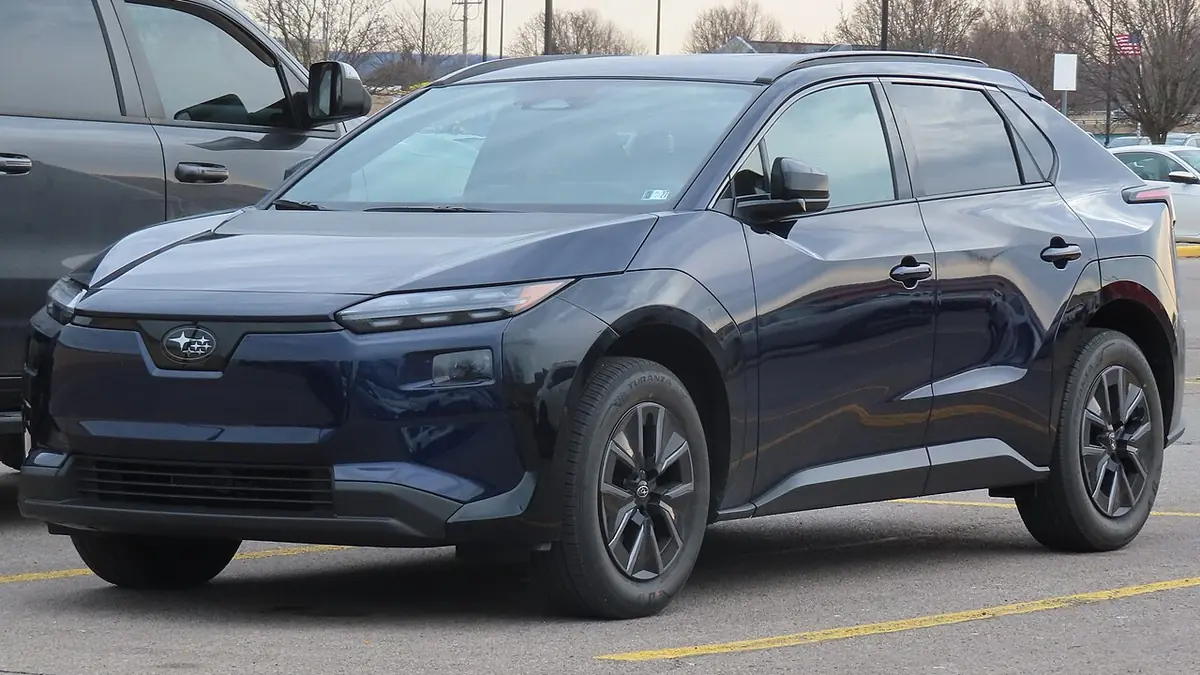
The Solterra Premium AWD costs $38,495 before destination, plus a $1,450 destination fee, for $39,945 delivered. Its 288 miles of EPA range come from a 74.7 kWh battery, at $138.70 per EPA mile, and it charges at up to 150 kW on DC.
The Solterra is the only pick in this guide with standard all-wheel drive, and it is the cheapest way to get it. Every Solterra has all-wheel drive, 8.3 inches of ground clearance, and the X-Mode system for snow and rough roads, which is why it also leads our best electric cars for snow guide. The 2026 Solterra is a redesigned car with a native NACS port, so it charges at Tesla Superchargers with no adapter, and its 288 miles is a big step up from the earlier Solterra’s range.
The Solterra shares its platform and battery with the Toyota bZ, so the two cars are close cousins: the bZ Plus goes 26 miles farther for $595 less, while the Solterra gives you all-wheel drive and ground clearance the bZ does not. Choose the Solterra if you drive in snow or on rough roads, and the bZ if you drive mostly on pavement and want the extra range.
Check before you buy: confirm the car is a 2026 Solterra, because earlier model years have a CCS1 port, less range and no NACS access, and confirm the trim is the Premium, because higher trims cost more for the same 288 miles. Also note that a separate fueleconomy.gov listing for a Solterra 20 AWD shows 278 miles: that is a different configuration, not the Premium.
Skip it if you do not need all-wheel drive, because the bZ Plus gives you more range for less money, or if you need the fastest charging. If you need an affordable EV that handles snow and dirt roads, this is the pick.
9. 2027 Tesla Model Y RWD: the best family EV for charging
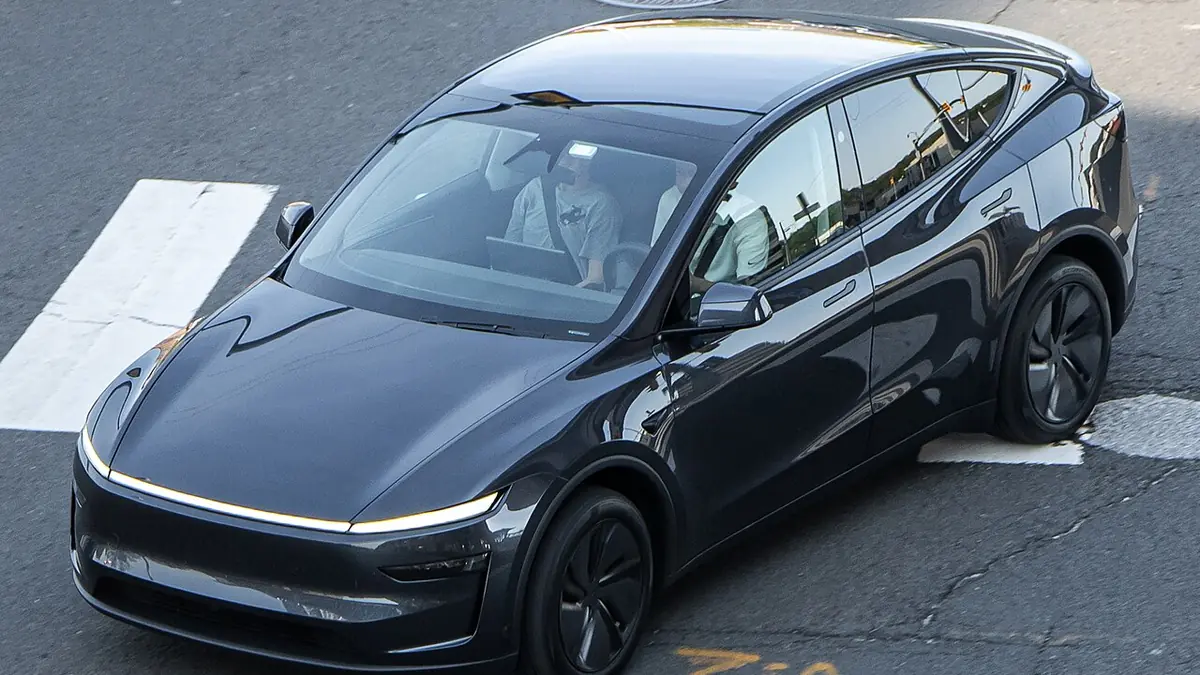
The Model Y RWD costs $39,990 before destination, plus a $1,390 destination fee and a $250 order fee, for $41,630 delivered. Its EPA range is 321 miles, at $129.69 per EPA mile, and it charges at up to about 250 kW on a Supercharger.
The Model Y is the best-selling EV in America for a reason: it is a mid-size SUV with generous cargo space, a roomy rear seat, and the easiest charging in the business through Tesla’s Supercharger network. It has a native NACS port, so there is nothing to buy and nothing to set up before your first road trip.
The range figure needs care. The EPA dataset on fueleconomy.gov lists the 2027 Model Y RWD at 321 miles, while Tesla’s own configurator claims 348 miles. This guide uses the EPA figure of 321 miles, because it is the figure that can be compared with the other cars here, and Tesla’s claim is noted, not hidden. The same pattern shows on the Premium RWD: the EPA dataset lists 355 miles, while Tesla’s site claims 357. The Premium RWD costs $45,990 before destination, or $47,630 delivered, for those 355 miles.
Two more facts matter. The cheapest all-wheel-drive Model Y is now the Premium AWD at $49,990 before destination, because the $41,990 all-wheel-drive version was removed from the configurator in November 2026. And new Model Y cars ordered since late January 2026 include Traffic-Aware Cruise Control and active safety features only, not the old Autopilot bundle.
Check before you buy: confirm the trim and the range on the order page, because Tesla has changed both the names and the claimed ranges during 2026, and confirm the delivered price includes the $250 order fee.
Skip it if your budget stops at $40,000 delivered, because the Model Y RWD is $1,630 over that line, or if you want the lowest cost per mile. If you want the roomiest family EV with the easiest charging, this is the pick.
10. 2026 Kia EV6 Light Long Range RWD: the 800-volt alternative
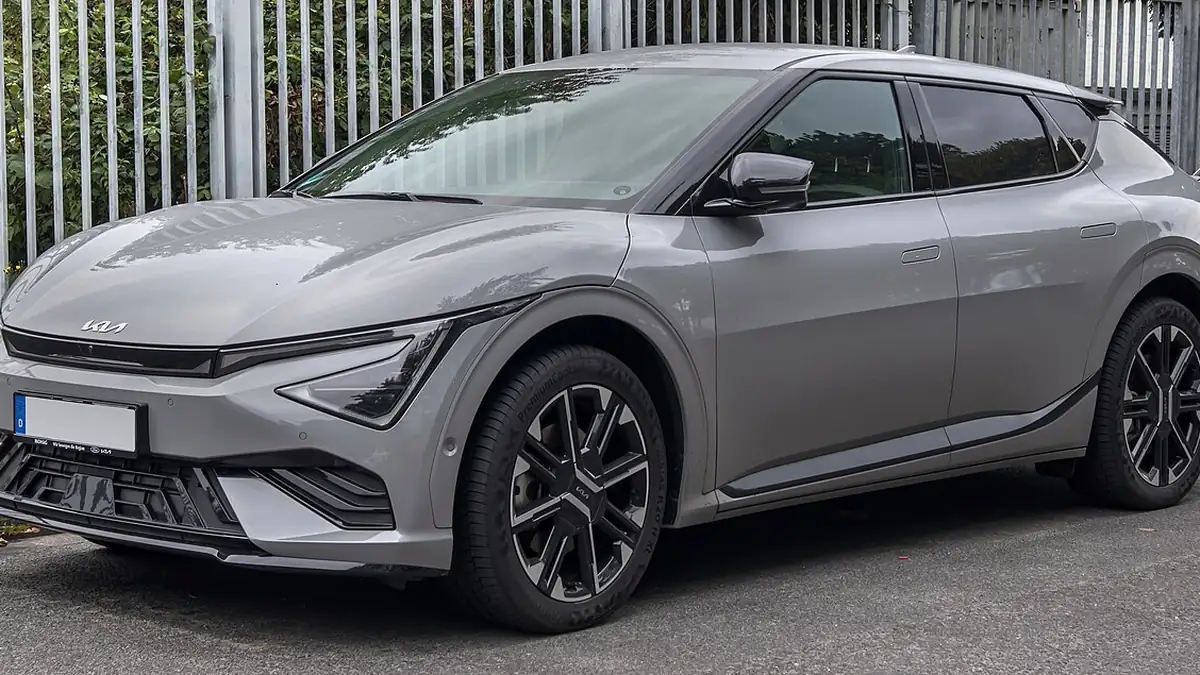
The EV6 Light Long Range RWD costs $41,200 before destination, plus a $1,545 destination fee, for $42,745 delivered. Its 319 miles of EPA range come from an 84 kWh battery, at $134.01 per EPA mile, and it charges at up to 240 kW on an 800-volt DC fast charger.
The EV6 is the Ioniq 5’s sister car, and the choice between them is mostly about shape and price. The EV6 is a lower, sleeker crossover, while the Ioniq 5 is a taller hatchback. The EV6 Light Long Range costs $3,645 more delivered than the Ioniq 5 SE long range for 1 more mile of EPA range, so the Ioniq 5 is the better value and the EV6 is the better choice if you prefer its shape, its driving feel, or its dealer. Both have native NACS ports, so both charge at Tesla Superchargers with no adapter, and both use the same 800-volt charging that makes road trips short.
The Light trim needs the same care as the Ioniq 5 SE. The Light with the standard-range battery costs $37,900 before destination, or $39,445 delivered, but its 63 kWh battery gives only 237 miles. The 319-mile figure belongs to the Long Range version that costs $41,200. Several pages mix the two, so check the battery on the window sticker.
Check before you buy: confirm the battery is the 84 kWh long-range pack, and confirm the car has a NACS port, because one secondary page wrongly lists the 2026 EV6 as a CCS1 car. The window sticker lists “NACS Charge Port”, which settles it.
Skip it if you want the best value in this price range, which is the Ioniq 5, or if $42,745 delivered is more than you want to spend. If you want 800-volt charging in a sleeker shape with 319 miles of range, this is the pick.
Every new EV under $50,000 MSRP
The two tables below list every new EV under $50,000 MSRP that could be verified on 26 November 2026, ordered by MSRP. The first table covers cars under $40,000 MSRP, and the second covers cars from $40,000 to $50,000 MSRP. Delivered prices are MSRP plus destination, before tax, registration, options and dealer add-ons. Tesla prices also include the $250 order fee.
Under $40,000 MSRP
| Model | MSRP | Destination | Delivered | EPA range | Port |
|---|---|---|---|---|---|
| 2027 Chevrolet Bolt LT | $27,600 | $1,395 | $28,995 | 262 mi | Native NACS |
| 2027 Kia EV3 Light FWD | $29,890 | $1,495 | $31,385 | 221 mi | Native NACS |
| 2026 Nissan LEAF S+ | $29,990 | $1,575 | $31,565 | 303 mi | Native NACS |
| 2026 Toyota bZ XLE FWD | $34,900 | $1,450 | $36,350 | 236 mi | Native NACS |
| 2027 Kia EV3 Wind FWD | $34,990 | $1,495 | $36,485 | 321 mi | Native NACS |
| 2026 Chevrolet Equinox EV LT 1 FWD | $34,995 | $1,800 | $36,795 | 319 mi | CCS1 |
| 2026 Hyundai Ioniq 5 SE, standard range | $35,000 | $1,600 | $36,600 | 245 mi | Native NACS |
| 2026 Fiat 500e Pop | $35,700 | $1,995 | $37,695 | 149 mi | CCS1 |
| 2027 Tesla Model 3 RWD | $36,990 | $1,390 + $250 | $38,630 | 321 mi | Native NACS |
| 2026 Hyundai Ioniq 5 SE, long range | $37,500 | $1,600 | $39,100 | 318 mi | Native NACS |
| 2026 Ford Mustang Mach-E Select RWD | $37,795 | $2,045 | $39,840 | 260 mi | CCS1 |
| 2026 Kia EV6 Light, standard range | $37,900 | $1,545 | $39,445 | 237 mi | Native NACS |
| 2026 Toyota bZ XLE FWD Plus | $37,900 | $1,450 | $39,350 | 314 mi | Native NACS |
| 2026 Subaru Solterra Premium AWD | $38,495 | $1,450 | $39,945 | 288 mi | Native NACS |
| 2026 Volvo EX30 Single Motor Extended Range Plus | $38,950 | $1,395 | $40,345 | 261 mi | CCS1 |
| 2026 Kia Niro EV Wind | $39,700 | $1,495 | $41,195 | 253 mi | CCS1 |
| 2026 Honda Prologue EX FWD | $39,900 | $1,495 | $41,395 | 308 mi | CCS1 |
| 2027 Tesla Model Y RWD | $39,990 | $1,390 + $250 | $41,630 | 321 mi | Native NACS |
$40,000 to $50,000 MSRP
| Model | MSRP | Destination | Delivered | EPA range | Port |
|---|---|---|---|---|---|
| 2026 Kia EV6 Light Long Range RWD | $41,200 | $1,545 | $42,745 | 319 mi | Native NACS |
| 2026 Chevrolet Equinox EV LT 2 FWD | $41,795 | $1,800 | $43,595 | 319 mi | CCS1 |
| 2027 Tesla Model 3 Premium RWD | $42,490 | $1,390 + $250 | $44,130 | 363 mi | Native NACS |
| 2026 Chevrolet Blazer EV LT FWD | $44,700 | $1,795 | $46,495 | 312 mi | CCS1 |
| 2026 Volkswagen ID.4 Pro RWD | $45,095 | $1,475 | $46,570 | 291 mi | CCS1 |
| 2026 MINI Countryman SE ALL4 | $45,200 | $1,175 | $46,375 | 212 mi | CCS1 |
| 2027 Tesla Model Y Premium RWD | $45,990 | $1,390 + $250 | $47,630 | 355 mi | Native NACS |
| 2026 Volkswagen ID.4 AWD Pro | $48,995 | $1,475 | $50,470 | 263 mi | CCS1 |
| 2026 Cadillac Optiq Luxury RWD | $49,995 | $1,795 | $51,790 | 317 mi | Native NACS |
| 2026 MINI Cooper SE | $30,900 | Not published | Not published | Not published | CCS1 |
Notes on these tables. The Model Y RWD range is the EPA figure of 321 miles; Tesla claims 348 miles. The bZ destination fee of $1,450 is the best-supported figure, but $1,595 and $1,655 also circulate, which would add $145 to $205 to the delivered price. The EV3 range figures are Kia’s EPA estimates. The ID.4 Pro, ID.4 AWD Pro and Niro EV ranges are secondary-source figures, because no fueleconomy.gov page was located for them. The Optiq destination fee comes from a 2027 listing and is not 2026-specific, and its delivered price of $51,790 crosses $50,000 even though its MSRP qualifies. The ID.4 AWD Pro also crosses $50,000 delivered, at $50,470.
The MINI Cooper SE has no published EPA range figure: MINI USA publishes none, and secondary estimates range from 137 to 150 miles, so no cost-per-mile figure is given for it. The EX30 and the Niro EV are remaining-stock only, and the Prologue’s 2026 model year is its last.
The Tesla Model 3 Premium AWD at $47,490 before destination also fits the $50,000 MSRP cutoff, and the Model Y Premium AWD at $49,990 does too. They are not in the tables because their EPA figures were not re-verified in this run; our longest range EVs guide covers their range figures.
Checked and excluded
These cars were checked and left out, so you do not chase them:
- 2026 Hyundai Kona Electric: there is no 2026 model year in the U.S. Hyundai skipped it, and only remaining 2025 stock is on sale. Pages listing a “2026 Kona” price or range are showing 2025 figures.
- 2026 Hyundai Ioniq 6 (standard): there is no standard 2026 Ioniq 6 in the U.S., only the limited Ioniq 6 N. Pages listing a 2026 Ioniq 6 SE price or range are showing 2025 figures, and they contradict each other.
- 2026 Nissan Ariya: there is no 2026 U.S. Ariya. Nissan paused U.S. production after the 2025 model year, and the 2026 Ariya is sold in Canada only. U.S. buyers can only find leftover 2025 stock.
- 2026 Nissan LEAF S (40 kWh, 149 miles): this car does not exist. The redesigned 2026 LEAF comes only as the S+, SV+ and Platinum+, all on a 75 kWh battery.
- 2026 Kia EV9 (any trim): over $50,000 MSRP, from $54,900.
- 2026 Tesla Model 3 Performance: over $50,000 MSRP, at $54,990.
- 2026 Honda Prologue Elite: over $50,000 MSRP, at $50,400.
- 2026 Volkswagen ID.4 Pro S RWD: over $50,000 MSRP, at $50,195, by $195.
- 2026 Cadillac Optiq Sport and higher trims: over $50,000 MSRP; only the Luxury RWD at $49,995 qualifies.
- 2026 Kia EV6 GT: not on sale in the U.S. for 2026.
- Slate truck, Ford Fathom and Rivian R2 standard: announced only, not delivering yet.
How to check before you sign

Work through these six checks on the exact car you are buying, not on the model in general. Every figure in this guide is tied to a trim, a battery and a model year, and the checks below are how you make sure the car on the lot matches the car in the guide.
- The port. Look at the charging port on the car. Native NACS plugs straight into a Tesla Supercharger. CCS1 needs an adapter for Superchargers and a CCS1 station otherwise. The 2026 Equinox EV, Mach-E, Prologue, Niro EV, EX30, ID.4, Blazer EV, 500e, Countryman SE and Cooper SE are CCS1 cars; the rest of the picks are native NACS.
- The adapter. If the car is CCS1, ask what the adapter costs and whether it is included. GM’s approved NACS DC adapter is $299, Ford’s is $200, the VW adapter is included as standard on 2026 models, and the Fiat adapter is $230. Hyundai’s and Kia’s free adapter programs have closed, so do not let a dealer promise you a free one.
- The network. A plug that fits does not prove access. Ask the dealer to show the car charging, or to confirm in writing that the car is enabled on the Supercharger network, because activation and the app setup are separate from the hardware.
- The exact trim’s range. Match the range on the window sticker to the trim and battery you are buying. The Ioniq 5 SE, EV6 Light, bZ XLE and EV3 all have two batteries with very different ranges under the same badge.
- Stock status. Ask whether the car is orderable or remaining stock only. The EX30 and the Niro EV are remaining stock only, the Prologue ends production in December 2026, and the Bolt is a limited run, so colour and trim choices may be narrow.
- The delivered price. Ask for the out-the-door number in writing, with the destination fee, options, tax, registration and any dealer add-ons shown separately. Destination fees alone run from $995 to $2,045 across this guide, and add-ons are where a $39,000 car becomes a $42,000 car.
Do affordable EVs charge at Tesla Superchargers?
Yes, most of them do. Nine of the 10 picks in this guide have a native NACS port and charge at Tesla Superchargers with no adapter to buy. The one exception is the Equinox EV, which needs GM’s $299 adapter. Check the port and the adapter before you sign, not after.
Worked example: what $40,000 all-in buys
If your all-in budget is $40,000 for the car itself, before tax and registration, here is what is left after the delivered price for each pick that fits. A home charger and its installation are on top of these figures, so check our Level 2 charger installation cost guide before you set your final budget.
| Pick | Delivered price | Money left from $40,000 |
|---|---|---|
| 2027 Chevrolet Bolt LT | $28,995 | $11,005 |
| 2026 Nissan LEAF S+ | $31,565 | $8,435 |
| 2027 Kia EV3 Wind FWD | $36,485 | $3,515 |
| 2026 Chevrolet Equinox EV LT 1 FWD | $36,795 | $3,205 |
| 2027 Tesla Model 3 RWD | $38,630 | $1,370 |
| 2026 Hyundai Ioniq 5 SE, long range | $39,100 | $900 |
| 2026 Toyota bZ XLE FWD Plus | $39,350 | $650 |
| 2026 Ford Mustang Mach-E Select RWD | $39,840 | $160 |
| 2026 Subaru Solterra Premium AWD | $39,945 | $55 |
The Bolt and the LEAF are the only picks that leave real money for a home charger, which is worth remembering: a cheap car with expensive charging is not a cheap car. The Mach-E Select is included here because it fits the $40,000 line, even though it is not one of the 10 picks. The Model Y RWD and the EV6 Light Long Range do not fit a $40,000 all-in budget, at $41,630 and $42,745 delivered.
What to avoid
- Paying for range you will not use. The EV3 Light saves $5,100 over the Wind but gives up 100 miles of range, and the base bZ saves $3,000 over the Plus but gives up 78 miles. Buy the range you drive, not the lowest sticker.
- Matching the headline range to the headline price. The Ioniq 5 SE, the EV6 Light, the bZ XLE and the EV3 all sell a long range and a low price, but never on the same car. Check the battery on the window sticker.
- Assuming Supercharger access. Nine picks have native NACS, but the Equinox EV needs a $299 adapter, and the Mach-E, Prologue, Niro EV, EX30, ID.4, Blazer EV, 500e and Countryman SE are CCS1 cars. Check the port, the adapter and the network before you sign.
- Forgetting destination and dealer add-ons. Destination fees run from $995 to $2,045, and the Optiq Luxury crosses $50,000 delivered even though its MSRP qualifies. Get the out-the-door number in writing.
- Assuming the federal tax credit still applies. It ended for vehicles acquired after 30 September 2025. Any price that subtracts $7,500 is out of date.
- Buying a remaining-stock car without asking what is left. The EX30, the Niro EV and the Prologue are ending or ended, so ask about colour, trim and delivery timing before you fall for a specific car.
Method and author note
The best EV under 50k is the one that fits your driving, your charging and your budget at the same time, and this guide is built to make that choice with real numbers: every price is shown as MSRP, destination fee and delivered price, and every range is tied to the exact trim and battery that earns it. Prices and ranges were checked on 26 November 2026 against the maker’s U.S. pages and window stickers and the single-vehicle pages on fueleconomy.gov. Where a fueleconomy.gov page could not be opened, the figure is marked as a maker estimate or a secondary-source figure in the research notes. Figures change, so check the window sticker on the exact car you buy.
This article was researched and drafted with AI assistance and reviewed against the primary sources listed above. No vehicle in this guide was tested by the author, and dealer stock was not audited. This article contains no affiliate links.
By Sam Wilson. Checked 26 November 2026.
What is the best EV under $50k for a family?
The Chevrolet Equinox EV LT 1 is the best family pick for space, at $36,795 delivered with 319 miles of EPA range. The Tesla Model Y RWD is the best family pick for charging and cargo, at $41,630 delivered with 321 miles of EPA range. There is no full-size three-row EV under $50,000 MSRP: the Kia EV9 starts at $54,900. The Model Y does offer a $2,500 third-row option, but that third row is child-sized with no LATCH anchors.
How far can these EVs actually go on a charge?
EPA range is a lab figure, so plan on about 70 percent of it between charges: leave home at 90 percent and arrive with 20 percent left. The LEAF S+ gives about 212 usable miles this way, the EV3 Wind about 225 miles, and the Bolt about 183 miles. Cold weather and highway speed cut real range further, so check our EV range factors guide before a long trip.
Is there still a federal tax credit for electric cars?
No. The federal new-vehicle tax credit ended for vehicles acquired after 30 September 2025, and the used-vehicle credit ended on the same date. No price in this guide subtracts a credit, and any listing that still shows $7,500 off a new EV is out of date.
What is the cheapest electric car in the U.S. right now?
The 2027 Chevrolet Bolt LT, at $28,995 delivered with 262 miles of EPA-estimated range. It is a limited run and it is on sale now, with a native NACS port for Tesla Superchargers. The next cheapest is the 2026 Nissan LEAF S+ at $31,565 delivered with 303 miles of range.
Do I need to buy an adapter to use Tesla Superchargers?
It depends on the port. Cars with a native NACS port need no adapter, and nine of the 10 picks in this guide have one. Cars with a CCS1 port need an approved NACS DC adapter: GM’s costs $299, Ford’s costs $200, and the VW adapter is included as standard on 2026 models. The adapter is for DC fast charging only, and the car must also be enabled on the Supercharger network.