Is a Tesla a Good First Car? A First-Time Buyer’s Guide
A Tesla can be a good first car, but only if you buy the right trim and go in with your eyes open. The cheapest new Model 3 costs $36,990 before fees, both the Model 3 and Model Y earn 5-star overall safety ratings from NHTSA, and the Supercharger network removes the charging worry that stops many first-time EV buyers. The catches are the insurance bill, which can top $480 a month for a driver under 25, and the driver assistance: a new Tesla no longer comes with lane-centering Autosteer as standard, so do not buy one expecting it to steer itself.
Checked November 14, 2026. Prices are from Tesla’s U.S. configurator as listed on the dates shown, before destination and order fees unless stated. Every range figure is the EPA rating for the exact trim and model year named. A listing price is not an out-the-door price, and a future model is not a car you can buy today.
Is a Tesla a good first car for a new or young driver?
Yes, for the right buyer and the right trim. A new Model 3 Standard or Model Y RWD gives a first-time driver a 5-star NHTSA safety rating, a native Supercharger plug, and parental controls that cap speed and acceleration. It is a poor first car if the insurance quote comes back over $400 a month, if you cannot charge at home or at work, or if you want the Performance trim, which reaches 60 mph in under 3 seconds and costs the most to insure.
That is the short version. The rest of this guide proves it with current prices, so you can check the decision against your own budget before you order.
What a new Tesla costs right now
Tesla sells direct, at set prices, with no dealer negotiation. The price on the configurator on the day you order is the price. That also means prices and even the lineup can change without warning, and they just did: on November 12, 2026, Tesla removed the $41,990 Model Y all-wheel-drive trim from its configurator, so the cheapest all-wheel-drive Model Y you can now order costs $49,990, an $8,000 jump. Some all-wheel-drive cars may still sit in existing inventory, but you cannot order that trim any more.
Here is the full lineup as listed on Tesla’s U.S. configurator on November 13, 2026 for the Model Y and October 21, 2026 for the Model 3. The delivered column adds Tesla’s $1,390 destination charge and $250 order fee, $1,640 on every trim, before state tax and registration. Range is the EPA combined figure for the trim and model year named, from the EPA dataset on fueleconomy.gov.
On a narrow screen, swipe the table sideways to see all five columns.
| Tesla | MSRP from (before fees) | Delivered before tax | EPA range | 0-60 mph |
|---|---|---|---|---|
| Model 3 Standard RWD | $36,990 | $38,630 | 321 mi (2026 and 2027) | 5.8 s |
| Model 3 Premium RWD | $42,490 | $44,130 | 363 mi (2026 and 2027) | 4.9 s |
| Model 3 Premium AWD | $47,490 | $49,130 | 346 mi (2026 and 2027) | 3.8 s on new orders |
| Model 3 Performance AWD | $54,990 | $56,630 | 314 mi (2026); 316 mi (2027) | 2.9 s |
| Model Y RWD | $39,990 | $41,630 | 348 mi (2027); 321 mi (2026) | 6.8 s |
| Model Y Premium RWD | $45,990 | $47,630 | 355 mi (2027); 357 mi (2026) | 5.4 s |
| Model Y Premium AWD | $49,990 | $51,630 | 327 mi (2026 and 2027) | 4.3 s |
| Model Y Performance AWD | $57,990 | $59,630 | 306 mi (2026) | 3.3 s |
Three things in that table need a warning, because the numbers changed in the last few weeks.
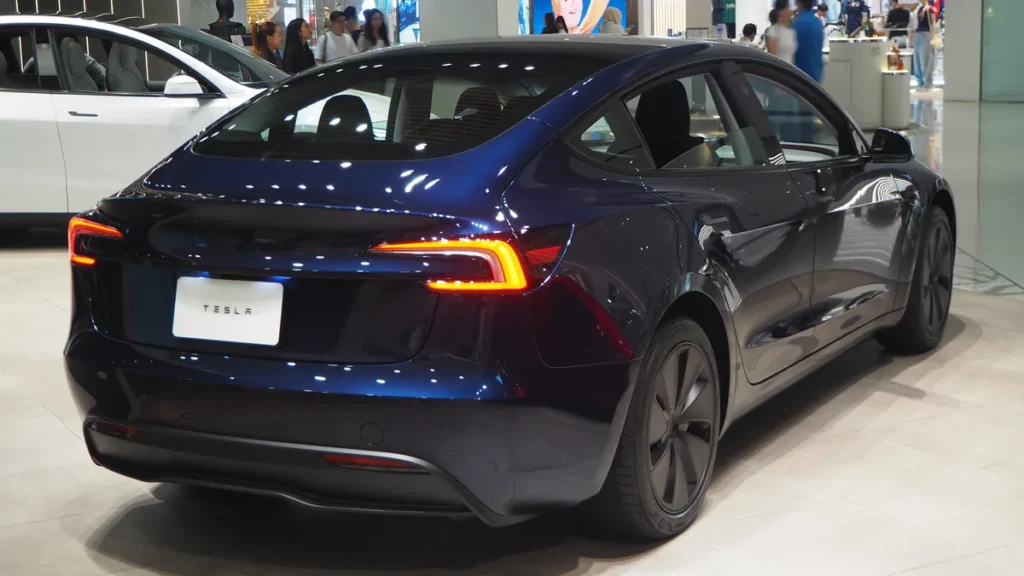
First, the model year matters now. Tesla’s configurator lists the Model Y as a 2027 model, and the 2027 range figures moved: the base Model Y RWD rose from 321 miles EPA for 2026 to 348 miles for 2027, while the Premium RWD slipped from 357 to 355 miles. The Model 3 changed less: only the Performance moved, from 314 miles for 2026 to 316 miles for 2027. Always check which model year a listing quotes, and never mix a 2026 range with a 2027 price in the same comparison.
Second, the Premium AWD acceleration changed too. Tesla updated the Model 3 Premium AWD from 4.2 seconds to 3.8 seconds to 60 mph on new orders from October 2, 2026, and the Model Y Premium AWD from 4.6 to 4.3 seconds. A car ordered before that date still does 4.2 seconds. Both figures are correct; they belong to different order dates.
Third, the federal $7,500 new-EV credit is gone. It ended for vehicles acquired after September 30, 2025, so do not subtract it from any price in this guide. Some states still offer their own rebates, but this guide names none, because state programs change and you must check your own state’s current rules before you count on one.
The cheapest new Tesla you can order today is the Model 3 Standard at $36,990, or $38,630 delivered before tax. The cheapest new Model Y is $3,000 more. That $3,000 gap is the heart of the first-car decision, and it is where the next section starts.
Model 3 Standard vs Model Y RWD: the first-car decision aid
These are the two first-car picks. Both are the cheapest way into a new Tesla, both seat five, both use the same native NACS plug and the same Supercharger network, and both carry the same 8-year, 100,000-mile battery warranty. The choice comes down to body shape, range, and $3,000. Here they are on the same basis, with prices from Tesla’s configurator as listed on November 13, 2026 and EPA range from fueleconomy.gov.
On a narrow screen, swipe the table sideways to see all four columns.
| Same-basis check | Model 3 Standard RWD | Model Y RWD |
|---|---|---|
| MSRP (before fees) | $36,990 | $39,990 |
| Delivered before tax | $38,630 | $41,630 |
| EPA range | 321 mi (2026 and 2027) | 348 mi (2027); 321 mi (2026) |
| 0-60 mph | 5.8 s | 6.8 s |
| Seats | 5 | 5 |
| Battery warranty | 8 years / 100,000 mi | 8 years / 100,000 mi |
| Insurance, average full coverage | $357 a month | $332 a month |
| Sticker price per mile of EPA range | About $115 | About $115 |
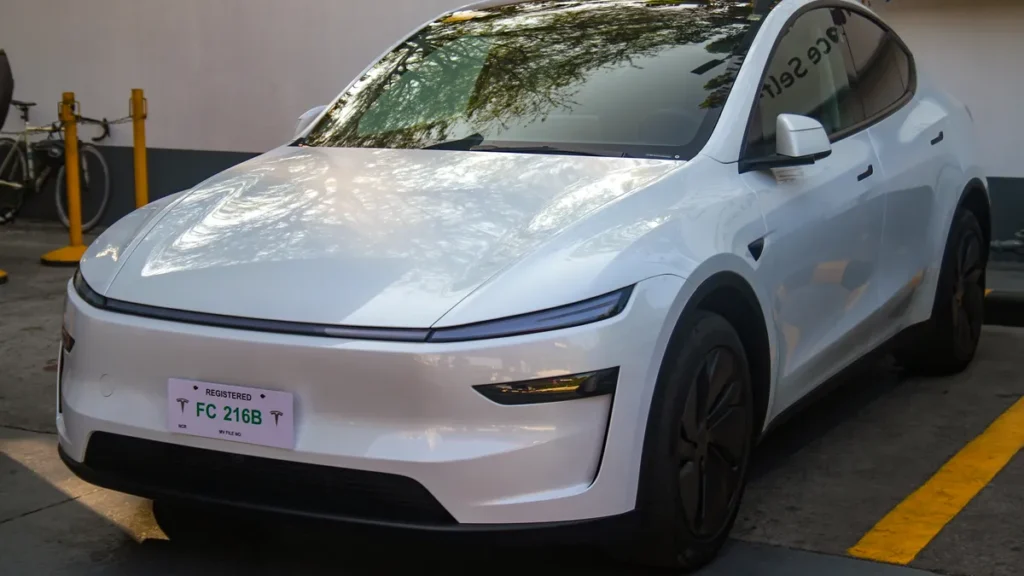
The Model Y RWD is the surprise in that table. On the current 2027 figures it out-ranges the Model 3 Standard by 27 miles, 348 against 321, for $3,000 more, and it averages $25 a month less on insurance. On the 2026 EPA figures the two cars tied at 321 miles, so check the model year on any listing before you compare. The Model 3 is quicker to 60 mph and easier to park, and it is a sedan, so it sits lower and handles more like a car. The Model Y is a crossover, so it sits higher, loads cargo more easily, and gives rear passengers more headroom.
Buy the Model 3 Standard if you want the lowest possible price, the easiest car to park, and the sedan shape. Buy the Model Y RWD if you want the extra space, the higher seat, and the longer 2027 range, and the $3,000 fits your budget. Either way, skip the Performance trims for a first car: the Model 3 Performance reaches 60 mph in 2.9 seconds and the Model Y Performance in 3.3 seconds, and Performance trims cost the most to insure. Speed is the one thing a new driver does not need more of.
If your driving is mostly in town, our best electric cars for city driving guide compares the cheapest city EVs on the same basis, and the LEAF and Equinox EV both undercut Tesla on price. If you are weighing new against used, our used-EV buying guide walks through the same checks for older cars.
What the Standard trim gives up
The Standard is $5,500 cheaper than the Model 3 Premium RWD and $6,000 cheaper than the Model Y Premium RWD, and Tesla cut real features to get there. Know the list before you order, because none of it can be added later.
On the Model 3 Standard, compared with the Premium RWD, you give up ventilated front seats, heated rear seats, the 8-inch rear touchscreen, two speakers (7 instead of 9), FM radio, ambient lighting, and full vegan-leather seats, which become a vegan-leather and textile mix. The mirrors fold by hand, the steering wheel adjusts by hand, the suspension uses passive shocks instead of adaptive ones, and the seat controls move to the touchscreen. What you keep matters more: the panoramic glass roof, heated front seats and a heated steering wheel, the powered trunk, the same cameras, and the same front screen, now 16 inches on new orders since October 2026. The car drives the same and charges the same; it is the cabin that is simpler.
The Model Y Standard gives up more. Its glass roof is covered by a fabric headliner, so you cannot see through it. The front and rear light bars are gone, the wheels are 18-inch steel instead of alloy, the rear seats fold by hand instead of by power, and the ventilated seats and rear screen go too. If the covered glass roof bothers you, the Premium RWD is the step up, at $45,990 before fees.
One more Standard-trim fact that surprises buyers: the Standard trims never came with Autopilot, even before Tesla changed the driver-assistance lineup in January 2026. That change is the subject of the driver-assistance section below, and it applies to every new Tesla, not just the Standard.
Insurance: get a quote before you order
Insurance is the cost that turns a good first-car decision into a bad one, and it is the cost most buyers check last. Do not. Get a real quote for your age, your ZIP code, and the exact trim before you order, because the monthly number swings by hundreds of dollars on those three facts alone.
Compare.com, updated November 10, 2026, puts the average full-coverage premium for a Tesla at $343 a month across all models, $357 a month for a Model 3 and $332 a month for a Model Y. The age split is the part that matters for a first car: drivers under 25 average $480 a month, against $250 a month for adult drivers. Other 2026 aggregators quote lower figures for a 30-year-old with a clean record, around $175 to $235 a month for a Model 3, but that is a different driver profile, so do not blend the two into one number. The rules that hold across every source are simple: under-25 drivers pay far more, Performance trims cost the most, and the car you can afford to buy is not always the car you can afford to insure.
Tesla Insurance, which prices on a Safety Score from your driving, is often 15 to 30 percent cheaper for clean drivers, but it is not available in every state, so check yours on Tesla’s insurance page before you count on it. No insurer currently discounts for FSD.
The practical step is short. Before you place the order, get quotes for the Model 3 Standard and the Model Y RWD from at least two insurers, with the VIN or the exact trim, and compare the monthly figure against the worked example at the end of this guide. If the quote comes back over $400 a month, the Tesla stops being a good first car for your budget, and a cheaper EV with lower premiums is the better buy. Our best used EV under $20,000 guide lists the cars that keep both the purchase price and the insurance bill down.
Safety: what the crash tests actually say
A first car has to protect a new driver, and this is where the Tesla case is strongest. NHTSA gives both the 2026 Model 3 and the 2026 Model Y a 5-star overall safety rating, with five stars in the frontal crash, side crash, and rollover tests. The battery pack sits in the floor, which gives the car a very low center of gravity and makes a rollover far less likely than in a typical gas SUV.
The IIHS results split the two cars, and the split is worth knowing. The Model Y (2026-27) is an IIHS Top Safety Pick+, the institute’s highest award. The Model 3 (2025-27) has no 2026 IIHS award, because it scored Acceptable rather than Good in the updated moderate overlap test, which focuses on rear-seat protection. Some older pages still call the Model 3 a Top Safety Pick+, but that award was under the earlier criteria; under the tougher 2026 rules the Model 3 does not qualify. The current award list, checked against the official IIHS and NHTSA pages on September 26, 2026, gives the award to the Model Y only. Both cars are safe. The Model Y is the stronger of the two on the current scoreboard.
Crash-test stars measure what happens in a crash. They do not measure whether a new driver will avoid the crash, and that is where Tesla’s parental controls earn their place in a first-car decision. Tesla’s built-in parental controls, in the Tesla app under Security and Drivers, let a parent cap the car’s top speed, force Chill mode acceleration, require safety features to stay on, and get a night curfew alert if the car is driven after a set time. Set them up on delivery day, before the first solo drive, not after the first scare.
Driver assistance: what a new Tesla actually includes
This is the biggest trap in this guide, and most of the top-ranking pages about Teslas as first cars still get it wrong. A new Tesla ordered in the U.S. or Canada since late January 2026 does not come with Autopilot. What comes standard is Traffic-Aware Cruise Control, which holds your speed and keeps a set distance from the car ahead, plus active safety features: Automatic Emergency Braking, Forward Collision Warning, Side Collision Warning, Obstacle Aware Acceleration, Blind Spot Monitoring, Lane Departure Avoidance, and Emergency Lane Departure Avoidance. Tesla is plain about the limit: while Traffic-Aware Cruise Control is engaged, you are still responsible for steering.
Autosteer, the lane-centering half of the old Autopilot bundle, is not included on a new order. If you want a new Tesla to steer itself, what Tesla sells is Full Self-Driving (Supervised), and it is now a subscription only: $99 a month in the U.S., with a free 30-day trial at delivery. The old $8,000 one-time purchase ended on February 14, 2026, and Tesla’s page now says FSD is currently not available for outright purchase. The FSD transfer program ended on March 31, 2026, so a subscription does not move to your next car. Enhanced Autopilot is no longer sold. A car that came with Autopilot before the January 2026 change keeps Autosteer; check Controls, then Self-Driving, on the touchscreen to see what your car has.
None of this makes the car self-driving. Autosteer and FSD (Supervised) are both SAE Level 2 driver assistance, which means the driver must stay fully engaged and ready to take over at all times. The owner’s manual warns that Autosteer is a hands-on assistance feature: keep your hands on the steering wheel at all times and always be prepared to take immediate action. FSD watches the driver with the cabin camera, and it cannot be disabled. If the system flags inattention repeatedly, it disengages for the rest of the trip, and after three or five strikeouts, depending on the car, it suspends FSD for a week.
For a first-time driver, the honest summary is this: the standard safety features are genuinely useful, Traffic-Aware Cruise Control is a cruise control and nothing more, and lane centering costs $99 a month on a new car. Do not buy a Tesla for a new driver because you think Autopilot will watch over them. It will not, and on a new car it is not even included.
Charging: home first, Supercharger second
Charging is the second question to settle before you order, and it has a simple answer for a Tesla: home charging first, Supercharger second. Both the Model 3 and the Model Y have a native NACS plug, the Tesla-style connector that SAE standardized as J3400, so they plug straight into any Supercharger with no adapter. That is the charging advantage over most non-Tesla EVs, which still need an approved adapter for Superchargers. Our charging-connector guide explains the plug types and why the adapter matters as much as the port.
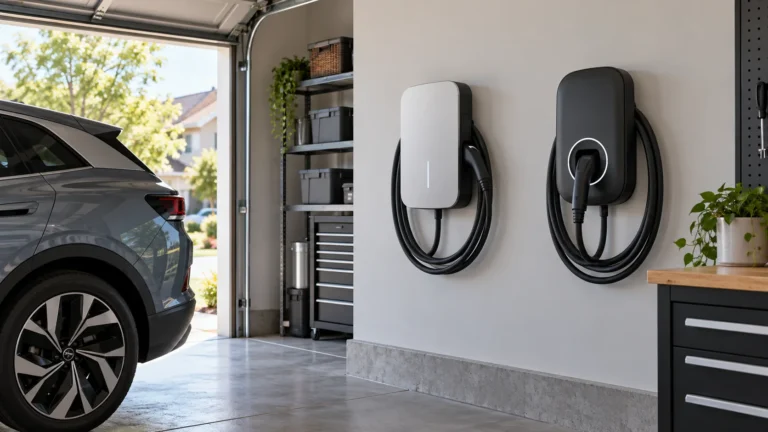
Home charging is where the money is. A Tesla Wall Connector costs $475 for the hardware and delivers up to 11.5 kW on a 60-amp circuit, which adds roughly 44 miles of range per hour to a Model 3. A typical all-in install runs $1,100 to $2,200, covering the hardware, the electrician, and the permit. If your home has an older 100-amp panel, a panel upgrade adds $1,500 to $4,000, so get an electrician’s quote before you order the car, not after. The federal 30C home-charger credit expired on June 30, 2026, so do not subtract it.
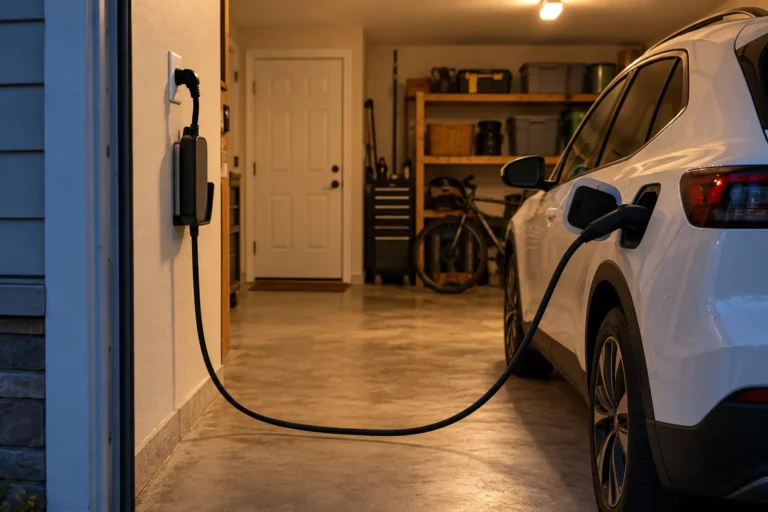
The cheaper path is a 240-volt NEMA 14-50 outlet with Tesla’s Mobile Connector, which is sold separately for about $200 to $300 and delivers up to 7.7 kW, or about 30 miles of range per hour. The outlet install typically runs $300 to $1,500 all-in. A standard 120-volt household outlet works as a backup at 3 to 5 miles of range per hour, but it is not a daily solution: fully recharging a Model Y battery that way can take more than 40 hours.
Here is the first-week setup, with the hardware cost and the installed cost kept separate, because they are different numbers.
On a narrow screen, swipe the table sideways to see all three columns.
| First-week charging setup | Hardware | Installed, typical all-in |
|---|---|---|
| Wall Connector (hardwired, up to 11.5 kW) | $475 | $1,100 to $2,200 |
| Mobile Connector + NEMA 14-50 outlet (up to 7.7 kW) | About $200 to $300 | $300 to $1,500 |
| Panel upgrade, only if your panel needs it | Not applicable | Add $1,500 to $4,000 |
| Supercharger only, no home charging | $0 | $0 |
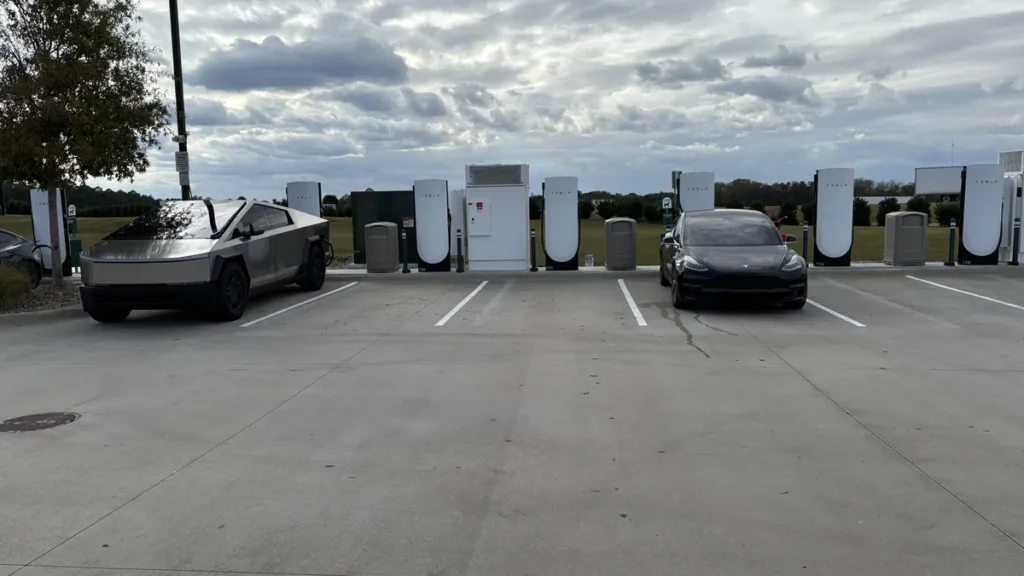
If you cannot charge at home or at work, a Tesla still works, but only if you plan around it: pick at least 300 miles of EPA range, learn where the Superchargers on your regular routes are, and expect to pay per kilowatt-hour at the Supercharger, with the price varying by site and state. Tesla recommends an 80 percent daily charge limit for most battery packs; if your car has an LFP pack, the manual says to charge it to 100 percent at least once a week. A 30-mile weekday uses about 9 percent of the Model 3 Standard’s 321-mile EPA range, or about 12 percent of the 80 percent daily window, so even the cheapest Tesla covers a normal week on two charges. Our home-charging guide walks through the full setup, and our EV range guide explains how speed, weather, and load change the miles you get from a charge.
Warranty and what it does not cover
Tesla’s warranty is straightforward, and it follows the car on resale if the transfer goes through Tesla, which matters if you buy used later. The clock starts at first delivery, not at the model year.
| Coverage | Model 3 and Model Y |
|---|---|
| Basic Vehicle Limited Warranty | 4 years or 50,000 miles, whichever comes first |
| Battery and Drive Unit, Standard trims | 8 years or 100,000 miles, minimum 70 percent capacity |
| Battery and Drive Unit, Premium and Performance trims | 8 years or 120,000 miles, minimum 70 percent capacity |
Two limits deserve attention. The battery warranty covers capacity only down to the 70 percent floor, so gradual degradation above that line is not covered. And it does not cover collision or flood damage, or a pack opened by anyone other than Tesla. Verify the exact warranty row for your trim on Tesla’s warranty page before you order, because Tesla maps its current trim names onto older booklet rows, and the row is the authority, not a summary.
Your first drive: a minute-by-minute checklist
A Tesla drives differently from a gas car in the first five minutes, and that is when a new driver makes mistakes. Use this checklist on your first drive, in order.
Before you sit down. Unlock with your phone key or tap the key card on the driver’s door pillar. Keep the key card in your pocket or wallet as a backup: if your phone battery dies, the key card is the only way in. Set the mirrors and the seat before you move, and turn on Chill mode under Controls, then Pedals and Steering, so the car launches gently.
Sitting down. Open the door and the touchscreen powers on. Press the brake pedal, then swipe up for Drive or down for Reverse on the touchscreen drive-mode strip. On older cars the same job is done with a stalk. If your car has Auto Shift out of Park turned on, it picks Drive or Reverse for you when you press the brake. If the screen says Drive Disabled and Requires Authentication, your key was not detected: place the key card in the phone dock on the center console, wait for the two-minute authentication window to restart, then press the brake again. If you set a PIN to Drive, enter it on the touchscreen first.
The first mile. Expect one-pedal driving: lift off the accelerator and the car slows itself down, using regenerative braking to recover energy. The default stopping mode is Hold, which brings the car to a complete stop and holds it there without the brake pedal. Creep makes the car inch forward like an automatic gas car, and Roll lets it coast. Practice in an empty lot first, because the car stops sooner than a gas car when you lift off. Use the touchscreen for everything: there are almost no physical buttons, and the speed, range, and warnings all live on that one screen. Voice commands cover most controls if you do not want to look away from the road.
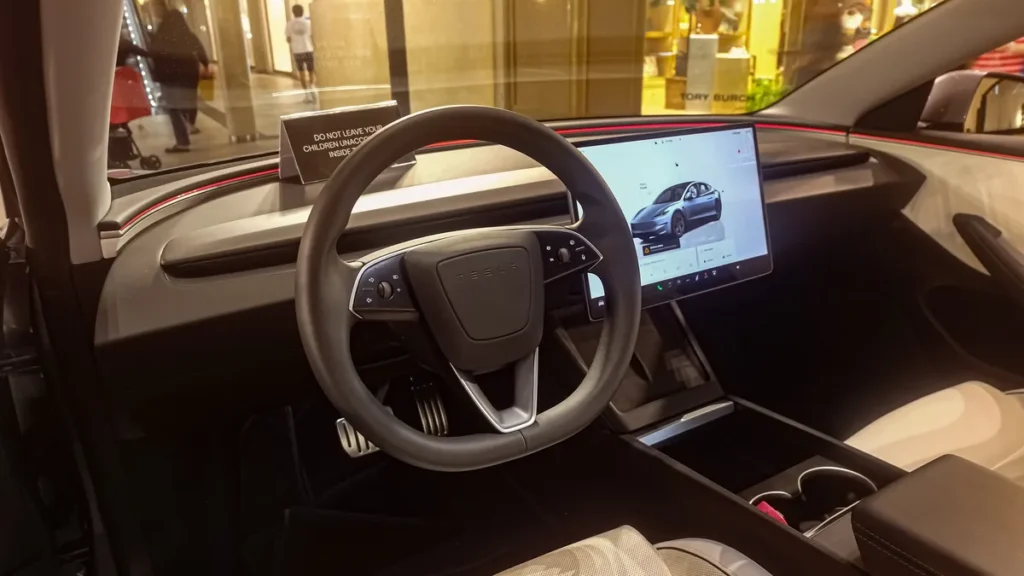
The first charge. Plug in at home first, before you need a Supercharger. Set the charge limit to 80 percent for daily driving. At a Supercharger, plug in, confirm charging started on the screen, and walk away: the car handles the session, and the bill goes to the payment method on your Tesla account.
If this goes wrong on day one. If the phone key fails, check that Bluetooth is on and the Tesla app is running in the background; if the phone battery is dead, use the key card. If the car will not shift, place the key card in the phone dock and press the brake again. If the touchscreen freezes, hold both steering-wheel scroll buttons until the screen goes dark and the Tesla logo appears, then wait for it to restart. If the car still will not drive, call Tesla roadside assistance from the app rather than guessing. These steps come from the 2026 Model 3 Owner’s Manual; the manual on your own car’s touchscreen is the authority for your car.
How do you start a Tesla for the first time?
Unlock the car with your phone key or key card, sit down, and press the brake pedal. Then swipe up for Drive or down for Reverse on the touchscreen drive-mode strip, or use the stalk on older cars. If the screen says driving requires authentication, place the key card in the phone dock on the center console and press the brake again. The whole sequence takes under a minute once you have done it twice.
Is one-pedal driving hard to learn?
No, but it feels strange for the first mile. Lifting off the accelerator slows the car down on its own, and the default Hold mode brings it to a complete stop without touching the brake. Most drivers adjust within one trip, and the car gives you Creep and Roll modes if you want it to behave more like a gas car. Practice in an empty lot before your first trip in traffic.
What is the difference between Autopilot and Full Self-Driving?
Autopilot was Tesla’s standard driver-assistance bundle: Traffic-Aware Cruise Control plus Autosteer lane centering. On new cars ordered since January 2026, only Traffic-Aware Cruise Control comes standard, and Autosteer is gone. Full Self-Driving (Supervised) is the paid package that adds city-street steering, automatic lane changes, and parking, for $99 a month. Both are SAE Level 2, so the driver must stay engaged at all times, and neither makes the car self-driving.
What a first year actually costs: a worked example
The sticker price is not the first-year cost. Here is what a first-time buyer actually pays in year one for the cheapest new Tesla, the Model 3 Standard, with every input dated and sourced. State sales tax and registration vary by state, so they are not in this table: add your own state’s figures before you decide.
On a narrow screen, swipe the table sideways to see all three columns.
| Year-one cost, Model 3 Standard | Adult driver | Driver under 25 |
|---|---|---|
| Car, delivered before tax | $38,630 | $38,630 |
| Insurance, first year (Compare.com, Nov 10, 2026) | $3,000 (12 x $250 a month) | $5,760 (12 x $480 a month) |
| Home charging setup | $0 to $2,200 | $0 to $2,200 |
| Year-one total before state tax and registration | $41,630 to $43,830 | $44,390 to $46,590 |
Check the maths: $38,630 plus $3,000 is $41,630, and plus $2,200 more is $43,830. For a driver under 25, $38,630 plus $5,760 is $44,390, and plus $2,200 is $46,590. The insurance line uses the Compare.com averages, $250 a month for an adult driver and $480 a month for a driver under 25, updated November 10, 2026. Your own quote will differ, so replace these two lines with your quotes and redo the total. Electricity is not in the table either, because it depends on your miles and your local rate; at the early-2026 U.S. average of about $0.18 per kilowatt-hour, a 30-mile weekday in the Model 3 Standard costs roughly $1.30 a day in electricity at home.
The Model Y RWD adds $3,000 to the car line, $41,630 delivered before tax, and averages $25 a month less on insurance, $332 a month against $357 for the Model 3. Adding FSD costs $99 a month, or $1,188 a year, on top of either car, and it is optional: skip it in year one and use the 30-day free trial to decide whether lane centering is worth it to you.
A used Tesla as a first car: when it makes sense
A used Tesla can be a better first car than a new one, and the numbers explain why. A used Model 3 from 2019 or 2020, the Standard Range Plus, starts at about $18,000 to $22,000 in asking price, which is about $15,000 less than the cheapest new Model 3 before fees at the top of that range. That saving covers several years of insurance. The trade is warranty and driver assistance: check the remaining battery and drive-unit coverage by VIN, not by model year alone, and run the VIN through NHTSA’s recall lookup before you pay, because some recalls need a service visit rather than an over-the-air update.
One advantage of buying used is that a car that came with Autopilot before January 2026 keeps Autosteer, so a used Tesla can have the lane centering that a new one no longer includes. Confirm it on the car’s own touchscreen under Controls, then Self-Driving, before you buy, because the feature belongs to the car and the listing may not mention it. Our used-EV buying guide covers the full inspection sequence, and our best used EV under $20,000 guide lists the budget picks that compete with a used Model 3.
Common first-week mistakes
- Ordering before getting an insurance quote, then finding the monthly premium is higher than the car payment.
- Assuming a new Tesla steers itself. It does not, and lane centering now costs $99 a month.
- Comparing a 2026 range figure with a 2027 price. Check the model year on every figure.
- Buying the Performance trim for a first car. The speed is the risk, and the insurance bill proves it.
- Skipping the home-charging quote. A panel upgrade can add $1,500 to $4,000, and it is better to know before delivery day.
- Charging to 100 percent every day on an NMC pack. Keep the daily limit at 80 percent unless your car has an LFP pack.
- Leaving parental controls unset. Set the speed limit and Chill mode on delivery day, before the first solo drive.
The shortlist: who should buy, who should wait
Buy a Tesla as a first car if you can charge at home or at work, if the insurance quote for the Model 3 Standard or the Model Y RWD fits your monthly budget, and if you want the strongest crash-test ratings and the simplest fast-charging network in the U.S. Between the two, the Model 3 Standard is the lowest price and the easiest to park, and the Model Y RWD is the roomier car with the longer 2027 range. Either one is a good first car on those terms.
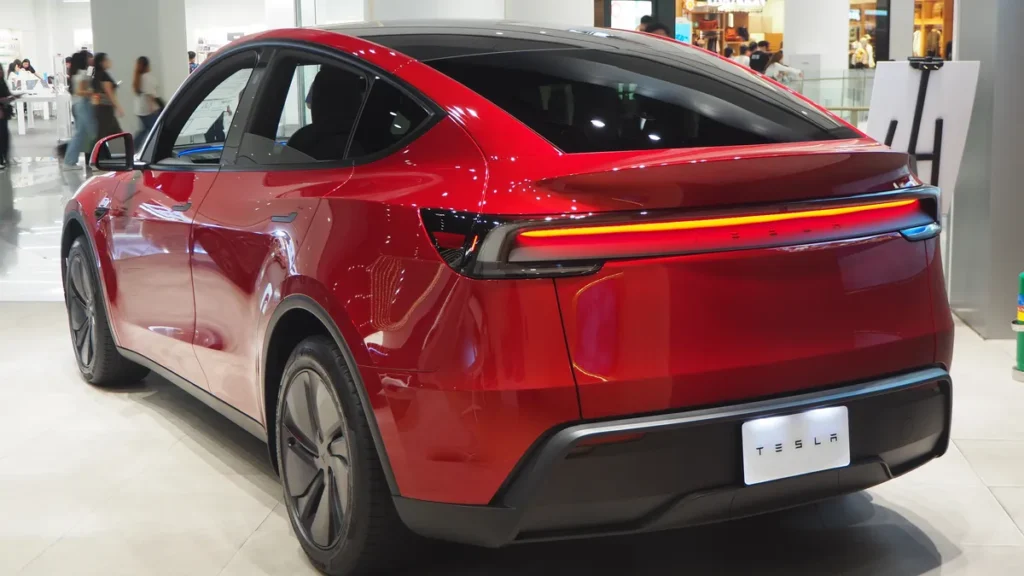
Wait, or buy something else, if the insurance quote comes back over $400 a month, if you have no reliable charging, or if you need a third row every day: the Model Y Premium AWD offers seven seats for $2,500 more, but a real three-row is a different car, and our electric minivan guide covers the options that actually seat seven. The six-seat Model Y L costs $61,990, and the Model S, Model X, and Cybertruck all cost far more, so none of them is a first-car pick. And if the Tesla price still stings, a used Model 3 from about $22,000 gives you the same Supercharger access and the same safety structure for roughly half the money, with the warranty check done by VIN first.
Sources
- U.S. DOE / EPA, fueleconomy.gov: 2026 Tesla Model 3 fuel economy and range, all variants, checked November 14, 2026. 2026 Model 3 EPA table
- U.S. DOE / EPA, fueleconomy.gov: 2026 Tesla Model Y fuel economy and range, all variants, checked November 14, 2026. 2026 Model Y EPA table
- Tesla U.S. configurator, Model 3 trims and prices, read October 21, 2026, via Trendy Tech Tribe
- Tesla U.S. configurator, Model Y trims and prices, read October 19, 2026, via Trendy Tech Tribe
- Electrek, November 13, 2026: Tesla removes the $41,990 Model Y AWD from the U.S. configurator. Electrek
- Tesla U.S. support pages, read November 8, 2026, via Trendy Tech Tribe: Tesla Autopilot vs FSD 2026
- NHTSA and IIHS ratings, checked against the official rating pages September 26, 2026, updated October 11, 2026, via TSLNA safety ratings
- Compare.com, updated November 10, 2026: Tesla insurance averages by model and driver age (research log)
- Tesla home charger installation costs, 2026, via Earth Energy Log
- Tesla Model 3 Standard features vs Premium, October 2026, via Trendy Tech Tribe and Ryan Shaw Media
- Tesla Model 3 October 2026 update (Premium AWD 3.8 seconds, Performance 528 hp), via Notebookcheck, October 2, 2026
- 2026 Tesla Model 3 Owner’s Manual, North America, via the manual excerpts in the research log
- Used Model 3 prices, updated November 10, 2026, via The EV Authority
- Tesla Model 3 vs Model Y EPA comparison, updated November 6, 2026, via CarWhere
About this guide
Written by Sam Wilson for EV Palace. Prices, range figures, and driver-assistance terms were checked against the sources above on November 14, 2026. Tesla changes prices, trims, and software without notice, so confirm the configurator and the car’s own touchscreen on the day you order. This guide was prepared with substantive AI assistance: the research, figures, and structure were checked by a human editor before publication, and no vehicle was tested and no dealer stock was audited for this article. Insurance figures are averages for the driver profiles named, not quotes; get a real quote for your age, ZIP code, and trim before you buy.
Is a Tesla a good first car for a teenager?
Yes, if you buy the right trim and set the parental controls. The Model 3 Standard ($36,990 before fees) or Model Y RWD ($39,990) give a new driver a 5-star NHTSA safety rating and Supercharger access. Set a speed limit and Chill mode on delivery day, get an insurance quote first (drivers under 25 average $480 a month), and skip the Performance trims.
How much does the cheapest new Tesla cost?
The Model 3 Standard costs $36,990 before fees, or $38,630 delivered before state tax and registration (Tesla configurator, November 2026). The cheapest Model Y RWD costs $39,990, or $41,630 delivered. Both figures add Tesla’s $1,390 destination charge and $250 order fee.
Does a new Tesla come with Autopilot?
No. New Model 3 and Model Y cars ordered since late January 2026 come with Traffic-Aware Cruise Control and active safety features only. Lane-centering Autosteer is not included; it comes with Full Self-Driving (Supervised), which costs $99 a month as a subscription, with a free 30-day trial at delivery.
How much does insurance cost for a first-time Tesla driver?
It depends on age. Compare.com (November 10, 2026) puts the average full-coverage premium at $480 a month for drivers under 25 and $250 a month for adult drivers, with the Model 3 averaging $357 a month and the Model Y $332 a month. Get a real quote for your age, ZIP code, and trim before you order.
Do I need a home charger for a Tesla?
No, but home charging is the cheapest way to run one. A Wall Connector costs $475 plus installation (typically $1,100 to $2,200 all-in). A Mobile Connector with a NEMA 14-50 outlet costs about $200 to $300 plus $300 to $1,500 for the outlet. Without home charging, plan your driving around Superchargers.