EV Work Van Guide: Range, Payload and Charging
The best electric work van for most U.S. buyers in late 2026 is the 2027 Ford E-Transit, from $54,260 before destination with up to 166 miles of maker-estimated range and the largest dealer and upfit network in the country. That recommendation only holds if your routes fit inside about 115 miles a day once you plan with a 20 percent reserve. If your routes run longer, the Mercedes-Benz eSprinter with the 113 kWh battery (up to 206 miles, from $59,410) is the range leader, and the Ram ProMaster EV (up to 164 miles, from $56,495) DC fast charges at up to 150 kW. The longest-range van of all, the Chevrolet BrightDrop 600 at up to 272 miles, is no longer in production, so only remaining 2025 stock is left. There is no federal tax credit to subtract any more: the commercial clean vehicle credit ended for vehicles acquired after September 30, 2025.
This guide compares the five electric work vans you can actually buy in the United States right now, with every range, payload and price tied to the exact configuration that earns it. Prices are the maker’s suggested retail price before destination unless a delivered figure is stated. All figures were checked November 27, 2026.
The 5 electric work vans you can buy in late 2026
Five vans make up the U.S. electric work van market in late 2026: the Ford E-Transit, the Mercedes-Benz eSprinter, the Ram ProMaster EV, the Rivian Commercial Van and the Chevrolet BrightDrop 400 and 600. That is the whole shortlist. Everything else is either a pickup, a van that is not sold here, or a van whose maker has stopped building it.
| Van | Starting MSRP (before destination) | Range (maker estimate) | Battery | DC fast charge peak | Max payload | Max cargo volume |
|---|---|---|---|---|---|---|
| Ford E-Transit (2027) | $54,260 | Up to 166 mi | 89 kWh usable | 176 kW | 3,322 lb (cargo van) | 487.3 cu ft |
| Mercedes-Benz eSprinter (2025) | $52,700 | Up to 150 mi (81 kWh) / 206 mi (113 kWh) | 81 or 113 kWh | 110 kW | 3,516 lb (81 kWh) | 488.1 cu ft |
| Ram ProMaster EV (2025) | $56,495 | Up to 164 mi | 110 kWh | 150 kW | 3,020 lb | 524 cu ft |
| Rivian Commercial Van 500 / 700 (2025) | $79,900 / $83,900 | 161 mi / 160 mi | 100 kWh LFP | 100 kW | 2,663 lb / 2,258 lb | 487 cu ft / 652 cu ft |
| Chevrolet BrightDrop 400 / 600 (2025, remaining stock) | $66,100 (600; 400 price by dealer quote) | 159 mi / 164 mi standard; up to 272 mi max | Ultium NMC, two sizes | 120 kW | 3,580 lb / 3,180 lb | 412.4 cu ft / 614.7 cu ft |
Read the table with two warnings. First, none of these range figures is an EPA rating, and the next section explains why that matters. Second, the BrightDrop row is the only one in the table for a van you can no longer order new from the factory. The rest of this guide keeps those two facts in view, because most of the guides ranking above this one get both of them wrong.
Two things every other guide gets wrong
Search for “ev work van” today and the top results will tell you two things that were true in early 2025 and are not true now. Both of them change the buying maths by thousands of dollars, so they belong at the top of this guide rather than in a footnote.
Is there still a $7,500 federal tax credit for an electric work van?
No. The federal commercial clean vehicle credit, section 45W of the tax code, is not available for vehicles acquired after September 30, 2025. The IRS states this plainly on its own credit page, and the statute itself says no credit shall be determined for any vehicle acquired after that date. The credit was worth up to $7,500 for vans under 14,000 lb gross vehicle weight rating and up to $40,000 for heavier ones, and the One, Big, Beautiful Bill (Public Law 119-21, signed July 4, 2025) ended it. A buyer who signed a binding written contract and made a payment on or before September 30, 2025 can still claim it when the van is delivered, but a van bought today gets nothing from the federal government.
Every total-cost table on the ranking pages subtracts $7,500 that no longer exists. Do not let a dealer or a guide do that subtraction for you. The consumer credit (section 30D) never applied to a commercial van purchase in the first place, so there is no consumer-credit workaround either. State programs still exist, such as California’s HVIP voucher and New York’s Truck Voucher program, and they are worth checking with your state agency, but this guide does not subtract any incentive it cannot verify for your state. Section 179 expensing and bonus depreciation for business vehicles are tax questions for your own tax adviser, not a discount on the sticker price.
Can I still buy a BrightDrop?
Only from remaining stock. General Motors confirmed on October 21, 2025 that BrightDrop production had ended at its CAMI Assembly plant in Ingersoll, Ontario, and that production would not move to another site. The plant had already been idle since May 2025. The vans were rebranded as the Chevrolet BrightDrop 400 and 600 for the 2025 model year, and Chevrolet’s own website still listed the 2025 BrightDrop 600 from $66,100 in October 2026, but that is leftover inventory, not a current model you can order and wait for. Buying one means checking what a dealer actually has on the lot, confirming the exact battery pack (there are two sizes, and only the larger one reaches 272 miles), and asking about parts and service support for a discontinued line before you sign. The BrightDrop is still the longest-range electric work van on paper, which is exactly why it needs this warning: the headline figure is real, and the van behind it is not being built any more.
How to read work van range figures
No electric work van sold in the United States carries an EPA range rating. The EPA does not rate Class 2b commercial vehicles over 8,500 lb gross vehicle weight rating, and none of these vans appears on fueleconomy.gov. Every range figure in this guide is therefore a maker estimate, measured on the maker’s own test cycle, and the makers do not all measure the same way.
That is why the numbers on different guides disagree so wildly. One ranking page gives the E-Transit 126 miles, another 159, another 165. All three are quoting something real, and all three are wrong for a buyer in late 2026. The 126-mile figure belongs to the 2022 and 2023 E-Transit with the old 68 kWh battery. The 159-mile figure is the 2024 to 2026 van with the 89 kWh battery. The 166-mile figure is the 2027 van. Same story at Mercedes: the 249-mile eSprinter figure that appears on some pages is a European WLTP number mislabelled as an American EPA figure. The American figure from Mercedes-Benz Vans is up to 206 miles with the 113 kWh battery. Whenever a guide calls a van range “EPA”, check whether the van is EPA-rated at all. For these five vans, it is not.
How far will an EV work van really go on a route?
Plan on 70 percent of the headline figure. Leave the depot at 90 percent charge, plan to return at 20 percent, and the 70 percent in between is your working range. That reserve covers a detour, a closed charger, a cold morning and a heavier load than usual. On that basis the working ranges are: E-Transit low roof 116 miles, eSprinter with the 113 kWh battery 144 miles, eSprinter with the 81 kWh battery 105 miles, ProMaster EV 115 miles, Rivian 500 113 miles, Rivian 700 112 miles, BrightDrop 600 with the larger pack 190 miles, and BrightDrop 600 with the standard pack 115 miles.
Cold weather takes another cut. Fleet testing and maker guidance agree that a loaded van in sub-freezing weather with the cabin heater running can lose 20 to 30 percent of its range, and a van that spends its day at highway speed loses range faster than one that stops and starts in town, because stop-and-go driving recovers energy through regenerative braking. Apply a 30 percent winter cut to the 70 percent window and the E-Transit low roof drops to about 81 miles of working range on a cold January day, while the 113 kWh eSprinter still clears about 101 miles. If your routes run in winter, buy the van that clears your longest day after both cuts, not the one that clears it on paper in June. A heat pump helps: the E-Transit has had a standard vapor-injection heat pump since the 2026 model year, which cuts the heating penalty compared with the older resistance heater.
Do electric work vans lose range in winter?
Yes, all of them do, for the same two reasons. A cold battery holds less usable energy, and heating the cabin draws power that would otherwise drive the wheels. Precondition the van while it is still plugged in at the depot so the battery and cabin are warm before the first stop, keep the van plugged in overnight in cold weather, and plan winter routes on the winter figure, not the headline figure. If your longest winter day is close to a van’s 70 percent window, that van is the wrong van for that route.
Ford E-Transit: the best EV work van for most buyers
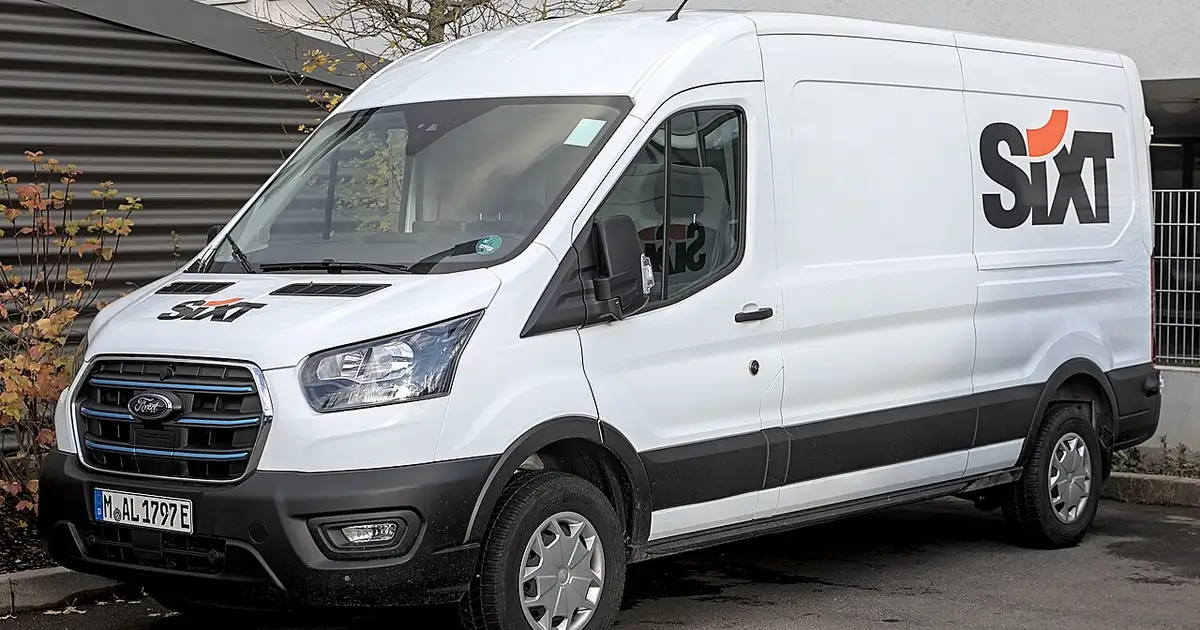
The E-Transit is the default choice, and for most buyers it is the right one. It is the cheapest van in this guide to buy, it has the largest dealer and service network of any electric work van, it shares its body with the gas Transit so upfitters already know it, and it is the only van here with a power outlet system that runs tools from the traction battery. Ford has sold more electric vans in the United States than anyone else, and the 2027 model carries the same hardware that made the 2024 to 2026 vans work, with a small range increase.
The 2027 E-Transit uses a single rear motor with 266 horsepower and 317 lb-ft of torque, driving the rear wheels, and an 89 kWh usable battery. Ford estimates up to 166 miles for the low-roof cargo van, 155 miles for the medium roof, and 149 or 148 miles for the high-roof models depending on length. The 2026 van, which is still on dealer lots, is rated up to 159 miles for the low roof, 148 for the medium roof and 143 or 142 for the high roof. The low-roof figure is demonstrated on testing consistent with the EPA drive-cycle method; the other roofs are analytical adjustments from that test. Starting prices for the 2027 cargo van run from $54,260 before destination, and the chassis cab starts lower. The 2026 cargo van started at $53,260 before destination, with a $2,095 destination charge, so a low-roof 2026 van cost $55,355 delivered.
Charging is the E-Transit’s weakest point on paper and a non-issue in practice for depot-based work. The van takes up to 176 kW from a DC fast charger, and Ford says a 180 kW or faster charger can bring the battery from 10 to 80 percent in about 28 minutes, adding about 67 miles in 15 minutes. The dual onboard chargers accept up to 19.2 kW on Level 2, so a full charge takes about six hours on Ford’s 80-amp Series 2 charger and about eight hours on a standard 48-amp Level 2 charger. That is an overnight charge, which is exactly how this van is meant to be used. The charge port is CCS1 with a J1772 inlet for Level 2. Ford’s approved NACS DC adapter opens Tesla Superchargers to the E-Transit, and for the 2027 model the adapter is a standalone hardware option rather than being bundled with the Mobile Power Cord.
Payload is up to 3,322 lb for the 2027 cargo van, and up to 4,055 lb for the cutaway and chassis cab versions that upfitters turn into service bodies and box trucks. Cargo volume runs from 277.7 cubic feet in the smallest cargo van to 487.3 cubic feet behind the front seats in the largest, and up to 536 cubic feet including cutaway bodies. The available Pro Power Onboard system exports 2.4 kW of 120-volt power from the battery, which runs tools and equipment at a jobsite while the van is driving or charging. The battery warranty is 8 years or 100,000 miles. Standard equipment for 2026 and 2027 includes the Ford Co-Pilot360 driver-assistance suite, a 12-inch touchscreen with SYNC 4, and Ford Pro Telematics for fleet tracking and charge monitoring.
Buy the E-Transit if your routes are predictable, under about 115 miles a day on the planning window, and you can charge at the depot overnight. Skip it if your longest day regularly passes 140 miles in winter, or if you need the biggest cargo box in this guide, because the BrightDrop 600 and the Rivian 700 both hold more.
Mercedes-Benz eSprinter: the longest range
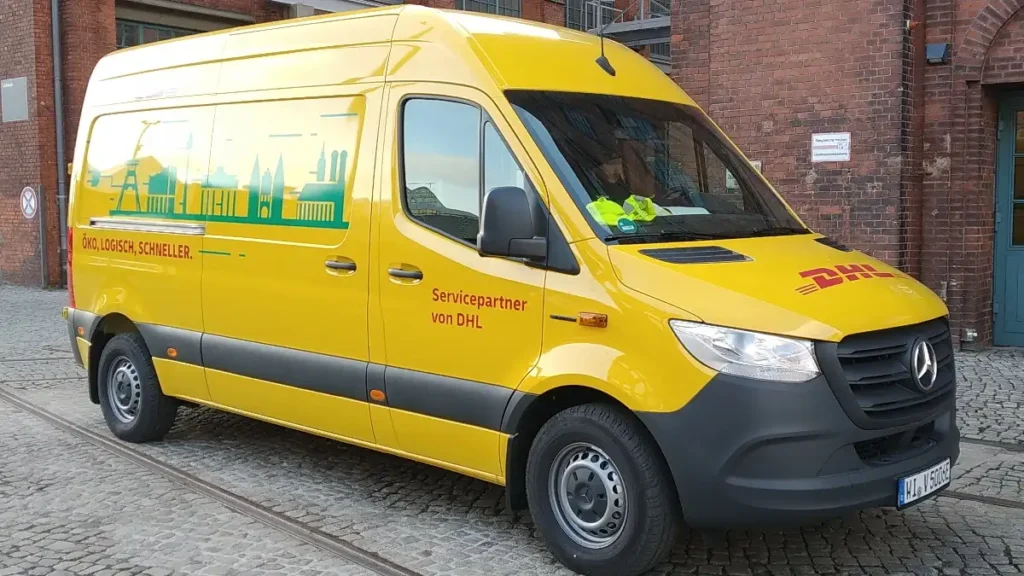
The eSprinter is the range leader among vans you can still order, and it is the only van in this guide where the battery choice changes the van. The 113 kWh battery gives up to 206 miles of Mercedes-estimated range; the 81 kWh battery gives up to 150 miles. The smaller battery is lighter, so it carries more: up to 3,516 lb of payload in the 144-inch standard-roof van, against 2,624 lb with the big battery. That is an 892 lb trade-off, and it is the single most important decision in the eSprinter range. A buyer who orders the long-range battery for a heavy load has bought the wrong van twice.
Prices from the Mercedes-Benz Vans configurator run $52,700 for the 144-inch standard-roof van, $56,250 for the 144-inch high-roof van, and $59,410 for the 170-inch high-roof van, all before destination. The High Output motor, 201 horsepower against the standard 134, adds $2,850. The 2025 model year is the one Mercedes-Benz Vans lists on its own site, and the 2026 carries over unchanged. Older guides quote $61,250 to $71,460 for this van; that is launch pricing from before the smaller battery and the shorter wheelbase arrived, and it is no longer current.
The eSprinter is a rear-wheel-drive cargo van with a rear-mounted motor, available in 144-inch and 170-inch wheelbases and standard or high roofs. Cargo volume runs from 319.0 cubic feet in the short standard-roof van to 488.1 cubic feet in the long high-roof van. Charging is the slowest in this guide: up to 110 kW on DC, taking 10 to 80 percent in about 32 minutes with the small battery and 42 minutes with the big one, and a 9.6 kW onboard charger that needs 12 to 13 hours for a full Level 2 charge. That is still an overnight charge, but it is the longest overnight charge here, so a depot with several eSprinters needs to think about panel capacity sooner than a depot with E-Transits. The charge port is CCS1 with a J1772 inlet. Mercedes-Benz sells an approved NACS DC adapter for $185, and its electric vehicles have had access to Tesla Superchargers since February 4, 2025 through the Mercedes me Charge service; native NACS ports arrive on new Mercedes electric vehicles from late 2025, but the eSprinter is still CCS1 for 2025.
Mercedes-Benz lists no tow rating for the eSprinter, so if you tow, buy the diesel Sprinter instead. The battery warranty is 8 years or 100,000 miles, and the first four scheduled services are included for four years or 100,000 miles. Buy the eSprinter if your routes run 120 to 140 miles a day and you want the most range without buying a discontinued van. Buy the 81 kWh version if your routes are short and your loads are heavy, because it carries nearly 900 lb more and costs $6,710 less than the long high-roof van with the big battery.
Ram ProMaster EV: the newest work van
The Ram ProMaster EV is the newest van in this guide. It DC fast charges at up to 150 kW, against 176 kW for the E-Transit and 110 kW for the eSprinter, and because its 110 kWh battery is smaller than the eSprinter’s big pack it spends less time at a charger for the same top-up. Ram targets up to 164 miles of combined range for the cargo van, and quotes 162 city miles at 50 percent payload on its own site. The step van version targets up to 180 miles in city driving. These are Ram targets, not EPA ratings, and Ram is the only maker here that publishes a city figure at half payload, which is the honest way to state a delivery van’s range.
The van is a high-roof cargo van on a 159-inch wheelbase, in 12-foot or extended 13-foot cargo lengths, in Tradesman, SLT and SLT+ trims, plus a Super High Roof step van. A 200 kW front-mounted drive module makes 268 horsepower and 302 lb-ft of torque through the front wheels. Launch prices before the $1,995 destination charge are $56,495 for the Tradesman, $59,490 for the SLT, $63,490 for the SLT+, $58,495 for the extended-length Tradesman, and $69,995 for the step van. A delivered Tradesman therefore costs $58,490. Payload is up to 3,020 lb. Cargo volume is 420 cubic feet in the 12-foot van and up to 524 cubic feet in the 13-foot extended van, the largest cargo volume of any conventional cargo van in this guide, and the load floor is flat and lower than the E-Transit’s or the eSprinter’s, which matters when a driver loads and unloads fifty times a day.
Charging uses a CCS1 port, with Level 2 up to 11 kW. Stellantis opened Tesla Supercharger access to its electric vehicles on March 19, 2026, with the Free2move Charge NACS-CCS1 DC adapter, available at low-emission-vehicle certified dealerships and through Mopar.com, and the ProMaster EV model years 2024, 2025 and 2026 are all listed as compatible. Only Stellantis-approved adapters may be used at Superchargers. The e-powertrain and battery warranty is 8 years or 100,000 miles, and the Uconnect 5 system with a 10.1-inch touchscreen is standard.
Buy the ProMaster EV if your operation is last-mile delivery with many stops, a low load floor and a fast mid-day top-up matter more than maximum range, or if you want the step van body that no other electric van in this guide offers. Its 164-mile target range is the shortest headline figure among the current vans, so check it against your longest day on the 70 percent window before anything else.
Rivian Commercial Van: the delivery-built EV work van
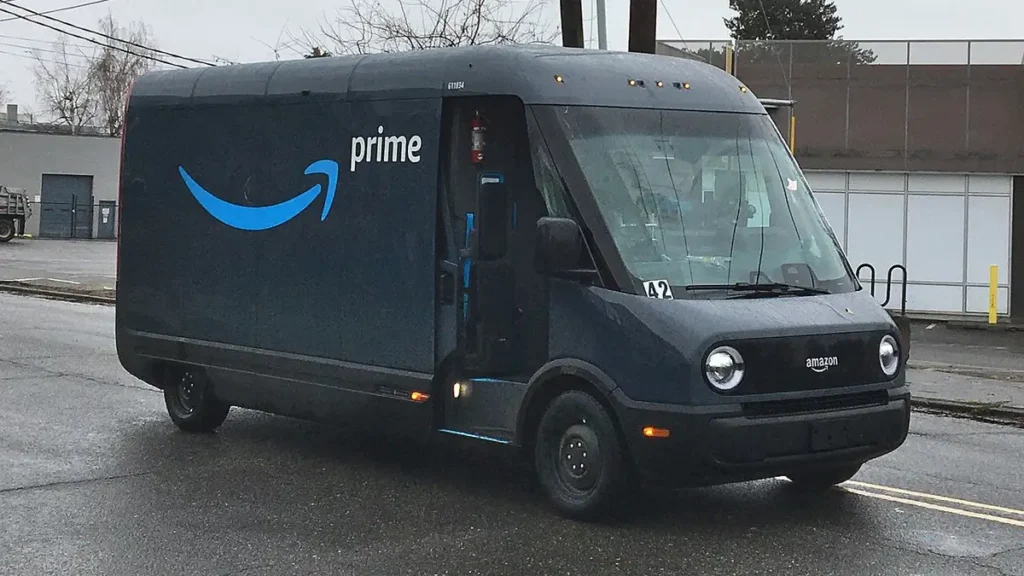
The Rivian Commercial Van is the only van in this guide that was designed around delivering packages rather than adapted from a gas van. Amazon co-developed it, more than 30,000 of them are already delivering packages in the United States, and Amazon has committed to 100,000 by 2030. Rivian opened sales to fleets of all sizes in February 2025, ending the Amazon exclusivity, but it is still a fleet-only vehicle: there is no consumer version, and you buy through Rivian’s Fleet Sales team.
Two versions are offered. The Delivery 500 starts at $79,900, carries 487 cubic feet, and is rated at 161 miles. The Delivery 700 starts at $83,900, carries 652 cubic feet, and is rated at 160 miles. Both use the same 100 kWh lithium iron phosphate battery, LFP chemistry rather than the NMC chemistry in the other vans, and the same single front motor with 320 horsepower. Payload is 2,663 lb for the 500 and 2,258 lb for the 700. Overall length is 248 inches for the 500 and 278 inches for the 700, and gross vehicle weight rating is 9,500 lb for both.
The delivery design shows in the details: an automatic bulkhead door that opens as the driver shifts into park, a 360-degree camera view, integrated shelving, and a sliding door and rear door arranged for fast stops. Charging is the slowest in this guide after the eSprinter: a CCS1 port, DC fast charging up to 100 kW, and Level 2 at 11 kW. Rivian provides NACS adapters as an opt-out option for the new vans, but the current vans are CCS1. That charging speed is fine for a van that returns to the depot every night and poor for one that needs a mid-day fast charge, so the Rivian only works with a depot plan.
Rivian is developing a larger battery pack targeting roughly 30 percent more range, about 209 miles, and an all-wheel-drive version, but neither has a firm public date. Buy the Rivian if you run a parcel operation with hundreds of stops a day and the delivery ergonomics are worth the premium price and the slower charging. Do not buy it as a general trades van: at $79,900 it is the most expensive van in this guide, its payload is the lowest except for the eSprinter with the big battery, and its 100 kW charging is the slowest.
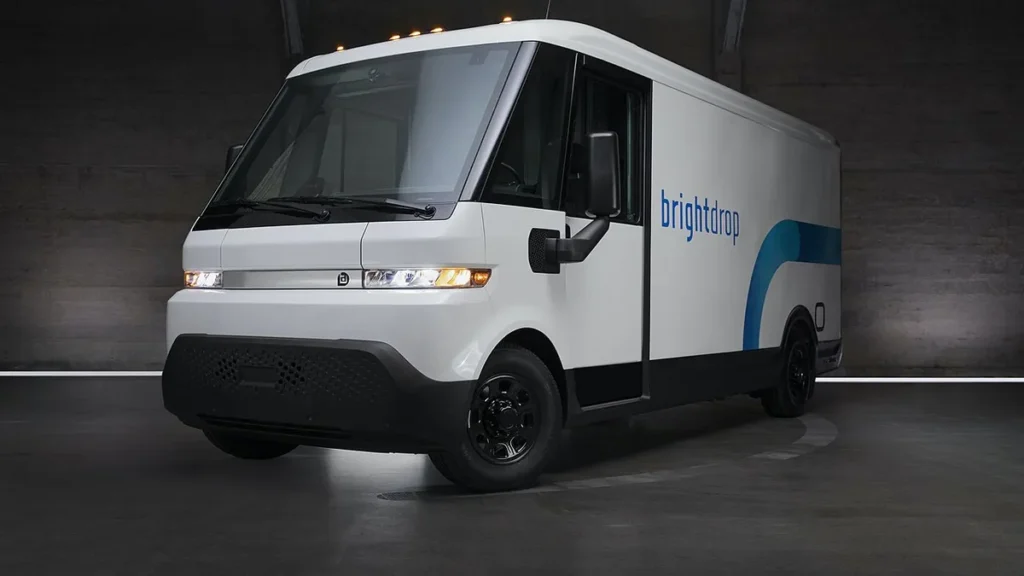
Chevrolet BrightDrop 400 and 600: the longest range you can no longer order
The BrightDrop 600 is the longest-range electric work van on paper in the United States, and it is the one van in this guide you should not plan a purchase around. General Motors ended production on October 21, 2025, and the plant has been idle since May 2025. What remains is 2025 stock: Chevrolet’s own website listed the 2025 BrightDrop 600 from $66,100 in October 2026. There is no published price for the 400, so a buyer has to get a quote from a Chevrolet commercial dealer.
The figures themselves are strong. GM estimates a standard-range combined figure of 164 miles for the 600 and 159 miles for the 400, and a max-range combined figure of 272 miles for both, from the larger of the two Ultium battery packs. Maximum available payload is 3,180 lb for the 600 and 3,580 lb for the 400, the highest payload in this guide. Cargo volume is 614.7 cubic feet for the 600 and 412.4 cubic feet for the 400. The vans are all-wheel drive, with a gross vehicle weight rating of 9,990 or 11,000 lb depending on configuration. DC fast charging peaks at 120 kW.
If you find a remaining 2025 BrightDrop 600 with the larger battery pack, it is the only van in this guide that clears a 190-mile day on the 70 percent planning window, and it undercuts the Rivian on price while carrying far more. Before you buy one, verify the battery pack size from the van’s own build codes, confirm the dealer will service it, and ask about parts availability for a discontinued line. A van that is no longer built can still be a good buy at the right price, but only with those three checks done first. Do not order one expecting a factory build slot, because there is none.
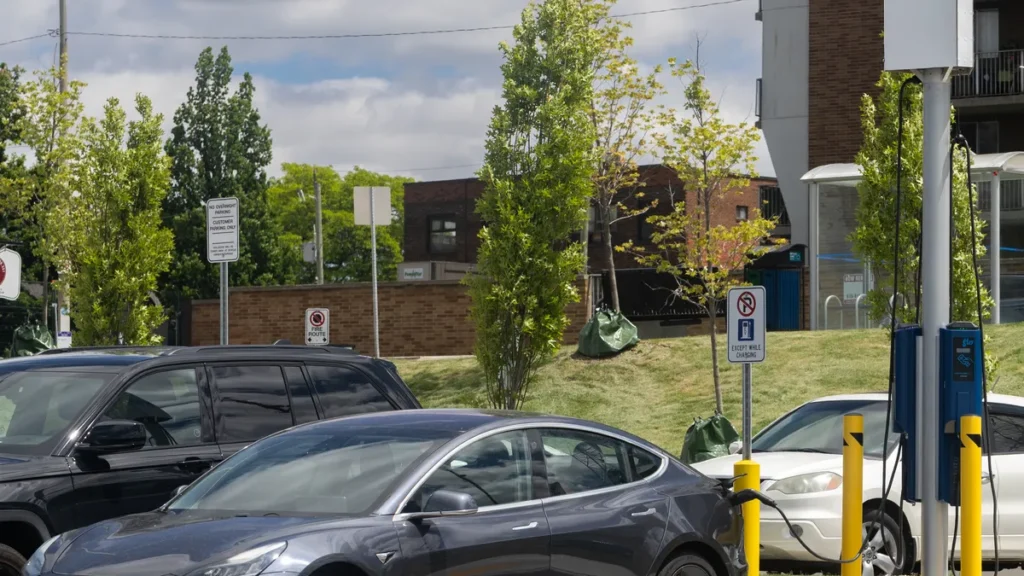
Charging an EV work van: port, adapter and network, van by van
Charging a work van is three separate checks, and a guide that only lists the charge port has answered one of them. The port is the physical plug. The adapter is whether the maker sells an approved adapter for the other plug. Network access is whether the maker’s software and account system actually let the van charge on that network. A plug that fits does not prove access.
| Van | Charge port | Approved NACS DC adapter | Tesla Supercharger access | DC peak | Level 2 |
|---|---|---|---|---|---|
| Ford E-Transit | CCS1 / J1772 | Yes, Ford-approved (standalone option for 2027) | Yes, since Feb 2024 | 176 kW | Up to 19.2 kW |
| Mercedes-Benz eSprinter | CCS1 / J1772 | Yes, MB-approved, $185 | Yes, since Feb 4, 2025 | 110 kW | 9.6 kW |
| Ram ProMaster EV | CCS1 / J1772 | Yes, Stellantis Free2move | Yes, since Mar 19, 2026 | 150 kW | 11 kW |
| Rivian Commercial Van | CCS1 / J1772 | NACS adapters as opt-out option | Via adapter (confirm with Rivian) | 100 kW | 11 kW |
| Chevrolet BrightDrop | CCS1 / J1772 | Not confirmed by GM | Not confirmed, ask the dealer | 120 kW | Ask the dealer |
None of these vans has a native NACS port. Every one of them charges at home base on Level 2, and that is how they should be charged: a van that returns to the depot every night should almost never need a public fast charger. The DC figures matter for the days that run long, not for the normal day.
Can I charge an electric work van on a standard household outlet?
Technically yes, practically no. A 120-volt outlet adds about 3 to 4 miles of range per hour, so a full charge of any of these vans takes more than a day. A 240-volt Level 2 circuit is the minimum for a work van: 9.6 to 19.2 kW depending on the van, which fills the battery overnight in roughly 6 to 13 hours. For a depot, plan one Level 2 charger per van, size the electrical panel with your electrician before the vans arrive, and check whether your utility charges demand fees for coincident peaks, because five vans charging at once can trigger them. A driver who takes a van home needs a 240-volt circuit at home, not an extension cord.
Worked example: an electrician’s 90-mile day with 2,200 lb on board
Take one real trade. An electrician drives 90 miles a day between jobs, carries 1,800 lb of tools, cable, panels and materials, and has 400 lb of shelving and racking bolted into the van. That is 2,200 lb on board every day. The van leaves the depot at 90 percent charge and must return at 20 percent, so the working window is 70 percent of the headline range. Which vans clear the day, and which still have payload to spare?
| Van | 70% planning window | Clears 90 mi? | Payload headroom (2,200 lb on board) |
|---|---|---|---|
| Ford E-Transit, low roof (166 mi) | 116 mi | Yes, 26 mi margin | 1,122 lb |
| Mercedes-Benz eSprinter, 113 kWh (206 mi) | 144 mi | Yes, 54 mi margin | 424 lb |
| Mercedes-Benz eSprinter, 81 kWh (150 mi) | 105 mi | Yes, 15 mi margin | 1,316 lb |
| Ram ProMaster EV (164 mi) | 115 mi | Yes, 25 mi margin | 820 lb |
| Rivian Commercial Van 500 (161 mi) | 113 mi | Yes, 23 mi margin | 463 lb |
| Rivian Commercial Van 700 (160 mi) | 112 mi | Yes, 22 mi margin | 58 lb |
| Chevrolet BrightDrop 600, max pack (272 mi) | 190 mi | Yes, 100 mi margin | 980 lb |
| Chevrolet BrightDrop 600, standard pack (164 mi) | 115 mi | Yes, 25 mi margin | 980 lb |
Every van clears the 90-mile day on paper, which is the point of the exercise: the headline range does not separate them, but the margins and the payload do. The Rivian 700 clears the route with 22 miles to spare and then has only 58 lb of payload headroom left, so a second worker, a spool of cable or a last-minute materials run puts it over its rating. The eSprinter with the big battery has the second-longest range in the guide and only 424 lb of headroom, while the same van with the small battery has the shortest range and the second-largest headroom at 1,316 lb. The E-Transit is the balanced pick for this electrician: 26 miles of route margin and 1,122 lb of payload headroom.
Now run the same day in January with a 30 percent winter range loss. The E-Transit’s working window falls to about 81 miles, which is below the 90-mile route, so the electrician needs a mid-day top-up or a shorter route that day. The 113 kWh eSprinter still clears it at about 101 miles. The BrightDrop 600 with the larger pack clears it easily. Winter is the season that separates these vans, not summer, and it is the season to test-drive in if you can.
The depot charge plan for this electrician is simple: one 240-volt Level 2 charger at the shop. The E-Transit’s 89 kWh battery fills in about six hours on an 80-amp charger. The eSprinter’s 113 kWh battery needs 12 to 13 hours on its 9.6 kW onboard charger, so it must be plugged in the moment the van returns. The ProMaster EV’s 110 kWh battery takes about ten hours at 11 kW, and the Rivian’s 100 kWh battery about nine hours at 11 kW. All of these are overnight charges with hours to spare, except the big-battery eSprinter, which is the one van here that needs the full night. All charge times in this paragraph are illustrative, before charging losses, and they assume the van returns with charge to spare rather than empty.
Cost per mile of range, on MSRP before destination, runs $243.01 for a remaining-stock BrightDrop 600 with the larger pack, $288.40 for the 113 kWh eSprinter, $326.87 for the E-Transit, $344.48 for the ProMaster EV, $351.33 for the 81 kWh eSprinter, $496.27 for the Rivian 500 and $524.38 for the Rivian 700. The cheapest dollar per mile of range is the discontinued van, which is a useful reminder that a low price per mile means nothing if the van is not the one you can buy, service and charge.
What to check before you sign
Work through this list with the dealer before you order, not after. It is the list no ranking page gives you, and it is where the expensive mistakes live.
- Audit your routes first. Pull 30 days of GPS data from your current vans and find your 95th-percentile daily mileage, not the average. Buy the van that clears that day on the 70 percent planning window, in winter, with your load on board.
- Weigh the load, shelving included. Weigh the tools, materials, shelving, racking and the driver. A 400 lb shelving package is a fifth of the Rivian 700’s payload and a sixth of the eSprinter’s with the big battery. Confirm the upfit is approved for the electric version of the van, because a shelving kit listed for a gas Transit is not automatically approved for the E-Transit, and drilling into a battery pack or high-voltage cable is a safety problem.
- Price the van you will actually order. The cheapest MSRP figure is usually the smallest battery, the lowest roof and no options. Price the roof height, the wheelbase, the battery, the motor output and the upfit, then add the destination charge and ask the dealer to confirm the total in writing.
- Confirm the charge port, the adapter and the network separately. Ask which plug the van has, whether the maker sells an approved NACS adapter and what it costs, and whether the van’s software and account are enabled for the network you plan to use. Buy the adapter with the van if you will ever need it.
- Check the depot power before the vans arrive. One Level 2 charger per van, a panel sized by your electrician, and a conversation with your utility about demand charges. A van that cannot charge at base is a van that cannot work.
- Confirm availability in writing. Ask whether the van is in stock, on order with a build date, or a remaining-stock model whose production has ended. For the BrightDrop, ask about parts and service support for a discontinued line.
- Do not subtract any federal credit. There is none for a van bought now. If a quote shows one, ask the dealer to remove it and re-price.
What these vans cannot do yet
An electric work van is the right vehicle for predictable local routes with depot charging. It is the wrong vehicle for several jobs that a gas van still does better, and this guide would be incomplete without saying so.
Routes that regularly run past 180 miles, or past 140 miles in winter, belong to a gas or diesel van until the next generation of these vans arrives with larger batteries. The Rivian’s bigger pack and all-wheel-drive version are in development, and Ford’s next-generation E-Transit is expected later, but neither is a van you can buy today. A van that cannot charge at base, because it parks on the street or at a driver’s home without a 240-volt circuit, will spend its working day hunting for public chargers. Towing is limited across the whole class: the eSprinter has no tow rating at all, and the other makers’ tow ratings are low and configuration-dependent, so check the maker’s towing guide before planning to tow anything. Heavy payloads above about 3,500 lb need a bigger truck than any van in this guide, and the diesel Sprinter still carries up to 4,211 lb in the 2500 class.
If a van does not fit your work, a pickup may. The Chevrolet Silverado EV Work Truck carries up to 493 miles of EPA-estimated range in its Max Range form and tows up to 12,500 lb, and it is a current model. The Ford F-150 Lightning Pro was the electric pickup alternative for fleets, but production of the current generation ended in December 2025, so only remaining dealer and used inventory is left. A used electric van is another route for a tight budget, and our used-EV buying guide explains how to check battery health and warranty before you buy.
Method and author note
This guide was prepared by Sam Wilson for EVPalace.com. Figures were checked against the makers’ own pages and releases, the IRS, and the U.S. Code on November 27, 2026, and every range figure is a maker estimate, because none of these commercial vans is EPA-rated. Prices are the maker’s suggested retail price before destination unless a delivered figure is stated, and no federal tax credit has been subtracted, because none is available for a van acquired after September 30, 2025. The research used AI assistance to gather and compare sources, and every figure was then verified against a primary source before publication. No vehicle in this guide was test-driven, no dealer stock was audited, and no dealer quote was obtained, so confirm price, availability and the exact configuration with a dealer before buying. If a figure in this guide has changed since it was checked, the maker’s current page is the authority.
FAQs
What is the best electric work van to buy in 2026?
For most U.S. buyers it is the 2027 Ford E-Transit, from $54,260 before destination, with up to 166 miles of maker-estimated range, the largest dealer network and the only tool-power outlet in this guide. It fits routes up to about 115 miles a day on a 70 percent planning window. If your routes run longer, the Mercedes-Benz eSprinter with the 113 kWh battery (up to 206 miles, from $59,410) is the range leader among vans still in production.
Are electric work vans eligible for the $7,500 federal tax credit?
No, not for a van bought now. The federal commercial clean vehicle credit (section 45W) ended for vehicles acquired after September 30, 2025, and the consumer credit (section 30D) never applied to commercial purchases. Any quote or guide that subtracts $7,500 from a van bought today is using a credit that no longer exists. State incentives may still apply.
How far does an electric work van really go on a charge?
Plan on 70 percent of the headline figure: leave at 90 percent, return at 20 percent. That gives about 116 miles for the E-Transit low roof, 144 miles for the 113 kWh eSprinter, 115 miles for the ProMaster EV and 113 miles for the Rivian 500. Cold weather can cut a further 20 to 30 percent, so plan winter routes on the winter figure. None of these vans is EPA-rated, so the headline figure is always the maker’s own estimate.
Can I still buy a Chevrolet BrightDrop van?
Only from remaining 2025 stock. General Motors ended BrightDrop production on October 21, 2025, and the van will not be built again. Chevrolet’s website listed the 2025 BrightDrop 600 from $66,100 in October 2026. Before buying one, verify the battery pack size from the van’s build codes and confirm parts and service support with the dealer.
Do electric work vans charge at Tesla Superchargers?
Yes, with the maker’s approved adapter. The E-Transit, eSprinter and ProMaster EV all use a CCS1 port and all three makers sell an approved NACS DC adapter that opens Tesla Superchargers: Ford since February 2024, Mercedes-Benz since February 4, 2025 (adapter $185), and Stellantis since March 19, 2026. The Rivian Commercial Van is CCS1 with NACS adapters available as an opt-out option. BrightDrop Supercharger access is not confirmed by GM, so ask the dealer.