Home EV Charger Installation Requirements and Readiness Checklist
Quick answer: Home EV charger installation requirements begin with a suitable parking location, a compatible charger, adequate electrical capacity, and a qualified electrician’s assessment. Level 2 generally uses a 240 V residential supply. The contractor plans the circuit, checks local code and permit rules, installs the equipment, and tests it. Requirements vary by home and jurisdiction; a spare outlet or breaker alone does not establish readiness.
You can do useful planning before an electrician visits without attempting electrical work yourself. Record where the car parks, how much it drives, what charging equipment it accepts and where the panel sits. This checklist explains the decisions and handoff, while leaving circuit design and code compliance to the professional.
Home EV charger readiness checklist
- Driving need: Daily miles, overnight parking hours, vehicle type and whether Level 1 already covers your routine.
- Parking spot: A reliable location the car can reach without stretching a cable across a walkway or traffic path.
- Vehicle and EVSE: The car’s AC charging limit, connector arrangement, cable length, listed safety features and suitable indoor or outdoor rating.
- Electrical service: A professional load assessment of panel and service capacity for the proposed charging output.
- Installation method: A contractor-approved hardwired setup or a suitable receptacle for a compatible plug-in EVSE.
- Local process: Applicable permit, inspection, property permission and utility requirements.
- Quote: Defined circuit route, equipment model, included restoration and who handles each approval.
The U.S. Department of Energy’s Alternative Fuels Data Center advises a qualified electrician to check a home’s capacity, use safety-certified equipment and follow applicable local and state rules. It notes that a suitable dedicated 120 V circuit may already serve some owners. Choose Level 2 because your driving and parking pattern calls for it, not simply because it is the fastest home option.
1. Decide whether Level 1 or Level 2 fits your routine
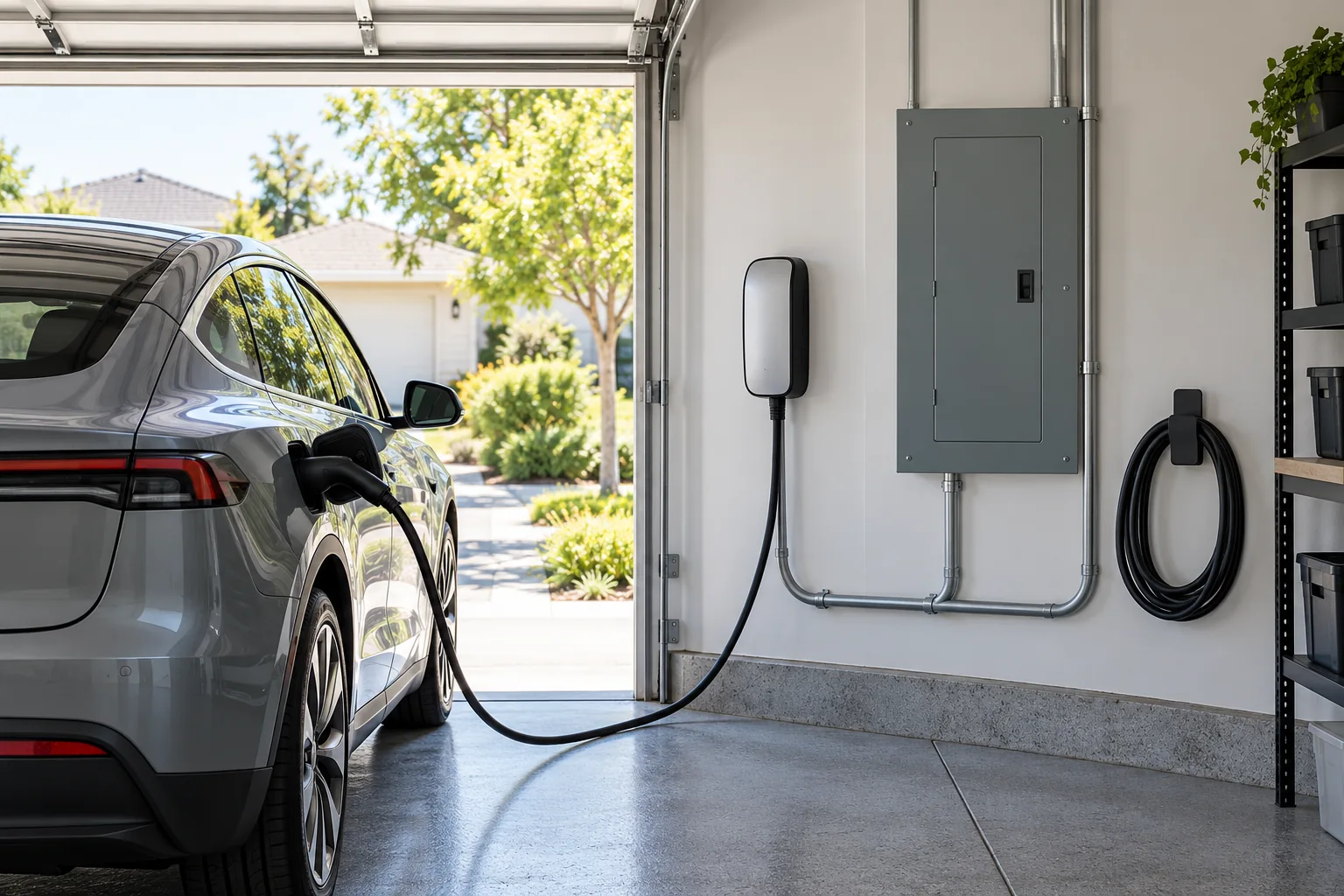
Level 1 charging typically uses a suitable 120 V circuit and compatible cordset. Level 2 uses a 240 V home supply and can add energy faster. If a car sits overnight and covers modest daily mileage, Level 1 may be enough. For longer commutes, irregular schedules or larger batteries, Level 2 may make daily charging easier. Our home charging guide walks through those tradeoffs, and the charging levels explainer compares the methods.
Estimate the energy or miles that must be replaced during your usual parking window. Check the exact car’s onboard AC charging limit; a more powerful EVSE does not force the vehicle to accept more. The EPA’s home charging guidance also points readers to driving needs and professional electrical assessment. The goal is a practical charging routine, not necessarily a full battery every morning.
2. Choose a usable and safe charger location
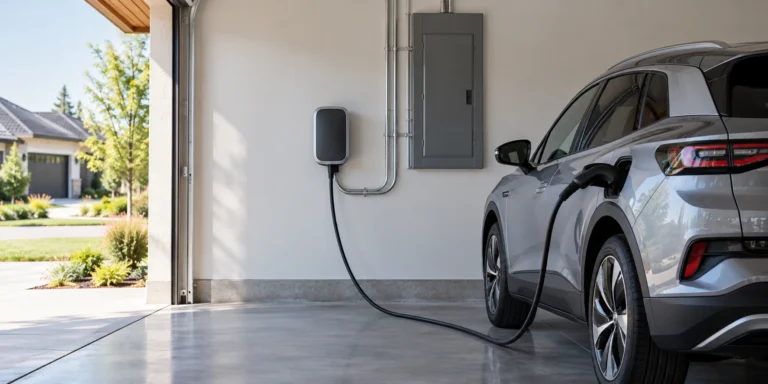
Walk from the proposed wall position to the car’s charge port in its normal parking position. Allow for future vehicles, cable storage, door movement and pedestrian access. Keep the location out of a path where a cable would be routinely crushed, pinched or tripped over. If the car is parked outdoors, the equipment and installation must be rated for that environment; the DOE notes that outdoor charging is feasible with appropriate equipment.
The distance from the panel to this location affects the electrical route and possibly cost. A short route is helpful, but the charger must still be convenient to use. If the garage is detached, the route or service arrangement deserves particular attention. The electrician can explain feasible paths and whether a site survey is needed before a firm bid. For cost variables, see our Level 2 installation cost guide.
3. Confirm the car, charger and mounting choice
The vehicle-side connector must be compatible with the car, whether the unit uses the vehicle’s native connection or an approved adapter. Check the equipment’s rated output, adjustable settings, cable length, safety certification and manufacturer’s mounting instructions. The ENERGY STAR EV charger guidance recommends certified equipment and a licensed electrician to evaluate the home wiring and outlets. A smart charger may add scheduling and energy reports, but those conveniences do not replace a safe electrical design.
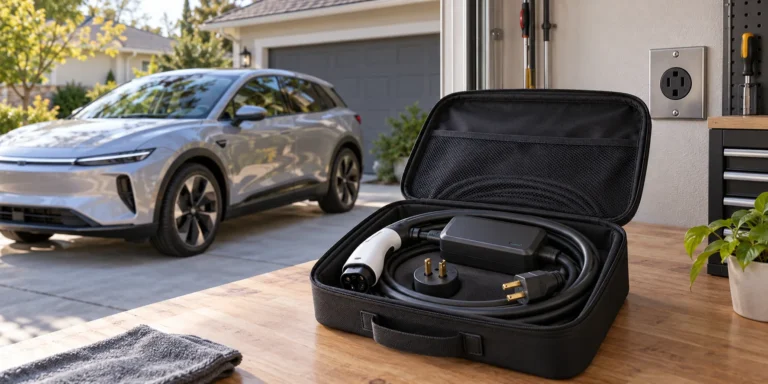
Decide with the contractor whether a hardwired EVSE or an approved plug-in arrangement suits the location and local rules. A plug-in unit still needs a suitable circuit and receptacle; an existing household outlet should not be assumed ready for sustained Level 2 charging. The precise outlet choice belongs in our outlet planning guide. Do not use an extension cord or improvised adapter as an installation plan.
4. Have a qualified electrician assess capacity
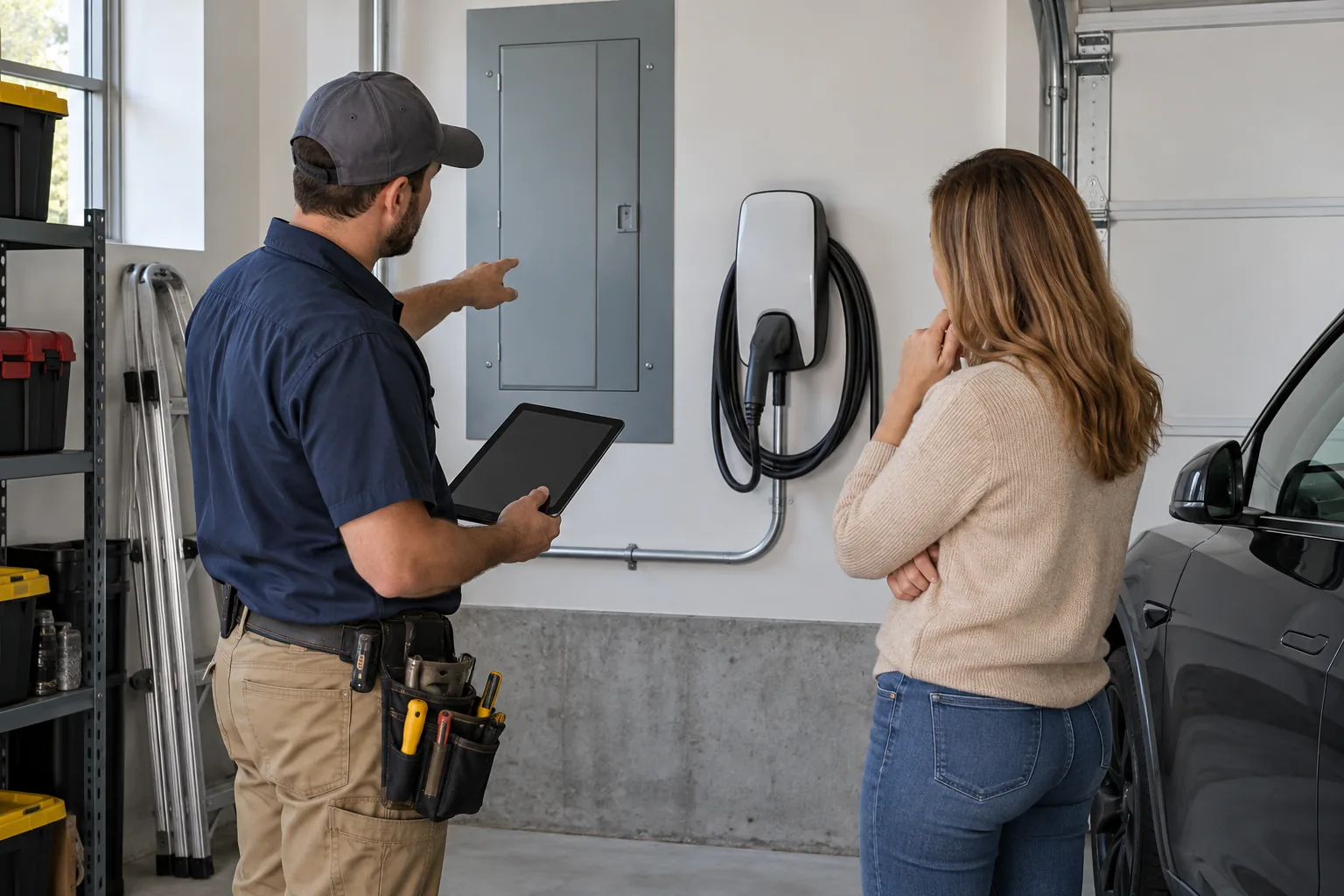
The installer should evaluate the existing electrical service, panel, household loads and proposed EVSE output. A visually empty breaker space is not a load calculation. Depending on the result, the contractor may recommend a different charging setting, a managed-load solution, a new circuit, or broader electrical work. The EPA notes that load management or circuit-sharing systems can help balance an EV charger with other appliances; ask the electrician whether an approved approach fits your equipment and jurisdiction.
Do not preselect an amperage or promise a certain charging speed based only on a charger label. Circuit capacity, continuous charging load, wiring method and protective devices are matters for the electrician and the locally adopted code. Ask for the proposed operating setting in the quote, plus what might change after the site assessment. If service work is needed, the contractor can clarify utility involvement.
5. Check permits, property rights and inspections
The DOE says installations must comply with local and state codes and that appropriate permits may be required. The process varies even within the United States: a city or county may require an electrical permit, plan information or inspection. For example, Seattle’s EV charger installation guidance provides its own permitting information. Use your local authority for the rule at your address rather than copying another city’s checklist.
If you rent, live in a condo, or park in a shared garage, obtain the required property approvals before buying equipment. Multifamily charging can involve separate metering, common areas and management decisions. Ask who will apply for permits, coordinate inspection, and provide the final record. The quote should distinguish fees from electrical labor.
What happens during a professional installation?
A typical process starts with a conversation or site visit, a load and route assessment, an itemized quote, and any required approval. The licensed or otherwise locally qualified contractor installs the agreed equipment and circuit to the applicable code, then tests operation and arranges inspection where required. The homeowner should receive the equipment manual, agreed settings, permit documents and a clear explanation of normal use.
Do not interpret online articles as instructions to open a panel, select breaker and wire sizes, or build a 240 V circuit. Those choices depend on the home, equipment instructions and adopted electrical code. Our guide is a planning aid so you can ask better questions and understand the professional’s proposal.
What to ask the installer before work starts
- Is the proposed output appropriate for my vehicle, daily driving and panel assessment?
- Is the charger hardwired or plug-in, and why is that choice suitable here?
- What exact route and finish work does the price include?
- Are the equipment, permit, inspection and testing included?
- Could load management avoid more extensive electrical work, if my site qualifies?
- What approvals do I need from the utility, landlord or association?
- What would trigger a change order, and what documents will I receive at handover?
Get comparable written scopes when seeking multiple bids. An inexpensive headline can omit the unit, permit or difficult cable route. The installation cost breakdown explains how to compare them without turning a national average into a site-specific price.
Confirm the charging approach before arranging electrical work. Review home charging planning. Use charging levels and home EV chargers to check the related decisions before choosing equipment or a charging routine.
Sources
- U.S. DOE AFDC: Charging Electric Vehicles at Home
- U.S. EPA: Getting Started with Home EV Charging
- ENERGY STAR: Electric Vehicle Chargers
- Seattle Department of Construction and Inspections: EV charger installation guidance
Frequently asked questions
Do I need a 240-volt supply for home Level 2 charging?
In the United States, residential Level 2 equipment typically uses 240 V. A qualified electrician must assess how an appropriate installation can be provided at your home.
Can I plug a Level 2 EV charger into any existing outlet?
No. The receptacle, circuit, protection and equipment must be suitable for the proposed load and comply with local rules. Have the setup assessed before using it for repeated charging.
Is a permit always required for an EV charger?
Permit and inspection requirements depend on the local jurisdiction and scope of work. Ask the contractor and local authority before starting.
Do I need to upgrade the electrical panel?
Not automatically. An electrician’s load assessment determines the available options. A lower output or approved load-management system may be possible in some homes.
Should I buy the charger before getting a quote?
It is often useful to identify a preferred model, but confirm the car’s compatibility, site capacity, installation method and contractor’s requirements before purchase.